
You are using an out of date browser. It may not display this or other websites correctly.
You should upgrade or use an alternative browser.
You should upgrade or use an alternative browser.
The New Residential Conversion Thread
- Thread starter bigpicture7
- Start date
Columbus Center IIWalk by a few times a week and have the same thought(s).
Well, even w/o going into air rights stuff, this surface lot (and remaining ones in the downtown core) should be transformed into something -- anything -- else (other than lab space) immediately. Such a gratuitous misuse of badly needed real estate (obviously this could/should be housing).
If there was ever a case for eminent domain, it's any surface parking lot within two miles of the CBD.
If there was ever a case for eminent domain, it's any surface parking lot within two miles of the CBD.
The Turnpike Authority already owns that triangular parcel and I think it actually is a critical portion of any future air rights project to cover over the part of the Pike because it's actually sitting on terra firma.Well, even w/o going into air rights stuff, this surface lot (and remaining ones in the downtown core) should be transformed into something -- anything -- else (other than lab space) immediately. Such a gratuitous misuse of badly needed real estate (obviously this could/should be housing).
If there was ever a case for eminent domain, it's any surface parking lot within two miles of the CBD.
Ah - Didn't realize that. Thanks!The Turnpike Authority already owns that triangular parcel and I think it actually is a critical portion of any future air rights project to cover over the part of the Pike because it's actually sitting on terra firma.

stick n move
Superstar
- Joined
- Oct 14, 2009
- Messages
- 13,924
- Reaction score
- 26,460
If I remember correctly thats where the core of columbus center was going to be built, on that little triangular plot.
Edit: Nope, different triangular parcel. Hows this for a blast from the past?

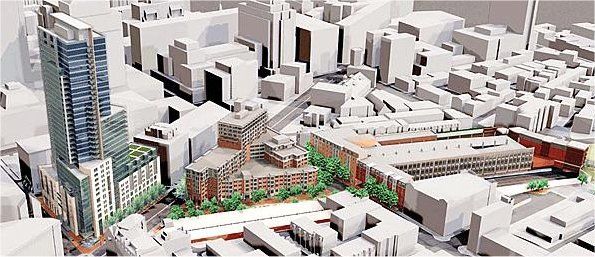
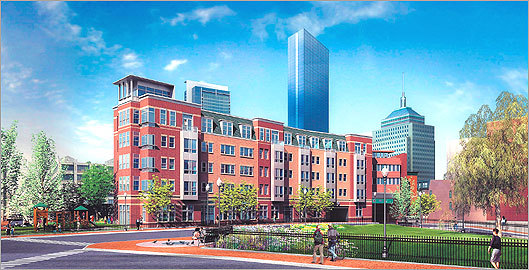
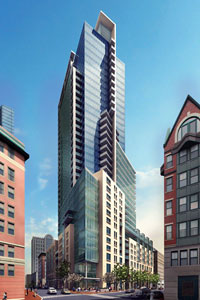
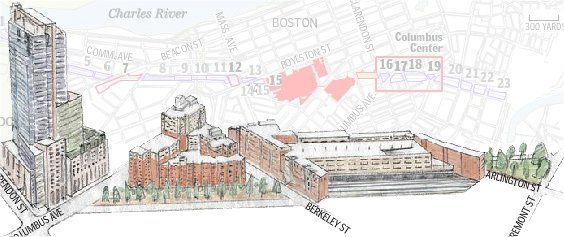

Edit: Nope, different triangular parcel. Hows this for a blast from the past?
Last edited:
sean99090900
Active Member
- Joined
- Jan 18, 2024
- Messages
- 291
- Reaction score
- 1,122
damn, the smaller triangular building would still have been super niceIf I remember correctly thats where the core of columbus center was going to be built, on that little triangular plot.
Edit: Nope, different triangular parcel. Hows this for a blast from the past?
View attachment 66558
View attachment 66559
View attachment 66560
View attachment 66561


themissinglink
Senior Member
- Joined
- Jan 13, 2018
- Messages
- 2,201
- Reaction score
- 6,283

What a walk through Boston’s dark office buildings revealed about its housing future - The Boston Globe
Boston’s office-to-residential program is remarkable because it tackles the city’s severe housing shortage and office vacancy crisis not as two separate problems but as a shared opportunity.
 www.bostonglobe.com
In early 2023, I was out touring office buildings in Boston with prospective tenants through my brokerage, Burns Realty & Investments. I began to notice a stark disconnect between reported office vacancy rates and the reality on the ground. While data from CoStar, a real estate information firm, suggested modest vacancy rates, what we were seeing during our walk-throughs painted a very different picture.
One day I visited a building in the Leather District that claimed 80 percent occupancy. Yet as we walked up the stairs, passing dark office after dark office, it became clear that these spaces were, for all intents and purposes, vacant. It was 10 a.m. on a Tuesday, and the workers who occupied these spaces before the COVID-19 pandemic were not coming back. Desks covered in sticky notes with employees’ forgotten to-do lists, scribbled-on whiteboards from long-ago brainstorming sessions, and half-finished cups of coffee were visible when peering through the glass office doors. It looked like a sci-fi movie in which everyone had just vanished.
At that moment, it became obvious to me and my team that Boston was on the precipice of an office vacancy crisis, but the problem had not yet fully materialized in the data. We also realized we had a potential solution — an opportunity to repurpose these underutilized spaces for housing.
[...]
We learned that our focus on prewar buildings also qualified us for federal and state historic tax credits, a powerful tool for developers rehabbing any building of historic character. HTCs are integral to making residential conversions financially feasible. They are not for the faint of heart: The application process is intricate, costly, and time-consuming. But done correctly, HTCs can unlock significant equity — up to 40 percent of qualifying expenses.
stick n move
Superstar
- Joined
- Oct 14, 2009
- Messages
- 13,924
- Reaction score
- 26,460
Non-Profit Acquires Vacant Downtown Property for $4.4M
“Bridge Over Troubled Waters, Boston has acquired 25 West Street in Downtown Boston for $4,410,000….”“Bridge proposes to redevelop the building into housing for homeless, runaway, and at-risk youth ages 18-24 earning less than 30% of the Area Median Income (AMI). The building will include a welcome center for unhoused youth and a mix of single room occupancy (SRO) units and three and four-bedroom suites of permanent supportive housing.”

Non-Profit Acquires Vacant Downtown Property for $4.4M
Non-Profit Acquires Vacant Downtown Property for $4.4M
 www.bldup.com


HenryAlan
Senior Member
- Joined
- Dec 15, 2009
- Messages
- 4,534
- Reaction score
- 5,454
This is super interesting.
Facebook
 www.facebook.com
Apparently the Steinert Building (162 Boylston Street) is undergoing conversion to residential on floors 2 through 7, first floor retail, and of perhaps greatest significance, a full restoration of Steinert Hall, which might be the greatest acoustic venue not in use anywhere in the country.
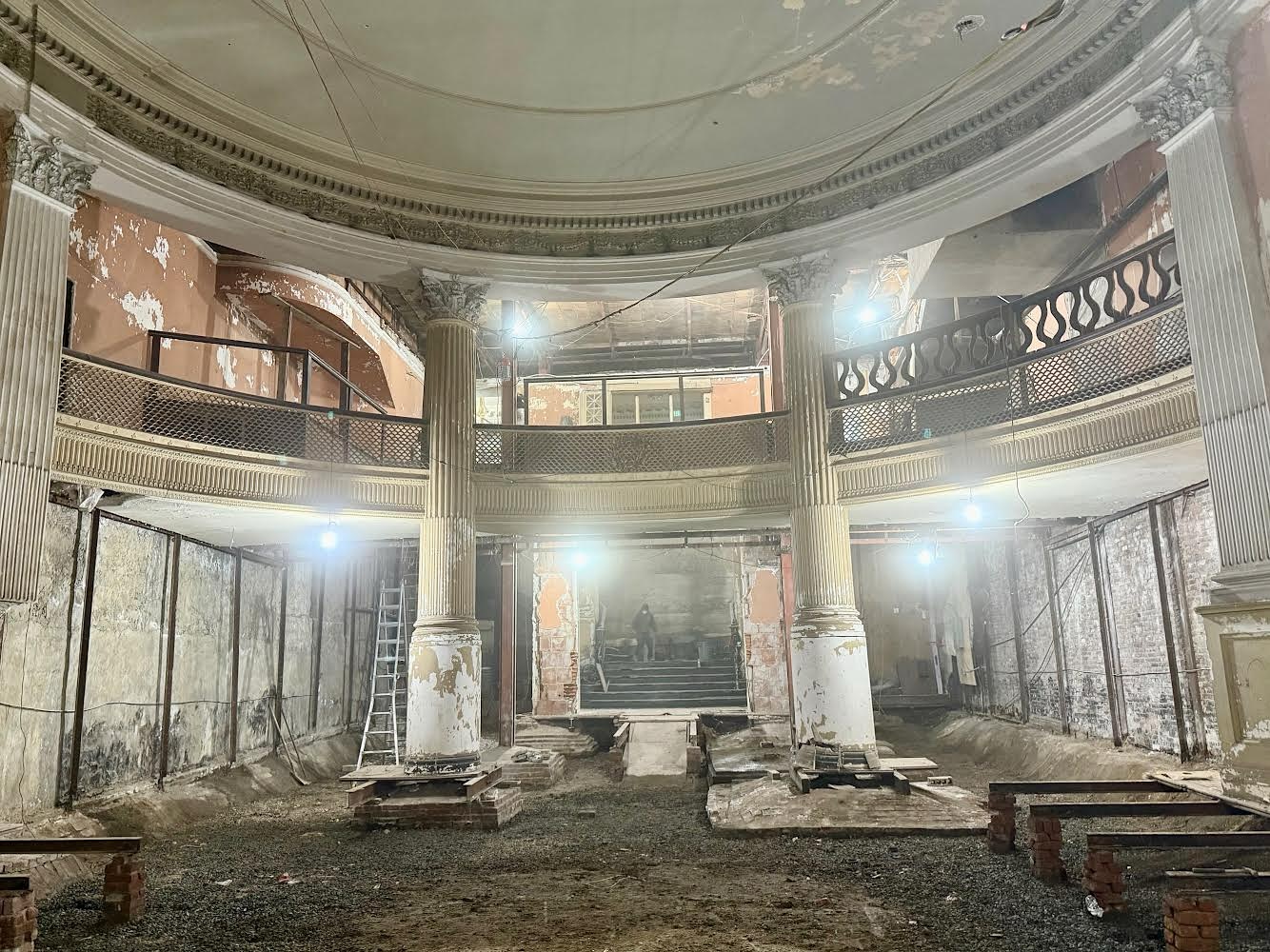
McKay Architects is handling the process.
www.facebook.com
Apparently the Steinert Building (162 Boylston Street) is undergoing conversion to residential on floors 2 through 7, first floor retail, and of perhaps greatest significance, a full restoration of Steinert Hall, which might be the greatest acoustic venue not in use anywhere in the country.
McKay Architects is handling the process.
stick n move
Superstar
- Joined
- Oct 14, 2009
- Messages
- 13,924
- Reaction score
- 26,460
Thats incredible news! Classic is coming back!
stick n move
Superstar
- Joined
- Oct 14, 2009
- Messages
- 13,924
- Reaction score
- 26,460

BACsop
Senior Member
- Joined
- Jun 1, 2019
- Messages
- 1,919
- Reaction score
- 8,120
More than just resi conversions, apparently!

 www.bostonglobe.com
‘Office-to-everything’ conversions may finally pay off for downtown Boston - The Boston Globe
Different kinds of office conversions were a big topic at the Downtown Boston Alliance's annual meeting this week.
www.bostonglobe.com
HenryAlan
Senior Member
- Joined
- Dec 15, 2009
- Messages
- 4,534
- Reaction score
- 5,454
This kind of creative repurposing is exactly what we need. I've long suggested that the floor plate area to window issue, which can be problematic for residential, is solvable by mixed use schemes, with residential on the outside, something else on the inside (data centers, vertical farming, light industrial uses, etc). I'm not seeing much in that space yet, but anything that looks further outside the box is a welcome advance in repurposing these buildings.More than just resi conversions, apparently!
stick n move
Superstar
- Joined
- Oct 14, 2009
- Messages
- 13,924
- Reaction score
- 26,460
419 Boylston Street
“The proposed project located at 419 Boylston Street contemplates the conversion of an existing 8 story structure from office space to residential units as part of the City of Boston's Office to Residential Conversion Program. Floors 3-8 would be adapted from office space to 44 residential units; existing retail space on the first and second floors to remain.”
419 Boylston Street | Bostonplans.org
Development Projects and Planned Development Areas (PDAs) that the Development Review division is coordinating.
 www.bostonplans.org
Justbuildit
Senior Member
- Joined
- Nov 27, 2022
- Messages
- 1,134
- Reaction score
- 3,984
Fine, but F this guy and what he's let happen to the Tannery building across the street (see: https://www.universalhub.com/2026/controversial-boylston-street-landlord-wants-convert-office-space)
Might have to write into the public comments and be supportive but urge the city to actually use the leverage they have and not approved this project until something happens with the massive eyesore on one of the most important blocks in the city.
Might have to write into the public comments and be supportive but urge the city to actually use the leverage they have and not approved this project until something happens with the massive eyesore on one of the most important blocks in the city.
Agree. Before I realized it was Sam, I thought, "Great!" Then this surfaced. From personal experience, I find him disagreeable to deal with in person. Rude and entitled are the phrases that come to mind.Fine, but F this guy and what he's let happen to the Tannery building across the street (see: https://www.universalhub.com/2026/controversial-boylston-street-landlord-wants-convert-office-space)
Might have to write into the public comments and be supportive but urge the city to actually use the leverage they have and not approved this project until something happens with the massive eyesore on one of the most important blocks in the city.
Historic Old South Building Poised for Residential Conversion in Downtown Crossing
Historic Old South Building Poised for Residential Conversion in Downtown Crossing
www.bldup.com
Incredible
Historic Old South Building Poised for Residential Conversion in Downtown Crossing
Historic Old South Building Poised for Residential Conversion in Downtown Crossing