MBTA Commuter Rail (Operations, Keolis, & Short Term)

Understand that on Monday February 2, there will be a reduction in train service on the Fall River/New Bedford Line. Most East Taunton shuttle trains will be bussed.

  • Service Change Upcoming
    New Bedford/Fall River Line will operate on a modified severe weather schedule on Monday, Feb 2 due to additional snowfall and extreme cold. View PDF Timetable
 
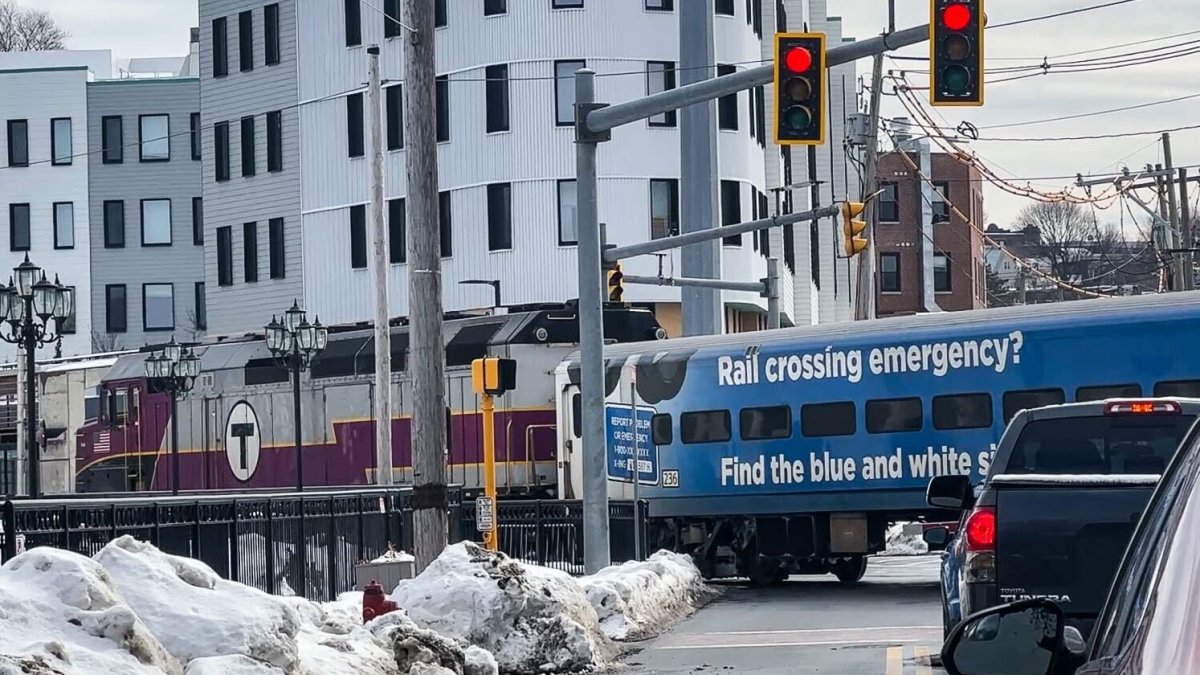
This one sounds like the same as the incident on Sunday. Except the guy was sober so he thought it would be a good idea to get out of the car before getting hit.
“Due to mishap” is such garbage journalism, passively implying the T is at fault happens way too often. The article itself says the gates were working and that the T did everything right, so how can you title it without mentioning the driver or specific situation at all. Garbage
 
Inbound and outbound Commuter Rail trains were canceled on the Newburyport/Rockport, Haverhill, Lowell, Fitchburg and Framingham/Worcester lines, according to Keolis, which operates the system and its 12 rail lines. Keolis reported the following cancellations:
  • Trains 533 (10:55 a.m. from South Station to Worcester) and 546 (1:05PM Worcester to South Station)
  • Trains 33 (10:35 a.m. from North Station to Rockport) and 40 (12:17PM Rockport to North Station)
  • Trains 1231 (10:35 a.m. from North Station to Reading) and 1234 (11:18AM Reading to North Station)
  • Trains 331 (10:20 a.m. from North Station to Lowell) and 336 (11:22AM from Lowell to North Station)
  • Trains 413 (10:30 a.m. from North Station to Wachusett) and 424 (9:30AM Wachusett to North Station)
 
Apparently it was a twin calamity of:
  • Major radio blackout on the system making dispatch communication too intermittent to run trains at full speed. That's apparently why this delay rash spanned both northside and southside.
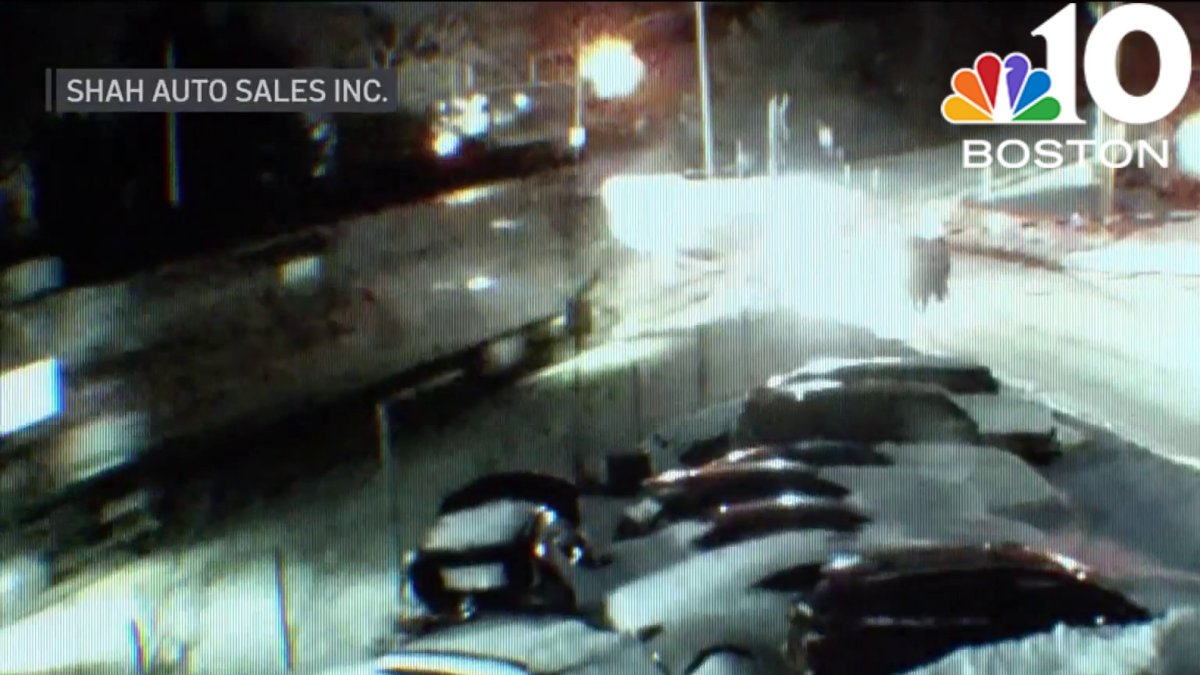
  • Multiple improperly activated grade crossing gates due to road salt spread before the previous night's snow then melting around the crossings in the morning with temps reaching above freezing for the first time in awhile. The salted melt product increased the electrical conductivity of the track circuits creating a lot of false-positive gate activations that had to be tended to by local law enforcement. Which meant trains were crawling through a lot of gates that weren't shutting off when the trains left and which had manual flaggers helping cars through the malfunctioning gates. Fitchburg, Haverhill/Reading, and the Rockburyport branches got clobbered by this due to their quantities and densities of grade crossings. This has apparently always been a potential winter issue, enough that the T formally advises towns to lay off on the salt mix within X feet of a crossing and has periodically re-warned towns during recent past bad winters when these types of failures have frequently occurred. But most towns simply ignore them outright on town-control streets, with most contract plow operators not even being made aware of the advisory so the overall enforcement has been nil.
 
Apparently it was a twin calamity of:
  • Major radio blackout on the system making dispatch communication too intermittent to run trains at full speed. That's apparently why this delay rash spanned both northside and southside.
  • Multiple improperly activated grade crossing gates due to road salt spread before the previous night's snow then melting around the crossings in the morning with temps reaching above freezing for the first time in awhile. The salted melt product increased the electrical conductivity of the track circuits creating a lot of false-positive gate activations that had to be tended to by local law enforcement. Which meant trains were crawling through a lot of gates that weren't shutting off when the trains left and which had manual flaggers helping cars through the malfunctioning gates. Fitchburg, Haverhill/Reading, and the Rockburyport branches got clobbered by this due to their quantities and densities of grade crossings. This has apparently always been a potential winter issue, enough that the T formally advises towns to lay off on the salt mix within X feet of a crossing and has periodically re-warned towns during recent past bad winters when these types of failures have frequently occurred. But most towns simply ignore them outright on town-control streets, with most contract plow operators not even being made aware of the advisory so the overall enforcement has been nil.
the T formally advises towns to lay off on the salt mix within X feet of a crossing

I think a municipal public works director might find it more prudent and less risky to lay down salt on approach to a grade crossing and risk the gates malfunctioning to their failsafe mode (activation) than dealing with the possibility of cars sliding into activated crossings and being hit. That being said, in the early 1970s, my hometown banned the sale and use of chloride salts in order to protect the drinking water and experimented with using heated sand at intersections and hills with decent results. Though they weren't satisfied enough with its widespread use so the town amended the bylaw several years later to allow for a low-ratio salt to sand mix on public roadways. As far as I know, the use of salt is still banned on private property in the aquifer areas, but I have no idea how strictly that is enforced.
 
Last edited:
If the problem is salty water pooling at crossings, it seems that an effort to slightly change the grade of offending crossings - so that they're slightly higher than the surrounding roadway - might be useful and relatively affordable. And/or target these crossings for drainage improvements.
 
If the problem is salty water pooling at crossings, it seems that an effort to slightly change the grade of offending crossings - so that they're slightly higher than the surrounding roadway - might be useful and relatively affordable. And/or target these crossings for drainage improvements.
All of that requires town+MBTA coordination, and the towns spending some share of money for road construction. Much like the "Why don't I have a quiet crossing?!?!" controversies that are always percolating through local media, they'd much rather impotently scream at the MBTA for the pure dopamine hit when their crossings malfunction every winter than actually make an effort to do anything about it on the infrastructure or plowing/salting procedure side. 🤷‍♂️
 
If the problem is salty water pooling at crossings, it seems that an effort to slightly change the grade of offending crossings - so that they're slightly higher than the surrounding roadway - might be useful and relatively affordable. And/or target these crossings for drainage improvements.
While generally not a bad idea ... this itself can add an additional failure mode that has led to some of the more spectacular train vs truck collisions out there. What is best practice anyways for a grade crossing, other than to just not have them?
W10_5_Yellow_640x640.jpg
 
While generally not a bad idea ... this itself can add an additional failure mode that has led to some of the more spectacular train vs truck collisions out there. What is best practice anyways for a grade crossing, other than to just not have them?View attachment 70664
The Federal Highway Administration strongly discourages (see under "Vertical Alignment" section) any grade changes at the crossing, and insists that they be as level as possible with no deviations of more than 3 inches within 30 feet of the crossing, which has been adopted by AASHTO as a standard for new construction. Although enforcement of this is virtually nonexistent because of the severe jurisdictional fragmentation around crossings, and the fact that routine drainage improvement projects frequently change the elevation of the rails at crossings without enough code enforcement of the affected crossing pavement. So, yeah...the feds are well onto the "spectacular crash" potential of having any raised crossings, though they've been largely unable to gain any traction on getting municipal road departments to actually listen to them.

These types of jurisdictional conflicts are something we're going to have to face at much greater level if Regional Rail gets implemented and train traffic effectively doubles and doubles for much longer hours systemwide. The multiple Reading Line crossings in Melrose got ensnared in the salt-melt follies last week causing large amounts of wreckage to Haverhill schedules when the trains all had to go into punitive speed restriction for miles at a time to crawl through all the malfunctioning crossings, completely borking the timed meets around the line's single track. That's a line that has formal funded plans (albeit ensnared for the moment in the community input defeat of the Reading pocket track) for nearer-term :30 service. You'd have wipeouts of literally half the line schedules during snowmelt days if towns like Melrose simply refuse to start obeying the salt-spread advisories or if there remains no top-down enforcement penalties for continuing to disobey those advisories. And that's even with the single-track being A-OK for :30 bi-directional with minimal infrastructure changes. The prevailing attitude in the towns that "everything bad or inconvenient that ever happens around a crossing is automatically the T's fault and I'm going to SCREAM REAL LOUD while doing nothing" just isn't conducive to ever resolving these conflicts. But resolve them we must if the service levels are ever to reliably increase. We're gonna have to work up more of an appetite than this for state and towns hashing this out like semi-mature and responsible adults.
 
Last edited:
New York Central heritage-paint unit is done and about to enter service. This is the paint scheme that all Boston & Albany trains used to run in, because the NYC was their parent company.


F40 #1071 (the one that's currently running in all-black primer) is supposed to get painted in the original F40PH-2C zebra stripe scheme when it gets back in the paint shop, and another being-repaired GP40MC down in Rochester is supposed to get a Boston & Maine blue dip scheme to complete the heritage program.
 
GP40MC 1128 is in NH orange/green paint down in Area 52. Awaiting hard-to-get parts from WABTEC (Just like the 1130 had to wait!). Rumors are they want to do a America 250th unit. Had not heard about a GP40MC B&M Blue dip one though
 
I was on the 4:20 to PVD. We ended up about 10 minutes or so behind schedule by the time I arrived, but I was actually pleasantly surprised at how fast the inbound train was turned around. At 4:20, there was no train at the platform. It pulled in at around 4:22ish, they immediately announced boarding, and we were rolling by 4:29.
 
A slow-speed derailment involving an MBTA Commuter Rail train near South Station in Boston, Massachusetts, caused several delays and cancellations across the Friday evening commute.
According to a Keolis spokesperson, a single coach on Providence Line Train 851 came off the rails at a low rate of speed between South Station and Back Bay.
Transit officials said there were 350 passengers on board and there were no reports of any injuries. All passengers were safely escorted off the train and back to South Station.
 
The Massachusetts Bay Transportation Authority announced that some service will be suspended on the Fall River/ New Bedford commuter rail line on some weekends in April.
According to officials, they will perform critical maintenance work, which includes renewal and revitalization work.
MBTA officials said that during the weekends of April 11 to 12, April 18 to 19, and April 25 to 26, service will be suspended between South Station and Braintree.
 
Hard to believe that the Old Colony lines are almost 29 years old. This service disruption is for the Boston-Braintree main affecting all OC trains. There are definitely things on the mainline coming up on replacement age (signaling, etc.) that need good preventative maintenance to stay reliable.
 
Hard to believe that the Old Colony lines are almost 29 years old. This service disruption is for the Boston-Braintree main affecting all OC trains. There are definitely things on the mainline coming up on replacement age (signaling, etc.) that need good preventative maintenance to stay reliable.
Q: at the time of the rebuild I was much less plugged in, is the Wollaston station a singularly prohibitive impediment to OC double tracking like I'd been led to believe or can it be worked through? It seems to my layman's eye thay QC or QA would be no less challenging
 
Q: at the time of the rebuild I was much less plugged in, is the Wollaston station a singularly prohibitive impediment to OC double tracking like I'd been led to believe or can it be worked through? It seems to my layman's eye thay QC or QA would be no less challenging
Wollaston is definitely brutal. I don't see how that gets solved without blowing-up/rebuilding the station yet again. They'd either have to swing the Red Line alignment further out on the parking lot side of the station and/or narrow the somewhat curiously over-wide for its passenger load (28 ft.) island platform. Either way it's a total nuke job, and calls directly into question what they were (or weren't) thinking when they planned the most recent station rebuild.

Quincy Center is not that bad. There's lots of earthen fill on the Burgin Pkwy. side of the station, so you could fairly straightforwardly scoop out, pour a concrete shell, do up an island platform, and punch repeated holes in the existing retaining wall for passage between the platform halves. That might even be a lower-reach installment-plan add before the running track outside the station gets doubled-up to increase frequencies a bit by using meets on the would-be island as a timing mechanism for closer bi-directional train spacing. It's honestly not as hard as doubling-up the tracks immediately south of the station under the parking garage. If you did islands at both JFK and QC first you'd be able to add quite a lot of frequencies...maybe still far from Regional Rail-on-3-branches levels, but having all mainline stations doubled-up first is worth pretty substantial gains as well as a lot better resiliency when anything's running late.

Quincy Adams is very snug, but the width of the Commuter Rail ROW through the station is about 31-32 ft. (only about 1-2 feet narrower than what the currently DT'd tracks do when passing the Braintree Red Line station). That should be *just* enough for double-track with no margin for error, though you've still got to blow-up/rebuild the very much single-track flyunder immediately south of the station to extend DT into Braintree and probably have to lane-diet Burgin Pkwy. everywhere between QC and QA to make it contiguous.
 
A Mass Coastal freight engine - GP9RM 2008 - was brought to Mansfield Friday by an extra. Related to FIFA Gillette Station work this week.
 

Back
Top