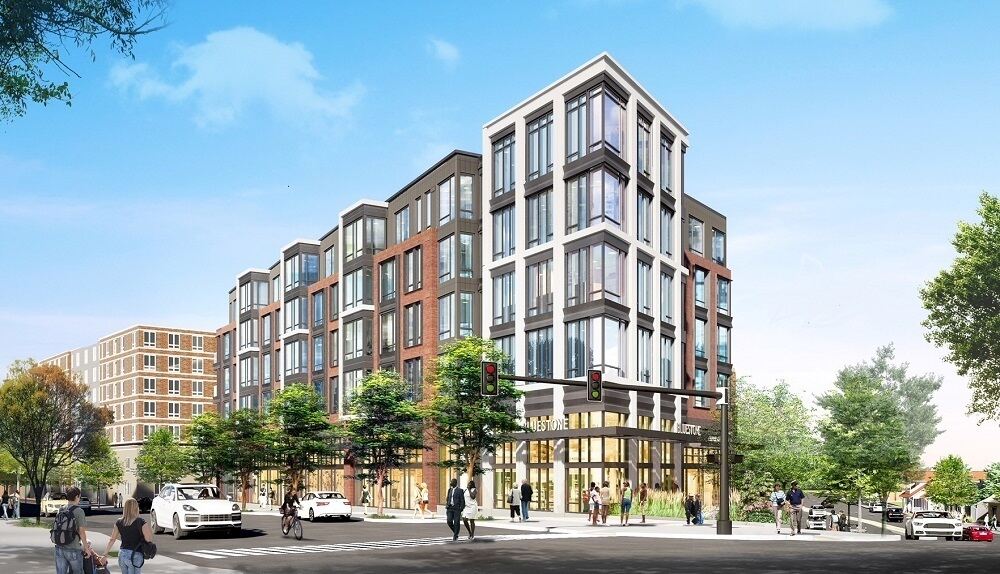
Good Morning Councilor Ryan,
Thank you for organizing the community meeting that was held last night re: the proposed 90 Columbia development. I wanted to follow up on what I felt were earnest and well-intentioned but ultimately misinformed comments regarding parking, vehicle trips, and transportation demand management (TDM).
Motor vehicle trips are not exclusively derived from the use at a given site, and the literature on this subject is robust. The work of
Donald Shoup and
Henry Grabar are fantastic explanations of this phenomenon in general, but for greatest relevance I would point to a
2015 study looking at the relationship between parking provision and automobile use in medium-sized New England cities which found: "At the city scale, we find that an increase in parking provision from 0.1 to 0.5 parking spaces per resident and employee is associated with an increase in commuter automobile mode share of roughly 30 percentage points. [...] Based on this knowledge, we infer that parking provision in cities is a likely cause of increased driving among residents and employees in those places. Given the costs associated with parking and its apparent effects on automobile use, our findings suggest that policies to restrict and reduce parking capacity in cities are warranted."
I deeply share the concern of increasing motor vehicle trips into the neighborhood, but increasing the amount of parking available will exacerbate that and the associated safety and public health concerns. For that reason, I would encourage you not to support the sale of the Plain Street right-of-way for the sake of increasing parking at the development.
Instead, I would like to suggest a few proven TDM strategies that could be included to help mitigate the number of motor vehicle trips to and from the development:
- The developer should commit to providing on-site bicycle parking. Just as providing vehicle parking is known to induce more trips via motor vehicle, providing bike parking is known to induce more bicycle trips. Ideally this would be covered, secure parking.
- The developer should pay the capital costs (~$50,000) to install a BlueBikes bikeshare station at the abutting park. There are no operating costs to the city (covered by user fees and the branding rights), and many municipalities leverage developers to help grow the station network. As you are likely aware, Quincy last month was awarded a $250,000 grant from MassDOT to fund the initial rollout and is currently working with the MPO on further funding. Adding bike share stations is known to increase the share of biking trips and will help improve access to/from other parts of Quincy as stations are rolled out, as well as make the already short trip to Quincy Adams that much more convenient.
- The developer, TLC, and the swim school should provide transit passes as a resident/employee perk. Employers providing transit passes is known to increase the share the of employees taking transit to work.
- This is a larger lift, but just as the developer for 21 Totman was asked to do, the developer could be asked to upgrade the sidewalks on Columbia between Centre and Plain Streets. Just as people are less likely to want to drive on poorly maintained streets, people are more likely to walk on well built and maintained sidewalks.
I'd also like to point to a couple examples of daycare centers in mixed-used developments in areas with similar transit accessibility:
Finally, I want to again express appreciation for hosting the opportunity for members of the community to discuss the project, but also acknowledge that who turned out last night is not representative of the neighborhood. This is a common problem with the format and I do not mean to single out you or the group that showed up, but it should be kept in mind that the neighborhood is much younger, more diverse, and majority renters. The perspectives shared were valuable, but they were one perspective and assumptions made by these groups about the travel behaviors of others should be taken with a firm grain of salt.
Thank you for taking the time to consider my comment and I hope you, the developer, and the community find the resources and suggestions I shared valuable.
Kind Regards,
Kyle Casiglio, AICP