New England Electrical Grid

I'm not exactly an expert on this stuff, but I was under the impression commoditized solar + battery storage already exists at a per MWh cost lower than what any new nuclear can provide, while SMRs are theoretical and far from being proven to be more cost-effective than solar paired with battery storage for baseload power.

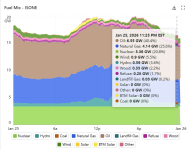
I'm not sure how cost effective solar would be during a winter storm, or if we'd be able to have enough battery storage to ride out the worst of it. California is making great use of it though, here's a snip from Jan 26th's grid mix. During that storm we had very little solar or wind production, and the cold weather in Canada basically cut off our hydro imports because they needed the power too. That's all from what I read from other sources, I'm no grid expert myself.

1770156084914.png
 
As always the biggest obstacle is NIMBYs and activists pushing back on the exact progress that they claim to want to promote.

Pilgrim, shut down. Seabrook expansion in NH, blocked and in regulatory hell. Offshore wind...at least 50/50 split by cape and island residents. Even battery storage has faced opposition. Hell, it's against the law to have rooftop solar on homes in historic zoned parts of the city.

Meanwhile we aren't going to let the grid collapse so we have to burn heavy oil while not allowing new natural gas pipelines that would be much cleaner head-to-head. Getting rid of coal is a win, but our grid is much dirtier than Texas' and it's not because they love the environment. Until we build more capacity in ISONE we aren't going to import our way out of this. Solar and wind paired with massive battery storage and a bit more gas on the margin would be a much better fuel mix. Once we're out of peak winter the imports on NECEC will be more reliable as well.

It's bad enough to have high prices driven by constrained capacity. It's worse when 50% of that capacity comes from burning oil. We need to get serious about building and permitting new things. We aren't going to de-growth our way out of this problem.
 
Somerset (2020) and Pilgrim (2019) were both losses of about 680 MW capacity each.

If we are looking for more base load capacity, we should really be back investing in nuclear, like NY State, not coal.
Vogtle Unit 3 took 14 years to begin operation from the start and at incredibly high cost.

Looking around the world, new nuclear builds seem to be increasingly climbing in cost and delays. Almost nowhere in the West appears to be having these projects go well, cheaply, or quickly. Even many countries known for using it heavily appear to be struggling (ex: France).

I have no problem with nuclear as power source but I am extremely skeptical that this region is somehow going to get new units actually built in less than 15-20 years from today (with no proposals currently even at the drawing board stage), which makes it of limited value to address present-day challenges.

I'm not exactly an expert on this stuff, but I was under the impression commoditized solar + battery storage already exists at a per MWh cost lower than what any new nuclear can provide, while SMRs are theoretical and far from being proven to be more cost-effective than solar paired with battery storage for baseload power.
In terms of being cost-effective power that can actually provide output at normal daily peaks - absolutely.

The problem with hoping to fully replace things with it here though, is that in New England you can have significant periods of very low solar output, especially in winter - short days + snow blanketing panels + heavy cloud cover, and those kinds of battery systems are intended to shift generation vs supply by a few hours - charge during the day, discharge for the PM + AM peaks, not to provide battery backup for a week. So it's helpful to overall cut our emissions but we're probably having to keep a lot of rarely used fossil fuel peaker capacity in place if that's all we've got to (mostly) replace it.

This page is a little old but the winter cold spell example here is pretty illustrative: https://www.iso-ne.com/about/where-we-are-going/solar-power-impact

My personal suspicion at the moment and with looking at the past few weeks - is that unless we can build far more transmission across regions to lessen the impacts of regional weather effects that we're going to struggle to be able to decommission much more of our oil capacity, even if we can make it much more rarely used.
 
Would love to see not 1 but 2 new reactors at Seabrook--there appears to be the space for two if built to the same dimensions of the current reactor. Besides, the current reactor is probably not going to be renewed again, which means that--especially if we electrify our vehicles and homes like we ought to be trying to--there'd be another 1.2GW to replace with renewables by 2050.

My seacoast development fantasy has those two extra reactors--making it possible for New Hampshire to become a net energy exporter within New England--and a reactivation of the rail line from Newburyport to Portsmouth, though I've always wondered what considerations there'd need to be given how close the old alignment is to the plant.
 
It’s anecdotal, but over the past few weeks (since the end of January) the grid forecast chip in the iOS Home app has been flagging cleaner energy for most of the day every day. I’m not sure what their data source is, but have we turned a corner?
 
With warmer sunny weather and less regional draw through NECEC and Phase II by Quebec, it's really stark to see how good the grid can look if we had additional capacity available. On top was a cold and snowy day in January requiring massive load (20GW+) with 40% coming from oil, and only ~25% non-carbon, mostly nuclear. Below is today, admittedly in the sunniest part of the day. Look at that mix (and overall reduced load). No oil and only ~20% from carbon producing sources (i.e. ~80% carbon free). Rooftop solar is doing work, and the hydro pull before sunrise is super strong.

1773071901357.png


1773071615273.png
 

Attachments

  • 1773071531170.png
    1773071531170.png
    75.2 KB · Views: 22
With warmer sunny weather and less regional draw through NECEC and Phase II by Quebec, it's really stark to see how good the grid can look if we had additional capacity available. On top was a cold and snowy day in January requiring massive load (20GW+) with 40% coming from oil, and only ~25% non-carbon, mostly nuclear. Below is today, admittedly in the sunniest part of the day. Look at that mix (and overall reduced load). No oil and only ~20% from carbon producing sources (i.e. ~80% carbon free). Rooftop solar is doing work, and the hydro pull before sunrise is super strong.
Nice post, I'll just add that it seems worth noting that real-time pricing has been largely negative today from 10:30 till now (15:00).
 

Looks like UMass Lowell is putting together a roadmap to try and guide how to get new nuclear built.
 
Reactive Pilgrim , add 2 more reactors to Seabrook , A new plant at Yankee Rowe , Maine Yankee and Connecticut Yankee that should be enough to satisfy all of New Englands Electric needs.
 
Reactive Pilgrim
It's been shut down for 7 years, old BWR designs seem to not be particularly well-regarded on the safety front, and it seemed to be a lightning rod for accusations of safety problems when it was operating - more so than most of the other plants in the region. I think it's unlikely anyone is going to agree to reactivate it.

I have no particular issue with nuclear as an energy source, but I also find the US track record on building it cost-effectively or in a reasonable amount of time to be abysmal, so I'd be pretty skeptical of proposals for new construction that risk leaving New England taxpayers/ratepayers on the hook if it runs wildly over budget.

If there's guarantees/funding in place to limit the financial risk to ratepayers it would look somewhat more attractive. (Federal $$$, private $$$, etc).
 
It's been shut down for 7 years, old BWR designs seem to not be particularly well-regarded on the safety front, and it seemed to be a lightning rod for accusations of safety problems when it was operating - more so than most of the other plants in the region. I think it's unlikely anyone is going to agree to reactivate it.

I have no particular issue with nuclear as an energy source, but I also find the US track record on building it cost-effectively or in a reasonable amount of time to be abysmal, so I'd be pretty skeptical of proposals for new construction that risk leaving New England taxpayers/ratepayers on the hook if it runs wildly over budget.

If there's guarantees/funding in place to limit the financial risk to ratepayers it would look somewhat more attractive. (Federal $$$, private $$$, etc).
Just build a reactor , have the Canadians or the French do it.
 
Building out Seabrook Unit 2 is just about the only remotely feasible option.

Pilgrim and Vermont Yankee are mostly disassembled. Pilgrim also had issues with the water temperature in Cape Cod bay affecting power levels.

At the root though, the Feds need to get off their butts and tell (not ask) some locale to eat their vegetables and host a waste repository.
 
Co-locating massive battery and solar farms on decommissioned nuclear sites isn't a bad start either. Gets away from zoning issues and should have extant grid interconnects available. As noted above, on sunny days with moderate temps, prices go negative, which would be the perfect time to charge massive batteries, providing an incentive to discharge in morning and evening hours (or cloudy days) where prices jump on increased demand.
 
Just build a reactor , have the Canadians or the French do it.
Canada hasn't brought a new reactor online in 43 years. I'll believe they can do it efficiently when I see it actually happen. Currently they have one project in construction.

France - Their most recent reactor project came in 12 years late and nearly 4x the original budget. I can't think of a worse advertisement for nuclear power than that. That was also their first one in 25 years.
 
Canada hasn't brought a new reactor online in 43 years. I'll believe they can do it efficiently when I see it actually happen. Currently they have one project in construction.

France - Their most recent reactor project came in 12 years late and nearly 4x the original budget. I can't think of a worse advertisement for nuclear power than that. That was also their first one in 25 years.
Really, the Koreans are the ones to go to for nukes, these days. The anti-nuclear coalition there is fairly weak, so although they waffle on actually building more plants, they've had a fairly steady stream of reactors coming online for the past few decades; even the anti-nuclear Moon Jae-in admin of a few years ago prompted nothing as passionate as worry for the potential loss of nuclear expertise. Lee Jae-myeong was anti-nuke in his earlier campaign, but reality's set in during his actual administration, and nukes are among the best options for Korea; they'd probably be thrilled to export some reactors to us.

I'm still convinced that nuclear is just one of those technologies we gave up on too quickly. However, at this point, even in a geographically-constrained and climatologically-compromised region like New England, renewables are just a much more realistic option for quickly displacing fossil fuels. If the whole place was still rapidly growing in population--i.e., if we built enough housing for everyone who wants to live there--we could probably justify more nukes (and given the long-term climate trends of the rest of the country, we probably need to start "reshoring" New England expats like myself at some point this century). Absent that, wind and solar are probably fine for however long we need to bridge the gap to reactor reconstruction.
 
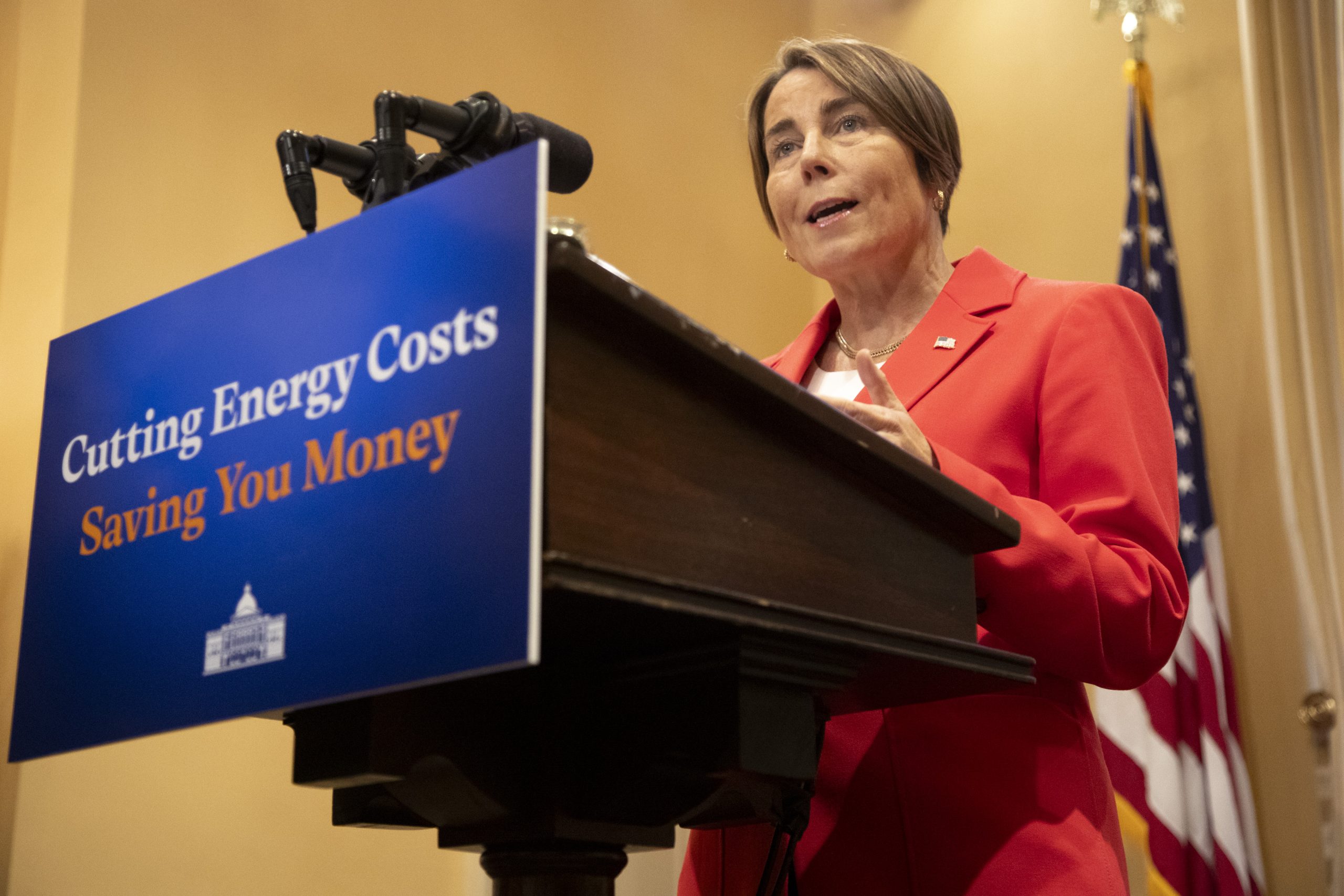
Healey signed an EO today to promote more energy generation - 10 GW on the supply side, 5GW new Storage. At typical assumed next generation BESS densities of 250-500ish MWh per acre, and typical nameplates rating for 8 hrs, we're looking at about a thousand hundred-ish acres of battery fields. (Edit to note that many existing fields are closer to 25-50MWh/ac, but 250-500 is likely over the next 10 years with some providers currently advertising 250MWh/Ac+ densities) The 10 GW supply is less aggressive - it includes 3.5GW in demand management and reduction - but still calls for 4GW in new solar. That implies 2.5GW in wind, geothermal, gas or nuclear.
Winchester — Governor Maura Healey today is setting strong new targets for bringing more energy into Massachusetts and lowering energy bills. The Executive Order she signed today outlines her all-of-the-above approach to energy supply and directs her administration to secure 10 new gigawatts (GW) of energy resources for Massachusetts by 2035, as well as 5 GW of new energy storage.

Governor Healey's directive requires agencies to pursue a range of energy resources and ensure adequate supplies in place to meet growing demand and lower bills. The Executive Order outlines directives for state agencies related to solar, storage, wind, load management, gas, nuclear, and geothermal, leading to an estimated savings of $10 billion for Massachusetts residents and businesses. Governor Healey signed the Executive Order at Lynch Elementary School in Winchester, which is powered entirely from roof-mounted and ground-mounted solar.

Governor Healey laid out her energy supply plan amidst a dramatic spike in oil and gas prices due to President Trump’s costly war and his failed energy policies that have taken American sources of energy like wind and solar off the table.

“The American people are now paying the price as oil and gas bills go through the roof because of President Trump’s costly war,” said Governor Healey. “I believe in an all-of-the-above approach to energy – that means solar, wind, gas, nuclear and hydro. While the President is taking American-built energy sources off the table, in Massachusetts, we are saying yes to more supply from more sources of energy. We are saying yes to American jobs and American energy independence. And we are saying yes to lowering energy bills for all.”


“When we invest in Massachusetts energy, we invest in Massachusetts energy jobs,” said Lieutenant Governor Kim Driscoll. “It’s Massachusetts gas, solar, offshore wind and electric workers that are keeping our lights on, homes warm and businesses moving. For many, these are 24/7, 365-day jobs. We need to support our in-state energy supply and the workforce that makes it possible.”

“Setting firm targets and laying out a clear energy supply strategy will provide certainty and stability as we work to lower energy bills,” said Energy and Environmental Affairs Secretary Rebecca Tepper. “And by building more energy resources with a fixed price, we can give Massachusetts a competitive edge. We’re going to work as a region to power our communities and ensure more affordable, reliable service.”

More Energy for Massachusetts

ISO New England projects that electricity consumption could rise by nearly 15 percent by 2035 and 50 percent by 2045, with peak electricity demand in the winter growing even faster. This is true across the country, as demand for electricity climbs and the cost to update the aging American electrical grid rises.

The Executive Order establishes a target of 10 GW of new energy supply-side and demand-side resources over the next 10 years, as well as a separate target for 5 GW of energy storage. 10 GW is roughly the equivalent of enough power for 2 million households. The 10 GW target includes 4 GW of new in-state solar and 3.5 GW of new electric demand reduction to be achieved through load management strategies such as energy efficiency, virtual power plants, and electric vehicle charging management. This builds on Massachusetts’ successful strategy of demand management over the past 20 years, during which electricity demand has declined while the economy has grown, increasing our overall energy productivity. Because of these past investments, all customers are saving $800 million every year – or on average, $20 each month – due to utilities not needing to spend on transmission and distribution infrastructure or buy electricity for their customers.

How We Get There

Governor Healey is directing agencies to take a number of immediate steps to get more affordable energy built in the near future, including to:

Ramp up efforts to build more solar projects before President Trump ends federal support;
Expand opportunities for wind, nuclear power, and fusion energy;
Explore natural gas and other fuel storage and delivery strategies to ensure reliability, avoid unnecessary spending and charges, and reduce reliance on imported liquefied natural gas.
Lower the cost of geothermal for heating and cooling; and,
Allow for flexible interconnection to make better use of the energy grid we already have and get more energy connected faster and cheaper.
Governor Healey filed the Energy Affordability, Independence, and Innovation Act to lower energy bills and bring more supply into Massachusetts. The legislation includes a key provision that would give the state more flexibility in procuring a range of energy resources when costs are at their lowest, rather than on a rigid schedule that locks ratepayers into high costs.

 
Last edited:
At typical BESS densities of 250-500ish MWh per acre, and typical nameplates rating for 8 hrs, we're looking at about a thousand acres of battery fields.
Could you walk through these calculations some more? It seems like it's off by about an order magnitude.

For context, here's the densities of two recent projects:
  • Energizar (Chelsea) - 250 MW/1,000 MWh on 3.7 acres (68 MW/acre)
  • Medway Grid BESS - 250 MW/500 MWh on 10.6 acres (24 MW/acre). Supposed only used 5.2 acres of developed land (48 MW/acre)
  • Trimount (Former Mystic site in Everett) - 700 MW/2800 MWh on 20 acres (35 MW/acre)
  • Proposed Brighton Electric Ave: 300 MW/1,200 MWh on 2.8 acres (107 MW/acre). Supposed only used 1.5 acres of developed land (200 MW/acre)
If we use the lowest energy density on this list, 24 MW/acre, that's a shade over 40 acres for 1 GW and 200 acres for 5 GW. That's at 50 MWh/acre. If we use the 250 MWh/acre sited, that number goes back down to 40 acres.

As someone who doesn't have expertise in power industry or grid management, is there something I'm missing? Based on the above, ~100 acres seems like a reasonable estimate for what's needed, not counting any increases in BESS densities.
 
Could you walk through these calculations some more? It seems like it's off by about an order magnitude.

For context, here's the densities of two recent projects:
  • Energizar (Chelsea) - 250 MW/1,000 MWh on 3.7 acres (68 MW/acre)
  • Medway Grid BESS - 250 MW/500 MWh on 10.6 acres (24 MW/acre). Supposed only used 5.2 acres of developed land (48 MW/acre)
  • Trimount (Former Mystic site in Everett) - 700 MW/2800 MWh on 20 acres (35 MW/acre)
  • Proposed Brighton Electric Ave: 300 MW/1,200 MWh on 2.8 acres (107 MW/acre). Supposed only used 1.5 acres of developed land (200 MW/acre)
If we use the lowest energy density on this list, 24 MW/acre, that's a shade over 40 acres for 1 GW and 200 acres for 5 GW. That's at 50 MWh/acre. If we use the 250 MWh/acre sited, that number goes back down to 40 acres.

As someone who doesn't have expertise in power industry or grid management, is there something I'm missing? Based on the above, ~100 acres seems like a reasonable estimate for what's needed, not counting any increases in BESS densities.
You are correct; I wrote that is a hurry and I was sloppy in my claims. I'll strike through and update my post, but its a rapidly evolving space. A lot of earlier and current existing installations were built to roughly 25-50 MWh/Ac, once you account for transformers and other infrastructure, which my mental math had in mind. That's roughly the Medway installation. Some newer design and developments are the ones claiming and marketing densities of 250-500MWh/ac, a difference of a factor of 10 - but I am unfamiliar with their actual deployments. I believe 80-200 is now fairly common, but I'm not gonna use Electric Ave since that's a unique multilevel design, and Energizar is also not one of the standard 20ft modular TEU deployments - to my understanding it too is a rather bespoke indoor. Something like Everett Mystic is the classic TEU in a field set up - and thats only hitting 140MWh/acre. My mental math went 5000/40(rough mid point of 25‐50)×8hrs, to arrive at a thousand acres.

Most of the developments you cite are 2 or 4 hour dispatch resources - the medway one claims 250MW, but only has the storage to make it 2hrs, Mystic 4 hours. For example, if Mystic became an 8 hr facility with the same footprint, it'd come down to a 350MW facility, 17.5MW/Acre. Medway would go down to 6MW/acre.

I used 8hrs - While 2-4hrs of dispatch able capacity is fairly common amongst energy storage generally and BESS installations right now, but its definitely up for debate as to how much is appropriate, and changes the land use formula dramatically. I do think we need to think about what appropriate dispatch capacity for solar needs to look like in a climate like New England, where it's not just peakers but where utility scale solar is likely to go offline or be degraded not for hours overnight, but for days during winter weather and simultaneously peaking demand. Long duration BESS will naturally multiply the land used. Its one of the things that the EO, or at least the press release, didn't specify - does Healey want 5GW nameplate worth of BESS for 2, 4 , 8 hrs? (Meaning 10, 20, 40GWh of actual storage capacity) or 5GWh total?

(I also don't work in this field, I just sat in on a few talks about this a few years ago when work had an interest in getting some behind the meter storage)
 
Last edited:
Posted elsewhere, but we now have two wind turbine plants putting power on the grid, with Vineyard 1 being nearly at full capacity. With some storms rolling through we just hit a record for most ever wind on ISONE at 1.74GW. At steady state, wind has been doing between 10 and 15% total contribution to fuel mix.

1773834992208.png
 

Back
Top