I have no sense of how expensive this stuff is. Could you (or anyone) put $1.3M in context? What does that actually buy?Double replying because it's a totally different topic:
Some big money for new BlueBikes stations, 1.3M as a group award to existing munis on the system, managed by MAPC, and 250k to Quincy to support their initial roll out

You are using an out of date browser. It may not display this or other websites correctly.
You should upgrade or use an alternative browser.
You should upgrade or use an alternative browser.
Biking in Boston
- Thread starter statler
- Start date
A standard expansion is a 19 dock station and 11 new bikes and costs roughly $50,000. Reading into "to support bikeshare operations" I suspect that some of the MAPC awarded money is going to fund the electrification of some of the stations rather than just being a straight expansion project. For Quincy it's going to fund 5 of their planned 10 station rollout. The funding for the other 5 is being sought from the MPO.I have no sense of how expensive this stuff is. Could you (or anyone) put $1.3M in context? What does that actually buy?
The next operating contract with Lyft is still being negotiated, but I know that one of their asks in exchange for eliminating the per station operating fee that the newer member municipalities pay is to have 10% of the stations electrified within a certain timeframe (I think 2 years last I heard, but don't quote me on that). This reduces the costs on their end of having to send people around swapping batteries on the e-bikes.

Wu backed off bike lanes last year. Now what? - The Boston Globe
It would be unfortunate if the mayor allows rancor over speed humps and bike lanes to block the kind of safety upgrades that are still needed across the city.
 www.bostonglobe.com
Flex posts have been removed from the Boylston Street bike lane along the common. I've been told by BTD that these are being replaced with cast-in-place concrete buffers.
Good to see they're actually moving their better buffers program into construction; i was hoping to see these last fall once they announced it, but I can understand them wanting to wait until after winter, especially with the benefit of hindsight and how much snow we got. That said... does anyone know how these will stand up to snowplows, compared to something like the precasts which have anchor bolts?


I mean... flexposts don't take getting hit occasionally gracefully. Wu is on record as saying they end up as "gross-looking crumpled plastic all over the place, because cars and trucks are running over the posts." If aesthetics are important to the admin, those will almost definitely take getting run over more gracefully.
Also, if the Google cache is accurate, the city posted a page about "Better Buffers" 4 days ago that evidently hasn't gotten any traction anywhere. As a replacement to flexposts, the city is apparently moving to cast-in-place concrete, built on top of the existing pavement without a full depth sidewalk foundation. This is evidently something they're also looking into for quick-build pedestrian refuges, and based on the promo image, one of the first places that will get it is Bolyston by the common.
JeffDowntown
Senior Member
- Joined
- May 28, 2007
- Messages
- 5,049
- Reaction score
- 4,230
I hope there is a real commitment to maintaining the warning paint striping along these barriers. The cast-in-place barriers are very hard for both cyclists and drivers to see in low visibility situations. Great way to really screw up a tire and rim (cycle or car).View attachment 71119
Good to see they're actually moving their better buffers program into construction; i was hoping to see these last fall once they announced it, but I can understand them wanting to wait until after winter, especially with the benefit of hindsight and how much snow we got. That said... does anyone know how these will stand up to snowplows, compared to something like the precasts which have anchor bolts?
View attachment 71120
We are not exactly known for maintaining road striping.

Scott
Senior Member
- Joined
- May 25, 2006
- Messages
- 1,375
- Reaction score
- 941
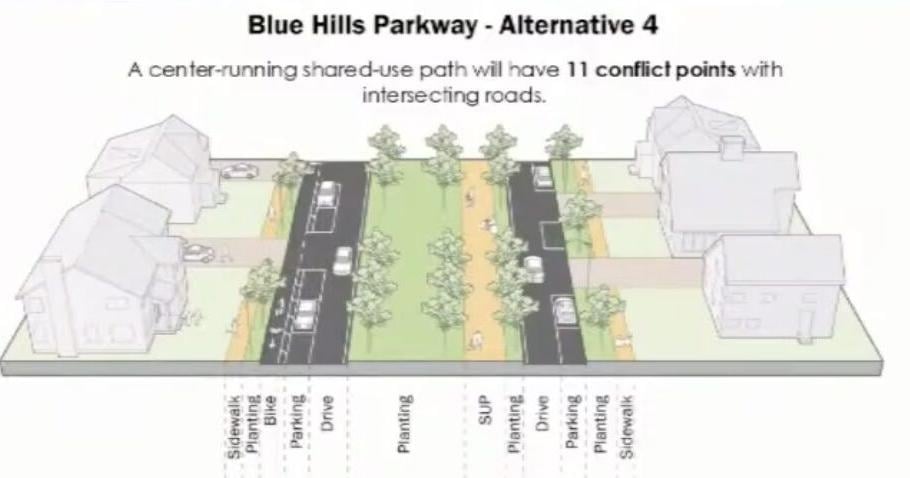
Blue Hills Parkway redesign plan moves another step
Blue Hills Parkway redesign is in progress.
Economic feasibility study? What are we doing hereBlue Hills Parkway redesign plan moves another step
Blue Hills Parkway redesign is in progress.www.miltontimes.com
It's not what you're missing, it's what I'm missing, which is the point of an economic feasibility studyIs there something I am missing here?

Charlie_mta
Senior Member
- Joined
- Jul 15, 2006
- Messages
- 5,150
- Reaction score
- 7,781
If the project applies for Federal funds, then a benefit/cost ratio needs to be calculated. But aside from that, I know of no reason to do an economic feasibility study for this type of project. Economic feasibility is not a purpose and need for the project; it's irrelevant. Sure, you always minimize costs in any way you can that still supports the goals of the project, but other than that.....It's not what you're missing, it's what I'm missing, which is the point of an economic feasibility study
Scott
Senior Member
- Joined
- May 25, 2006
- Messages
- 1,375
- Reaction score
- 941
"Concerning next steps, the project team will work to dig deeper into one design to focus on in the feasibility study. That study will be presented to DCR, which owns the roadway and would be responsible for implementation. DCR would also be responsible for securing funding for the work, which may push the timeline for construction given unreliable federal funding and tight state and local budgets."
Charlie_mta
Senior Member
- Joined
- Jul 15, 2006
- Messages
- 5,150
- Reaction score
- 7,781
So they haven't applied for funding yet, so a B/C ratio type of analysis needs to be done. I've reviewed these for projects before, and they're pretty basic, just assigning monetary values to the various benefits provided by the project, plus adding up the costs.
Longfellow
Active Member
- Joined
- Dec 12, 2023
- Messages
- 432
- Reaction score
- 1,033
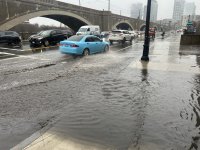
This has been annoying me forever, the bike lane redesign by the museum of science that extended the curb to add elevated bike lanes (which took them years to do for some reason) was not designed with drainage in mind at all… this is the worst I’ve seen it today but there’s several locations along the Charles River Dam Rd that do this when it rains at all. Hiring engineers is hard because you never know when you get the B team or the A team even if it’s the same firm!
Attachments
bigpicture7
Senior Member
- Joined
- May 5, 2016
- Messages
- 4,068
- Reaction score
- 10,551
Agree that's a horrible spot for drainage, and that the bike lane redesign really whiffed on that (created/worsened the situation). Unfortunately it is a State road. If it were a Cambridge road, the city is usually quite responsive to reported drainage issues.This has been annoying me forever, the bike lane redesign by the museum of science that extended the curb to add elevated bike lanes (which took them years to do for some reason) was not designed with drainage in mind at all… this is the worst I’ve seen it today but there’s several locations along the Charles River Dam Rd that do this when it rains at all. Hiring engineers is hard because you never know when you get the B team or the A team even if it’s the same firm!
Longfellow
Active Member
- Joined
- Dec 12, 2023
- Messages
- 432
- Reaction score
- 1,033
It’s uphill from this puddleI recall there being a drainage inlet there - is it just not kept up and full of trash and debris?

Newton Finance Committee Approves Over $30,000 in Funding Toward Bike Racks and Parking - The Heights
Newton’s Finance Committee voted unanimously on Monday to pass a motion appropriating $34,626 in Community Preservation Act funding for bike parking at public parks and high schools as part of a city-wide bike parking initiative.
 bcheights.com
A bunch more recent articles about this:Wu backed off bike lanes last year. Now what? - The Boston Globe
It would be unfortunate if the mayor allows rancor over speed humps and bike lanes to block the kind of safety upgrades that are still needed across the city.
Delayed projects, low morale: Boston’s streets department is stalling under Wu, long a transit champion
Advocates and city staff say the majority of Boston’s transit, street safety projects have stalled over past year
Delayed projects, low morale: Boston’s streets department is stalling under Wu, long a transit champion - The Boston Globe
Advocates and city staff say the policy change has caused an epic bottleneck, stalling the majority of Boston’s transit and street safety projects for the past year.
 www.bostonglobe.com
Readers on Mayor Wu's Bike Lane Reversal

Readers on Mayor Wu’s bike lane reversal - The Boston Globe
The politics of this aren’t going to get any easier for Wu.
 www.bostonglobe.com
Boston at risk of losing $200 million in funding as street projects stall under Wu, City Council president says

Boston at risk of losing $200 million in funding as street projects stall under Wu, City Council president says - The Boston Globe
Boston City Councilors are calling on Mayor Wu’s administration to provide updates on a series of stalled streets projects.
www.bostonglobe.com
Where is the mayor on street safety?

Where is the mayor on street safety? - The Boston Globe
"Seeing many successful traffic safety projects grind to a halt has directly affected my family," writes one reader.
www.bostonglobe.com
Globe Report Implicates Mayor Michelle Wu In Street Safety, Transit Project Cancellations
The mayor's about-face on street safety initiatives has already cost the City of Boston millions of dollars in lost federal funding.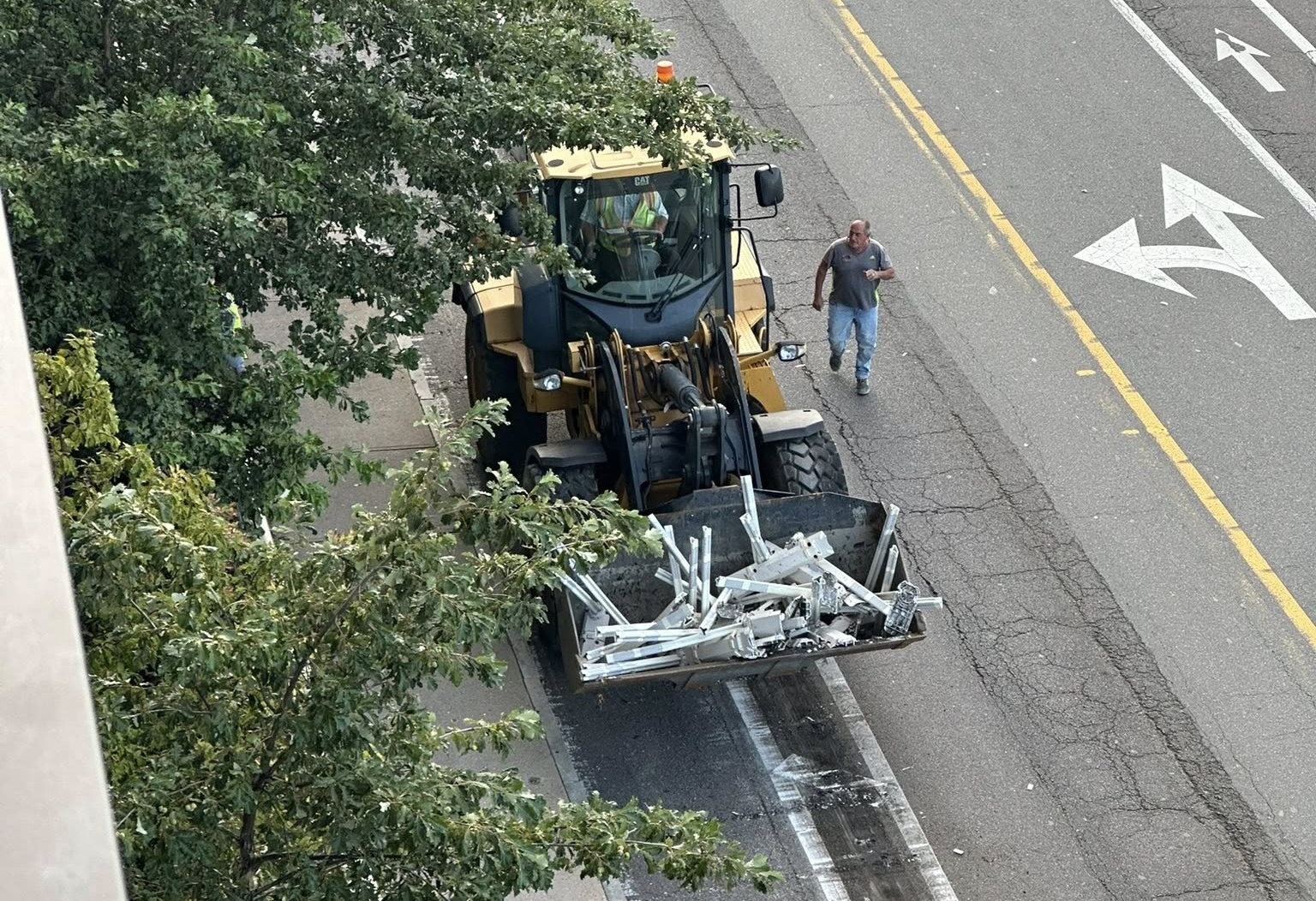
Globe Report Implicates Mayor Michelle Wu In Street Safety, Transit Project Cancellations - Streetsblog Massachusetts
The mayor's about-face on street safety initiatives has already cost the City of Boston millions of dollars in lost federal funding.
 mass.streetsblog.org
Boston City Council Seeks Oversight of Mayor’s Transportation Agenda
A hearing order from City Council President Liz Breadon warns that "continued delays to the advancement of these transportation projects could jeopardize an estimated $200 million in public investment."
Boston City Council Seeks Oversight of Mayor's Transportation Agenda - Streetsblog Massachusetts
A hearing order from City Council President Liz Breadon warns that "continued delays to the advancement of these transportation projects could jeopardize an estimated $200 million in public investment."
mass.streetsblog.org