Other People's Rail: Amtrak, commuter rail, rapid transit news & views outside New England

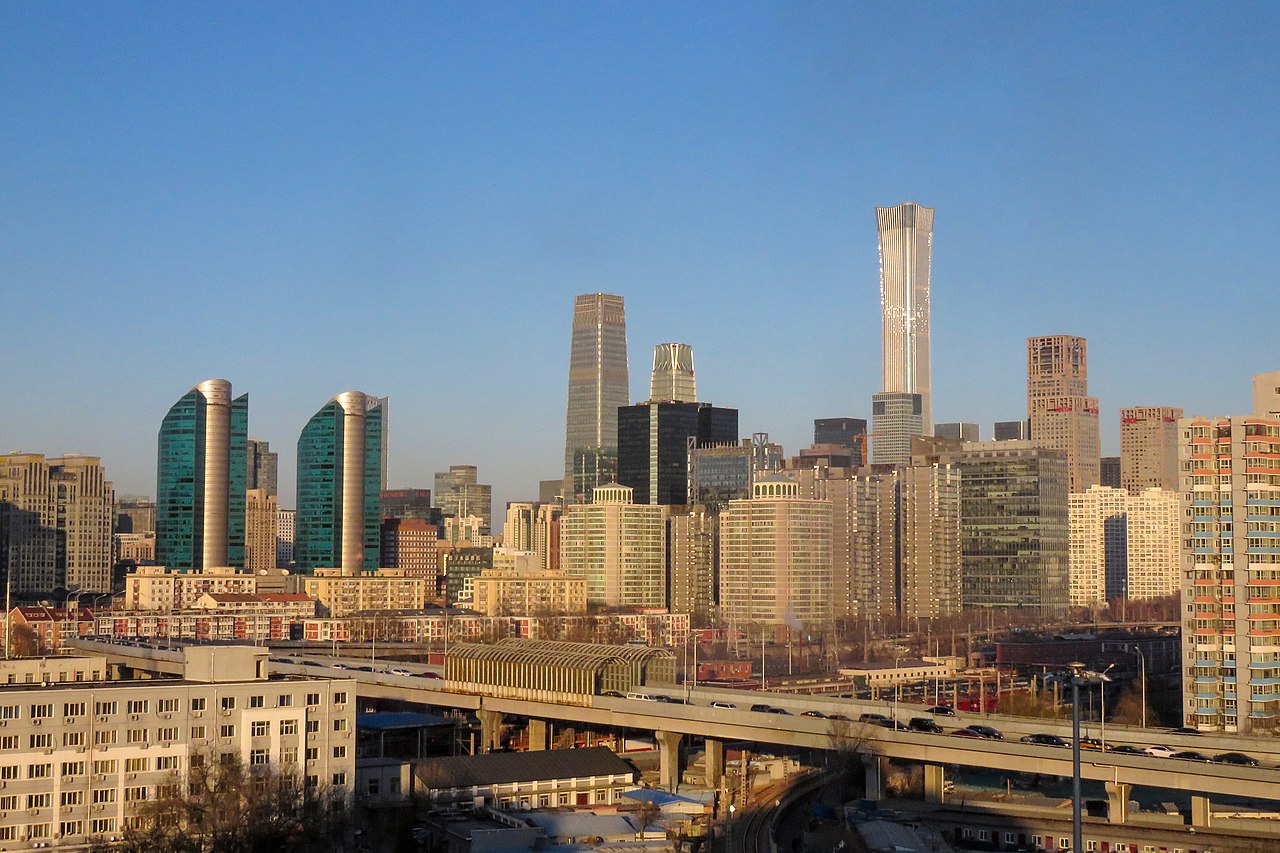
I've seen pictures and news stories about a few giant Chinese rail stations like this one, and some just seem... odd. This one has been open since 2020, but I can't find any pictures of people actually using it. I can't find passenger count numbers. It's such a massive station, but it seems like they only planned to have one subway line go through it. So it's large enough to handle a million people a day, but... one subway line? That isn't even built yet?

Obviously China is building a mind-bogglingly incredible HSR network. So maybe I'm missing something, or I'm reading poorly translated news sources, or something. But this station (and some others like it) look kind of useless. Or at least, they were made giant for the sake of bragging about making a giant building, and not for much practical transit needs.
HSR in China is a complicated story. Some amount of it is either built for political reasons (see the lines to Xinjiang or Tibet) or just built for the sake of building something and pumping GDP up. Obviously there is a debate about whether transit and HSR should be profitable but there is a line somewhere and routes that are unable to cover the interest on their construction costs or even just electricity are probably on the wrong side of that line.
 
I've seen pictures and news stories about a few giant Chinese rail stations like this one, and some just seem... odd. This one has been open since 2020, but I can't find any pictures of people actually using it. I can't find passenger count numbers. It's such a massive station, but it seems like they only planned to have one subway line go through it. So it's large enough to handle a million people a day, but... one subway line? That isn't even built yet?

Obviously China is building a mind-bogglingly incredible HSR network. So maybe I'm missing something, or I'm reading poorly translated news sources, or something. But this station (and some others like it) look kind of useless. Or at least, they were made giant for the sake of bragging about making a giant building, and not for much practical transit needs.
As I mentioned that station is in Xiong’ an which is a completely new from the ground up built from scratch city. Its still a massive construction site. Right now the station is really far away from the finished part of the city, basically out in the middle of nowhere because only a small part of the city is completed. Eventually the part around the station is going to look like those pictures. Not many people have moved in yet so theres not much demand for such a massive station right now.

The purpose of the city is to take pressure off of Beijing, all of the govt offices and non essential services of Beijing are being moved to Xiong’ an to free up space in beijing. Also there is a megalopolis being developed called jing-jin-ji which is beijing, tianjing, and hebei which are all slowly merging together into one megaregion and this falls within that area, its 100km south beijing.

One thing I havent liked from the start is they havent built any subway lines and are instead focusing on the “future” transit modes like autonomous cars and buses. I think this is a mistake esp for a city which is planned to hold 5 million people. Eventually I bet they will change course and build subway lines. For now its a massive construction site which has gone up blazingly fast. This is one of Xi Jinpings personal pet projects the way Shenzhen was for Deng Xiaoping, so the whole power of the state is being wielded here. The difference is Shenzhen was a free market capitalist experiment and this city is a socialist experiment where its being entirely built by the state to hold state functions.


Last edited:
HSR in China is a complicated story. Some amount of it is either built for political reasons (see the lines to Xinjiang or Tibet) or just built for the sake of building something and pumping GDP up. Obviously there is a debate about whether transit and HSR should be profitable but there is a line somewhere and routes that are unable to cover the interest on their construction costs or even just electricity are probably on the wrong side of that line.
Their construction costs are also pretty high relative to other countries in spite of dirt-cheap labor, in part because the blank-check nature of the authoritarian gov't spending doesn't lend itself to good oversight (i.e. "Why bother minding costs when the government is going to print enough money to get this done any which way?"). It's a popular myth that they're building good things cheap when the rest of the world sees them underbidding for competitive foreign contracts (which the government is also subsidizing), but they're really kind of sloppy at project management in-practice. Alon Levy has written a lot about how the People's Republic (and, similarly, other authoritarian governments) don't do costs very well at all.

Along with many other economic indicators that this "manifest destiny" spending spree of theirs isn't sustainable.
 
Honestly, we just can't compare to really anywhere in East Asia, at all. They build new transit lines, stations, bridges, transmission infrastructure, housing developments for hundreds or thousands of people, as a matter of course. I swear to god, if people in California saw the scale of housing development that occurs in e.g., South Korea, they'd just start convulsing and never stop.
Just as a reminder, it typically takes a near-society-ending or full-society-ending type of disruption to cause this. It's absolutely true, and absolutely unhelpful to compare to other countries - as comparision is often the theif of joy.
 
Just as a reminder, it typically takes a near-society-ending or full-society-ending type of disruption to cause this. It's absolutely true, and absolutely unhelpful to compare to other countries - as comparision is often the theif of joy.
Well, this is some bs nonsense if ever I did hear.

Yes, it’s true that all over Europe and Asia, they had hugely disruptive and destructive events in the last century of the sort the US hasn’t.

No, it’s absolutely not true that that means we have nothing to learn from them about how to build things more quickly, safely, efficiently, cheaply, equitably. Besides, have you seen the rapid devastation we inflicted on most of our major cities to plow highways through their centers? And what American, these days, doesn’t think we NEED some kind of society-wide disruption??

I love that your coda is basically, “better things aren’t possible”. Wonderful contribution.
 
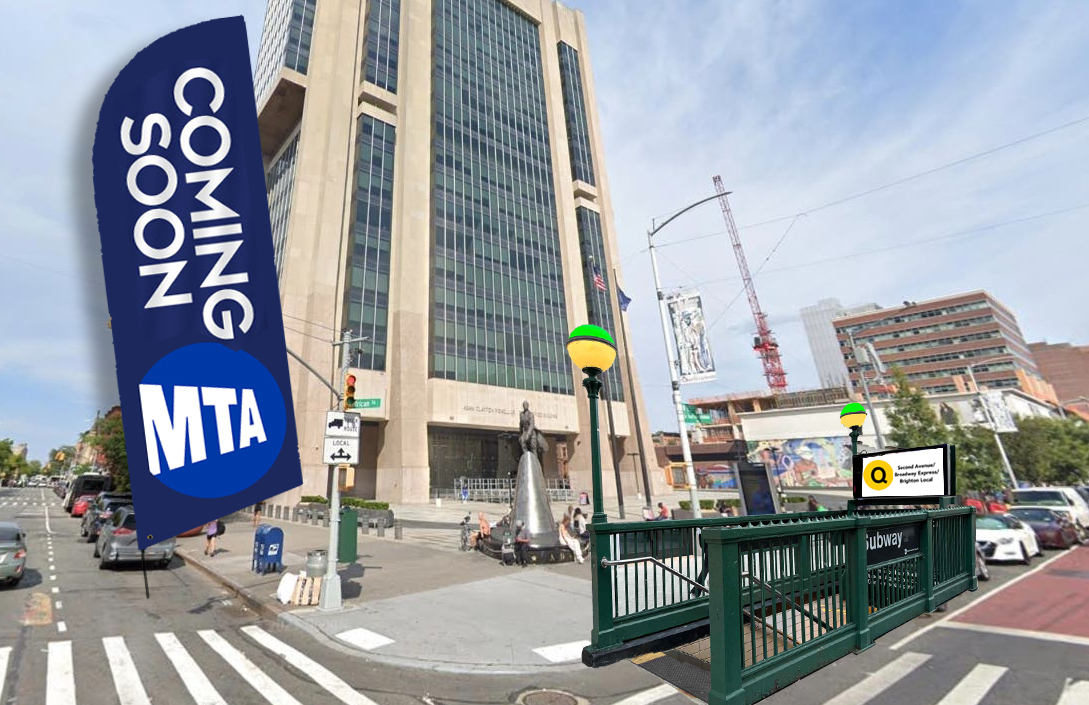
Gov. Hochul, Sen. Chuck Schumer, and Rep. Adriano Espaillat joined MTA bigs in East Harlem Monday morning to break ground on what will be the launch site for a pair of tunnel boring machines that should ultimately extend the long-promised Second Avenue subway line.
“Nearly a century after false starts and broken promises, today we finally break ground on a dream that’s 100 years in the making,” Hochul said, standing on a temporary plywood dais in a patch of dirt at the corner of E. 120th St. and Second Avenue.
To her left, cordoned off with traffic cones and yellow chains, sat a shallow pit — the start of a shaft that will be used to launch a pair of specialized digging machines when they arrive from Germany. Officials say that will happen early next year.
The work is the latest piece of progress on what is officially known as Second Avenue Subway Phase 2. The plan will extend the current Second Avenue Line, made up of the three northernmost stops on the Q train, with three additional stops up the East Side and into East Harlem, where it will connect to the current 125th St. station on the Lexington Line.
[...]
Once Phase 2 is completed — it is scheduled to go into service in 2032 — Hochul and MTA leadership plans to keep the massive tunneling machines in the ground to continue digging an additional phase that would bring the subway across Manhattan under 125th Street.
 
Good news to see the next phase progressing, but I think phase 3 is the only true transformational element of this project. Hopefully that actually happens.
The first two phases combined will be transformational for Harlem and the Upper East Side, but I agree that Phase 3 is by far the most important part of the project. The 125th St Crosstown Subway will also be transformational if it gets built.

There was actually a recent update on the 125th St Crosstown Subway project:
The budget passed last week by Gov. Hochul and state lawmakers contains one-off language that transit officials hope will save the MTA money and speed up the extension of the Second Avenue subway west across 125th Street.
The legislation allows the MTA to conduct the $7.7-billion project’s state-required environmental review in segments — first for just the crosstown tunnel, then for the tracks and stations — rather than one single review for the entire project.
The practice, known as segmenting, will let the MTA keep the tunnel boring machines currently digging out the Second Avenue subway up to Malcolm X Boulevard and 125th Street to then dig the crosstown extension west to Broadway, known as the Q West extension.
The MTA also got $25 million to advance the early design work and engineering on the tunnel while the environmental review is ongoing, all part of what the governor said is a push to keep momentum on the project going at full speed.
“Expanding the Second Avenue Subway even further across 125th Street is an extraordinary opportunity, and I am not going to waste any time advancing this project,” said Gov. Hochul. “By securing funding to design the tunnel and accelerating environmental review, we have set the MTA up to deliver this project as soon as possible and save hundreds of millions of dollars in potential project costs.”
Allowing the MTA to do its crosstown tunneling work regardless of the status of the rest of the project is a move that the consultants at AECOM said should save money. An MTA official recently pinned the potential cost savings at $175 million or more.
 
Last edited:
No, it’s absolutely not true that that means we have nothing to learn from them about how to build things more quickly, safely, efficiently, cheaply, equitably.
They had to reorient their entire governance structures to provide the basic infrastructure for working society for untold masses of hungry, angry, and suffering people. In the contemporary era, the US has only been adding to the number of the mass of hungry, angry, and suffering people - both under Biden and Trump.

Nothing to learn - no. Urbanists learning the wrong thing every time - yes!
 
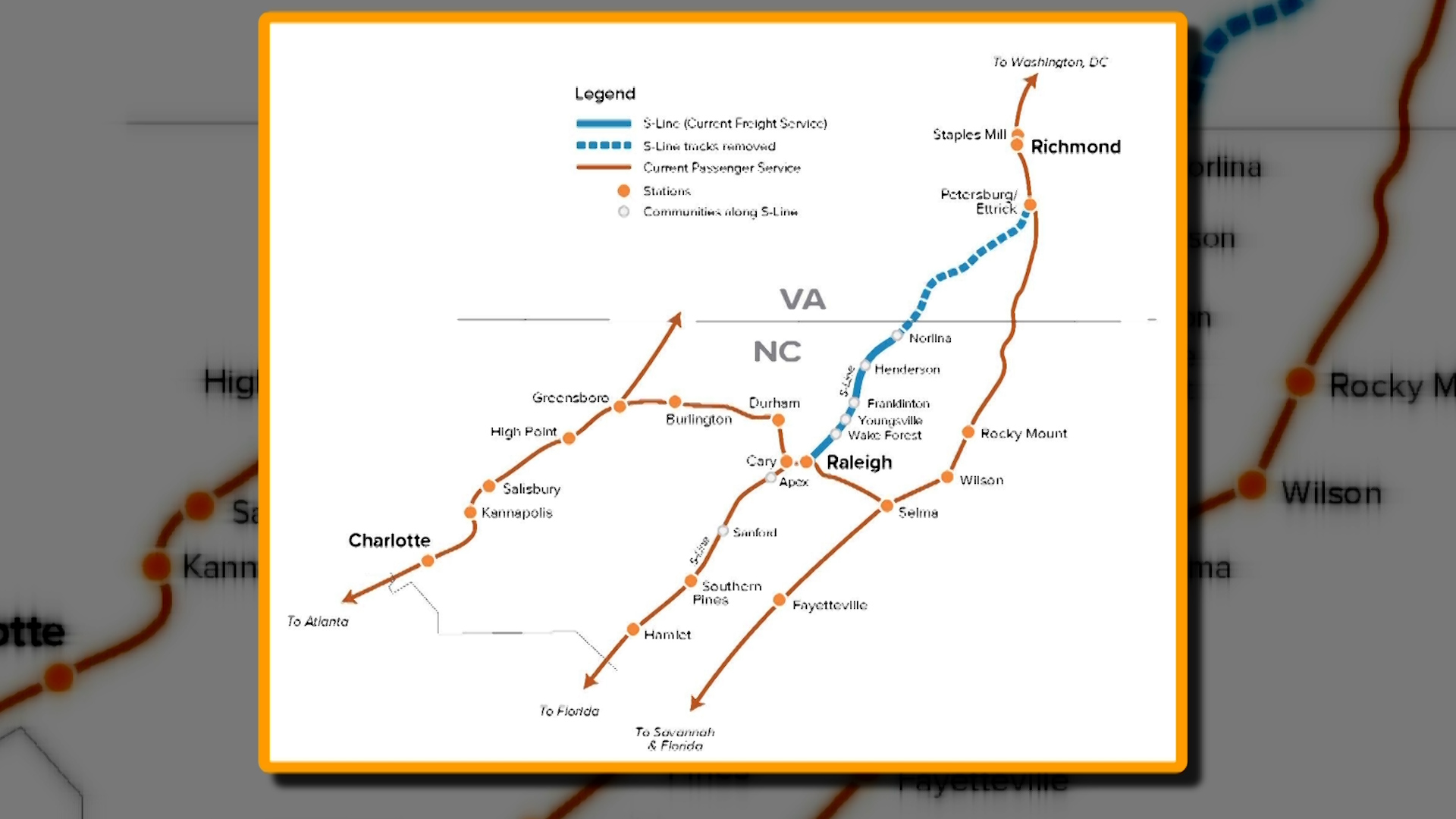
Crews are already building the first major phase of the S-Line on Durant Road in Raleigh. The "R2R grade separation project" will separate rail and roadway traffic, easing congestion for thousands of daily drivers.
[...]
State and federal transportation officials gathered at the Durant Road work site Wednesday to discuss the project. Drew Feeley, the Deputy Administrator of the Federal Railroad Administration, said a lot of progress has been made since the FRA's last visit to the work site in February.
The FRA previously contributed $57 million to the project. The FRA announced Wednesday it would give another $65 million for the purchase of the S-Line from CSX Transportation.
[...]
Officials said the upgrades will improve safety and set the stage for faster, more reliable passenger rail service between North Carolina and Virginia. Phase 1 of the Durant Road project is anticipated to be complete by October, and the new overpass will open by the end of 2027.
 

NEWS RELEASE: California High-Speed Rail Advances Major Construction Procurement for Merced to Madera Extension

The California High Speed Rail Authority (Authority) Board of Directors approved issuing a Request for Qualifications for the Merced to Madera civil works collaborative design build contract, a key step toward extending the nation’s first high-speed rail system north toward Merced County. The procurement represents a major expansion of active high-speed rail construction.
The Merced to Madera contract covers major civil work along the segment, including grading, structures construction, and roadway improvements. The project represents the next phase of extending California’s high-speed rail system north through the Central Valley, building on the 119 miles of construction already underway. The procurement follows a collaborative design-build process, allowing the Authority and competing teams to work together during project development to refine design, reduce risk and improve cost and schedule certainty before a final contractor is selected.
The solicitation for this procurement will be issued this summer. Two teams will be shortlisted by the end of 2026, with early collaboration beginning shortly thereafter. Major construction on this new segment is anticipated from late 2027 through 2030. The full contract is estimated at approximately $2.4 billion.
 

Two Virginia passenger rail projects receive federal grants

Two passenger rail projects in Virginia have received a total of $50 million federal grant funding, the state’s two senators announced today (Monday, July 6).
[...]
Those grants are:
  • $25 million for the Potomac and Rappahannock Transportation Commission’s L’Enfant Station and Fourth Track Project, which will improve the Virginia Railway Express L’Enfant station and add a fourth track between the L’Enfant and Virginia Interlockings to increase capacity.
  • $25 million for the Virginia Passenger Rail Authority to complete design and construction of the Richmond Layover Facility, which will provide overnight storage and servicing for existing and future passenger rail service. The facility will include three storage tracks, a maintenance platform, a service pit covered by a canopy, upgrades to the existing rail signal system, roadway improvement and a staff parking lot, and site building for staff facilities and equipment storage.
 

Texas DOT renews call for commuter rail between Austin and San Antonio

The Texas Department of Transportation issued a study that suggests adding more passenger rail service between Austin and San Antonio, reports Richard Webner in Express News.
"Yet there is a big barrier to making it happen: The owner of the tracks, Union Pacific, doesn't appear to be interested." Union Pacific did not participate in the study, and a 2024 letter from the company said they were not looking to host more passenger trains.
The study outlines infrastructure improvements which could allow for more passenger trains without impeding freight traffic. The estimated cost of the improvements is anywhere from $810 million to $1.9 billion.
 

Austin resident now, and really think an Amtrak route several times a day duplicating the Eagle but ending in Dallas would be a much better service.

Amtrak’s Austin stop and the presumed CR location, is awkwardly set out from the rest of downtown, and lacks solid transit connections to the main BRT and single light rail terminal. Not convinced that commuter rail in that corridor would have a real market because of that, unless they invest in east-west brt there.

As an intercity spot though it has more value, day trippers/tourists/college students wouldn’t mind a 2nd seat ride as much from the station weather that’s shuttle bus, “brt”, or an uber
 

Back
Top