
You are using an out of date browser. It may not display this or other websites correctly.
You should upgrade or use an alternative browser.
You should upgrade or use an alternative browser.
"Dirty Old Boston"
- Thread starter theSil
- Start date
Look at all that surface parking in the bottom and middle right quadrant!
Boston has come a long way towards urbanization in the past 40 years (and still has a ways to go).
RandomWalk
Senior Member
- Joined
- Feb 2, 2014
- Messages
- 3,980
- Reaction score
- 7,563
Intresting. I think that’s the first shot I have seen of the Government Center garage under construction.
Also, I hate what the artery and the urban renewal did to the city.
Also, I hate what the artery and the urban renewal did to the city.
RandomWalk
Senior Member
- Joined
- Feb 2, 2014
- Messages
- 3,980
- Reaction score
- 7,563
Prior to Flynn’s folly (aka the office on top of the GC garage) what did the top of the garage look like? Was it the bare concrete beams seen in that photo?

Charlie_mta
Senior Member
- Joined
- Jul 15, 2006
- Messages
- 5,288
- Reaction score
- 8,077
Looks worse than the bombed-out Dresden Germany after WW II. I've often wondered over the years if this scorched-earth wholesale demolition of the Scollay/Haymarket Square and West End districts of Boston in the name of urban renewal wasn't actually inspired, on a subconscious level, by the cities in Europe that were partly wiped out in WW II. You know, let's wipe the slate clean, like the European cities were forced to do, and make a headlong leap into a bright dazzling future. Also, the personal trauma of WW II, which many of the US and local leaders had lived through, probably prompted them to want to erase a painful past and move on to Tomorrowland. Unfortunately, that all translated into destroying the history of large sectors of the city core and replacing them with a car-centric landscape of expressways, wide sweeping highway-like surface streets, empty plazas, and anonymous super blocks. At least burying the Central Artery with the Big Dig went a long way to at least creating a foundation to re-knit the city.
Yes, and many of the properties came relatively cheap, which means they were largely used by people not highly valued in the scheme of things. OTOH, real estate values in neighborhoods that we'd assume were prestigrious were not all that high during the Depression: my aunt worked as a WAVE nurse head and lively inexpensively in a multi-room flat in a former single family townhouse on a lot on Commonwealth & Clarendon that is now a tot lot.Looks worse than the bombed-out Dresden Germany after WW II. I've often wondered over the years if this scorched-earth wholesale demolition of the Scollay/Haymarket Square and West End districts of Boston in the name of urban renewal wasn't actually inspired, on a subconscious level, by the cities in Europe that were partly wiped out in WW II. You know, let's wipe the slate clean, like the European cities were forced to do, and make a headlong leap into a bright dazzling future. Also, the personal trauma of WW II, which many of the US and local leaders had lived through, probably prompted them to want to erase a painful past and move on to Tomorrowland. Unfortunately, that all translated into destroying the history of large sectors of the city core and replacing them with a car-centric landscape of expressways, wide sweeping highway-like surface streets, empty plazas, and anonymous super blocks. At least burying the Central Artery with the Big Dig went a long way to at least creating a foundation to re-knit the city.
Charlie_mta
Senior Member
- Joined
- Jul 15, 2006
- Messages
- 5,288
- Reaction score
- 8,077
This is from 1974. As the Hancock officially opened in 1976, does anybody know when it would have opened if the windows weren't falling out? Also note that floor 58 didn't have the sliding weight yet, so it doesn't have that black strip.
View attachment 75418
www.facebook.com
They used to call this version of the Hancock "The Plywood palace".
RandomWalk
Senior Member
- Joined
- Feb 2, 2014
- Messages
- 3,980
- Reaction score
- 7,563
It made an appearance in the opening credits of Banacek, as I recall.
On August 25, 2002, the O'Neill Tunnel was opened to over 600,000 Bostonians for a tour of the Big Dig. Apparently the tunnel started springing leaks after it was actually opened to vehicle traffic. Did any archboston members attend?
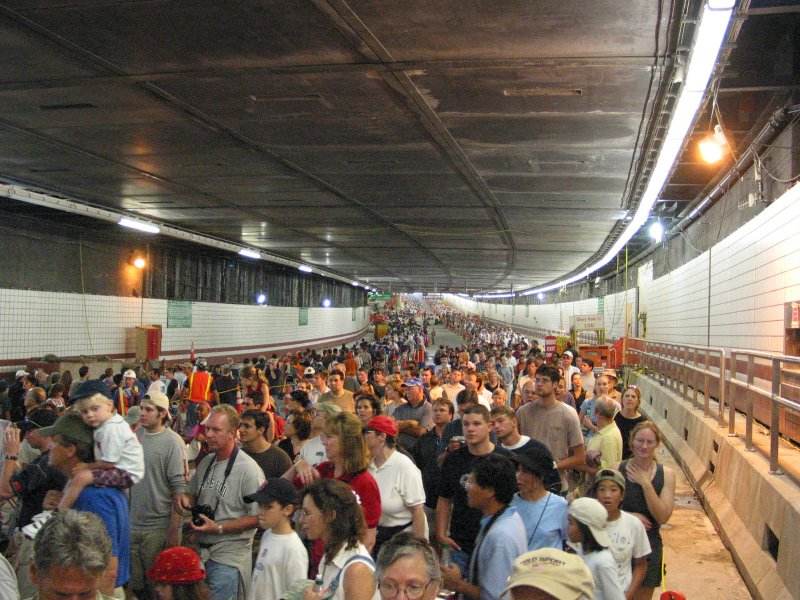
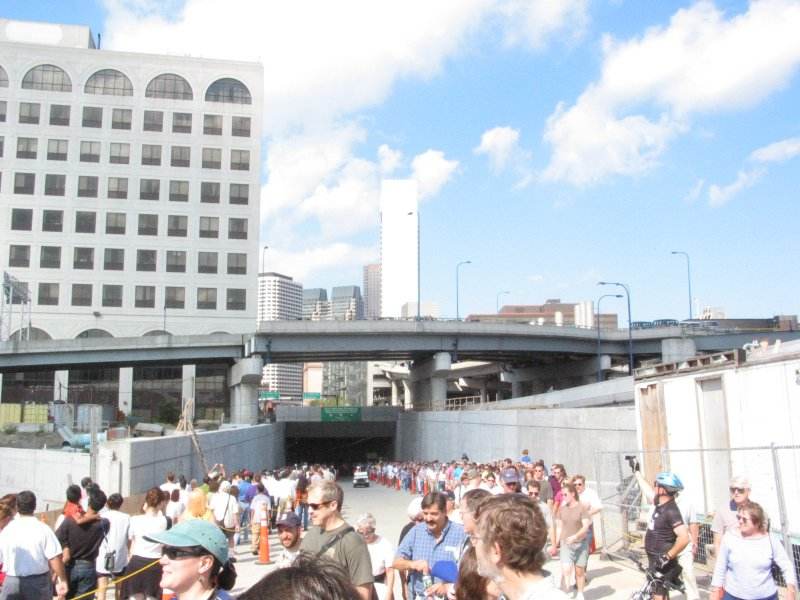
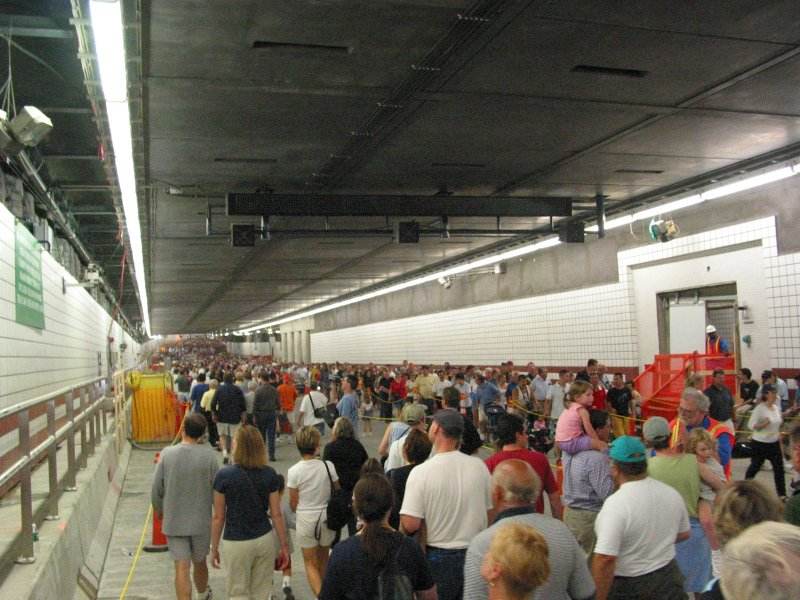
from this blog: https://www.vistadome.com/boston_album02/bigdig.html
from this blog: https://www.vistadome.com/boston_album02/bigdig.html
What a cool site! I especially love the photo of the BFD truck with a Fung Wah Bus and the blue Big Dig fencing in the background.
I remember the tours happening but no one in my family (myself included) was interested in them then. In retrospect it would have been cool, though certainly we all saw enough of the tunnels once they opened to traffic. It's odd to think that we're now 20 years past the last elements of the Big Dig opening up.
I remember the tours happening but no one in my family (myself included) was interested in them then. In retrospect it would have been cool, though certainly we all saw enough of the tunnels once they opened to traffic. It's odd to think that we're now 20 years past the last elements of the Big Dig opening up.
prediction-error
New member
- Joined
- Oct 30, 2025
- Messages
- 5
- Reaction score
- 11
My wife and I were there. We also took a bike tour earlier through the tunnel with the guy who I believe was head of publicity for the project. I must have photos someplace...On August 25, 2002, the O'Neill Tunnel was opened to over 600,000 Bostonians for a tour of the Big Dig. Apparently the tunnel started springing leaks after it was actually opened to vehicle traffic. Did any archboston members attend? View attachment 75506View attachment 75505View attachment 75504
from this blog: https://www.vistadome.com/boston_album02/bigdig.html

Scott
Senior Member
- Joined
- May 25, 2006
- Messages
- 1,415
- Reaction score
- 1,045
On another day there was a tour of the Zakim Bridge that also drew a huge crowd. After two decades of construction people were excited. I'll tell you that walking up and standing on the middle of the Zakim Bridge is a whole different experience than driving over it
RandomWalk
Senior Member
- Joined
- Feb 2, 2014
- Messages
- 3,980
- Reaction score
- 7,563
Today in I’m Too Damn Old.
There’s something funny about the Big Dig shiny and new getting posted in the Dirty Old Boston thread.
There’s something funny about the Big Dig shiny and new getting posted in the Dirty Old Boston thread.
Last edited:
I dont know about old but its certaintly dirty nowadaysToday in Too Damn Old.
There’s something funny about the Big Dig shiny and new getting posted in the Dirty Old Boston thread.
Charlie_mta
Senior Member
- Joined
- Jul 15, 2006
- Messages
- 5,288
- Reaction score
- 8,077
I don't know if any more infrastructure mega projects will be built in this country, on the scale of the Big Dig. It was budgeted at about $15 billion at the time, as I recall, and ended up more. Inflate that massive cost to today's dollars, and that would be impossible to fund. Also, the political system today lacks any dynamic leaders like Tip O'Neil, who was the force behind obtaining the funding for the Big Dig.Today in I’m Too Damn Old.
There’s something funny about the Big Dig shiny and new getting posted in the Dirty Old Boston thread.
RandomWalk
Senior Member
- Joined
- Feb 2, 2014
- Messages
- 3,980
- Reaction score
- 7,563
Short of increasing the size of the US House, I agree with you.