Fall River/New Bedford Commuter Rail (South Coast Rail)


For anyone who’s taken a trip down to New Bedford, how did you make your last-mile connection from the station to downtown? Do you tend to agree with the article’s stance that the Whale’s Tooth site is particularly inconvenient, or do you think it’s overstating the issue? Seems like a (reinstated) bike share program could be part of the solution if there is indeed a problem…as would be signage directing people across the pedestrian bridge to use the existing SRTA routes on Purchase Street (not sure why they haven’t done yet?).
 

For anyone who’s taken a trip down to New Bedford, how did you make your last-mile connection from the station to downtown? Do you tend to agree with the article’s stance that the Whale’s Tooth site is particularly inconvenient, or do you think it’s overstating the issue? Seems like a (reinstated) bike share program could be part of the solution if there is indeed a problem…as would be signage directing people across the pedestrian bridge to use the existing SRTA routes on Purchase Street (not sure why they haven’t done yet?).

I agree with the article's stance. Purely from a distance standpoint, it's not a bad walk. But in terms of the actual experience on the ground, it's not intuitive, nor is it pleasant. The more direct (Acushnet/MacArthur) literally reeks of fish and feels very industrial (not to mention a little nerve wracking if a truck goes by). The pedestrian bridge route is mostly a better pedestrian experience, but it's a bit longer to reach downtown, and longer still to most of the main sights downtown (waterfront, whaling museum, national historic park, etc.). The Route 6 intersection (the "octopus") is notoriously unfriendly to pedestrians and none of the recent revisions have made it much better.

It's not the least walkable half mile in the world, but for an urban connection between a passenger rail station and a historic New England downtown core, it's pretty bad.

Better signage and bikeshares would help. I think an upgrade to the stretch of Macarthur/Acushnet between the station and Pier 3 (Black Whale) including a widened sidewalk or shared bike/pedestrian path, some trees and landscaping, and better lighting would go a long way to improve the connection as well. But the city should be able to put together a group to get consistent shuttle service going. Between SRTA, the National Park Service, the Seastreak and Cuttyhunk ferries, downtown business organizations, local hotels (LaFrance hospitality operates one, bought a second, and has proposed building a third), etc., there should be a way to fund something straightforward between the station and State Pier.

 
I wonder if the "proposed" State Pier station would've been affected by the current situation on the pier? Probably! Also, there was/is a clearance issue with the RT6 bridge (Even though the track appears to be undercut years ago).
 
I agree with the article's stance. Purely from a distance standpoint, it's not a bad walk. But in terms of the actual experience on the ground, it's not intuitive, nor is it pleasant. The more direct (Acushnet/MacArthur) literally reeks of fish and feels very industrial (not to mention a little nerve wracking if a truck goes by). The pedestrian bridge route is mostly a better pedestrian experience, but it's a bit longer to reach downtown, and longer still to most of the main sights downtown (waterfront, whaling museum, national historic park, etc.). The Route 6 intersection (the "octopus") is notoriously unfriendly to pedestrians and none of the recent revisions have made it much better.

It's not the least walkable half mile in the world, but for an urban connection between a passenger rail station and a historic New England downtown core, it's pretty bad.

Better signage and bikeshares would help. I think an upgrade to the stretch of Macarthur/Acushnet between the station and Pier 3 (Black Whale) including a widened sidewalk or shared bike/pedestrian path, some trees and landscaping, and better lighting would go a long way to improve the connection as well. But the city should be able to put together a group to get consistent shuttle service going. Between SRTA, the National Park Service, the Seastreak and Cuttyhunk ferries, downtown business organizations, local hotels (LaFrance hospitality operates one, bought a second, and has proposed building a third), etc., there should be a way to fund something straightforward between the station and State Pier.

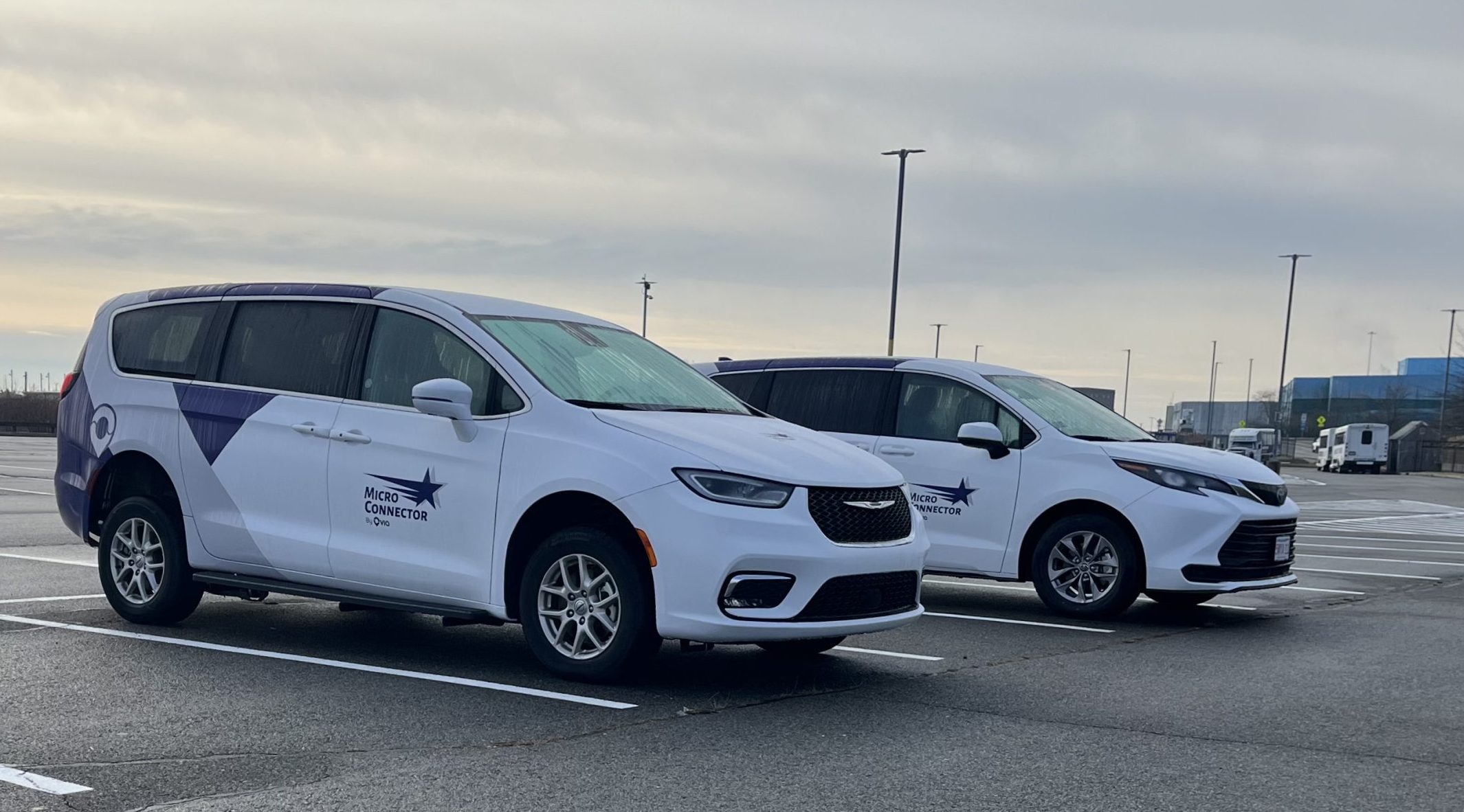
Pretty much exactly my thoughts. If I were to take SCR to New Bedford again, I'd be tempted just to call a Lyft if I was headed downtown.
 

Is South Coast Rail working? Four area mayors banking on connection

State Sen. Mark Montigny noted that the hour-and-40-minute one-way trip is “a long ride, and we need to do everything we can to shorten that ride.” Eng said that while that’s longer than driving if there’s no traffic, but “it’s very uncommon that there’s no traffic.”
Eng said 40 miles of the route are single-tracked and the MBTA is considering double-tracking “significant portions” of that. The MBTA is also considering having “express service” end-to-end, and using battery-electric locomotives that accelerate faster than the diesel engines.
New Bedford Mayor Jon Mitchell and Whaling Museum President Amanda McMullen both noted that their city has seen a definite increase in tourism from South Coast Rail, with 43% increase in visitors from Boston ZIP codes. And rail access gives people “one more reason to live in New Bedford,” Mitchell said.
The down side? “The traditional commute — five days a week, 50 weeks a year over the course of the career — is not something that people are going to do from New Bedford on the current line,” Mitchell said, noting the lengthy ride as it stands. “Not too many in their right frame of mind would do that.”
 

Jury finds MBTA did not underpay for Weaver's Cove — and is owed money

A jury has found that the MBTA did not shortchange a landowner for property it took by eminent domain to build a South Coast Rail layover station — and in fact, the MBTA is due some money back.
In February 2020, the MBTA used eminent domain to take about 18 acres of property belonging to Weaver’s Cove LLC along North Main Street to build the Weaver’s Cove Layover station as part of its commuter rail project.
The MBTA at the time made what’s known as a pro tanto payment to Weaver’s Cove of $2,288,950 for the land. A payment "pro tanto" means the amount was temporarily settled but could change if disputed.
Weaver’s Cove LLC sued two years later, claiming the MBTA did not pay fair market value for the land it took along the Taunton River waterfront, and alleging the property was worth $8.2 million.
After a weeklong trial this month, and after hearing from multiple expert witnesses in the field of real estate appraisal, a jury determined the land’s fair market value at the time of the taking was only $1.65 million — almost $639,000 less than what the MBTA initially paid.
According to state law governing eminent domain, Weaver’s Cove is required to pay the difference to the MBTA, plus interest, and its court costs. That total amount has not yet been determined.
 
For folks who don't have access to today's Globe edition or bostonglobe.com, here are some details from the editorial. Some fair use quotes:

"One year after launching, the worst-case fears have proven misplaced. The train is running smoothly and attracting a significant number of riders...

"There is an opportunity, then, for the South Coast line to spur economic and population growth in the region. But for that to happen, the MBTA needs to continue making improvements to the service. And Fall River and New Bedford can do more to market themselves to potential visitors and new residents."

The editorial then goes on to note the Fall River/New Bedford (formerly Middleborough/ Lakeville) line is now the "fourth-most popular" MBTA commuter rail route of the 13 lines. It notes in detail how the region can help promote the service. It also notes the MBTA could provide fare incentives and needs to improve wi-fi service on it trains.

The second to last paragraph advocates South Coast Rail Phase 2: "...As a political compromise, the state has opted for a slower route through Brockton and Bridgewater..., but said it would eventually switch the trains to the faster route through the Hockomock Swamp in Easton..."
 
Phase 1 is a good start (a very expensive one), but Phase 2 is what the South Coast really needs. It's disappointing that there are no plans to build the second phase.

At the very least, double-tracking between Middleborough and Boston needs to be one of the MBTA's top priorities. It would alleviate some of the reliability issues with South Coast Rail and enable more service to Cape Cod.
 
Last edited:

Back
Top