Other People's Rail: Amtrak, commuter rail, rapid transit news & views outside New England

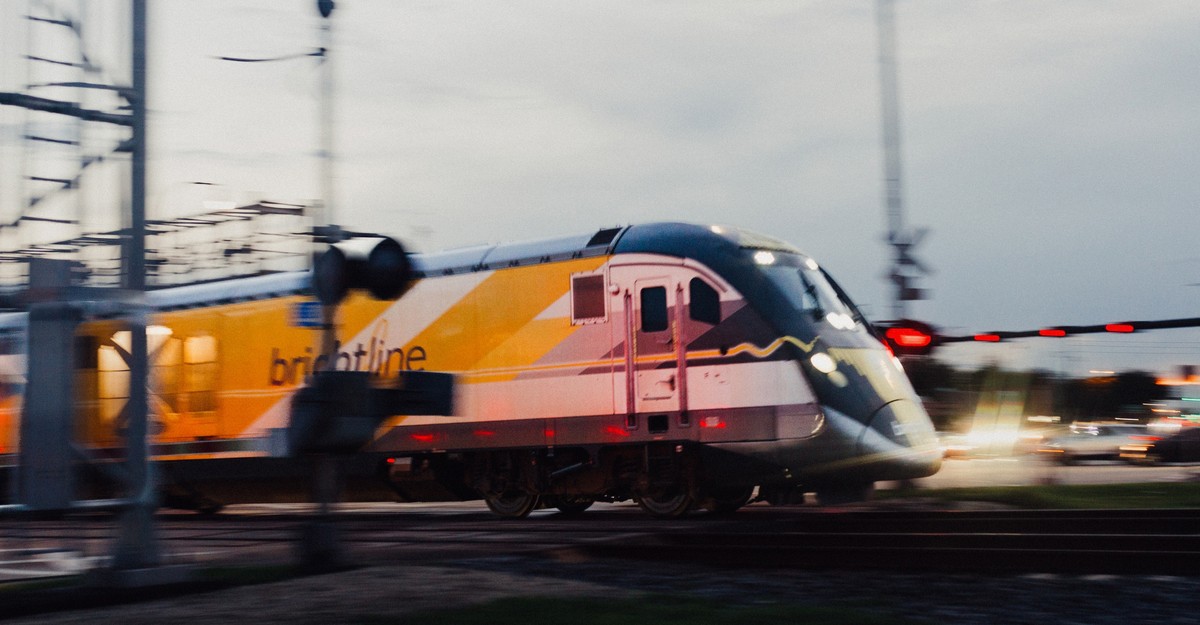
Err, I kinda doubt that this set will be particularly representative of what we should expect in NEC service, if they're bringing this up here for performance benchmarks? The Cascades sets are pure diesels, without the pantograph or aux power cars. What could they accomplish with it, other than a little marketing for "this is whats coming"?

That said... the electrified Airos are meant to go with a diesel Charger to basically create a dual mode set. Whats the possibility of Amtrak matching "plain" non-APV Airo sets (from future options) with the ACS64, which had no future in a pure Airo environment?
They need to get reps at 125 MPH, since that is the design speed for all single-level Amtrak coaches (Amfleets, Metroliners, Horizons, Viewliners, Ventures, Airos) regardless of what their home corridor's speed is. The Midwest and California Ventures also got a lot of testing reps on the NEC before they graduated to their state corridors, because they're >95% identical under-the-hood to the NEC Airos. It helps that the NEC for better part of a decade has almost always been testing something day and night (be it Acela II's, Viewliner II's, Ventures, cab car conversions of retired HHP-8 and P42 locomotives, or Amfleets and Metroliners fresh out of heavy repair), and has built-in schedule slots and assigned crews on a near-daily basis for doing that testing. You'd have to draft slots and assemble a crew board from scratch to do it in any other territory; it's plug-and-play on the NEC by simply feeding the existing slots with an ever-differing cast of new equipment. So every piece of equipment excluding the next-gen bi-level order (which won't fit East Coast clearances) will test on the NEC first as a matter of practicality.

They will certainly test them with the Sprinter electrics to test fleet compatibility...probably test with the old Genesis P42 and P32 diesels, too. Anything that's not outright retired (the Sprinters are sticking around with long-distance NEC trains, and the Genesis will malinger for several more years as a protect and supplemental fleet) could end up pulling an Airo set in revenue service as a necessity (e.g. the NEC Airos preceding the Charger 42E dual-modes in delivery/acceptance, future non-APV options) or in a contingency (e.g. breakdowns, equipment shortages).
 
You won’t be able to ride the first segment of L.A. Metro's D Line extension, which will stretch the subway route through Miracle Mile, until some time early next year, pushing the anticipated opening date back from this fall.
Why the delay? Metro said in a statement that testing “took longer than expected.” An agency spokesperson added that the contractor for the project is adding sidewalks, curbs and gutters before the first segment of the extension opens. “Metro is working as quickly as possible to ensure that when the line opens, it is something we can be proud of,” the countywide transportation agency said in an email.
Is there a more specific date? No. The most recent timeframe for the opening offered by Metro officials is “winter 2026.” But that means some time in January, February or March, not the end of next year.
 
In a last minute 4am vote, Illinois funded CTA/Metra/Pace (RTA) and other statewide transit for $1.5B over the coming years, largely funded by redirecting fuel taxes from roads to transit and other road funds, in addition to increases in sales taxes in the RTA counties. Additionally, the RTA, parent organization to Pace/Metra/CTA, is getting replaced by the Northern Illinois Transit Authority, which will have the power to set universal fares and coordinate schedules between the operating agencies.

The bulk of the funding, $860 million, would come through redirecting sales tax revenue charged on motor fuel purchases to public transportation operations. Another estimated $200 million would come from interest growing in the Road Fund — a state fund that is typically used for road construction projects but can also be used for transportation-related purposes under the state constitution.

The plan calls for raising the existing Regional Transportation Authority sales tax by 0.25 percentage points, to 1% in Lake, McHenry, Kane, DuPage and Will counties and 1.25% in Cook County. That tax hike will generate $478 million.

Drivers of passenger vehicles on northern Illinois’ toll roads will also have to pay 45 cents more per toll as part of a plan to create a new capital program for tollway projects. It will also increase by inflation each year. That will raise up to $1 billion annually

 
In a last minute 4am vote, Illinois funded CTA/Metra/Pace (RTA) and other statewide transit for $1.5B over the coming years, largely funded by redirecting fuel taxes from roads to transit and other road funds, in addition to increases in sales taxes in the RTA counties. Additionally, the RTA, parent organization to Pace/Metra/CTA, is getting replaced by the Northern Illinois Transit Authority, which will have the power to set universal fares and coordinate schedules between the operating agencies.


Illinois has the history of political disfunction and they broke through. Is Little Rhody too disfunctional to create a breakthrough on their transit system?
 
In 1999, President Bill Clinton stood across the street from New York’s Pennsylvania Station with the state’s governor and its senior senator to announce plans for transforming the area into a modern gateway for the nation’s biggest city.
[snip]
More than 25 years, five presidencies and four governors later, the plan to rebuild Penn Station is nowhere near completion.

Lots of wasted opportunity in the intervening years, but as somebody who knows Penn Station from both eras, I can say that it is significantly better now than it was in 1999. To be clear, it still sucks, but not to the same extent.
 
[snip]


Lots of wasted opportunity in the intervening years, but as somebody who knows Penn Station from both eras, I can say that it is significantly better now than it was in 1999. To be clear, it still sucks, but not to the same extent.
Also, IIRC, a big part of the track expansion is tied up with the Gateway Tunnel project (and its many starts, stops, recasts, etc.) (as well as other Manhattan real estate boondoggles south of the station). The two systems have to come together to make it all work.
 
...by rescinding billions in Gateway grants?:unsure:
Probably just political posturing but we will see. There wasn’t any follow up on that threat.

The idea of dangling the carrot of a grand Trump Station in front of him may be too tempting… like a cat with a shiny object. But at the same time his attention span is limited
 
https://www.nytimes.com/interactive...e_code=1.008.lTw4.7Z1CbLcHJ0VE&smid=url-share

Interesting article on the stagnancy of fixing Penn Station. But the accompanying graphics are even better.

1763125200753.png


Oh wow this picture brought up some traumatic, yet fun, memories. I knew this was track 17. It's my most hated platform (and usually the one my train was scheduled on) when taking the LIRR ~20 years ago. That platform is so damn tight. It's still in my muscle memory where I'd enter/stand if I either wanted to get good seats for our group, get an easy exit for my station, or where I'd go if the train consist would be shorter that day.

I didn't know about the columns being there because of the need to support MSG above. I always knew the columns were annoying but eventually you forget they're there. This article really nailed how pervasive and obstructive they are, woof.
 
Probably just political posturing but we will see. There wasn’t any follow up on that threat.

The idea of dangling the carrot of a grand Trump Station in front of him may be too tempting… like a cat with a shiny object. But at the same time his attention span is limited
I would much rather it remain the shit that it is, than become another gilded palace with that name on it.
 
Last edited:
Gov. Josh Shapiro is sending $220 million to SEPTA as it repairs fire-prone Silverliner IV Regional Rail cars and a damaged overhead power system in the trolley tunnel that together have brought commuting chaos.
With the new capital funds, SEPTA will be able to restore Regional Rail to its normal capacity within a few weeks. Shapiro has directed PennDot to transfer money set aside for emergencies from the Public Transit Trust Fund to SEPTA, his office said.
[...]
Federal regulators on Oct. 1, ordered SEPTA to inspect and repair, as needed, all of its Silverliner IV fleet after five train fires involving the 50-year-old cars.
Delays, cancellations, station skips and overcrowded Regional Rail trains running with fewer than the normal number of cars have been regular challenges for riders during six weeks of inspections and repairs focused on electrical components of the 223 Silverliner IVs.
 

Back
Top