Yesterday, I noticed a bunch of conversation on Reddit (and cannot find the post on r/MBTA anymore) with a post saying that the fare gates at South Station are bagged/wrapped and that the equipment wasn't made for our snow and cold temperatures. Anyone with more information about this?

You are using an out of date browser. It may not display this or other websites correctly.
You should upgrade or use an alternative browser.
You should upgrade or use an alternative browser.
MBTA Fare System (Charlie, AFC 2.0, Zone, Discounts)
- Thread starter Mongo
- Start date
Having seen the same post, it was locked due to reddit being reddit and taking that claim at face value. I believe its since been fact checked that that model of gate is likely rated to -30°C.Yesterday, I noticed a bunch of conversation on Reddit (and cannot find the post on r/MBTA anymore) with a post saying that the fare gates at South Station are bagged/wrapped and that the equipment wasn't made for our snow and cold temperatures. Anyone with more information about this?
Ok - I don't think I saw that when I was there. The original assertion seemed odd to me. But, did you catch a source for the fact check too? Or was that also an assertion by someone claiming some "secret knowledge"?I believe its since been fact checked that that model of gate is likely rated to -30°C.

Koopzilla24
Active Member
- Joined
- Dec 20, 2022
- Messages
- 465
- Reaction score
- 1,393
The Reddit thread itself was closed to comments by Mods because the whole thread is just speculating that they would somehow forget to design for cold. According to that same MOD fact check note, the gates are rated for -22F and the same technology is used in Ottawa. My guess is that they didn't want people to be fumbling with phones out in these uniquely prolonged low temps, and figured they might as well wrap them up to preserve them if they're not gonna be used. This is corroborated by people in that thread saying they've been left open for about a week. It also makes sense since the opening and closing action would keep ice from building up inside the mechanisms but if they're not gonna be doing that...Yesterday, I noticed a bunch of conversation on Reddit (and cannot find the post on r/MBTA anymore) with a post saying that the fare gates at South Station are bagged/wrapped and that the equipment wasn't made for our snow and cold temperatures. Anyone with more information about this?
F-Line to Dudley
Superstar
- Joined
- Nov 2, 2010
- Messages
- 10,110
- Reaction score
- 12,890
Yeah. It's been a shitshow of a rollout for reasons that have little to nothing to do with the technology and everything to do with incompetent queue management meeting extreme weather causing long, backed-up lines in said extreme weather. With Commuter Rail service taking its own body blows this week from lengthy delays and cancellations, they likely didn't want the bad PR to start taking on a life of its own (it was) and shelved it temporarily until they get their bearings on how to better administer the loading at the gates. Seems they didn't factor the whole dwell difference between indoor/North Station and outdoor/South Station while everyone's trying to fumble with their gloves and phones at the same time, and they need to retool their protocols to prevent the gate dwells from backing up as badly as they were.The Reddit thread itself was closed to comments by Mods because the whole thread is just speculating that they would somehow forget to design for cold. According to that same MOD fact check note, the gates are rated for -22F and the same technology is used in Ottawa. My guess is that they didn't want people to be fumbling with phones out in these uniquely prolonged low temps, and figured they might as well wrap them up to preserve them if they're not gonna be used. This is corroborated by people in that thread saying they've been left open for about a week. It also makes sense since the opening and closing action would keep ice from building up inside the mechanisms but if they're not gonna be doing that...
The mod who locked that r/ thread is a T employee of some sort. He used to post here.
Interesting - I wonder if there's a document with that specification (or the T's requirements for the procurement?).According to that same MOD fact check note, the gates are rated for -22F and the same technology is used in Ottawa.
My experience in Ottawa was that their fare gates, while not in a building, are better protected from the cold, snow, and ice than South Station's vaulted passageway.
This seems to be common with European operators.incompetent queue management
I guess this continues the tradition of the French heavily discounting winter much to their chagrin.outdoor/South Station while everyone's trying to fumble with their gloves and phones
Koopzilla24
Active Member
- Joined
- Dec 20, 2022
- Messages
- 465
- Reaction score
- 1,393
That's a great point about how North Station and South Station operate different. At North Station, people pay before they enter the waiting area, where people arrive in a staggered fashion. So when they go to board the train, they have already paid. But for South Station, because they put the gates just before the platform, people have to pay AS they are going to their train, leading to huge bottlenecks. I don't think this arrangement will work.
Not a frequent commuter rail user anymore, so I didn't understand the design differences between North and South stations fare gates until cden pointed them out. WTF. Of course the South Station arrangement will not work. Passengers (quite reasonably) want to wait in a climate controlled waiting area until train time, particularly when the weather is not ideal outside.That's a great point about how North Station and South Station operate different. At North Station, people pay before they enter the waiting area, where people arrive in a staggered fashion. So when they go to board the train, they have already paid. But for South Station, because they put the gates just before the platform, people have to pay AS they are going to their train, leading to huge bottlenecks. I don't think this arrangement will work.
Not a shining moment for the MBTA project management team. I imagine Eng has taken notice, but his arrival is late to the game, and I don't know what options might exist to mitigate this poor planning.

MjolnirMan
Active Member
- Joined
- Jan 18, 2016
- Messages
- 319
- Reaction score
- 709
It would work a little better if the track assignments were much more obviously visible (think, destination signage the same size as the large track numbers signs and visible without obstruction from the entire arched area), happened significantly earlier before scheduled departure or were assigned permanently, trains opened doors starting at the station end of the platform, and boarding did not coincide with an entire train disembarking its passengers on the same platform causing entrance/exit competition for the same bank of gates. The MBTA, unfortunately, is unable to do any of those things. The gates are unreliable in the best of circumstances and the segmentation of the track platforms caused by the redesign exacerbate the conflict issue. I hate this more than anything the MBTA has done during my ridership.That's a great point about how North Station and South Station operate different. At North Station, people pay before they enter the waiting area, where people arrive in a staggered fashion. So when they go to board the train, they have already paid. But for South Station, because they put the gates just before the platform, people have to pay AS they are going to their train, leading to huge bottlenecks. I don't think this arrangement will work.
Y'all haven't experienced an train station like Paddington then - faregates at platform access is pretty common in European and Asian terminals, where they also only announce track assignments immediately prior to boarding. If i were to point fingers, I'd say that not enough gates are operational at any one time, artificially throttling throughput. I think the operational reliability is too low at the moment, but hopefully will come up.
I think you're right in that they haven't worked out the operations sufficiently. They really should have one-way flow and maybe some of the tape-like ribbon barriers for crowd control. My experience of the London terminals is that they're all pretty bad at this and the management is really all quite hard about capturing every last cent. Asian terminals less chaotic - they seem to give you at least 10-15 minutes notice, even if the train isn't there at that time. But, they seem to run more on time than we experience here.
MjolnirMan
Active Member
- Joined
- Jan 18, 2016
- Messages
- 319
- Reaction score
- 709
"It commonly is like this elsewhere" is not a compelling argument to me for "we should make our system more cumbersome than it used to be." If you had to guess, do you think the MBTA will consistently maintain good "operational reliability," or will it be chaotic like this frequently?Y'all haven't experienced an train station like Paddington then - faregates at platform access is pretty common in European and Asian terminals, where they also only announce track assignments immediately prior to boarding.
This. I’ve been surprised at how many gates have been down at any given moment. I think it’s been a major factor in the rough rollout. Though the QR scanners on the gates themselves are inconsistent. I’ve had a few instances where a gate simply wouldn’t read my QR code. When I step over to an adjacent gate, it works nearly instantly. I’ve seen this happen with numerous others and have talked to colleagues who have experienced it. If we’re stuck with QR code scanning for the foreseeable future, it’s got to be more efficient. Hopefully there’s an easy fix.Y'all haven't experienced a train station like Paddington then - faregates at platform access is pretty common in European and Asian terminals, where they also only announce track assignments immediately prior to boarding. If i were to point fingers, I'd say that not enough gates are operational at any one time, artificially throttling throughput. I think the operational reliability is too low at the moment, but hopefully will come up.

The EGE
Senior Member
- Joined
- Jun 29, 2013
- Messages
- 1,920
- Reaction score
- 5,336
That's a big aspect that doesn't seem to be successful (yet): how quickly a crowd of people can go through the gates. On the rapid transit system, the faregates read cards fast and open fast. From my limited experience, the North Station gates seemed much slower.

StreetsblogMASS
New member
- Joined
- May 26, 2023
- Messages
- 73
- Reaction score
- 450
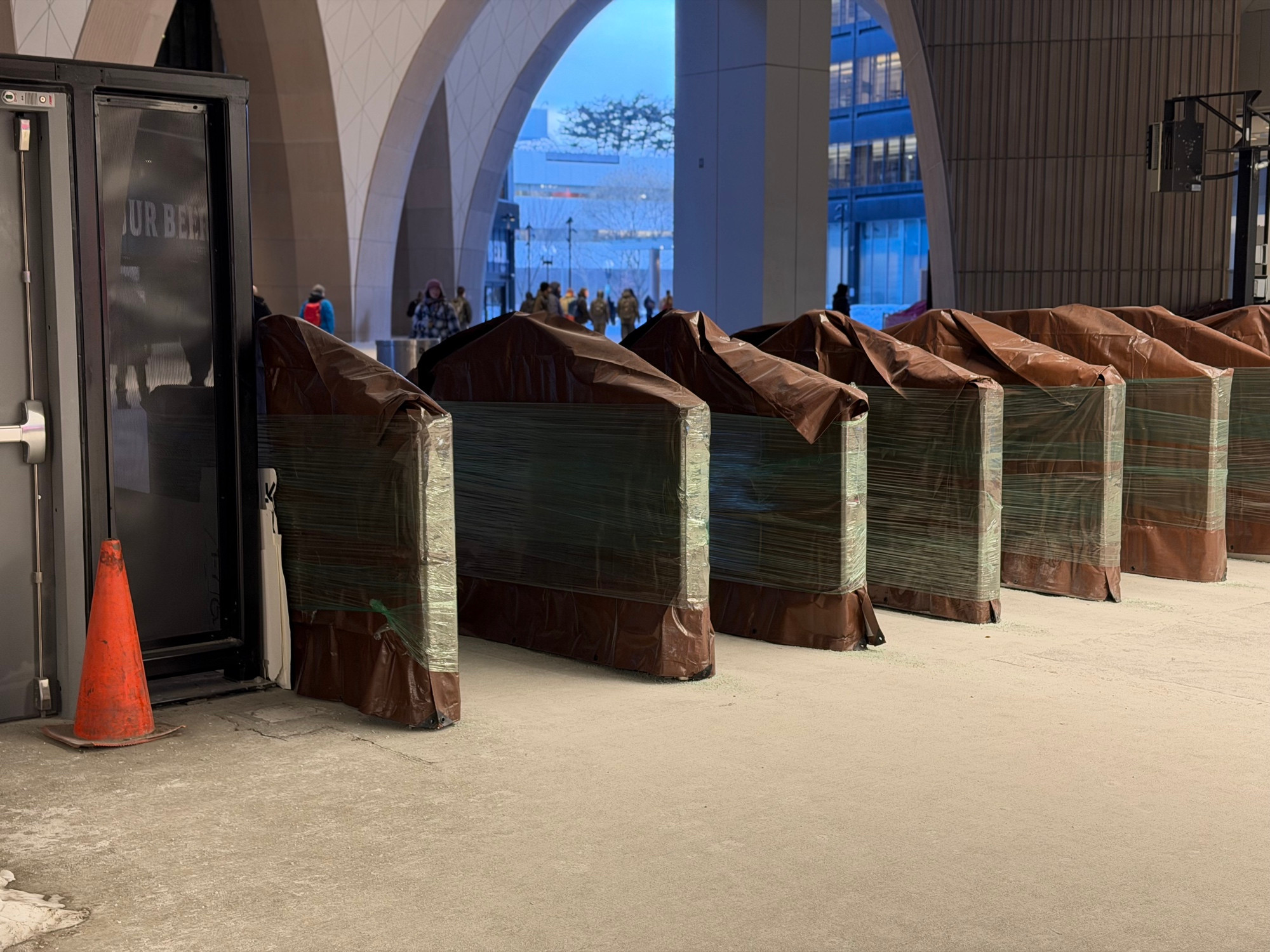
Fares, Frozen: South Station's New Fare Gates Are Already Out of Service - Streetsblog Massachusetts
Snow and cold temperatures have sidelined the new fare gates at South Station out of service barely a month after their installation. Commuters to South Station this week have noticed that the new fare gates have been swaddled in plastic, allowing riders to pass freely in and out of the platform...
 mass.streetsblog.org
Justbuildit
Senior Member
- Joined
- Nov 27, 2022
- Messages
- 1,134
- Reaction score
- 3,984
I would simply re-engineer the brand new multimillion dollar concourse and waiting area to enclose the sides (and that damn gap in the top) to keep the snow from clogging my brand new fare gates.
MjolnirMan
Active Member
- Joined
- Jan 18, 2016
- Messages
- 319
- Reaction score
- 709
Without electrification of the entire southern commuter rail network, all of the MBTA engines run on diesel. While they point the engines towards the far end of the platforms and have industrial ventilation fans under the bus terminal, this would lead to a smelly environment at best and a hazardous one at worst. Having said that, electrification should have been completed years ago as part of a regional rail transformation as commuter habits changed post-COVID, and it doesn't appear any aspect of the redesign was created with possible future enclosing in mind.I would simply re-engineer the brand new multimillion dollar concourse and waiting area to enclose the sides (and that damn gap in the top) to keep the snow from clogging my brand new fare gates.
F-Line to Dudley
Superstar
- Joined
- Nov 2, 2010
- Messages
- 10,110
- Reaction score
- 12,890
Enclosed spaces are a pain-in-the-ass for RR operations. Even in a fully electrified future you want considerations for a diesel rescue loco or diesel service substitution for overhead wire maintenance to be able to access the station. We don't want a situation where complex and draconian operating rules are required like in Grand Central or Penn Station to get even *one* rescue or work-shift diesel into the platform space. That'll be required for NSRL by necessity, but there's no reason to breach that subject beforehand. Surface South Station will always have to be open to the elements.Without electrification of the entire southern commuter rail network, all of the MBTA engines run on diesel. While they point the engines towards the far end of the platforms and have industrial ventilation fans under the bus terminal, this would lead to a smelly environment at best and a hazardous one at worst. Having said that, electrification should have been completed years ago as part of a regional rail transformation as commuter habits changed post-COVID, and it doesn't appear any aspect of the redesign was created with possible future enclosing in mind.
Besides, diesel stuff is going to continue using South Station even if regular electric service comes to all Commuter Rail lines. Cape Flyer will malinger as diesel until we muster up enough daily commuter service to Hyannis to justify electric. A future Newport Flyer will probably always be diesel...and so on.