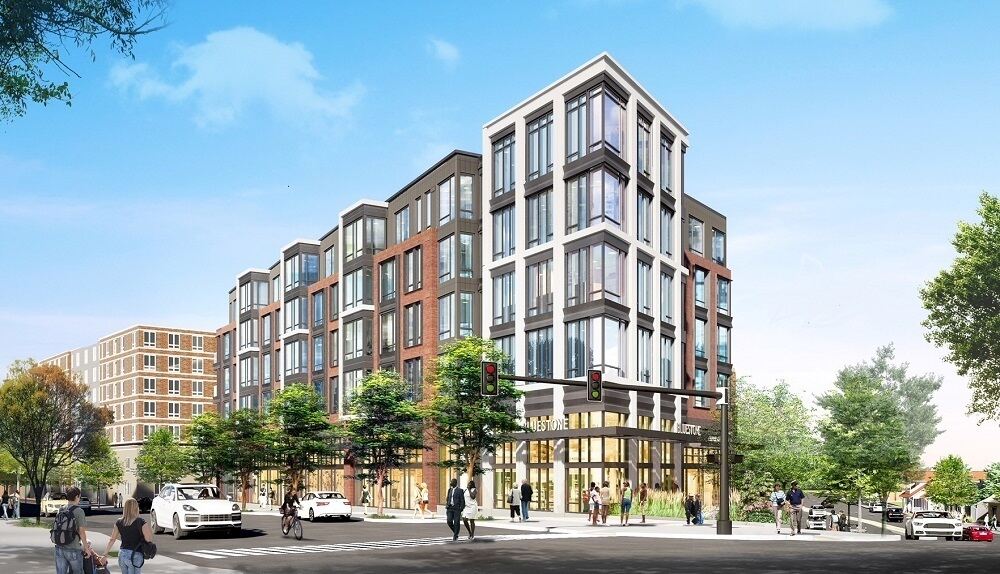
Quincy Infill and Small Developments

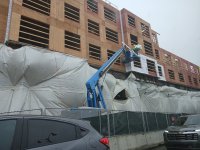
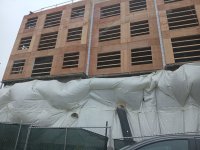
Oh it's come so much farther along since then, I'll try and get some pictures next time I'm swinging by Star Market.

Also, the IHOP they displaced has now reopened across the street (181 Parkingway)
 

Attachments

  • 20260305_151435.jpg
    20260305_151435.jpg
    3.9 MB · Views: 63
  • 20260305_151430.jpg
    20260305_151430.jpg
    3.6 MB · Views: 53
  • 20260305_151435.jpg
    20260305_151435.jpg
    3.9 MB · Views: 64
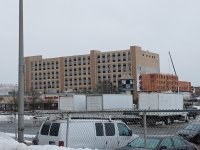
  • 20260305_140526.jpg
    20260305_140526.jpg
    2.8 MB · Views: 64
Would have been better without the pixelated bullcrap. Why make it look worse for no reason? I dont get modern architects.
If the design had gone all monochromatic, people would complain about that too. So there is no winning for architects in general. There is only so much that can be done with residential units and keep costs within a reasonable line.
 
If the design had gone all monochromatic, people would complain about that too. So there is no winning for architects in general. There is only so much that can be done with residential units and keep costs within a reasonable line.
Meh, maybe on a forum but in real life I doubt it. Something like this would disappear and blend into the background noise the day after it was completed. Its not going to win any awards obviously, but a building like this should be trying to blend in to the existing fabric of the city anyways.

3FC0FD72-2680-44E0-9E46-42045E738A9E.jpeg


This though will stick out for the rest of the time it exists due to the fact that it has this wonky zig zag pattern which is uncommon and stands out against the existing built environment. It wont be able to just fade into the background because people will always notice the pixelated pattern on the facade. Ugly buildings or weird textures stand out and are noticeable. Theyre unable to fade into the background and disappear.
90B0BBA6-04F6-461A-AEE2-2CE145E2B27B.png


Just like a doctor the goal of an architect should be to do no harm. They should never make the built environment worse by the addition of a new building. The number one thing an architect should be asking themselves is does this building make the neighborhood around it a better place than before? After all at the end of the day these are places people have to live. Instead though it seems what architects value today is making a building stick out and say look at me and get noticed.

If a building doesnt make the neighborhood better at the very least it should keep it about the same, it should never make it worse. I think in the first example it makes the neighborhood better by filling in a gap and adding more housing without sticking out. The neighborhood stays about the same but gains more housing. The second example though stands out and makes the neighborhood a little bit uglier than it needed to be. Most new buildings are going to be average and thats perfectly fine. Average buildings should be trying to blend in. Trying to stick out and be average is a bad combo. Not every 5 over 1 should be trying to be experimental and stand out, leave that to a few designated parcels where you can spend the money on good materials and a good architect to do it the right way.
 
10 independence ave u/c

“Planned 4-story building to replace an auto-body shop. The project would include 1 ground-floor commercial space with 9 condo units on the upper floors.”


Unfortunately it seems to have changed from this
72453977007-10-ind-rendering.png


To this
10%20indpendence.png


At least it kept the retail space..


Also nice flat iron type lot, would have been nicer in brick tho.
IMG_5387.jpeg
 
I thought that project was dead, glad to hear it's not only still alive but is keeping the mixed use aspect. Walking distance to QA and has a bunch of bus routes at that intersection.


Frequently shared the bus with some of my child's daycare staff when she was of that age. One was even sometimes the bus driver! (The pope should canonize anyone who can do double duty as a public bus driver and then daycare teacher in a single day)

It should be noted, this is a dead-end side street. Who cares if parents park on the street to drop their kid off?
Went to the community meeting for this last night and the answer is "folks that don't actually live on the street". Some good discussion was had on things the actual neighbors brought up like the lighting plan and how it will interface with the abutting parklet, but the majority of the conversation was people living a few blocks over (or farther) concerned about parking. Absolutely disjointed from reality. When the daycare operator discussed how the staff at her centers in Foxborough and Marlborough have a less than 50% drive to work share, one resident immediately went "well this is Quincy we do things differently here!" as if those places are anywhere close to as walkable/transit accessible as even south Quincy. Utterly rejected the idea that there's any sort of relationship between parking provision and vehicle trips or that there was any point to bothering with any sort of TDM because "that just doesn't work".

Unfortunately this collection of folks seemed to push the developer into seeing if he can buy the unbuilt right-of-way for Plain Street in order to add more on-site parking.

EDIT: My letter to Councilor Ryan this morning:

Good Morning Councilor Ryan,

Thank you for organizing the community meeting that was held last night re: the proposed 90 Columbia development. I wanted to follow up on what I felt were earnest and well-intentioned but ultimately misinformed comments regarding parking, vehicle trips, and transportation demand management (TDM).

Motor vehicle trips are not exclusively derived from the use at a given site, and the literature on this subject is robust. The work of Donald Shoup and Henry Grabar are fantastic explanations of this phenomenon in general, but for greatest relevance I would point to a 2015 study looking at the relationship between parking provision and automobile use in medium-sized New England cities which found: "At the city scale, we find that an increase in parking provision from 0.1 to 0.5 parking spaces per resident and employee is associated with an increase in commuter automobile mode share of roughly 30 percentage points. [...] Based on this knowledge, we infer that parking provision in cities is a likely cause of increased driving among residents and employees in those places. Given the costs associated with parking and its apparent effects on automobile use, our findings suggest that policies to restrict and reduce parking capacity in cities are warranted."

I deeply share the concern of increasing motor vehicle trips into the neighborhood, but increasing the amount of parking available will exacerbate that and the associated safety and public health concerns. For that reason, I would encourage you not to support the sale of the Plain Street right-of-way for the sake of increasing parking at the development.

Instead, I would like to suggest a few proven TDM strategies that could be included to help mitigate the number of motor vehicle trips to and from the development:
I'd also like to point to a couple examples of daycare centers in mixed-used developments in areas with similar transit accessibility:

Finally, I want to again express appreciation for hosting the opportunity for members of the community to discuss the project, but also acknowledge that who turned out last night is not representative of the neighborhood. This is a common problem with the format and I do not mean to single out you or the group that showed up, but it should be kept in mind that the neighborhood is much younger, more diverse, and majority renters. The perspectives shared were valuable, but they were one perspective and assumptions made by these groups about the travel behaviors of others should be taken with a firm grain of salt.

Thank you for taking the time to consider my comment and I hope you, the developer, and the community find the resources and suggestions I shared valuable.

Kind Regards,

Kyle Casiglio, AICP

 
Last edited:
I went thu and spent some time in Quincy center recently and the changes there are dramatic. I appreciate the influx of capital but the center has really lost its character. It was necessary, I just wish it was handled with a little more grace and not just slapping 5+1s all over the place
 

QUINCY ‒ Mayor Tom Koch has reached an agreement with the former Eastern Nazarene College's governing board on a "proposed purchase" of the 27-acre campus in the city's Wollaston neighborhood for $21 million, according to the mayor's office.

Koch will ask Quincy City Council to authorize the purchase as early as the May 4 meeting, according to a press release.

[...]

Chris Walker, Koch's chief of staff, said the city would issue a bond to fund the $21 million purchase price as well as additional "contingency costs."

[...]

In the coming weeks and months, the administration will provide the council with the financial and conceptual information it needs for its deliberations, with hopes to secure council approval before the council recesses on June 15, Walker said.

Probably deserves its own thread, but I will be strongly encouraging my councilor to not approve the bond. We have far too much debt to letting Koch continue to play SimCity. Let this sell and be developed by the private sector.


Probably deserves its own thread, but I will be strongly encouraging my councilor to not approve the bond. We have far too much debt to letting Koch continue to play SimCity. Let this sell and be developed by the private sector.
This seems like the Mayor is playing land speculator. What is the goal here? Purchase the property, upzone (barely based on early conversations) and then see piecemeal for a hopeful profit? I completely agree that the land should sell to a private developer OR the city should facilitate a master plan through the current owners to then parcel the property out to developers to build smaller developments so it isn't having to be financed by one big entity.
 
This seems like the Mayor is playing land speculator.
He has a history of doing such, and it almost always results in the city selling the land at a loss to one of three developers. Or a heavily subsidized parking garage ($1 hour) that is still perpetually empty.

What is the goal here?
Great question. We're buying it without that being articulated because the only stated goal is that "the city should be able to control the future of the land to protect the neighborhood"

Absolutely not. There was already a previous private buyer who wanted to build multifamily there but the mayor came down hard and said they would never be granted the variances, and under no circumstances would he allow "high-density development"

I don't think there is any shot of this being parceled up. Koch (not that he's unique in this) likes a big "clean" project all done in one fell swoop.

There's some reasonable use cases for buying the property. In particular making it the Quincy College (one of the very few municipally owned and operated colleges in the US) campus I think makes a lot of sense and might be the one case I'd support. Other ones like a performing arts center, community center /w open space, or senior center I think are all nice-to-haves that we can't afford as the most debt-burdened city in the state. And most certainly buying it just for the sake of ensuring it's not developed into scary "high density" multi-family housing is a comical, short-sighted, waste of money.
 

Back
Top