General MBTA Topics (Multi Modal, Budget, MassDOT)

Would it? The T got more aggressive with these because the public response wasn't what had long been feared it would have been.

Personally, I have long standing terrible memories of the seemingly endless night/weekend shuttles of the braintree branch 2019-2021. It's basically switching from a long term, major impact on a particular group of riders to a shorter and more broadly felt impact while also delivering the project faster and cheaper. Sure, people who don't work in food service now have to suffer too but I think the tradeoffs are well worth it.
I'm not sure I agree with you which is worse. Closing a line or branch all day for a week is more disruptive. It affects far more people. That's far more people who get persuaded that they can't rely on the T and their household needs a car, or a second car, or they'll change jobs, or they'll leave the state.

Regardless which is worse, though, these shouldn't be our only two options. We shouldn't have to pick between regular long-term shutdowns or never-ending late-night shuttles. Long-term shutdowns could be done sparingly. Same with late-night shutdowns. We should be aiming for a state of repair where maintenance can overwhelmingly be handled overnight. Eng was talking about making infrastructure/policy changes to allow for safe single-tracking where possible, which allows more work to get done while maintaining some level of service. There are other options.

Just to be clear, it's not that I think long shutdowns can be totally avoided. I wouldn't even doubt they're warranted now. But they are really disruptive, and I don't want this to be the new normal. If the T is still doing regular long shutdowns like this in five years, that would be really bad. Before then, I don't know when to start getting worried.

And lastly, you say this is cheaper, and that's fair. I'd guess that's a large motivating factor in a lot of these decisions. But also, fundamentally what the T does is spend money to provide transit service. Generally, it totally makes sense in most cases to spend extra on night-only maintenance if the alternative is shutting down a rapid transit line. Obviously the exact numbers matter, but the T should be heavily biased in favor of keeping train lines running.

I think frequent weekend (or longer) closures for maintenance are a fact of life for older transit systems. Even without deferred maintenance (which most government authorities are guilty of, anyway) they are needed.

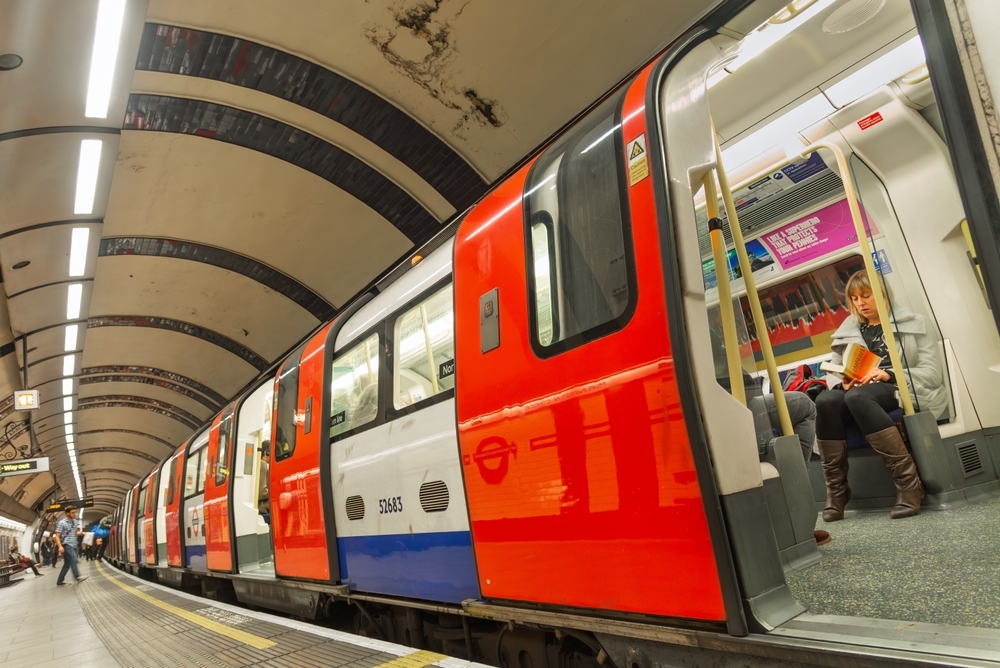
Here are the London and Paris closure schedules for this long weekend there:

That's fair, but also the article says those London shutdowns are for only three days and says that's "major." The B Line here is closed for eight days, and that's now treated as normal.

Also, shutting down sections of a line in London or Paris is (often, not always) less of problem, too. Those cities have really massive and often overlapping train networks. In lots of cases, if one line is down, it means walking slightly further to another station on another line, or adding one transfer to the trip. Their networks have a lot of redundancy. That's not true in Boston. Except for the Green/Orange Lines between North Station and Back Bay, there is basically zero redundancy. If you're in JP, need to get downtown, and the Orange Line is closed, the only option is a slow bus shuttle replacement.
 
Last edited:
Also, shutting down sections of a line in London or Paris is (often, not always) less of problem, too. Those cities have really massive and often overlapping train networks. In lots of cases, if one line is down, it means walking slightly further to another station on another line, or adding one transfer to the trip. Their networks have a lot of redundancy. That's not true in Boston. Except for the Green/Orange Lines between North Station and Back Bay, there is basically zero redundancy. If you're in JP, need to get downtown, and the Orange Line is closed, the only option is a slow bus shuttle replacement.
Eh, only between Government Center/State and Back Bay/Copley. The MBTA only sometimes extends 1 of the 2 branches from Government Center to North Station during OL shutdowns. If the Orange Line is shut down, the T needs to send every single train on the Green Line to North Station, not turning around half of them or a quarter of them at Government Center. If the B branch runs every 11-12 minutes instead of every 9-10, it's worth doubling the capacity between North Station and Government Center when the OL is down.
 
older transit systems
I don't doubt the need for some sustained maintenance, repair, or modernization work. However, shutting down over a holiday weekend or for 3.5 days is a big difference to the weeks long shutdowns that are still going on regularly on the subway in Boston.
 
I don't doubt the need for some sustained maintenance, repair, or modernization work. However, shutting down over a holiday weekend or for 3.5 days is a big difference to the weeks long shutdowns that are still going on regularly on the subway in Boston.
You mean like these closures in London? (I just grabbed the current weekend closure for comparison -- long shutdowns happen.)

"Major 2026 London Underground closures include a four-month partial closure of the Northern line and significant, multi-month shutdowns on the Piccadilly line for repairs. Key disruptions include Barons Court eastbound (until mid-June), westbound (mid-July to end of 2026), and Southgate (exit only until March)"
 
You mean like these closures in London? (I just grabbed the current weekend closure for comparison -- long shutdowns happen.)

"Major 2026 London Underground closures include a four-month partial closure of the Northern line and significant, multi-month shutdowns on the Piccadilly line for repairs. Key disruptions include Barons Court eastbound (until mid-June), westbound (mid-July to end of 2026), and Southgate (exit only until March)"
Just to be clear, those aren't whole lines being shut down for months. The Northern Line will just be closing early (10pm) four nights a week for those months. Similar for the Piccadilly, as far as I can tell. There are a few all-day closures sprinkled in there. Barons Court will be closed for a while, but that's one station, and the next nearest station appears to be ~1/4 miles away. That's really not the same as completely shutting down a long section of rail for a week or more, like we do around here.


(You're right, this is an example of an agency having to do disruptive, long-term work, like the kind @KCasiglio complained about. But when I read your post here, I thought it meant those lines would be largely closed for months. I don't want anyone to misunderstand, like I did.)
 
I’m more curious to see what the closures look like in the back half of this year - I think every major closure this year has been for signal upgrades? With red and orange line (and maybe even GLTPS install) allegedly wrapping up in the next month, I’d imagine the weeklong closures will all but stop. This month is also a lot because they’re trying to do enough work to get them through FIFA with no shutdowns. But we’ll see what August and beyond looks like.
 
Just to be clear, those aren't whole lines being shut down for months. The Northern Line will just be closing early (10pm) four nights a week for those months. Similar for the Piccadilly, as far as I can tell. There are a few all-day closures sprinkled in there. Barons Court will be closed for a while, but that's one station, and the next nearest station appears to be ~1/4 miles away. That's really not the same as completely shutting down a long section of rail for a week or more, like we do around here.


(You're right, this is an example of an agency having to do disruptive, long-term work, like the kind @KCasiglio complained about. But when I read your post here, I thought it meant those lines would be largely closed for months. I don't want anyone to misunderstand, like I did.)
Just to put this in perspective. a partial closure on the Northern Line in London is far more disruptive than a full closure of the B branch on the Green Line. The Northern Line is the Tube's busiest line, with over 300 Million passengers per year. That is not a typo. The Northern Line probabaly caries more pasengers from 10 PM to 4 AM than the B branch does in a week.
 

Outbound platform at Tappan Street and Englewood Avenue is closed until July 10th. Inbound Tappan Street platform closed until June 12. This is hidden in the planned suspension starting tomorrow.
 
Last edited:
The MBTA is going into overtime for the World Cup. For the inaugural June 13 game at Boston Stadium — we know it as Gillette Stadium Foxborough — trains will run as late as 4 a.m., ferrying spectators back to their homes and hotels.
That led GBH’s transportation reporter, Jeremy Siegel, to ask: if the MBTA can run late-night trains for the World Cup, could overnight service become more regular?
In short: No. “We have tried 24-hour overnight service over and over again,” said Brian Kane, executive director of the MBTA Advisory Board. “And it’s failed every time, not because there’s not enough ridership, but because it’s too expensive.”
Kane also anticipates hearing from neighbors after the June 13 game. “I guarantee you the next day, my office will be flooded with phone calls of neighbors in these cities and towns who are woken up at 3 in the morning by a diesel train going by,” he told Siegel. “We have to think about this holistically before we start doing things like, ‘Let’s operate this 24/7.’ We’re just not there yet.”
 
Up until 1960, Boston had night-owl service on its subway system. Here's a brief history gathered by AI. It's pretty lousy:
  • 1960: Regular 24-hour "owl" subway service ended when the Metropolitan Transit Authority (MTA) was replaced by the MBTA.
  • 2005: The MBTA "Night Owl" bus pilot (initiated in 2001) was discontinued due to low ridership.
  • March 2016: The MBTA ended a two-year pilot program that had extended weekend train service until 3 a.m.
 
I was working in food service at the time of the most recent pilot and can attest it was a massive boon for the industry. The T indirectly shapes it. Having done nearly a decade across a few spots, I would never consider places open past T service. Plenty of coworkers in both front/back of house would use uber/Lyft to commute, which I saw as insane but people make weird choices.

I'd be interested to see the ridership breakdown, my hunch is it was very poorly performing until a small peak near the end of service when the staff closing things down went home.
 
Via Wikimedia Commons, here are maps of the BERy's "Owl" service from 1940 and 1947. It's not clear what the frequencies were like, but there was pretty extensive coverage of the urban core. I would love to see the return of this sort of network.

I haven't found any maps of the Owl network after 1947, but the seminal "Changes to Transit Service in the MBTA District, 1964-2026" has a listing of the remaining routes (by then, all bus) at the time of the service's discontinuation in 1960 on PDF page 4.
1280px-1940_BERy_Owl_service_map.png

1280px-1947_BERy_Owl_service_map.png
 
I'm struggling to find the source for where I learned this, but I believe that in the electrified period, the Narrow Gauge (Boston, Revere Beach and Lynn Railroad) offered hourly overnight service from Lynn to Orient Heights where passengers would connect to BERy owl streetcar the rest of the way to Boston. Sore lack of scanned documents from the Narrow Gauge, sadly. There's a timetable and map scan from 1939 on Wikipedia where you can see the timetable through the paper on the opposite side, but no scan of that side with the timetable seems to be out there. At least not that I've been able to find.
 
I'm struggling to find the source for where I learned this, but I believe that in the electrified period, the Narrow Gauge (Boston, Revere Beach and Lynn Railroad) offered hourly overnight service from Lynn to Orient Heights where passengers would connect to BERy owl streetcar the rest of the way to Boston. Sore lack of scanned documents from the Narrow Gauge, sadly. There's a timetable and map scan from 1939 on Wikipedia where you can see the timetable through the paper on the opposite side, but no scan of that side with the timetable seems to be out there. At least not that I've been able to find.
I actually have a timetable (with a map) of them from 1933, which looks nearly identical to the one on Wikimedia. No mention of overnight service unfortunately. Does show all-day service nearly every 10-15 minutes on the main line, and nearly every 20-40 minutes on the Winthrop branch, if that peaks anyone’s interest.
 
While I agree that full 24/7 service is unlikely, I do think Boston desperately needs some kind of 24/7 transit service (likely bus), at least within the urban core.

The biggest issue might be finding people willing to drive the bus when the main ridership would be creepers.

I was working in food service at the time of the most recent pilot and can attest it was a massive boon for the industry. The T indirectly shapes it. Having done nearly a decade across a few spots, I would never consider places open past T service. Plenty of coworkers in both front/back of house would use uber/Lyft to commute, which I saw as insane but people make weird choices.

I'd be interested to see the ridership breakdown, my hunch is it was very poorly performing until a small peak near the end of service when the staff closing things down went home.

Could see that being considered a feaure, if it forced most restaurants to close by midnight.
 
Could see that being considered a feaure, if it forced most restaurants to close by midnight.
A) The existing system clearly doesn't

B) Can you articulate why trying to coerece them to close by midnight is a societal good? This particular route is going about it by punishing the most vulnerable employees and...what? Hoping enough quit that the business becomes unsustainable? Rather than just..idk saying they have to close at 12?
 

Back
Top