Koopzilla24
Active Member
- Joined
- Dec 20, 2022
- Messages
- 457
- Reaction score
- 1,359
A lot of very interesting information from this.This came out last month, but MassInc Policy Center working with TransitMatters came out with this report on Commuter Rail fares.
Their position is the T should implement steep discounts (like, 50%) for off-peak and reverse commutes. Other systems do this around the world, and there is currently massive unused capacity on those MBTA trains. They point to the $10 weekend pass as an example of cheaper fares encouraging a lot more riders outside normal commuting patterns.
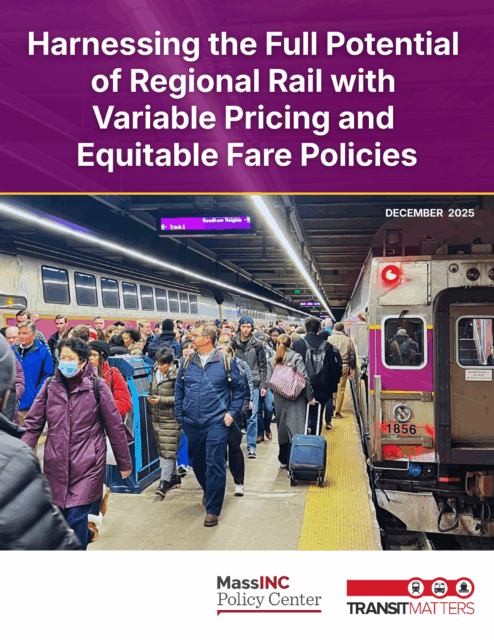
Harnessing the Full Potential of Regional Rail with Variable Pricing and Equitable Fare Policies - MassINC
This analysis outlines a practical path to increasing ridership and expanding access on the commuter rail through variable pricing and more equitable fare structures. The report shows how Massachusetts can make measurable progress toward Regional Rail by leveraging existing system capacity to...massinc.org
Two-thirds of riders now reach Commuter Rail stations by bike or on foot should hopefully lead to some municipalities and the T reevaluating some of their Big Dig mitigation parking lots. In relation to the 71% Franklin Line modeshare, the stations that are prime candidates to have parking reduced and apartment buildings placed on the land are Dedham Corp and Norwood Central. Norwood Central has 624 daily riders for 781 parking spaces, despite the lot never reaching 50% full. Dedham has 437 boardings for 497 spaces, despite only ever reaching 1/3 capacity. Both also set a precedent with their existing apartment complexes near their stations.Roughly half of riders (53 percent) responding to surveys between 2015 and 2017 walked or biked to the train. Results from the 2022 to 2024 surveys show this fraction has increased to two-thirds of riders. The walking/biking shares are highest on the Needham line (79 percent) and the Franklin/Foxboro line (71 percent)
The significance of this is pretty big. For the Commuter Rail to have recovered nearly to pre-pandemic weekday ridership and exceed weekend ridership with less than 2/3 of the former daily commuters means that there are significantly more unique riders taking the train. Combining that with the large increase in those infrequent riders shows that the train has become a more useful option for a lot of people who just need to make a one-off trip here and there. That's a type of journey that is a car's area of domination.The share of riders traveling 5 days per week or more declined by 37 percentage points. There was a significant increase in those traveling 1 to 4 days per week (+15 percentage points), reflecting the shift to hybrid work schedules. But the biggest change was among those using commuter rail three or fewer times per month (+23 percentage points). These passengers now make up more than one-quarter of riders
Not quoting cause it's a large block but the section highlighting the reality of needing to own a car in many suburbs/gateway cities and giving examples of how that plus the commuter rail drives transportation costs to an unaffordable level is very important to understand when considering fare restructuring and income eligibile discounts. It's very clearly the annual car costs that make the train unaffordable, but without good transit in the non-core communities, especially in relation to getting to and from grocery stores, families are forced to own a car to live. Even a Zone 8 monthly fare is under 15% of a minimum wage worker's income, but a low-income family doesn't have great transit connections to food or the train station in say Grafton or Middleboro. Unfortunately, that means adding the T to their car transportation costs makes the transport portion of their income go from 13% to 18% for someone making 300% federal poverty level, making it now unaffordable (research study explains better, more in depth; give it a read). Bringing those fares down despite already being a small percent of income as transport costs on their own is a way to capture some of those car driving trips.
Lots of great data and analysis in there. A 4% cost increase for the T for a 10% daily estimated ridership increase is a pretty good deal.