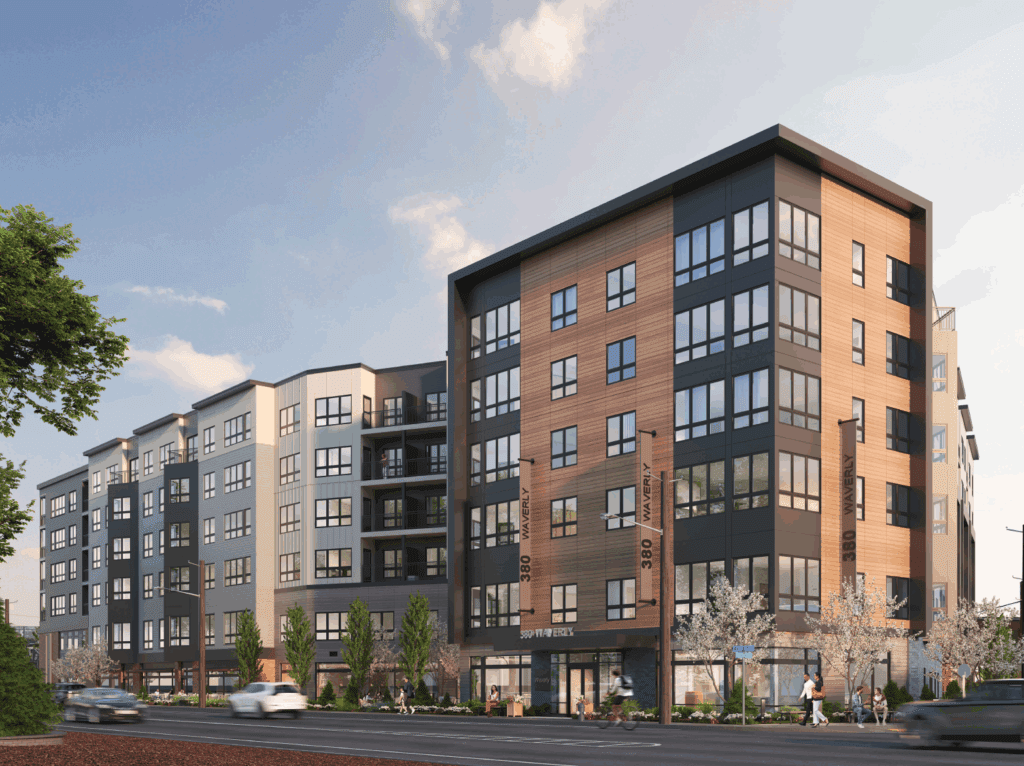
Framingham Developments

I was having trouble placing where exactly on the Shoppers World property that is. My best guess is where the Kohls is off Ring Rd., though it looks a little like it could be where the Walmart is. I can't imagine they'd demo the whole shopping center for this, at least right now.
Found a map...

1751722432120.jpeg

 
If I live long enough, I’m going to see a redevelopment proposal that returns the outdoor train and the dome to Shopper’s World.
 
Found a map...

View attachment 64515
Ah, so they're keeping the Chick-Fil-A but nuking the Kohl's. I wonder if there's a plan to move it elsewhere in the area (over to the main Shoppers World?) or it would close outright.
 
“A fresh set of registry filings shows that the Chicken Bone redevelopment is now fully capitalized.

On Aug. 6, 2025 the developer, LH WD Waverly Owner LLC, recorded a “CONSTRUCTION MORTGAGE, ASSIGNMENT OF LEASES AND RENTS, SECURITY AGREEMENT AND FIXTURE FILING” against 358-380 Waverly St.

The instrument identifies the borrower and lender plainly:

“LH WD WAVERLY OWNER LLC… as Borrower… FIRST-CITIZENS BANK & TRUST COMPANY… as Administrative Agent.”

The mortgage closes on a principal loan amount of “FORTY-SEVEN MILLION THREE HUNDRED THOUSAND and 00/100 Dollars ($47,300,000.00)”

—a figure that neatly tracks the $40.5 million construction budget already on file with the Building Department, plus roughly 17-20 percent head-room for contingencies.

Recording data lists the filing as Document No. 93634, Book 84461, Page 90, recorded at 2:27 p.m. on Aug. 6, covering the entire parcel at “358 Waverly Street, Framingham, Massachusetts.”

A companion Assignment of Leases and Rents was logged moments later, repeating the same $47.3 million loan covenant and giving the bank sweeping rights over future rental income.
A UCC fixture filing followed for “all assets of the debtor… including goods that are or are to become fixtures,” locking the bank’s stake to everything built on-site.

What this means

Financing hurdle cleared. A construction mortgage of this size signals that the lender’s due-diligence is done and funds are ready to draw, a major milestone after years of planning.

Budget consistency. The loan’s size—about 17-20 percent above the $40.5 million permit estimate—tracks industry norms for cost overruns, interest reserve, and soft costs.

“No land uncertainty. A quitclaim deed filed the same day shows the project entity took title from 16 South Street LLC in June, consolidating multiple lots into a single ownership block.

With the site already cleared and utilities stubbed, the recorded mortgage removes the last paper barrier to vertical construction. Expect excavation crews and tower cranes to follow soon...”

1754596752210.png

1754596767174.png

1754596778418.png

1754596789264.png

1754596804125.png

1754596816554.png
 
“When the private sector says No! City seeks HUD backing for downtown supermarket

The City of Framingham has filed a Section 108 application with the U.S. Department of Housing and Urban Development (HUD) requesting a $1 million federal loan guarantee to jump-start a full-service supermarket at 35 Concord Street—a long-vacant building a few steps from the MBTA commuter-rail station. City planners say the 31,000-square-foot store, to be branded “Seabra Foods” (also referenced internally as “Market 22”), will anchor the transit-oriented revitalization district and “result in the creation of at least 50 new FTE jobs in downtown Framingham.”

Framingham argues the guarantee is needed because “regional and national financial institutions remain skeptical of lending to new supermarket projects, particularly in locations located [in] urban centers like downtown Framingham.”

The application states: “This HUD 108 Loan Guarantee will remedy this lack of funding by providing much-needed financing to assist in the development of the Seabra Supermarket Framingham,” allowing the developer, A.M.S. Massachusetts Real Estate Holdings LLC, to purchase refrigeration, HVAC, and other fixtures.

The supermarket is pitched as a critical amenity for the hundreds of new apartments rising downtown. City officials note that, despite a proliferation of convenience marts, “there are no full-service supermarkets in Downtown Framingham,” forcing residents to travel elsewhere for groceries and dampening further investment.

By meeting HUD’s economic-development test, the project must generate at least one job for every $35,000 in federal assistance; Framingham pledges to exceed that benchmark by almost double.

If approved, the city will borrow the funds on HUD’s credit, repay the note over 10 to 15 years with Community Development Block Grant revenues, and secure the debt with a lien on supermarket equipment and, if needed, a mortgage on the property.

City planners frame the loan as a catalyst that will “leverage significant additional private investment” along Concord Street and complement zoning tweaks that lowered parking minimums, raised height limits, and encouraged mixed-use construction downtown.

A public hearing and City Council vote are required before HUD can issue its final guarantee. If all goes as scheduled, construction on the supermarket build-out could begin in 2026, delivering fresh food—and dozens of paychecks—to the heart of Framingham’s historic business district.”

1755906495668.png

1755906505720.png

1755906531175.png

1755906518003.png

1755906542669.png


Ok, so that raises a question. Seabra already has a Framingham location less than ½ a mile away down Waverly. Is this a new location, or just a move? From an urban perspective this is certainly better, but Seabra is also a multi-location chain with multiple stores in MA - Is this just an incentive from the city to relocate them here? If its just a move, I can't see this actually creating many more additional jobs?
 
1000041421.jpg

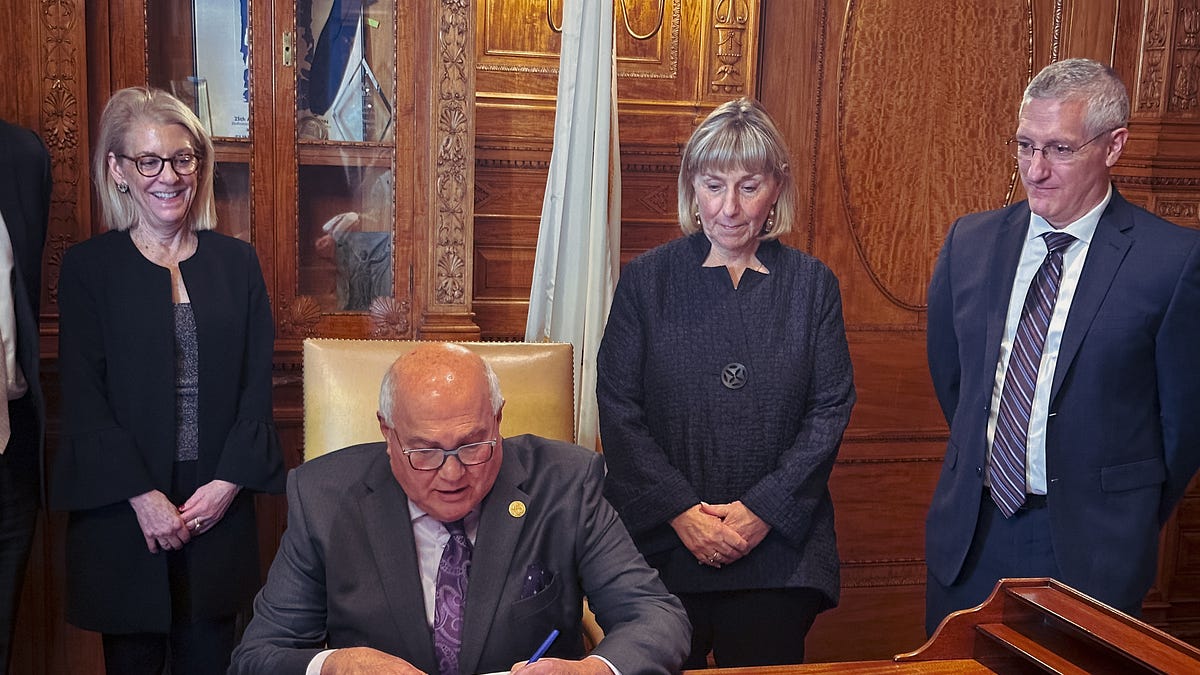
Its been percolating for quite a while, but renders are apparently out for the new Framingham RJC, which will replace the ca1909 Union School Building, which was more recently the Danforth Muesum. Most likely, will represent the eventual consolidation out of the Marlborough DC, Framingham JC and DC locations.

This particular project appears to have been prioritized ahead of perhaps more needful replacements, such as Springfield which has been relegated to a P3, especially given the recent renovations of both Marlboro and Framingham DCs existing locations - likely due to the personal influence of Sen. Spilka, President of the Senate, who represents Framingham.
1000041425.jpg

 
1766104315493.png

1766104360648.png

1766104342381.png

1766104374453.png

1766104391273.png


1766104421026.png

1766104432544.png

1766104444128.png

“Framingham’s Next Mega-Apartment Complex Proposed for Manufacturing-Zoned Land on Waverly Street

A 46-unit apartment complex is being proposed for a 1.26-acre parcel at 733 Waverly Street, a site currently zoned for General Manufacturing, setting up what could become one of the most consequential land-use cases along the Waverly Street corridor in recent years. The project, filed by 733 Waverly LLC, seeks permission to demolish existing structures and replace them with four multi-family residential buildings despite residential use being prohibited in the zoning district.

According to the application and architectural plans submitted to the city, the proposal would replace a single-family home, garage, and outdoor storage area with four multi-family buildings containing a total of 46 one-bedroom units. Three of the buildings would be three stories tall, while one would be two stories, with a combined gross floor area of approximately 39,200 square feet. The development would include 46 off-street parking spaces, including four accessible spaces and eight compact spaces, with access and egress from Waverly Street.

City records show the property is owned by 733 Waverly LLC, a Massachusetts limited liability company co-owned by William and Walter Villa, with William Villa listed as manager. In a memorandum submitted to the Zoning Board of Appeals, the applicant notes that both owners were “born and raised in Framingham” and have owned and operated a nearby business on Waverly Street since 1985.

In addition to seeking zoning relief, the developer has proposed using a modular construction method, a detail outlined in a Multi-Family Housing Feasibility Study prepared for the site. That study describes the project as a “turnkey modular” development, in which residential units are manufactured off-site and assembled on location, substantially reducing construction time compared with conventional building methods. The materials indicate that this approach is intended to allow the buildings to be completed and occupied on an accelerated schedule, with the potential for the complex to be constructed, finished, and ready for tenant move-in in under six months once approvals are secured and site work begins.

The proposal was formally denied a building permit by the city’s Inspectional Services Division on November 25, 2025, triggering the current zoning appeal. In the denial letter, Building Commissioner Fred Bray wrote that “multifamily dwellings are a prohibited use in the ‘M’ zone” and that the project would require four separate use variances, one for each proposed structure. The letter further states that the project “exceeds the maximum floor area ratio in the ‘M’ zone” and fails to meet required front and side yard setbacks, necessitating multiple dimensional variances.

In their filing, the applicant argues that the proposal is more compatible with the surrounding neighborhood than manufacturing uses permitted as of right. The supporting memorandum asserts that the “proposed two and three-story residential, wood-framed and sided buildings would be a better fit in the neighborhood” and that the project’s density and mass are “substantially less than the apartment developments existing and approved on Fountain Street”. The applicant further claims the project would constitute “a significant improvement to the neighborhood”.

A central argument advanced by the developer is that while the property is zoned manufacturing, its surroundings are not. The memorandum notes that the immediate area consists of “a mix of residential properties (one-family, two-family and multiple-unit residential), industrial, retail and a restaurant,” and that land directly across Waverly Street is zoned Business. The applicant also emphasizes that the proposed buildings are “substantially in accordance with the current regulations of the Central Business District although the property is in the General Manufacturing District”.

The development would require approval from both the Zoning Board of Appeals and the Planning Board, with the applicant acknowledging that site plan review and additional special permits would follow only if zoning relief is granted. The request includes use variances, dimensional variances for setbacks, a variance for floor area ratio, and a special permit to reduce parking below the normally required two spaces per unit.

If approved, the project would represent a significant shift in how manufacturing-zoned land along Waverly Street is used, raising broader questions about whether industrial zoning in this corridor is giving way—parcel by parcel—to dense residential development capable of moving from approval to occupancy in a matter of months.”

 
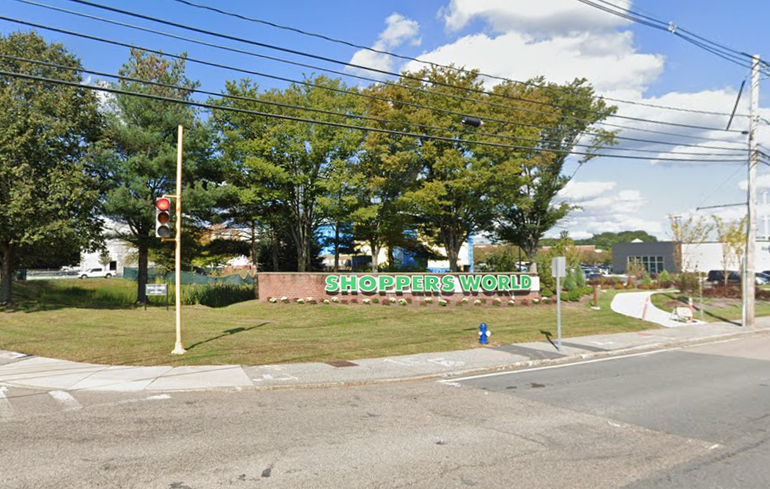
Interesting proposal for shoppers world

1770931886440.png

1770931912021.png

1770931949592.png

 
Give it enough time and Shopper’s World will return to the dome and courtyard style of the original.
 
View attachment 66831
Its been percolating for quite a while, but renders are apparently out for the new Framingham RJC, which will replace the ca1909 Union School Building, which was more recently the Danforth Muesum. Most likely, will represent the eventual consolidation out of the Marlborough DC, Framingham JC and DC locations.

This particular project appears to have been prioritized ahead of perhaps more needful replacements, such as Springfield which has been relegated to a P3, especially given the recent renovations of both Marlboro and Framingham DCs existing locations - likely due to the personal influence of Sen. Spilka, President of the Senate, who represents Framingham.
View attachment 66832
Another one from street level. Much better urban street presence than the old building.

1771570681382.png


Last edited:
1775142034987.png


10 & 20 SPEEN STREET REDEVELOPMENT: FROM HALF-EMPTY OFFICES TO A 250-UNIT HOUSING COMPLEX

“The proposal for 10 & 20 Speen Street in Framingham is a textbook example of the post-COVID commercial real estate reset. Once viable suburban office assets are now described by their own proponents as underperforming, with the site currently “~50% occupied” and suffering from a “lack of capital investment” and an “inability to maintain market rents.”

Rather than attempting to revive a declining office market, the ownership group—Calare Properties and Wood Partners—is pivoting toward a mixed-use model centered on residential density.

The redevelopment targets a 4.41-acre parcel currently occupied by two office buildings totaling approximately 65,840 square feet, along with 334 parking spaces.

Location is one of the site’s strongest selling points. The property sits immediately adjacent to the Interstate 90 interchange and within walking distance of major regional amenities including the Natick Mall, Shoppers’ World, and the Cochituate Rail Trail. The surrounding area is also anchored by major employers such as TJX and MathWorks.

This places the site in a high-demand corridor despite the underperformance of the existing buildings.

At the core of the plan is the construction of a new six-story residential building containing approximately 250 apartment units…….”


No provisions for a bike path connection to the Cochituate Rail Trail? The existing condition with sharrows on a 4-lane road is not exactly adequate.
 

Back
Top