
You are using an out of date browser. It may not display this or other websites correctly.
You should upgrade or use an alternative browser.
You should upgrade or use an alternative browser.
Tufts Residence Hall | 401 Boston Avenue | Medford
- Thread starter stick n move
- Start date


stick n move
Superstar
- Joined
- Oct 14, 2009
- Messages
- 13,486
- Reaction score
- 24,574
Where do they go now though?
FormFollowsBudget
Senior Member
- Joined
- Jan 15, 2015
- Messages
- 2,318
- Reaction score
- 4,106
Depends on the quality of the soils.
For "clean" (contaminant free) soil, if you can't re-use on site, projects may work deals with other projects that need structural fill imported, so long as your soil meets their spec through testing. You can also send fill back to plants to process it into an engineered fill that meets various specs, and that plant will sell to projects that need fill. Even if a project (like this one) appears to be removing soil, they may still be importing some soil if the existing soils can't meet the structural requirements of the building.
For dirty soils, they're often sent to landfills - sometimes depending on the size of your cut, sending across multiple state lines is not out of the picture. There are some small local sites accepting fill. Here's one as an example, taking 200,000 cubic yards. If you're really stuck, you can remediate in place and either sell to plants or to other projects, but costs sending out to landfills are already sky-high, so in-situ remediation is an absolute last resort.
For "clean" (contaminant free) soil, if you can't re-use on site, projects may work deals with other projects that need structural fill imported, so long as your soil meets their spec through testing. You can also send fill back to plants to process it into an engineered fill that meets various specs, and that plant will sell to projects that need fill. Even if a project (like this one) appears to be removing soil, they may still be importing some soil if the existing soils can't meet the structural requirements of the building.
For dirty soils, they're often sent to landfills - sometimes depending on the size of your cut, sending across multiple state lines is not out of the picture. There are some small local sites accepting fill. Here's one as an example, taking 200,000 cubic yards. If you're really stuck, you can remediate in place and either sell to plants or to other projects, but costs sending out to landfills are already sky-high, so in-situ remediation is an absolute last resort.
stick n move
Superstar
- Joined
- Oct 14, 2009
- Messages
- 13,486
- Reaction score
- 24,574
stevebikes
Active Member
- Joined
- May 14, 2013
- Messages
- 307
- Reaction score
- 217
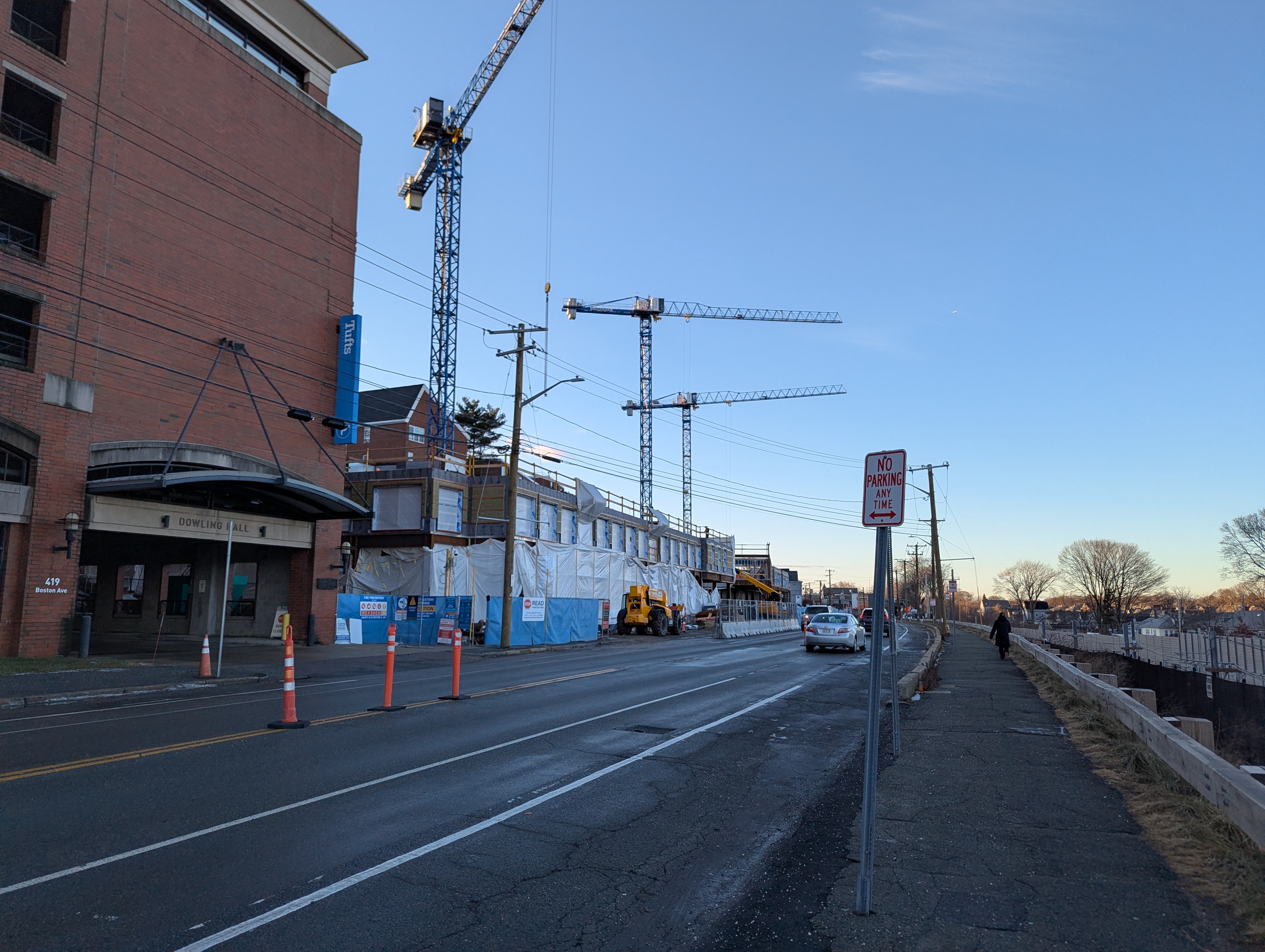
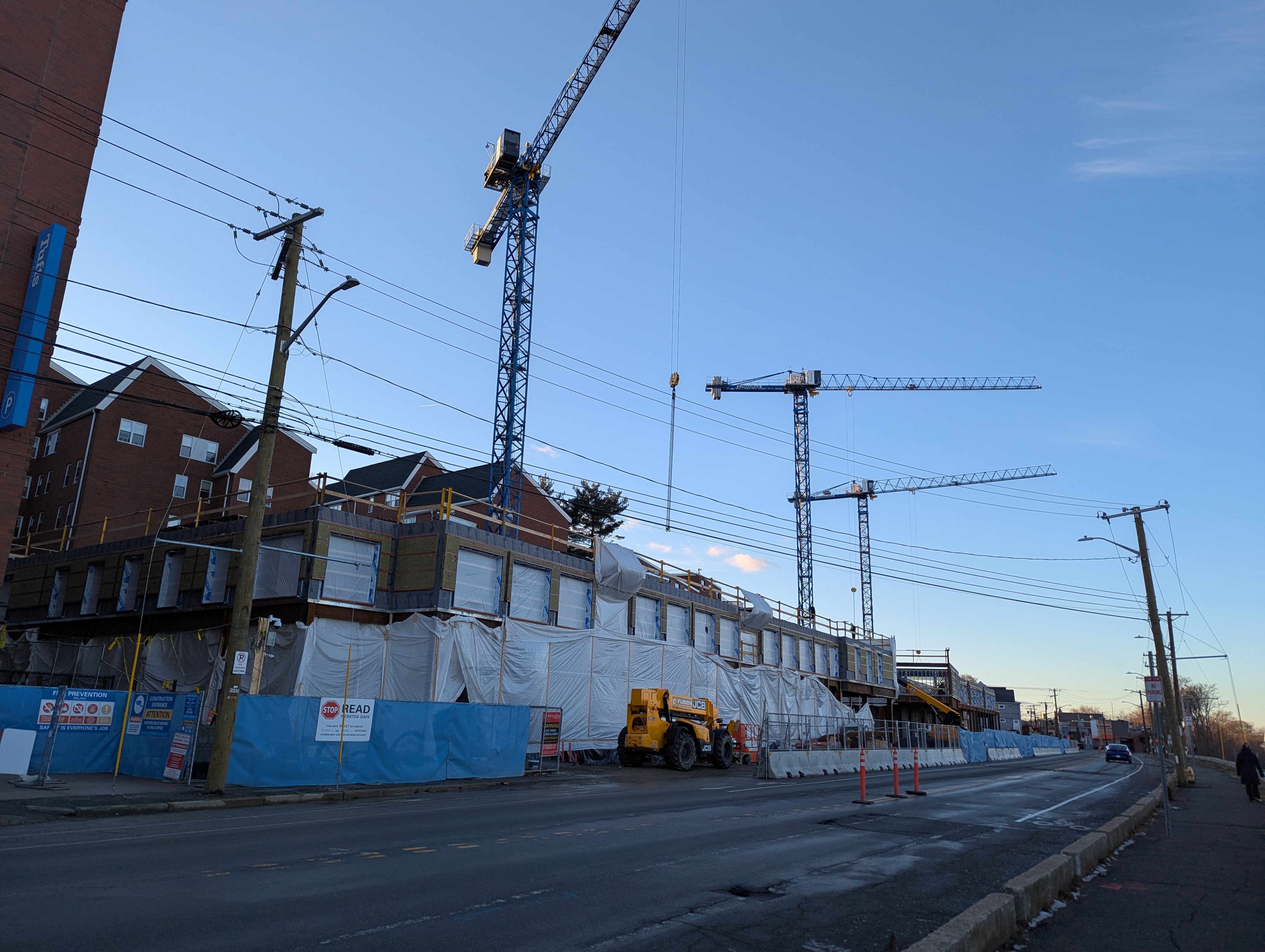
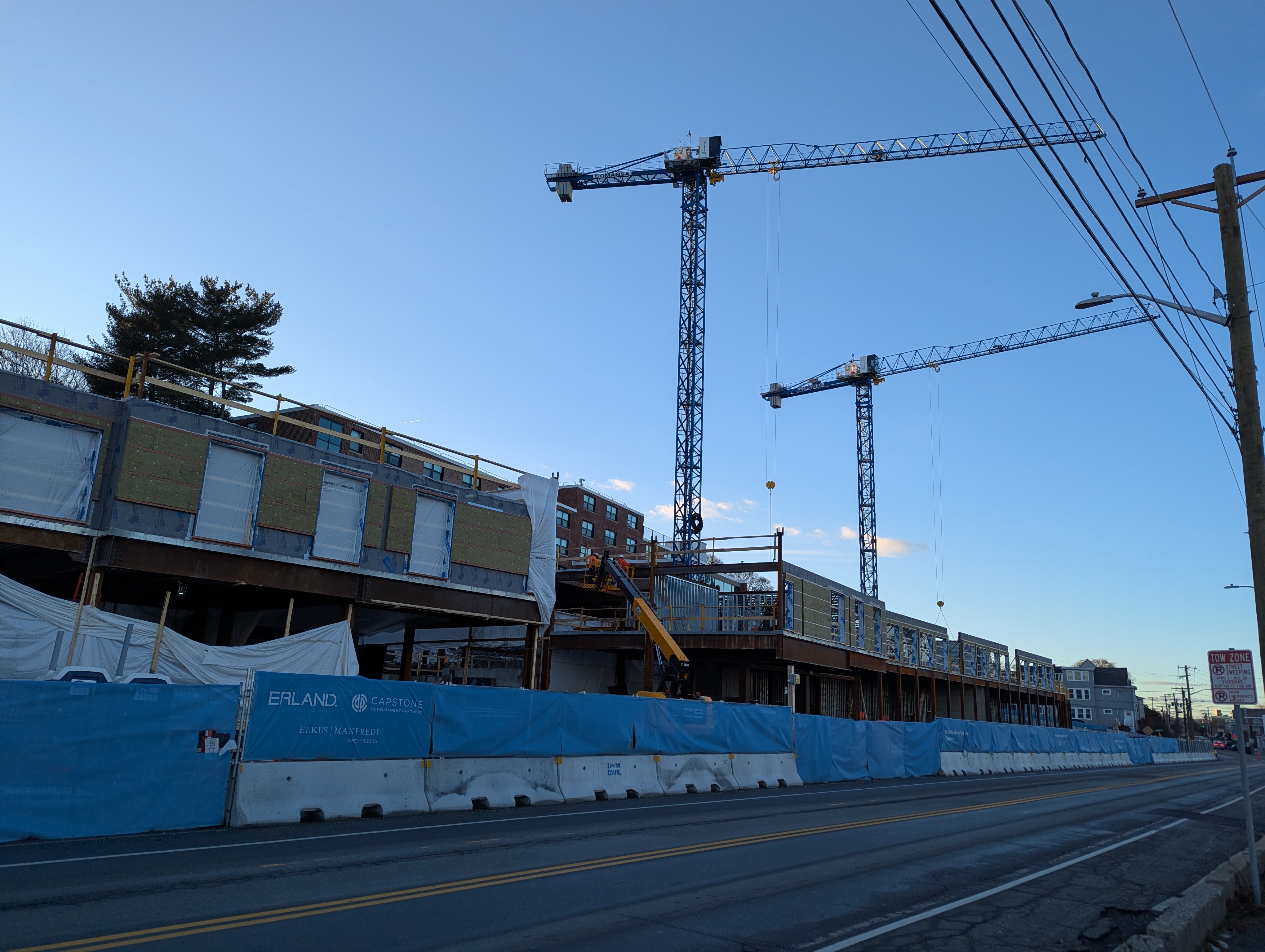
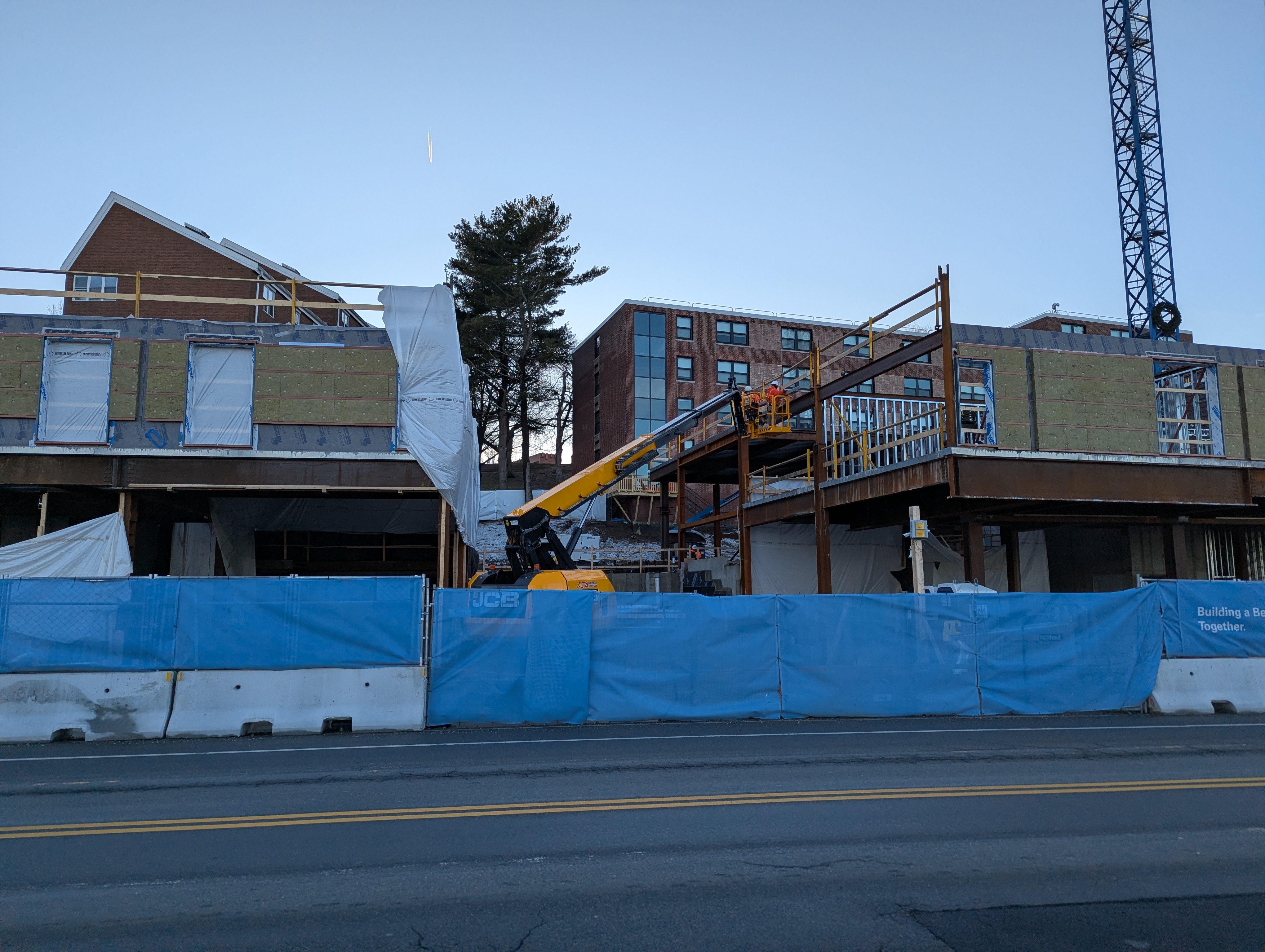
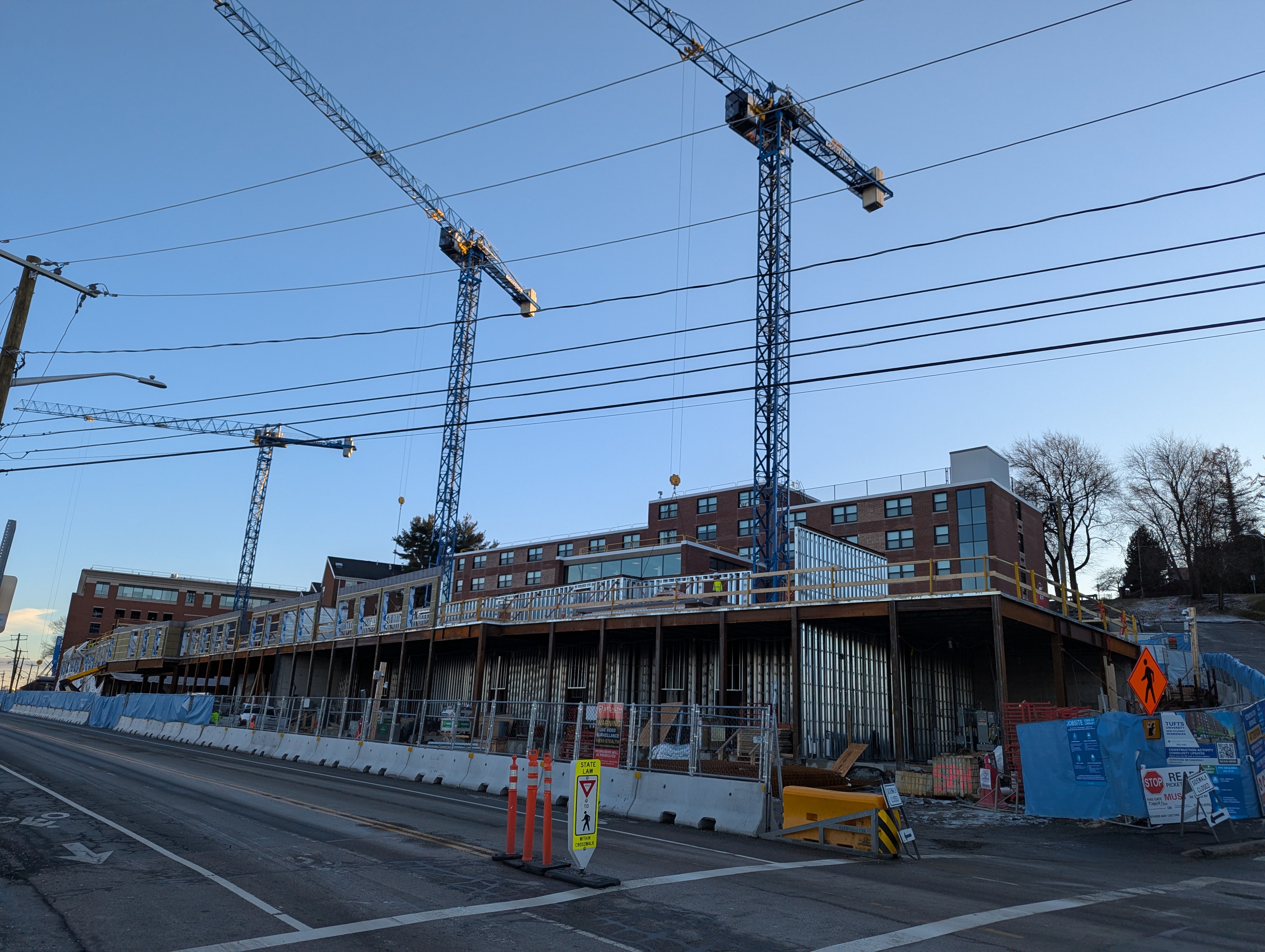
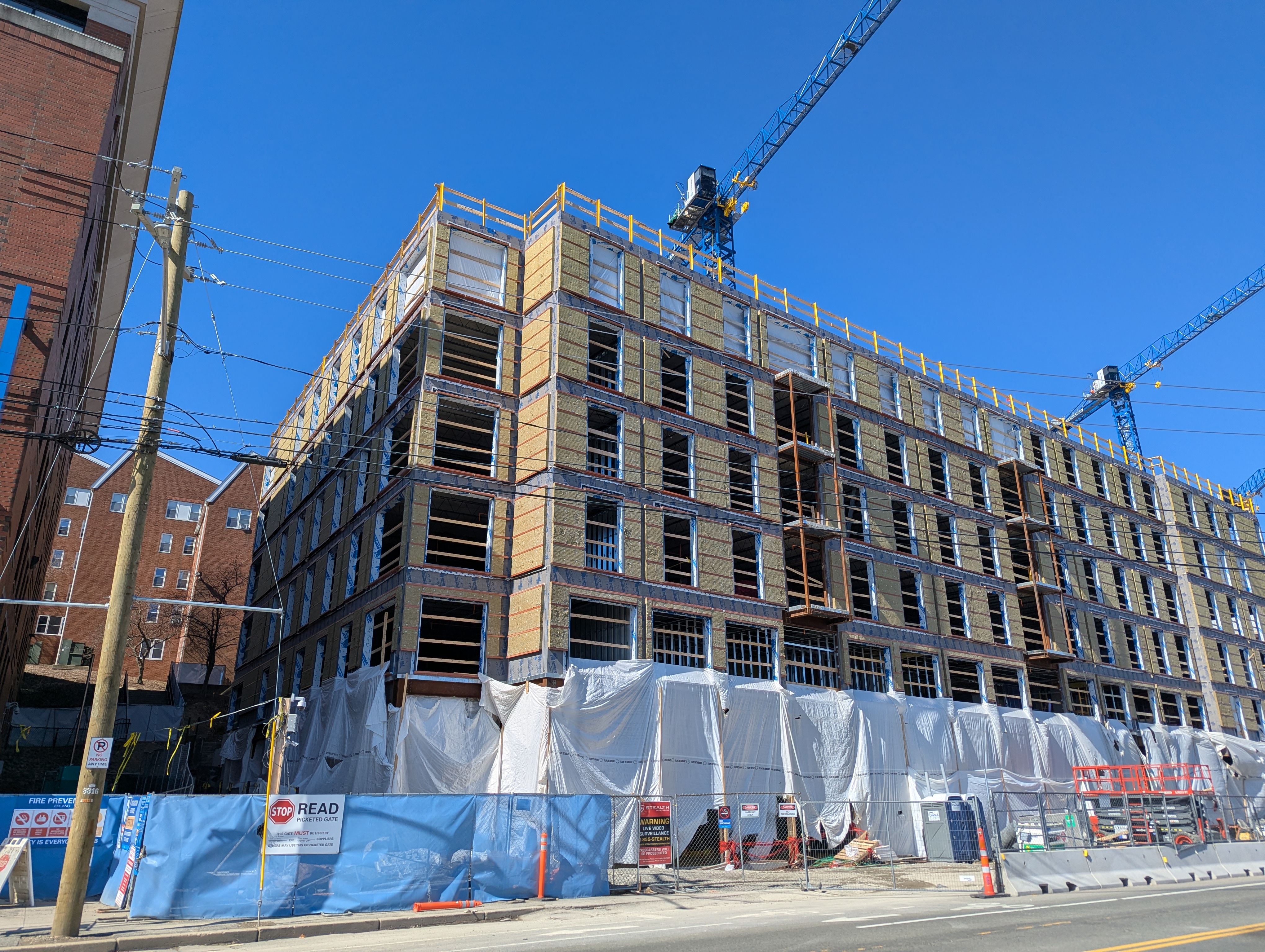
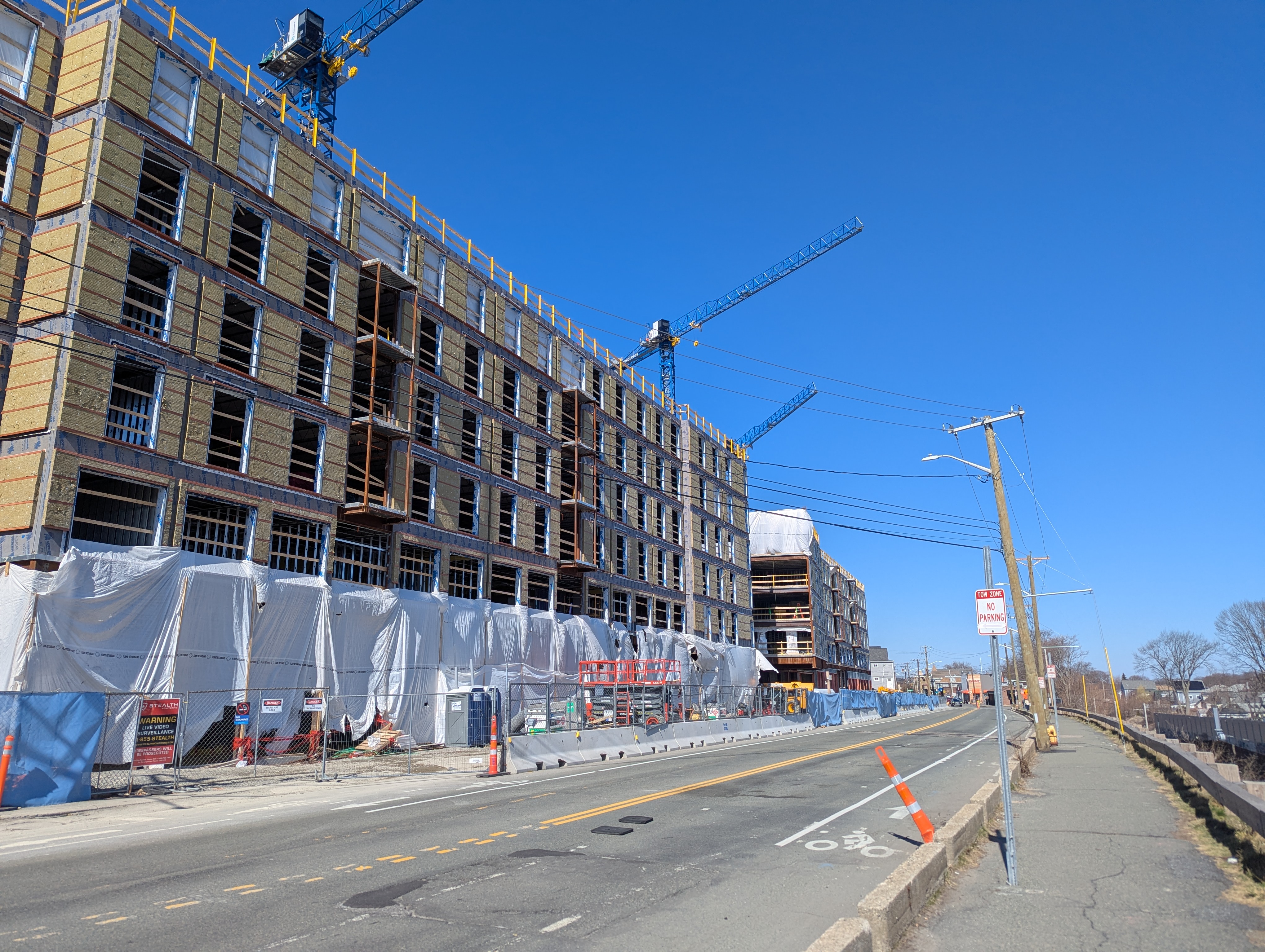
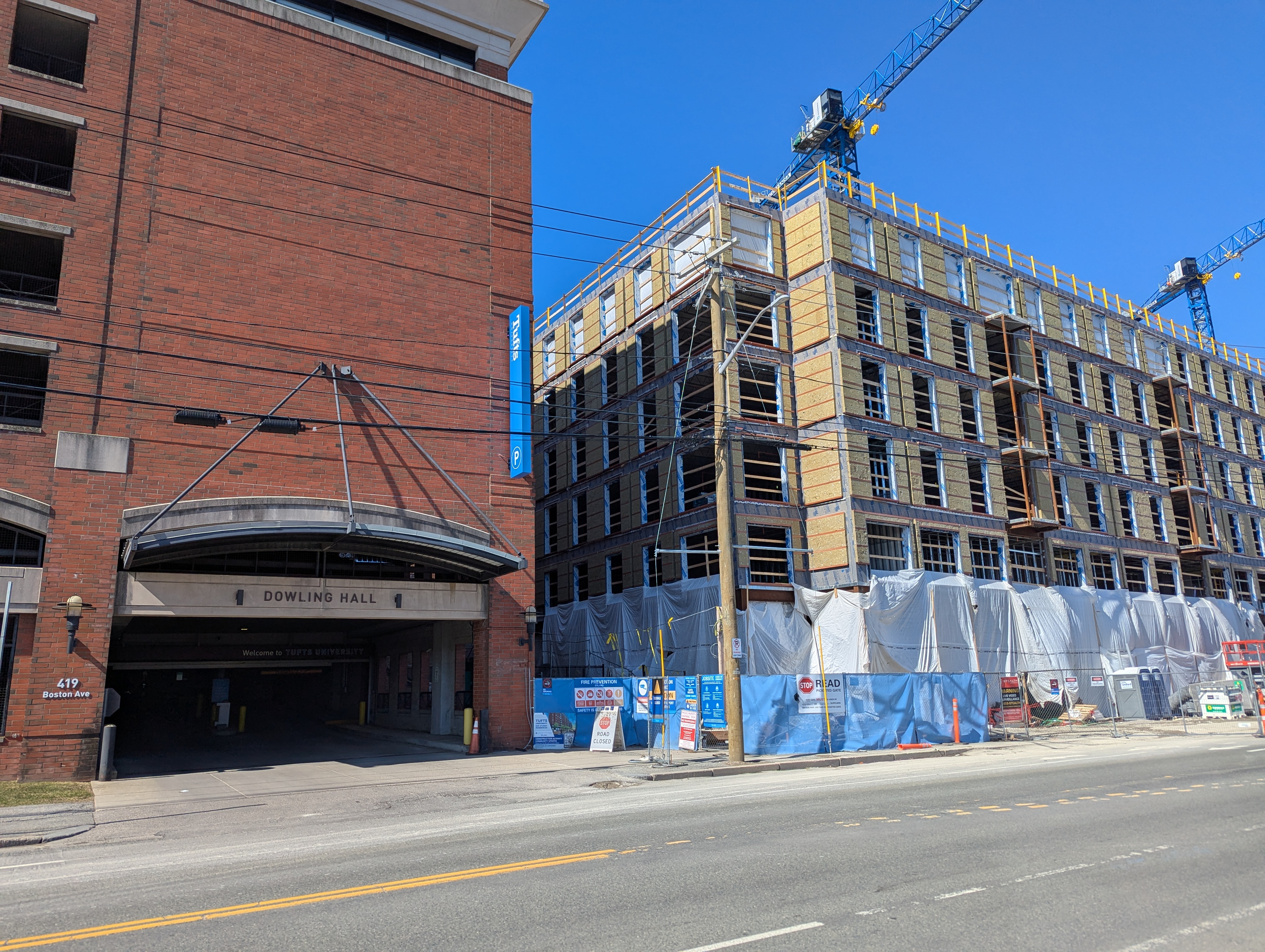
Going vertical:
stevebikes
Active Member
- Joined
- May 14, 2013
- Messages
- 307
- Reaction score
- 217
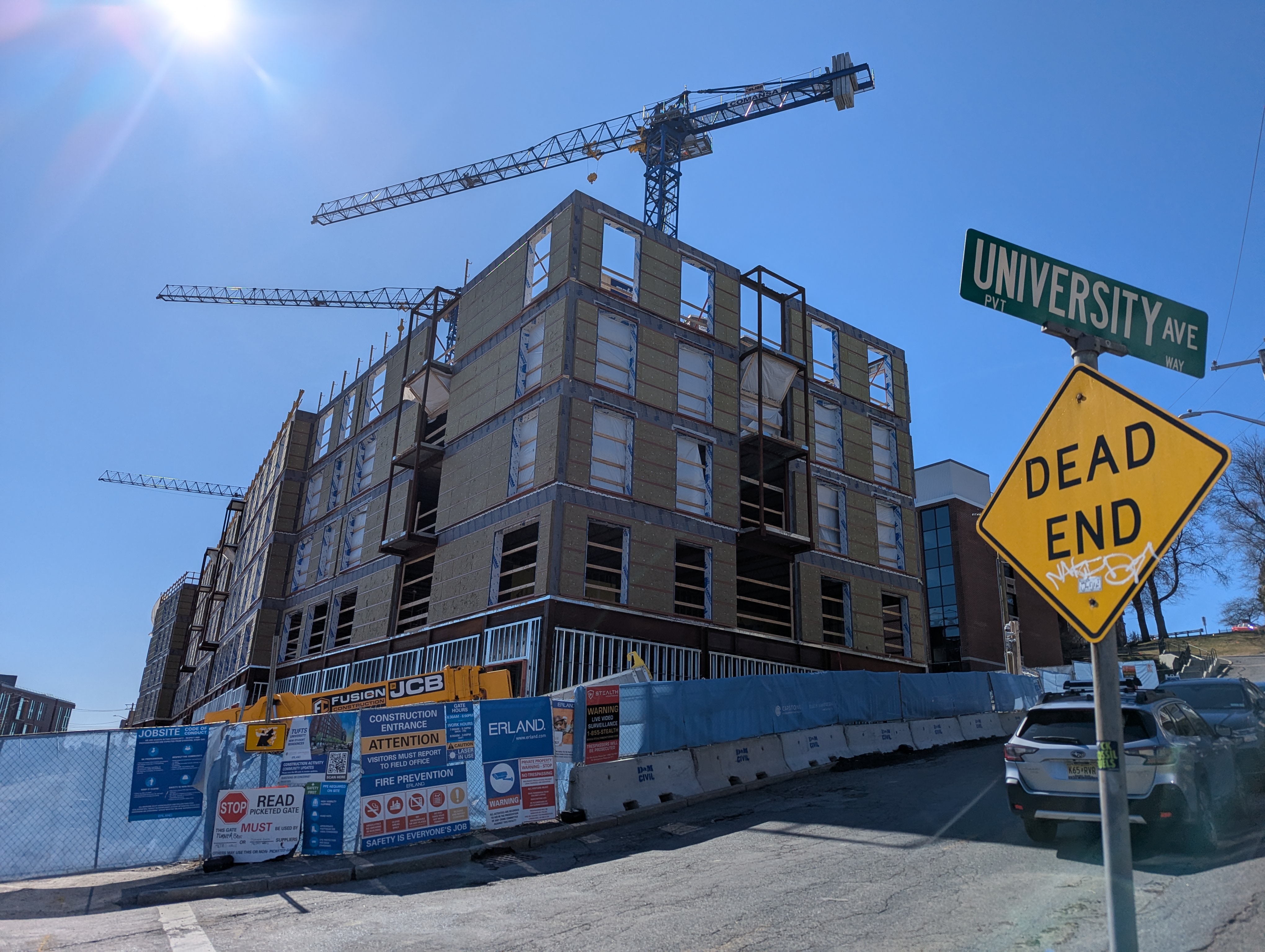
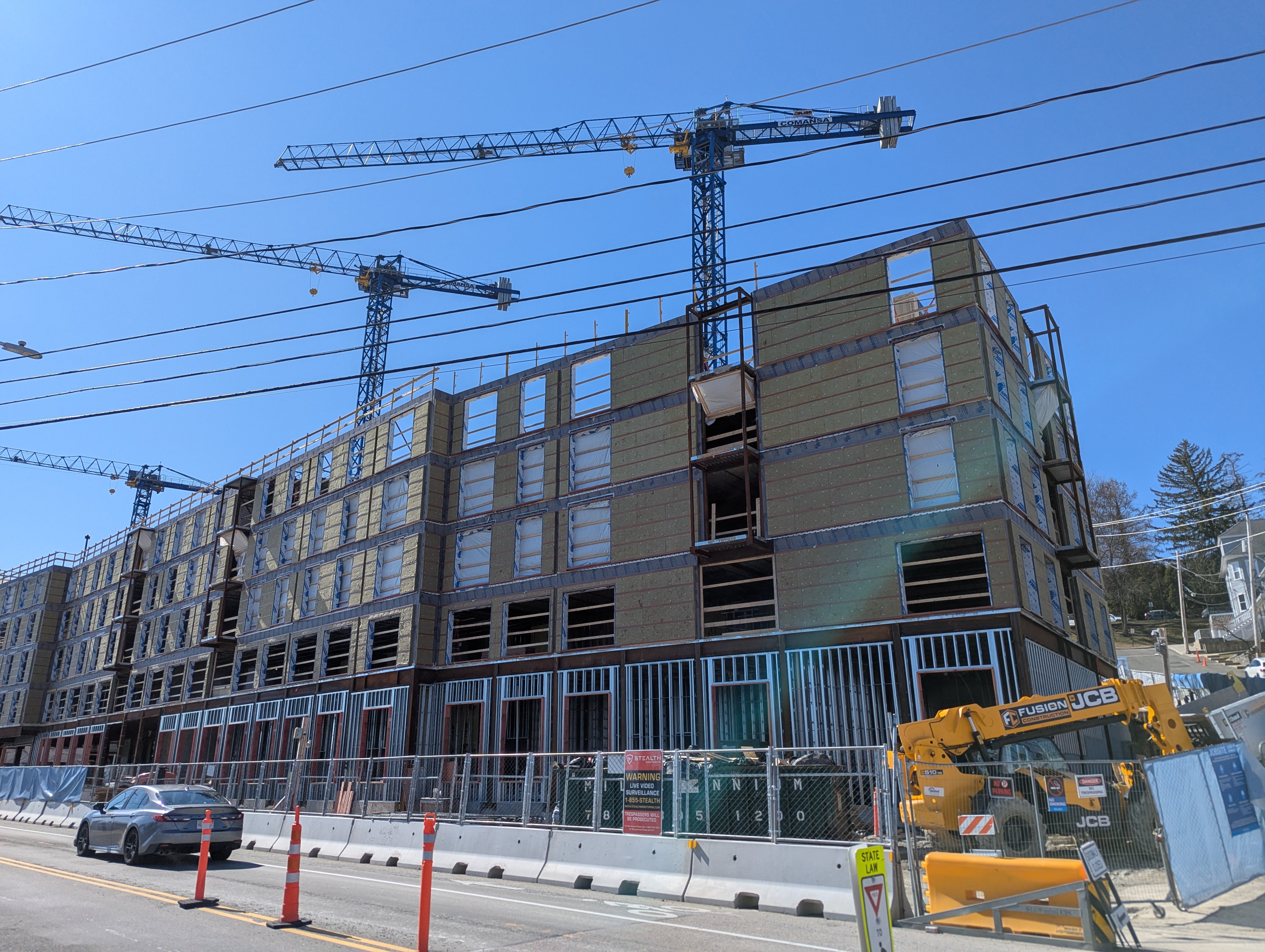
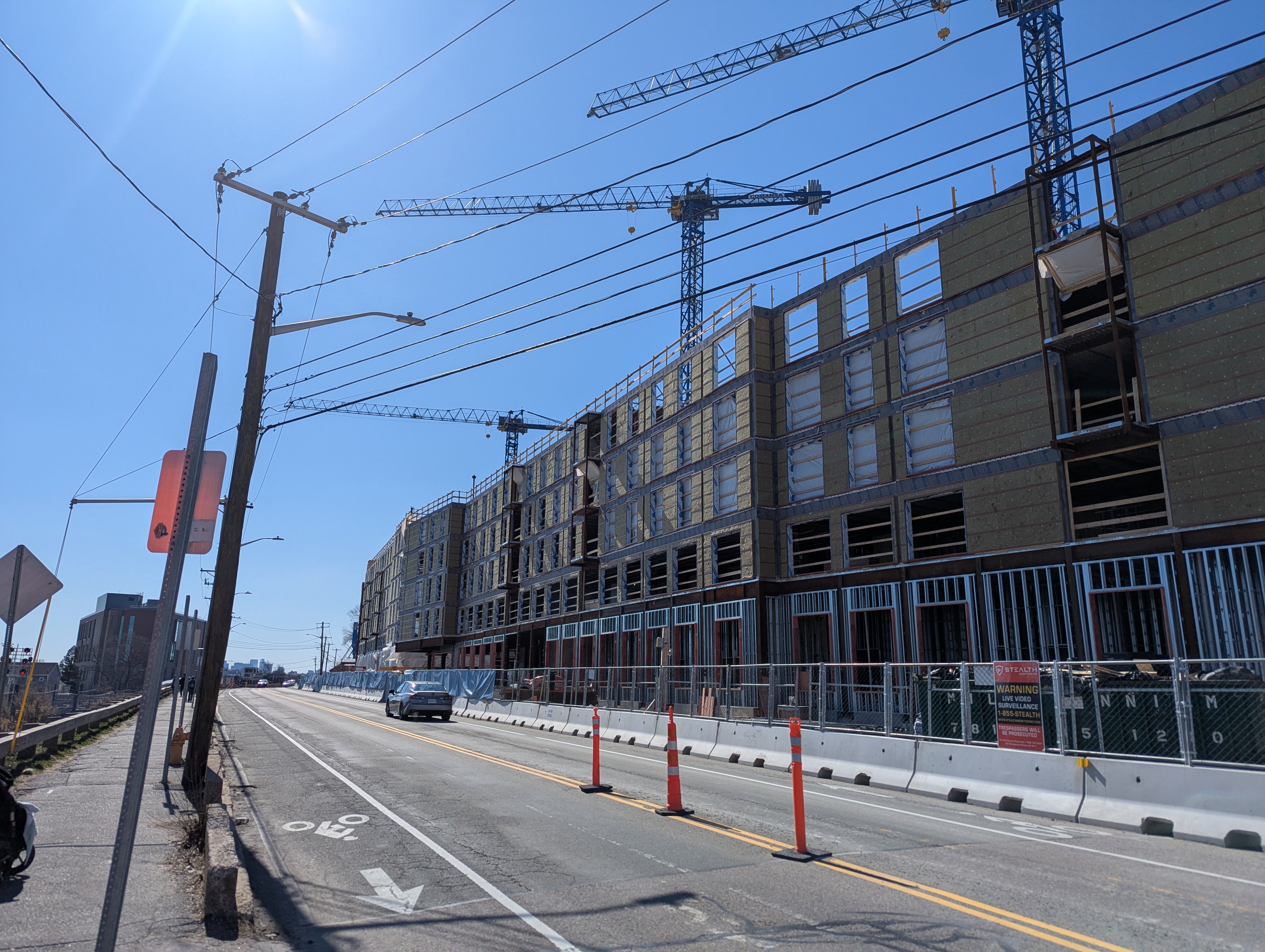
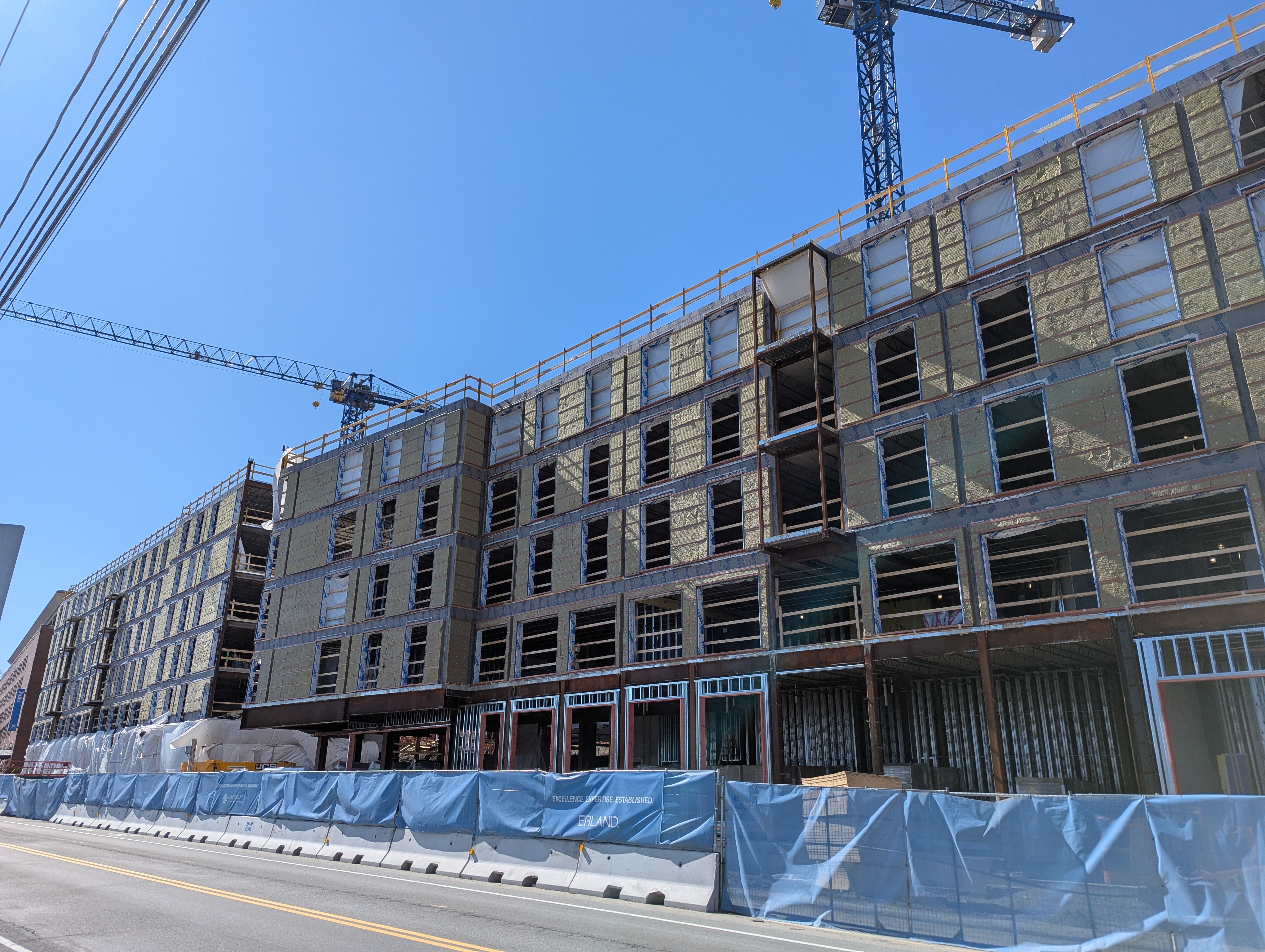
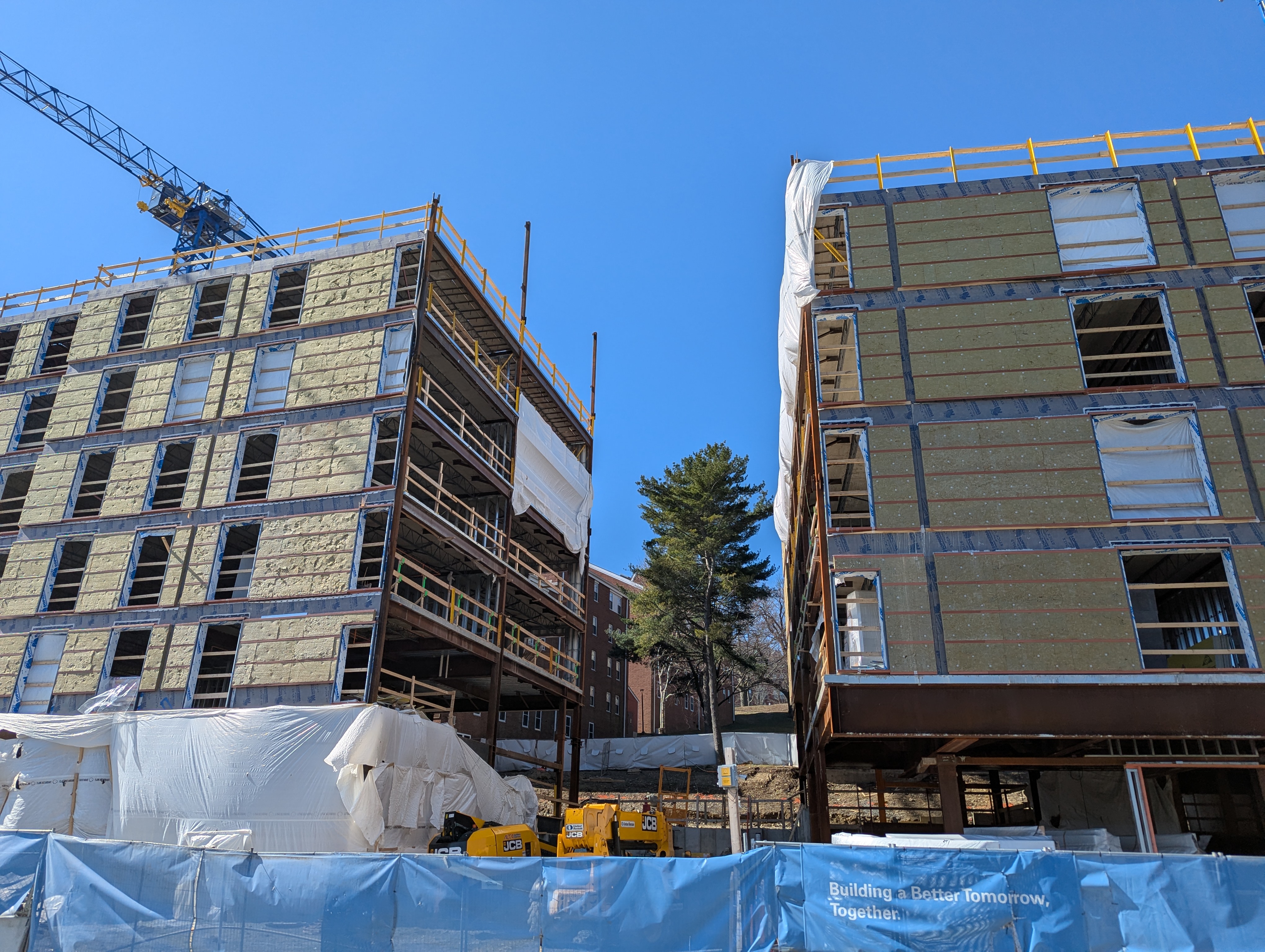
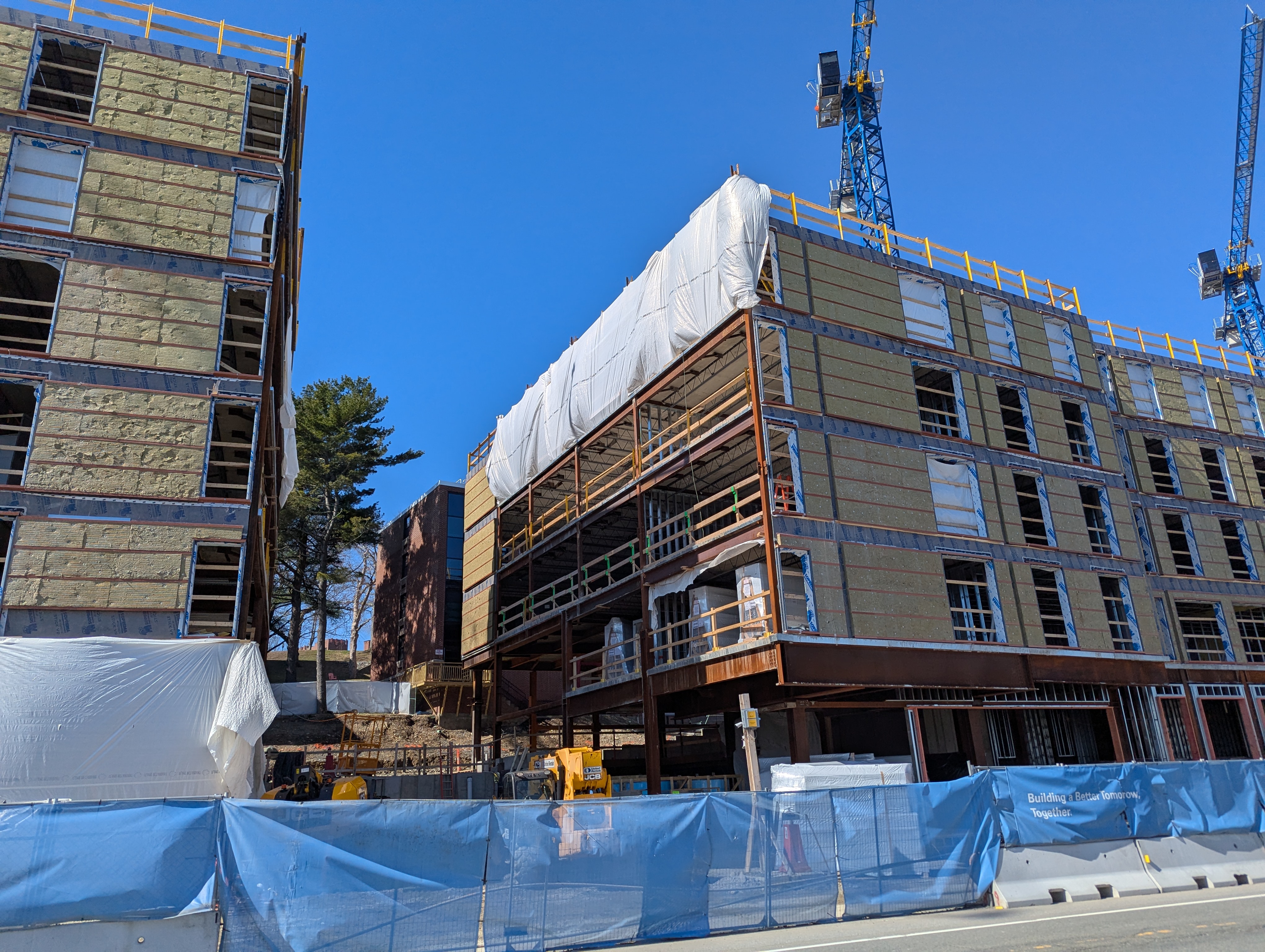
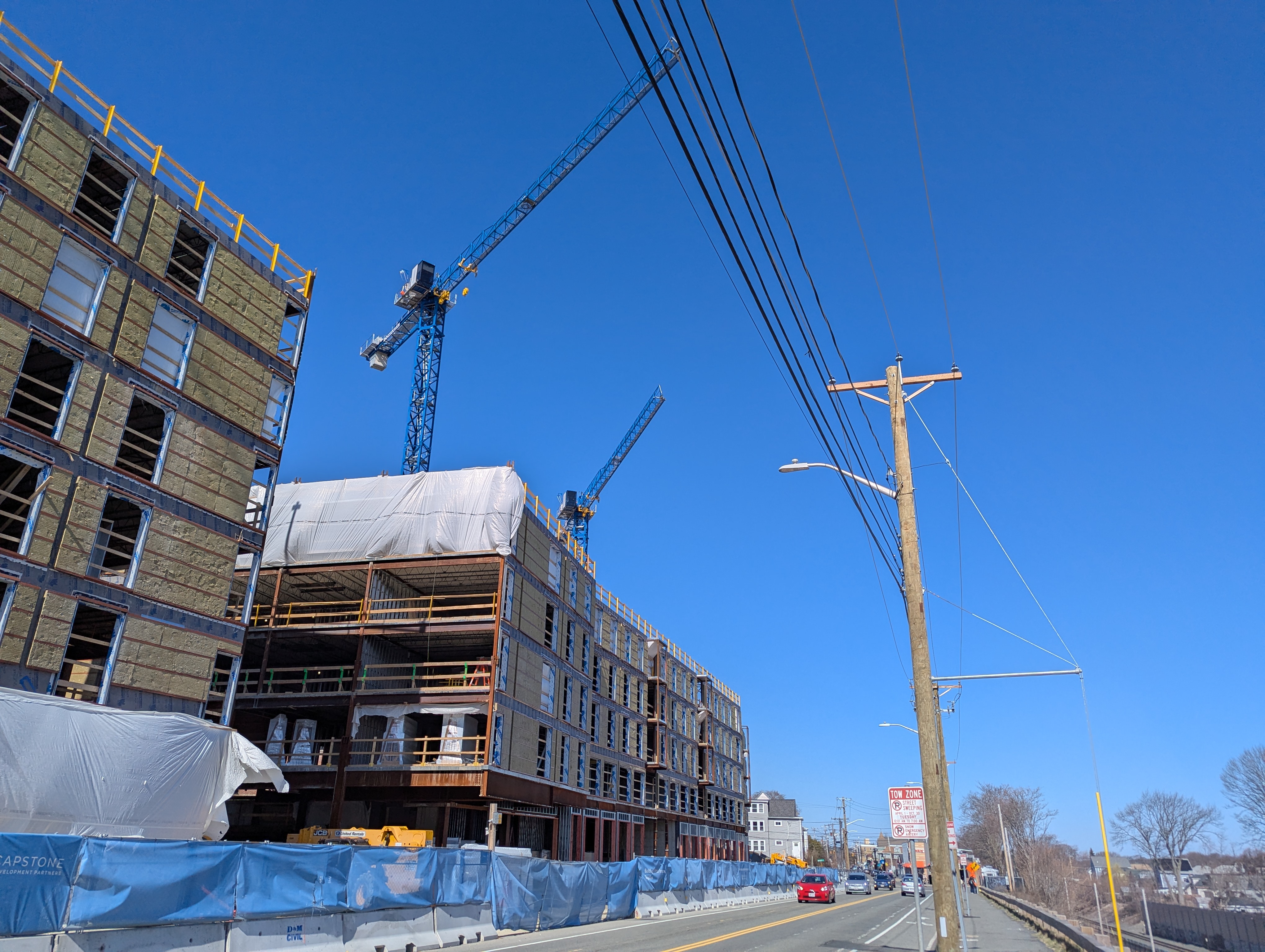
About halfway up.

JumboBuc
Senior Member
- Joined
- Jun 26, 2013
- Messages
- 2,808
- Reaction score
- 1,995
If only the ROW across Boston Ave could've been decked this would be a real corridor!
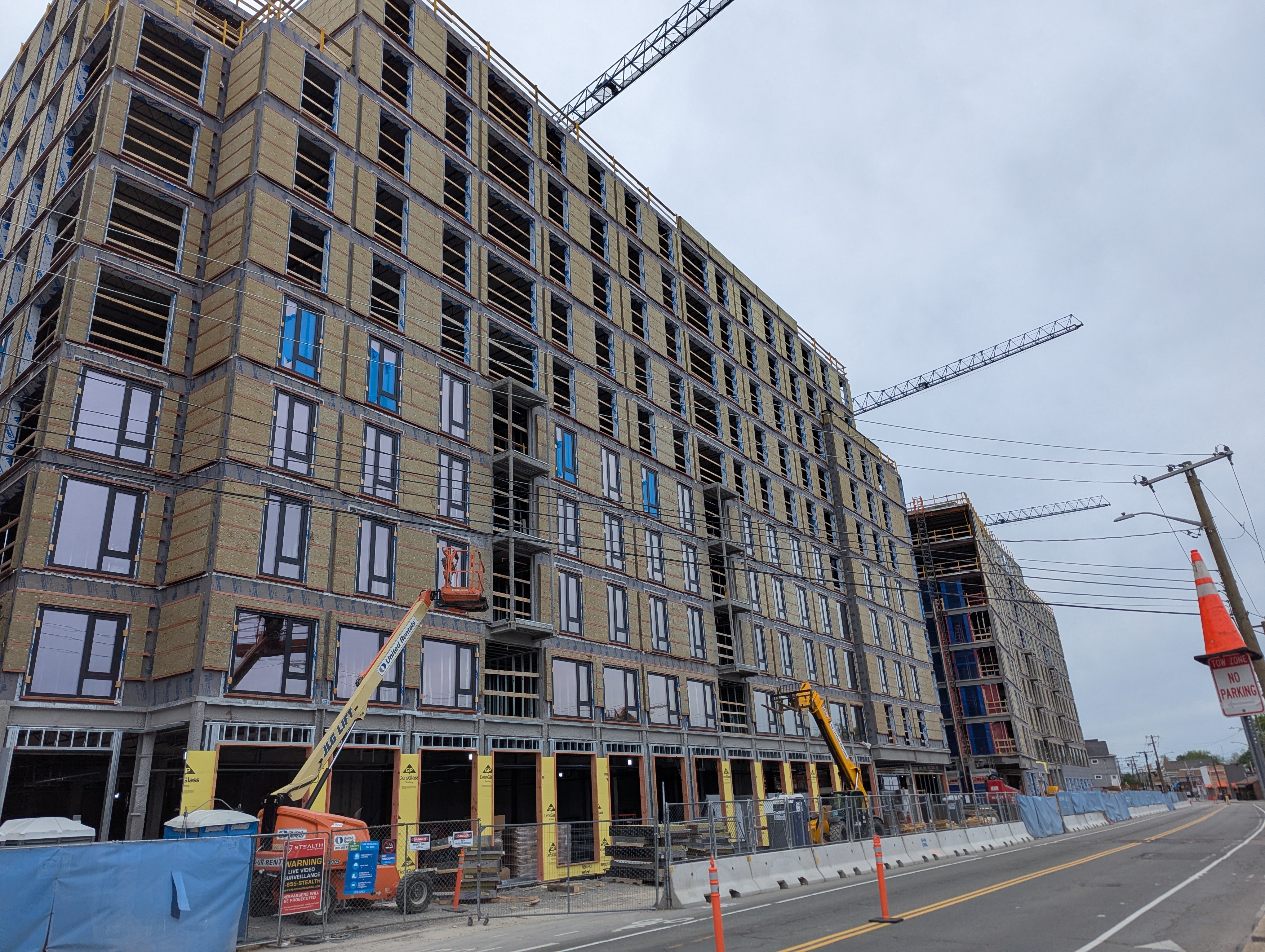
Also, this is an interesting construction sequence. Exterior insulation (and interior non-structural wall framing) is going up with each floor of steel? Typically all the structural steel goes up first then the other trades come in afterwards.
Also, this is an interesting construction sequence. Exterior insulation (and interior non-structural wall framing) is going up with each floor of steel? Typically all the structural steel goes up first then the other trades come in afterwards.
bigpicture7
Senior Member
- Joined
- May 5, 2016
- Messages
- 4,068
- Reaction score
- 10,551
Yeah, I was noticing that too. It looks like they're using some kind of pre-fab exterior wall system. A lot of times for cases of steel-framed buildings that don't use an external facade curtainwall, we've seen manual installation of steel studs, sheathing, and insulation all around the building for these exterior walls.Also, this is an interesting construction sequence. Exterior insulation (and interior non-structural wall framing) is going up with each floor of steel? Typically all the structural steel goes up first then the other trades come in afterwards.
I have a hunch for this case: since they have the three tower cranes going with full reach all around the building (which another poster above hypothesized was due to the lack of lay-down area on this site), they probably have the craning capacity and reach to be hoisting these pre-fab'd exterior walls into place in-process. That approach, in turn, might also be due to the lack of lay-down space for raw materials. Guessing that trucks show up just-in-time with these pre-fab'd walls.
stevebikes
Active Member
- Joined
- May 14, 2013
- Messages
- 307
- Reaction score
- 217
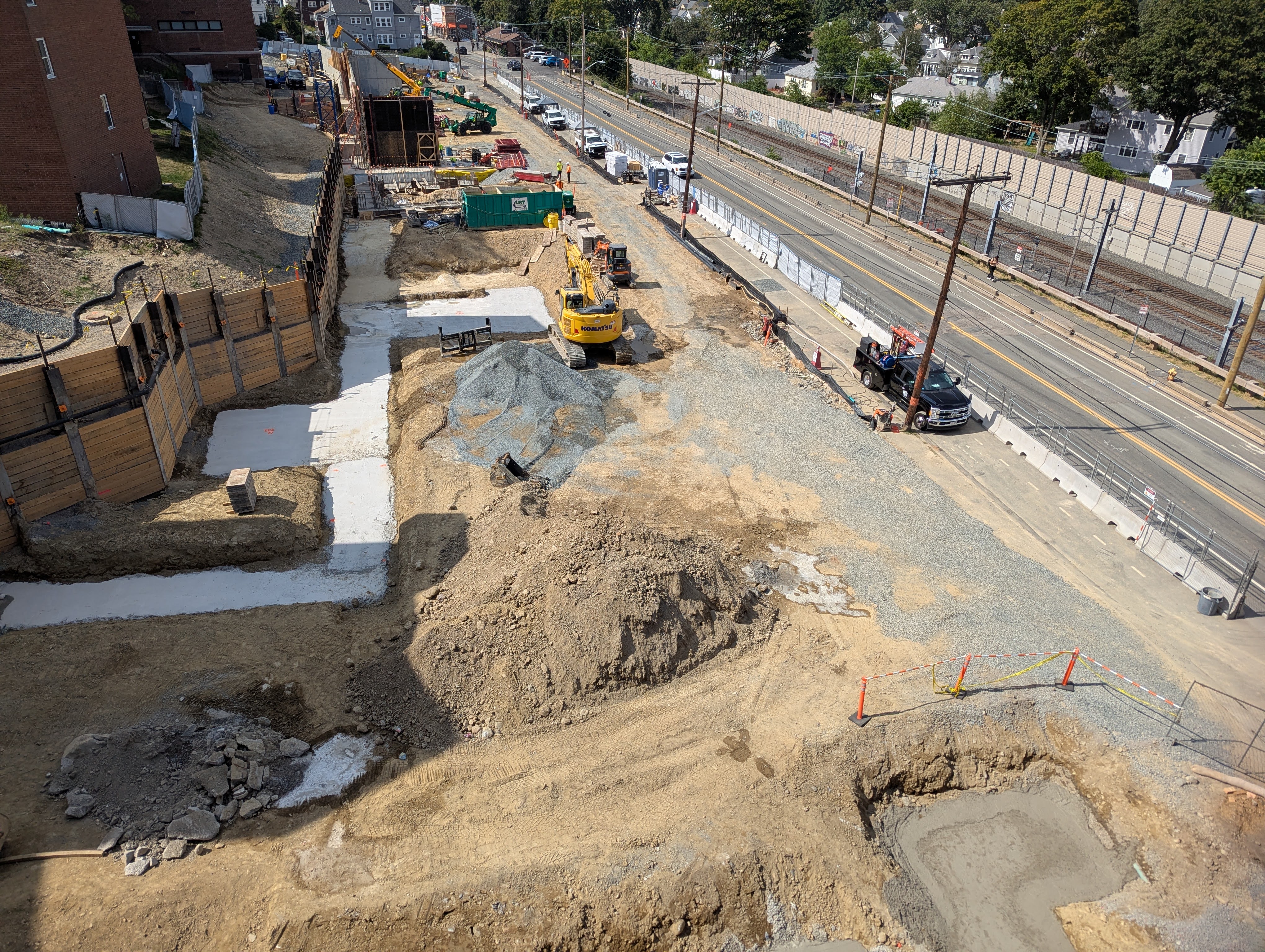
Back when I was traveling this way more regularly I used to take pictures from the garage, but I always forgot to post them. Here's the last one from August 25, where you can see the site layout:
stick n move
Superstar
- Joined
- Oct 14, 2009
- Messages
- 13,486
- Reaction score
- 24,574
Yea I was going to say it appears to be some type of prefab exterior system being used with the insulation already installed. Pretty cool imo I dont remember seeing a system that looks exactly like this before. Seems like itd make construction much quicker.
RandomWalk
Senior Member
- Joined
- Feb 2, 2014
- Messages
- 3,793
- Reaction score
- 6,820
I think the Prism residential building on Rogers St in Cambridge used a similar system.
-anarresti-
New member
- Joined
- Jul 26, 2022
- Messages
- 45
- Reaction score
- 186
5/20
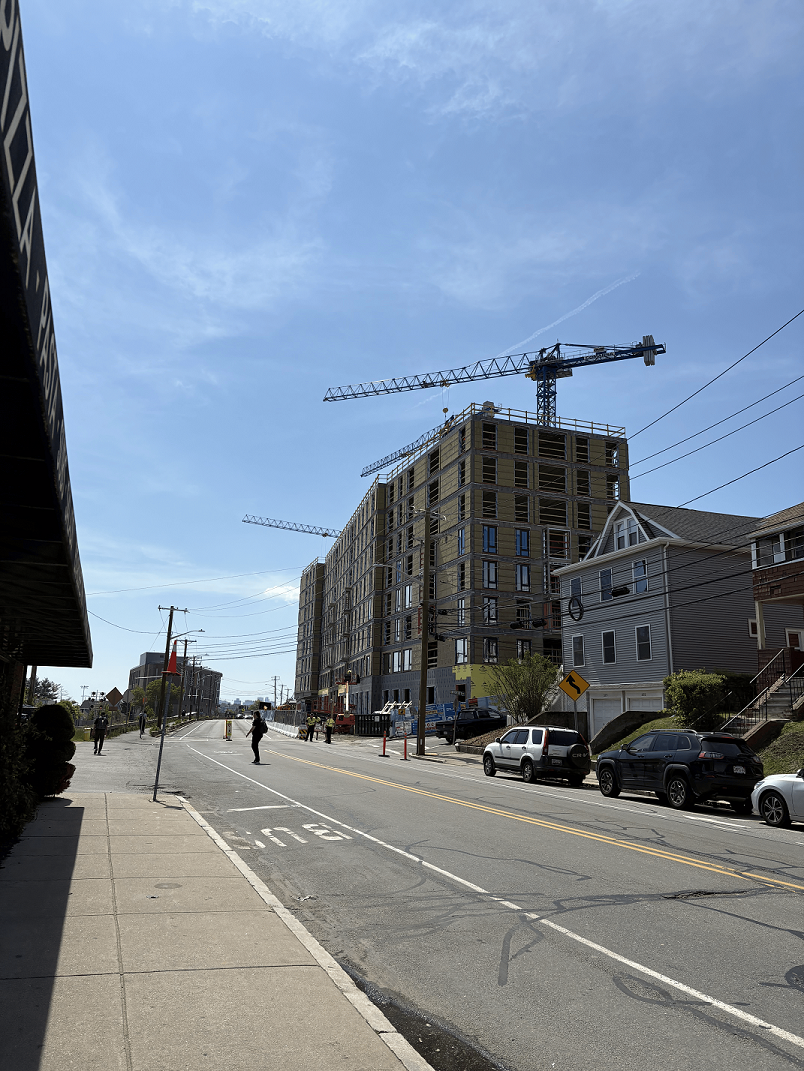
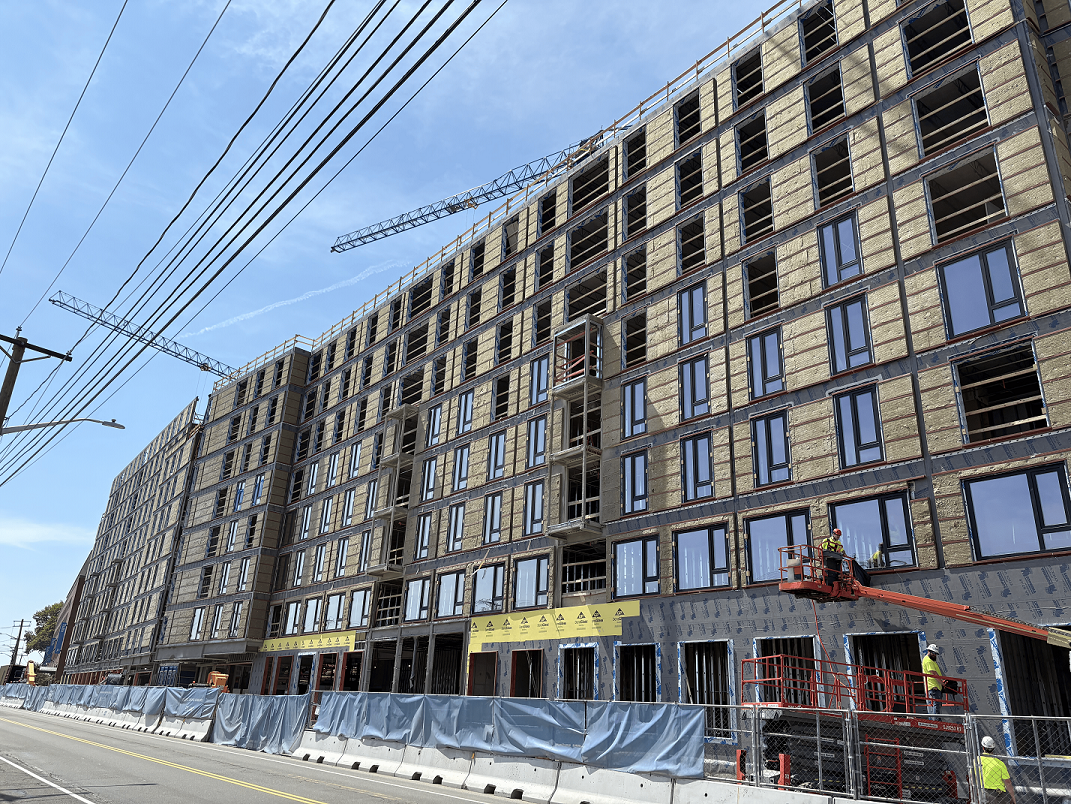
stick n move
Superstar
- Joined
- Oct 14, 2009
- Messages
- 13,486
- Reaction score
- 24,574
I was just thinking about this last night how far along it was, thanks for the update.
stevebikes
Active Member
- Joined
- May 14, 2013
- Messages
- 307
- Reaction score
- 217
May 23. I think the one on the left is topped off now.
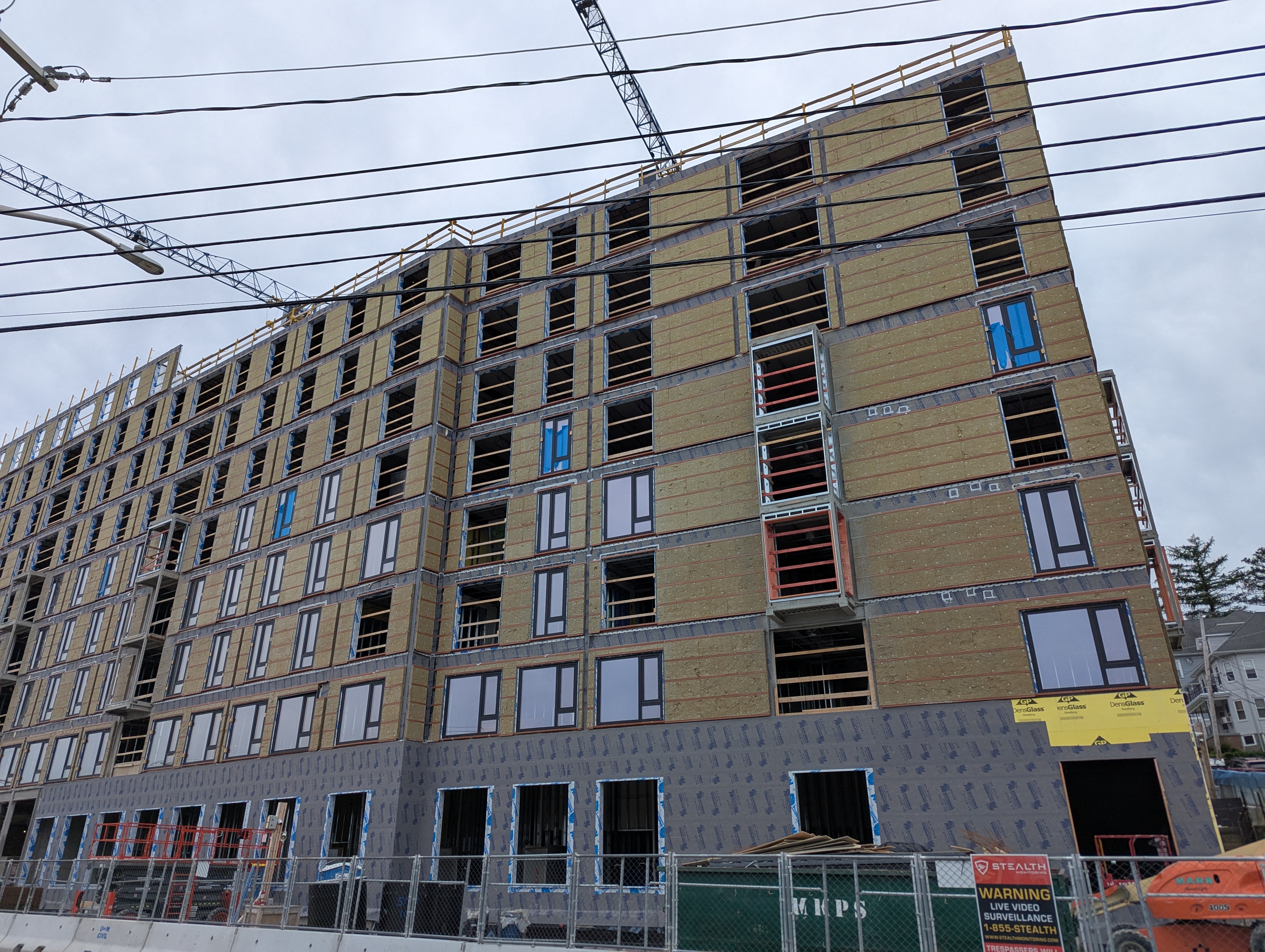
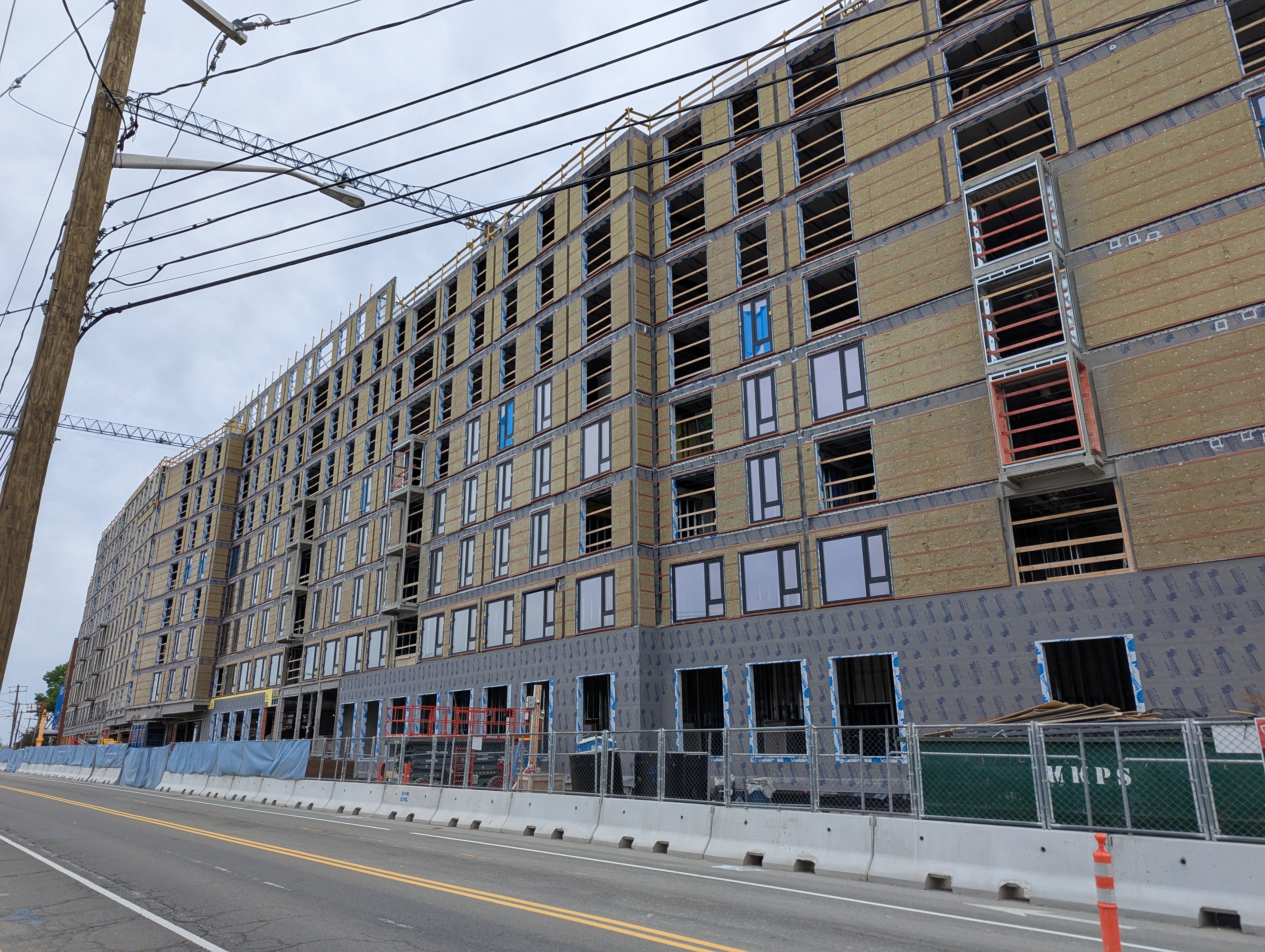
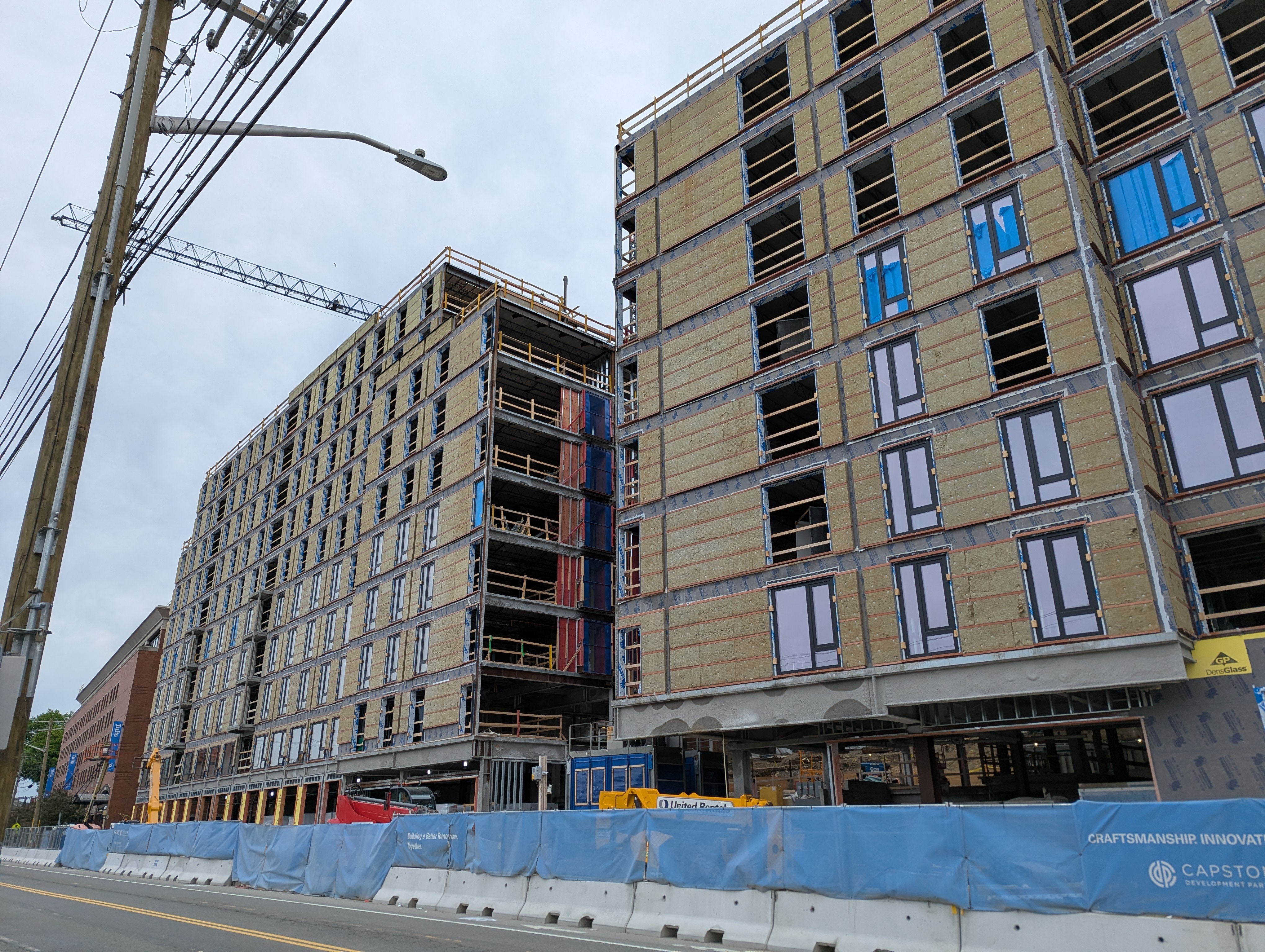
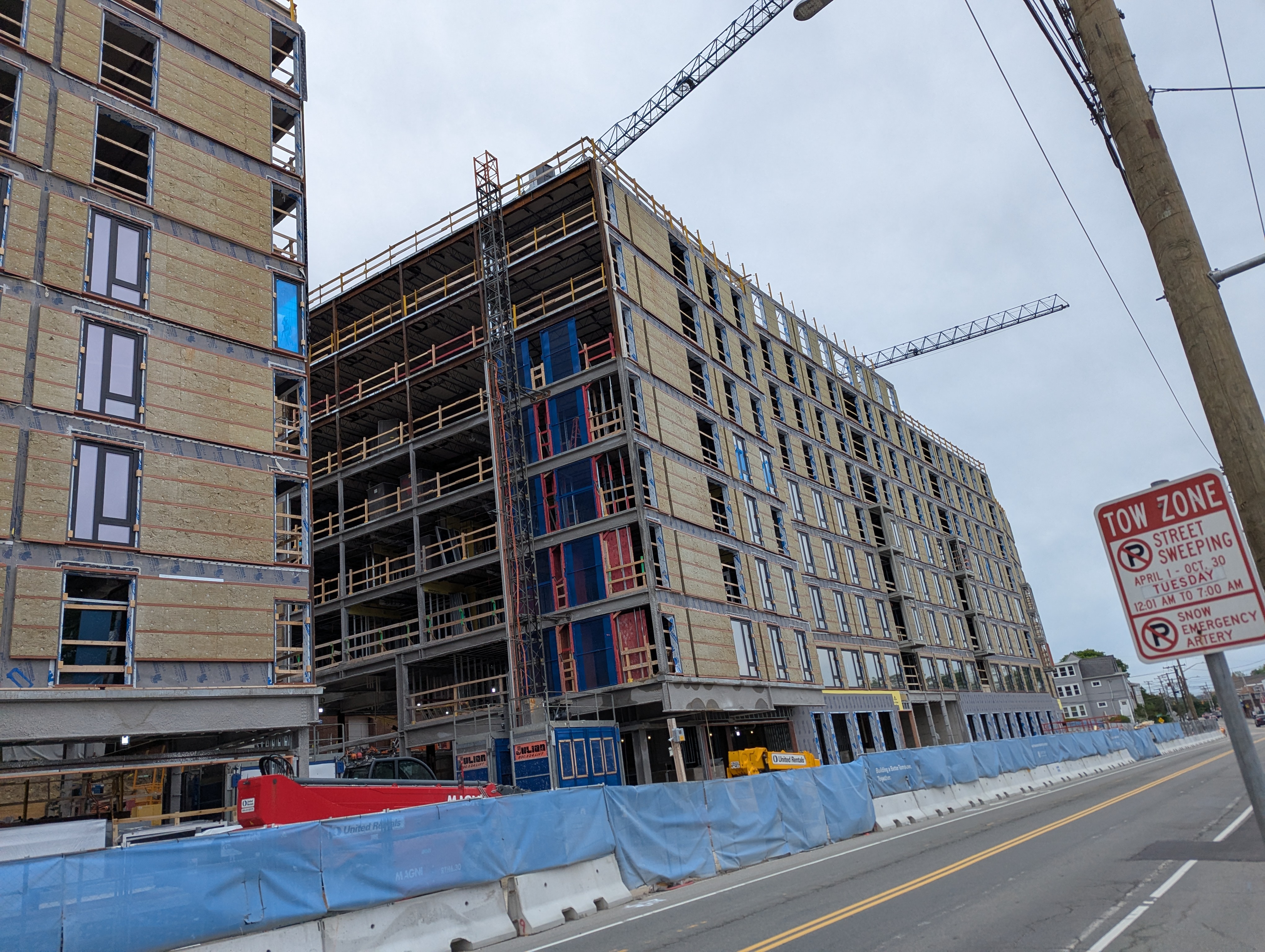
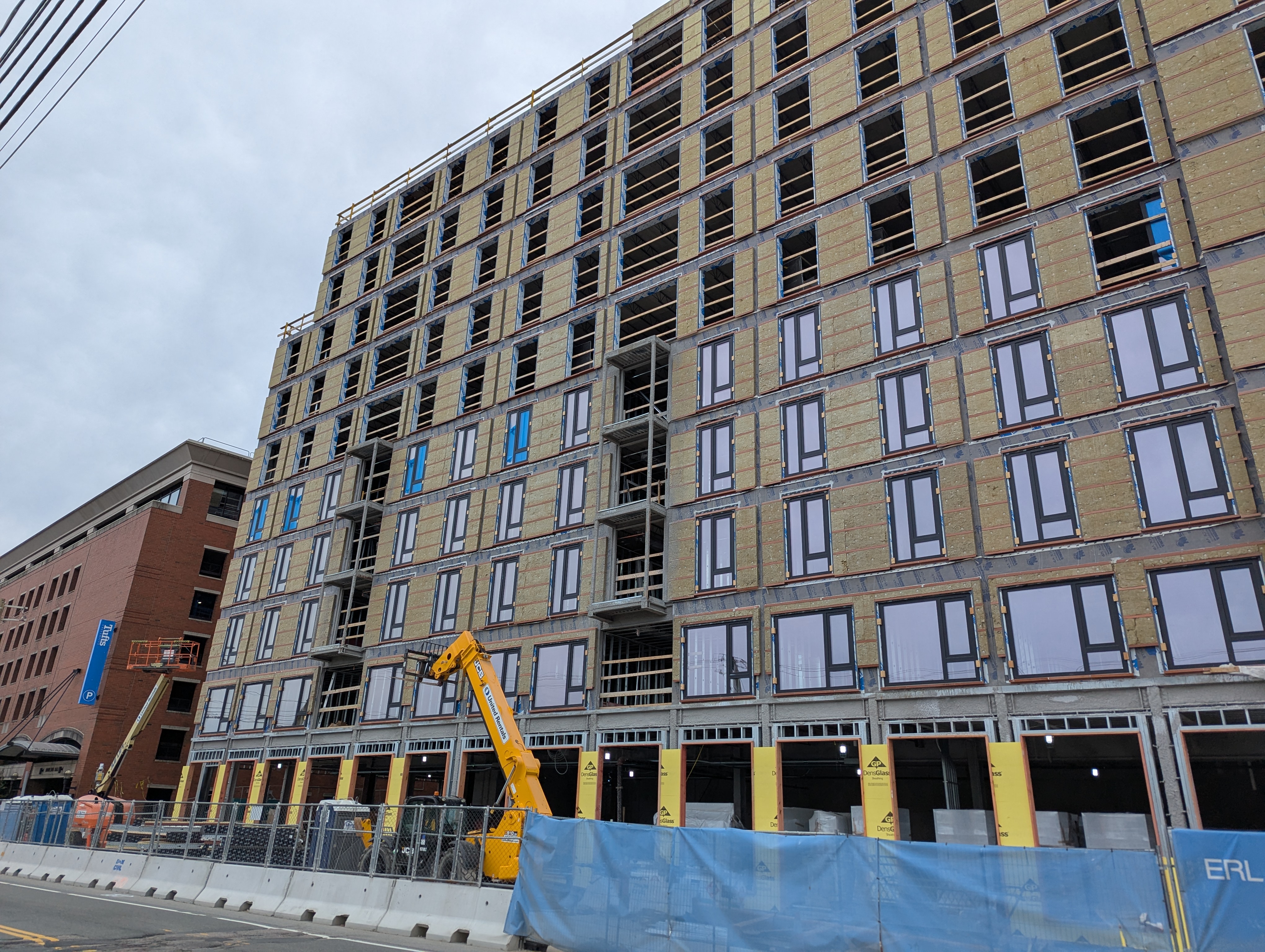
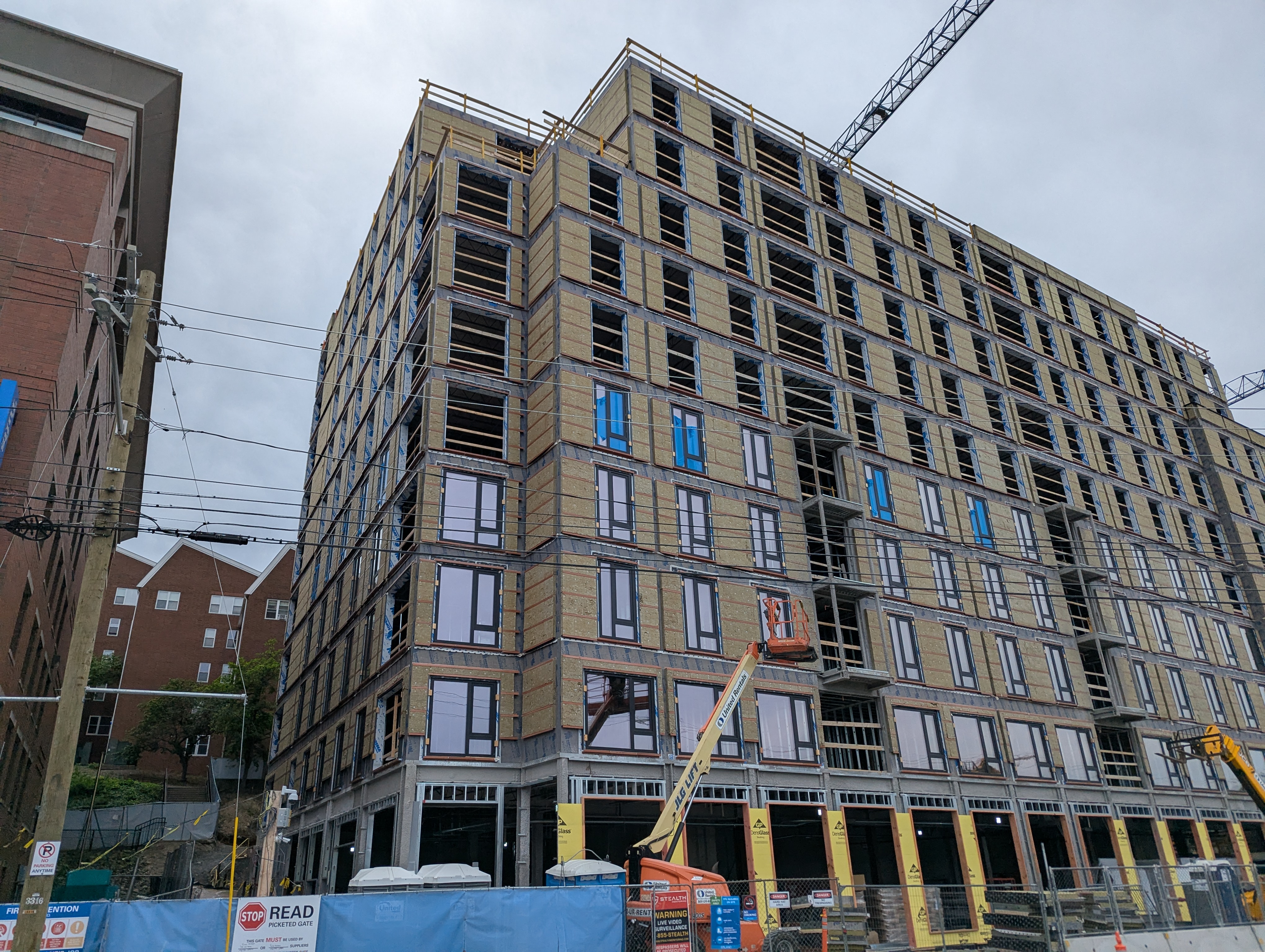
stevebikes
Active Member
- Joined
- May 14, 2013
- Messages
- 307
- Reaction score
- 217
I'm curious about the timing here. I assume there's no way they're completely done by the start of fall semester. But if this is meant to be filled with students who normally rent apartments, is it going to sit empty for a year? Or will Tufts make people break their leases in January? Or do something else with it for a year?
The temp housing is still sitting on the tennis courts, so maybe those people will move first.
The temp housing is still sitting on the tennis courts, so maybe those people will move first.
JumboBuc
Senior Member
- Joined
- Jun 26, 2013
- Messages
- 2,808
- Reaction score
- 1,995
I'm curious about the timing here. I assume there's no way they're completely done by the start of fall semester. But if this is meant to be filled with students who normally rent apartments, is it going to sit empty for a year? Or will Tufts make people break their leases in January? Or do something else with it for a year?
The temp housing is still sitting on the tennis courts, so maybe those people will move first.

Boston Avenue residence hall construction progresses despite winter setbacks - The Tufts Daily
Construction of Tufts’ new residence hall on Boston Avenue is steadily progressing, with project leaders estimating completion by July 2027. Led by developer group Capstone Development Partners and general contractor Erland Construction, the hall aims to ease housing pressures and reshape...
 www.tuftsdaily.com
Construction of Tufts’ new residence hall on Boston Avenue is steadily progressing, with project leaders estimating completion by July 2027.
[...]
The development consists of two buildings, East and West, that will house more than 660 upperclassmen in apartment-style units. Most units are four-bedroom suites featuring a shared kitchen, common area, two bathrooms and large windows.
[...]
Applications for fall 2027 occupancy in the new residence hall will officially open this July, with the option for students to join a VIP list now available.
So basically the 2026-27 sophomores and juniors will sign leases on these apartments for the 2027-28 academic year (moving in late-summer 2027).
I'm very curious to see what this does to the rental market in the area. Deleting demand for ~165 apartments in the surrounding neighborhoods is a big deal.
Last edited:
RandomWalk
Senior Member
- Joined
- Feb 2, 2014
- Messages
- 3,793
- Reaction score
- 6,820
Maybe those landlords will start itching for the Mystic Valley Parkway extension of the Green Line.</sarcasm>
stevebikes
Active Member
- Joined
- May 14, 2013
- Messages
- 307
- Reaction score
- 217
Boston Avenue residence hall construction progresses despite winter setbacks - The Tufts Daily
Construction of Tufts’ new residence hall on Boston Avenue is steadily progressing, with project leaders estimating completion by July 2027. Led by developer group Capstone Development Partners and general contractor Erland Construction, the hall aims to ease housing pressures and reshape...
So basically the 2026-27 sophomores and juniors will sign leases on these apartments for the 2027-28 academic year (moving in late-summer 2027).
I'm very curious to see what this does to the rental market in the area. Deleting demand for ~165 apartments in the surrounding neighborhoods is a big deal.
How did I miss "Pachyderm Place"? Ha.
We're up on the hill off Curtis, we've got students behind, in front, on both sides. Never had an issue, they're all pretty chill, but some of the houses could use the love they'd presumably get if they were renting to grownups or hitting the market. At least a couple of landlords seem to be getting ahead of that.
stick n move
Superstar
- Joined
- Oct 14, 2009
- Messages
- 13,486
- Reaction score
- 24,574
