TheRatmeister
Senior Member
- Joined
- Sep 23, 2023
- Messages
- 1,580
- Reaction score
- 3,203
I travel a lot (arguably too much) and so I have a lot of random observations about transit and urbanism from various places, mostly Europe for now. This first batch is almost all transit-related but I'll post more things as I think of them while going through photos or encounter them out in the world. That does mean there is no particular order here, things are not sorted chronologically although everything is 2023 or later so nothing should be terribly out of date. Alright, let's begin.
Wuppertal Schwebebahn
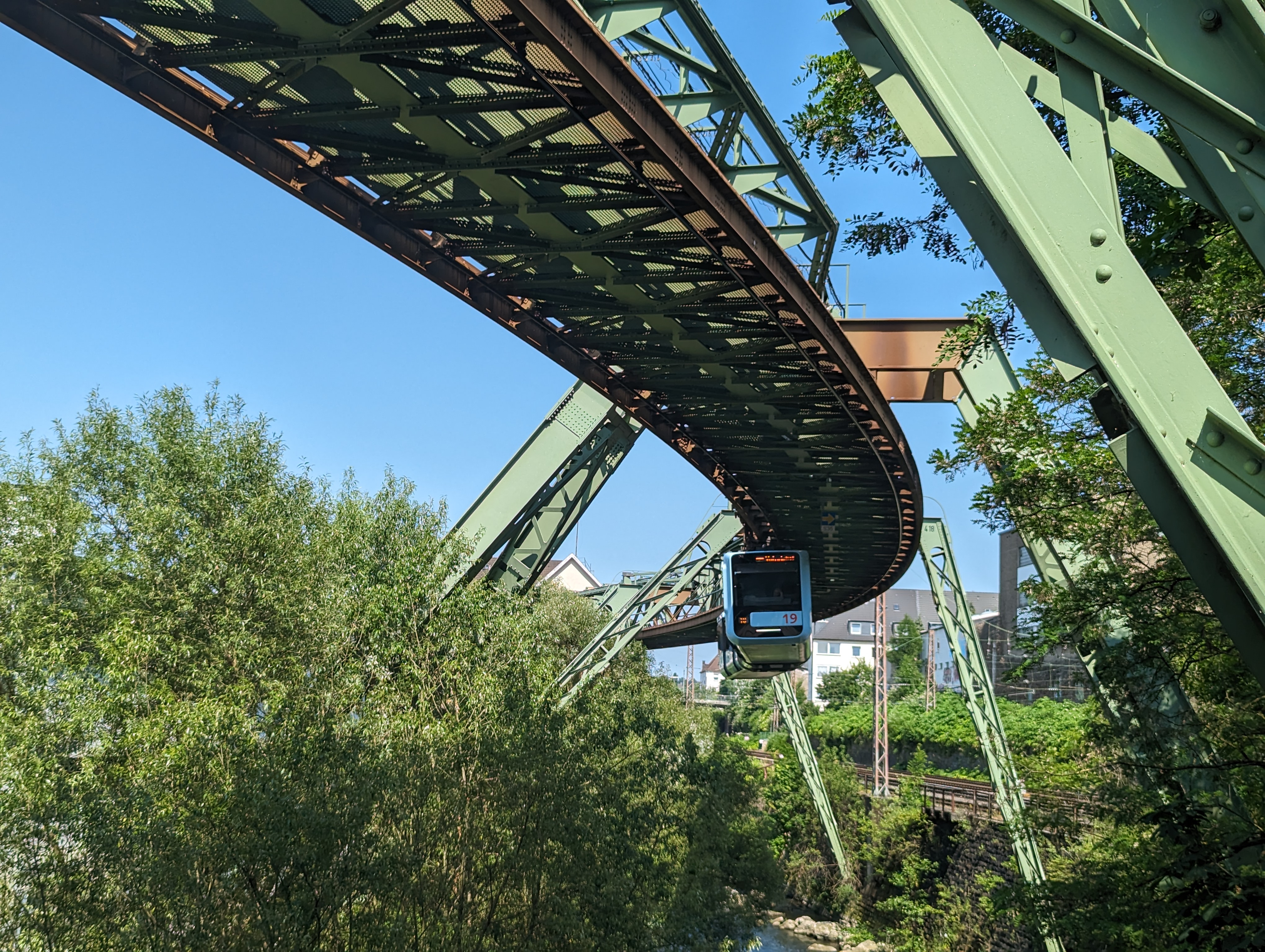
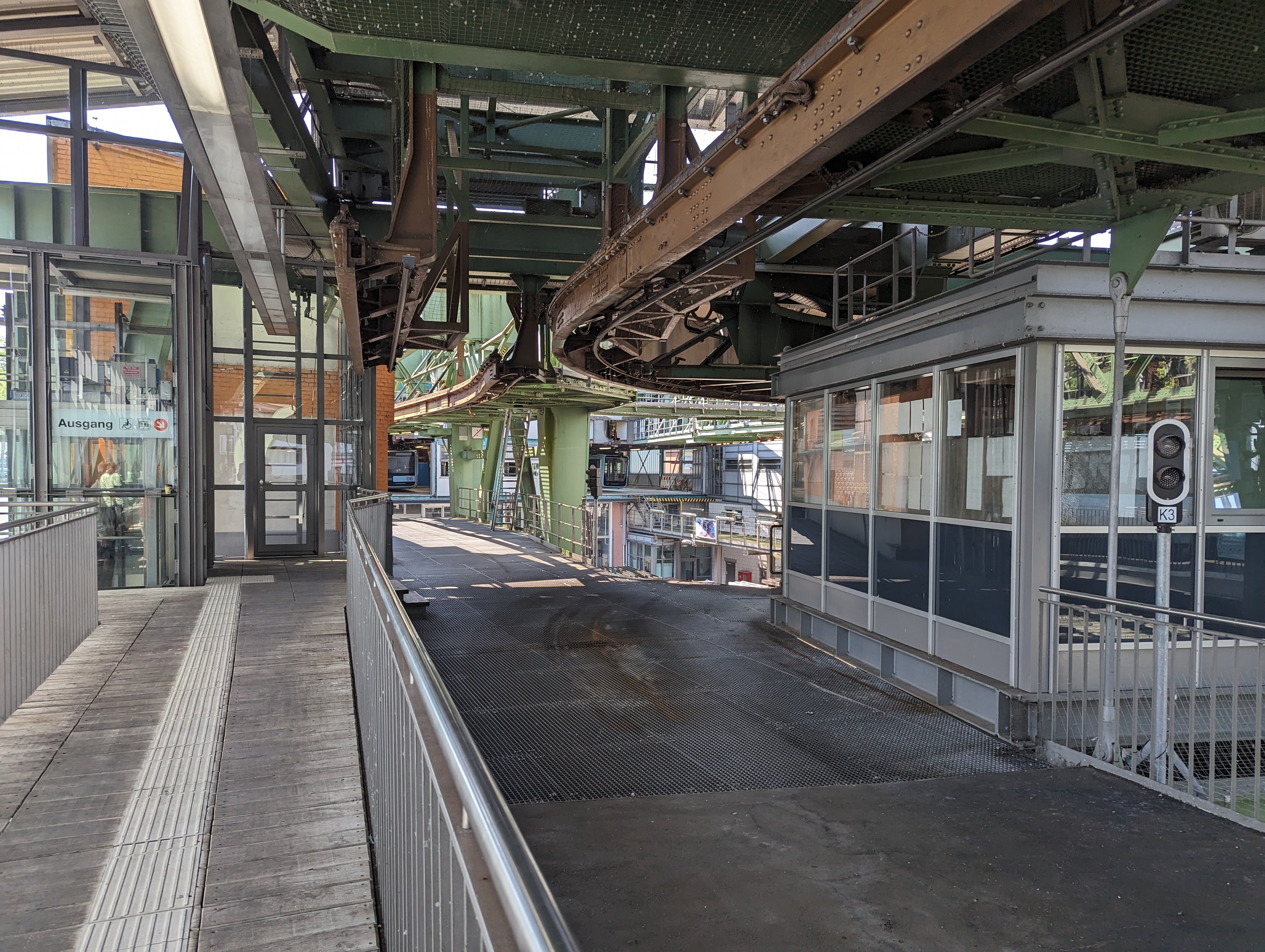
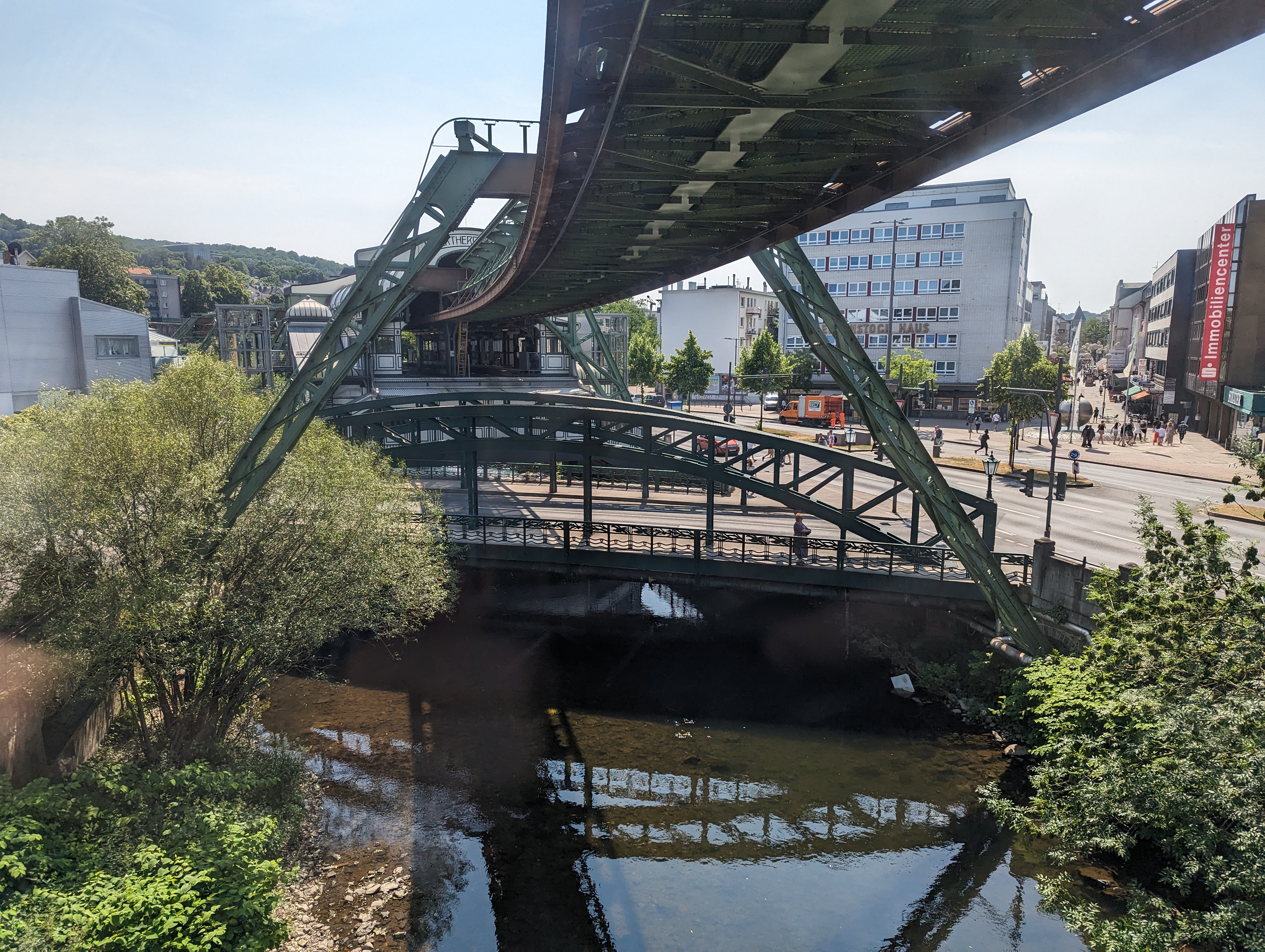
Obviously I had to make the pilgrimage, and it was 100% worth it. It's such an interesting and unique system I cannot recommend it enough. There are so many oddities that I'm probably missing some, but here are some thoughts and observations:
Archeo-stations
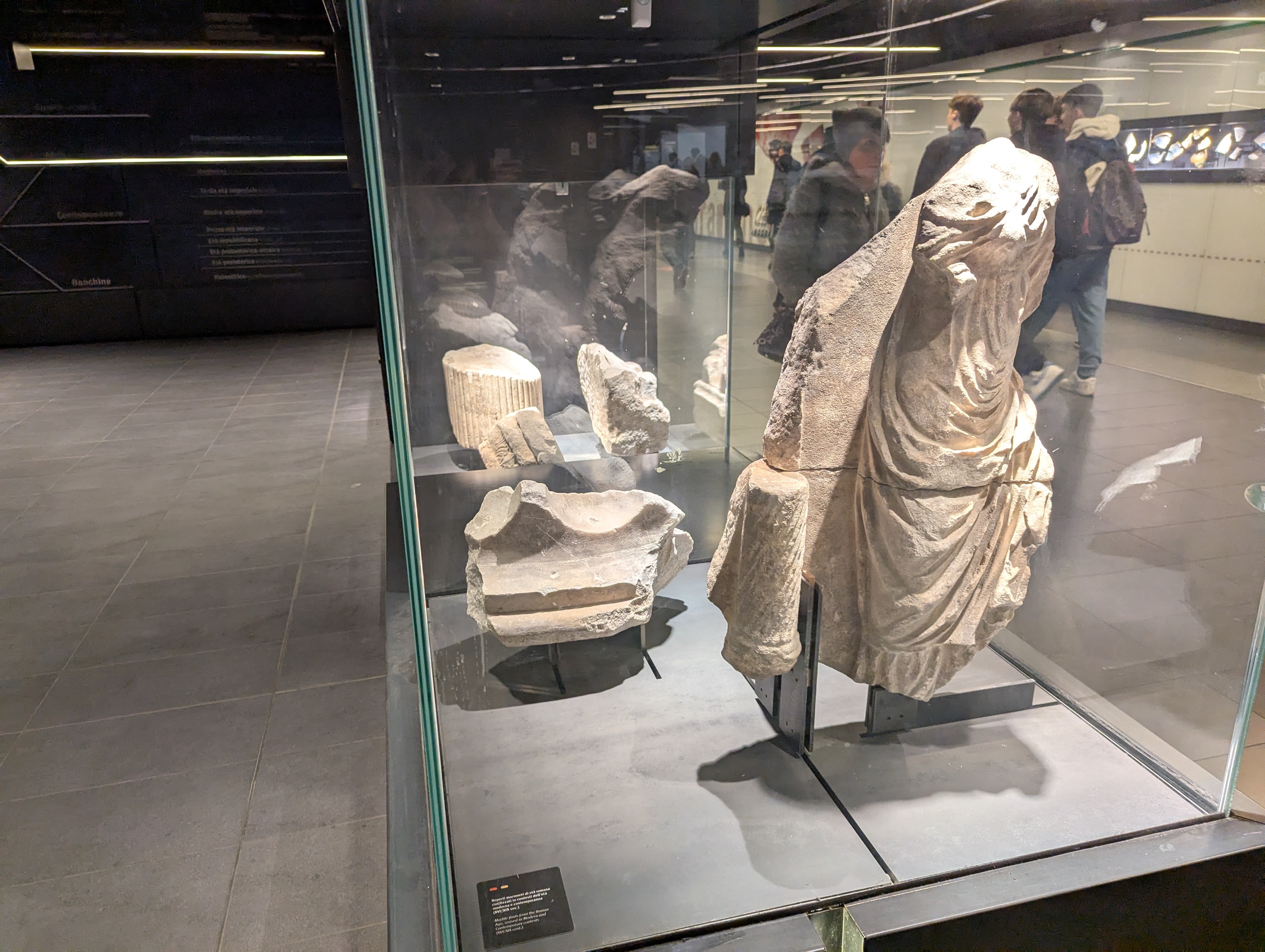
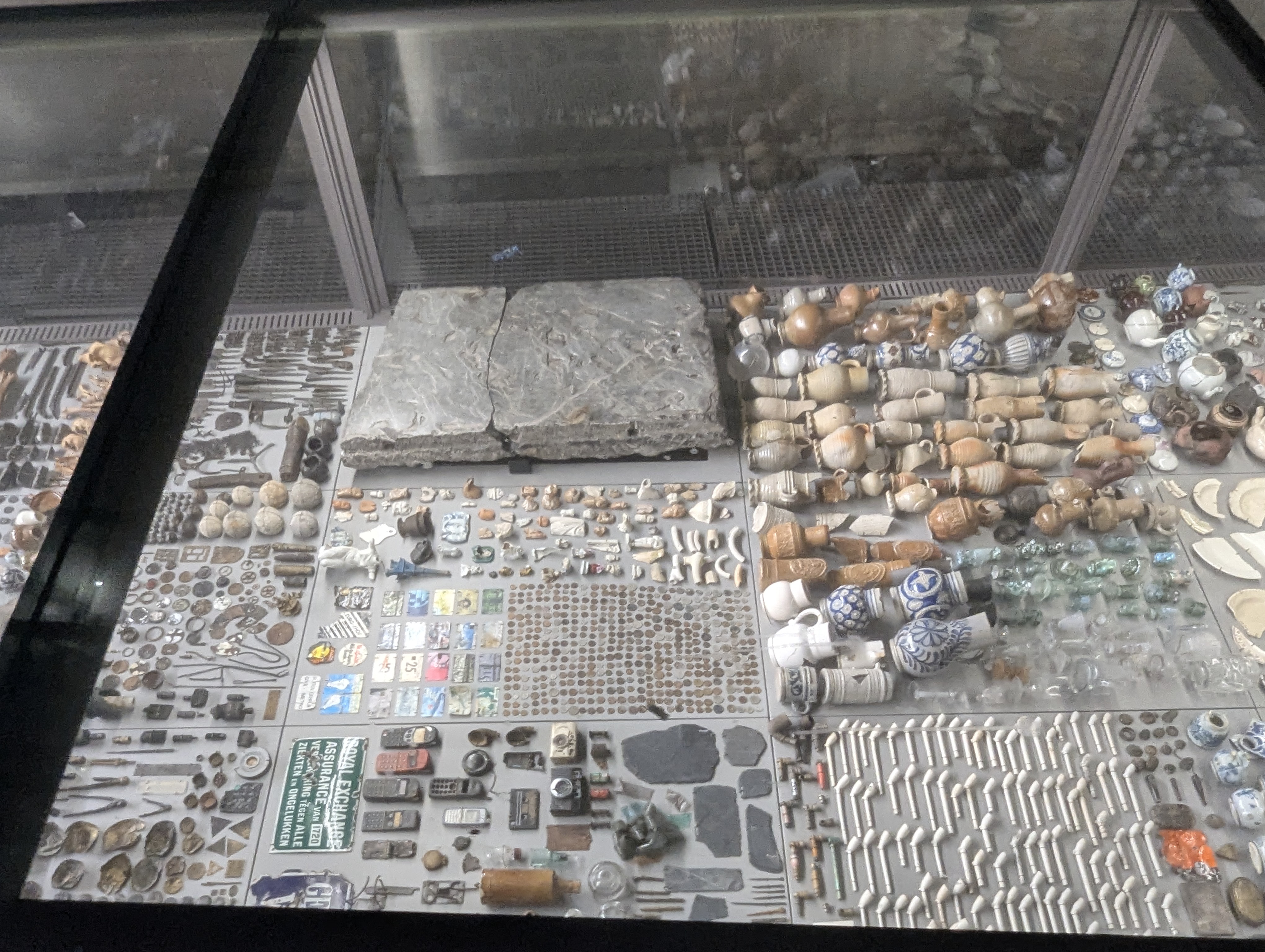
Two examples of so-called 'Archeo-stations' which incorporate artifacts dug up during their construction. The left is San Giovanni in Rome, the right is Rokin in Amersterdam.
Side note, the Rome metro is up there with SEPTA for the worst, grimiest metro system I've ridden.
Christmas Market Tram (Bremen)
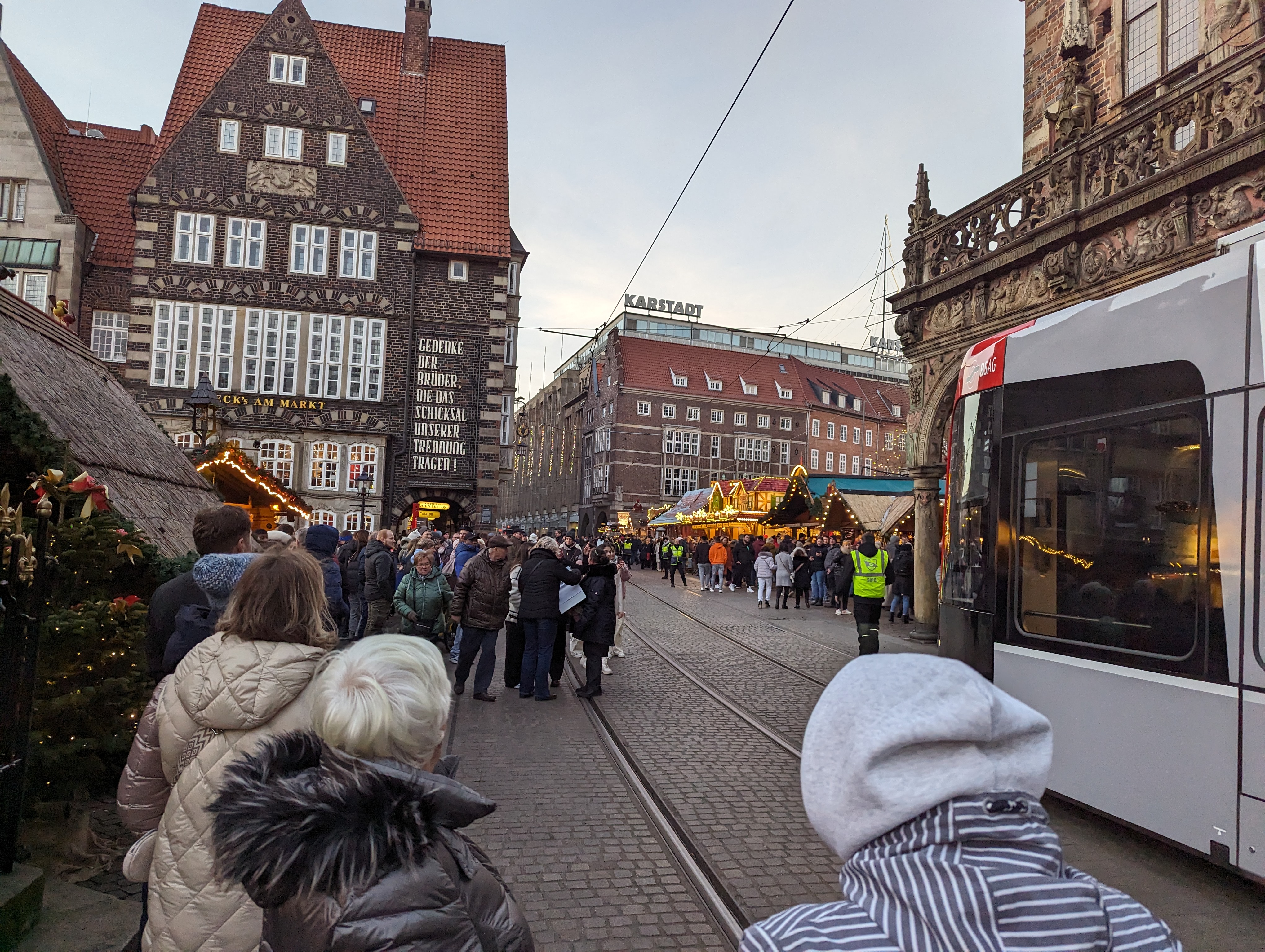
Pictured is a tram running down a very busy street at the Christmas Market in Bremen. The way they avoid hitting anyone is by literally having someone walk in front with a bell to clear the tracks. Once the tram passes everyone re-fills the street. There is also a Santa tram but I did not get a picture
How to avoid wasted space with tram loops (Dnipro)
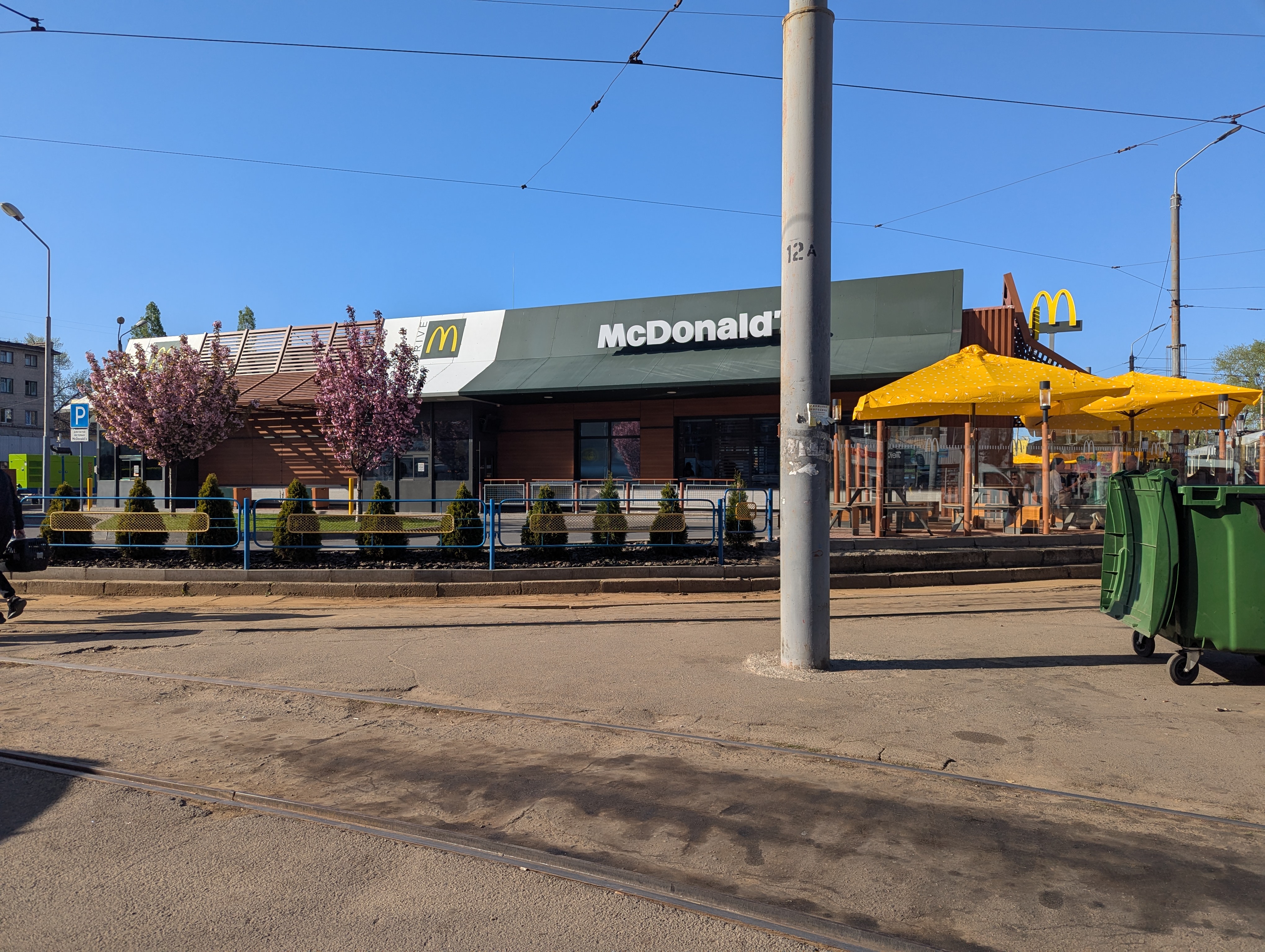
For cities that operate unidirectional trams, either because they haven't bought new vehicles or other less sensible reasons, loops are a requirement. But this doesn't mean it needs to be wasted space, you could put a McDonalds in the middle.
Supercapacitor trams
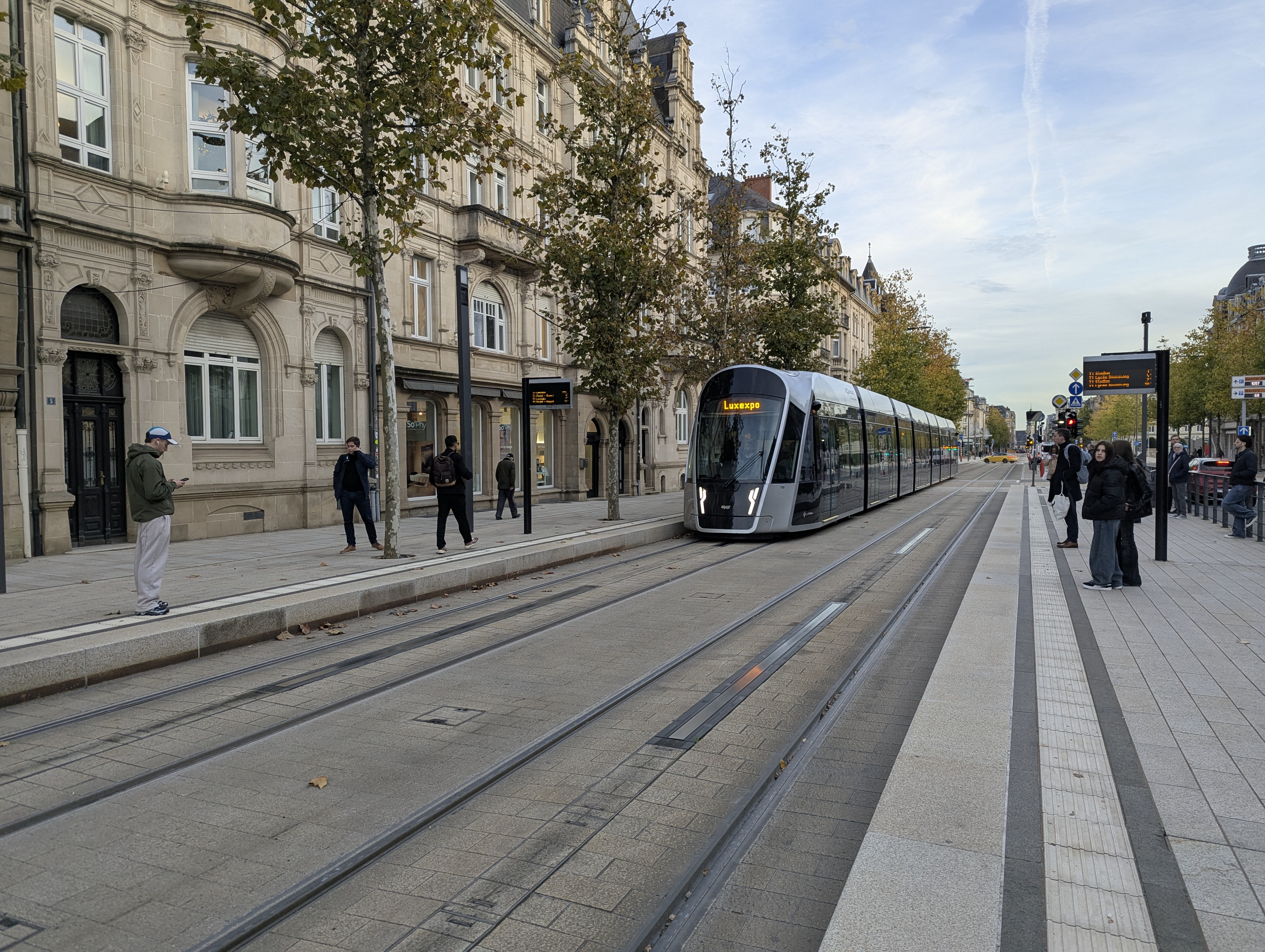
Recently I rode my very first battery (okay, Supercapacitor) electric rail vehicle, the Luxembourg tramway. I can now very definitively say that this is not the future. Dwells at each stop were consistently 15-30s longer than they needed to be, and of course there's no skipping stops if it's not busy. This system is designed by CAF, it's their 'ACR' system. Alstom has a much better design which while still proprietary uses a continuous conduit rail with sensors that prevent power from flowing unless the vehicle is actually over it. If you must have a tram without overhead lines, that's a significantly better solution.
Nieuwmarkt station (Amsterdam)
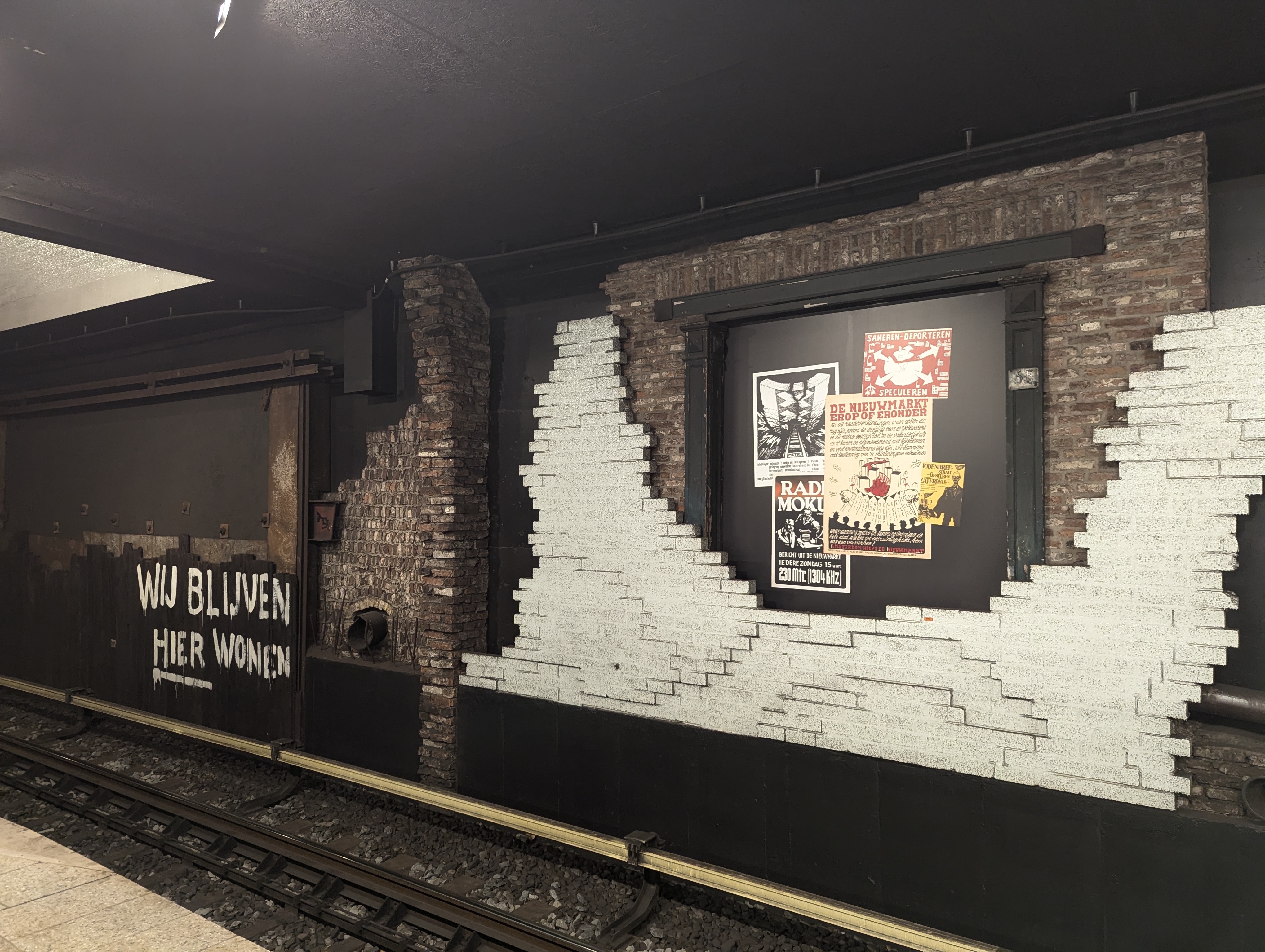
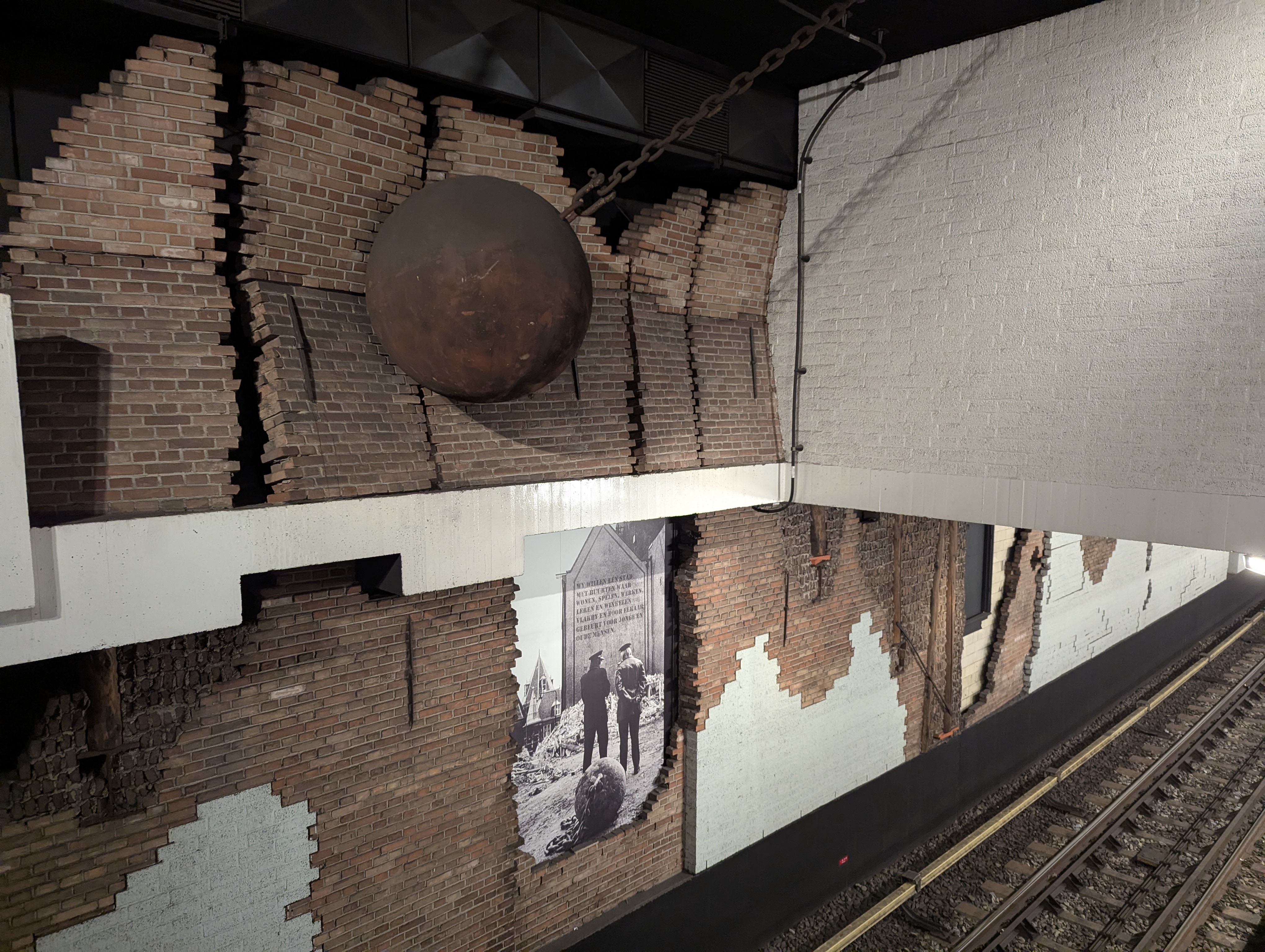
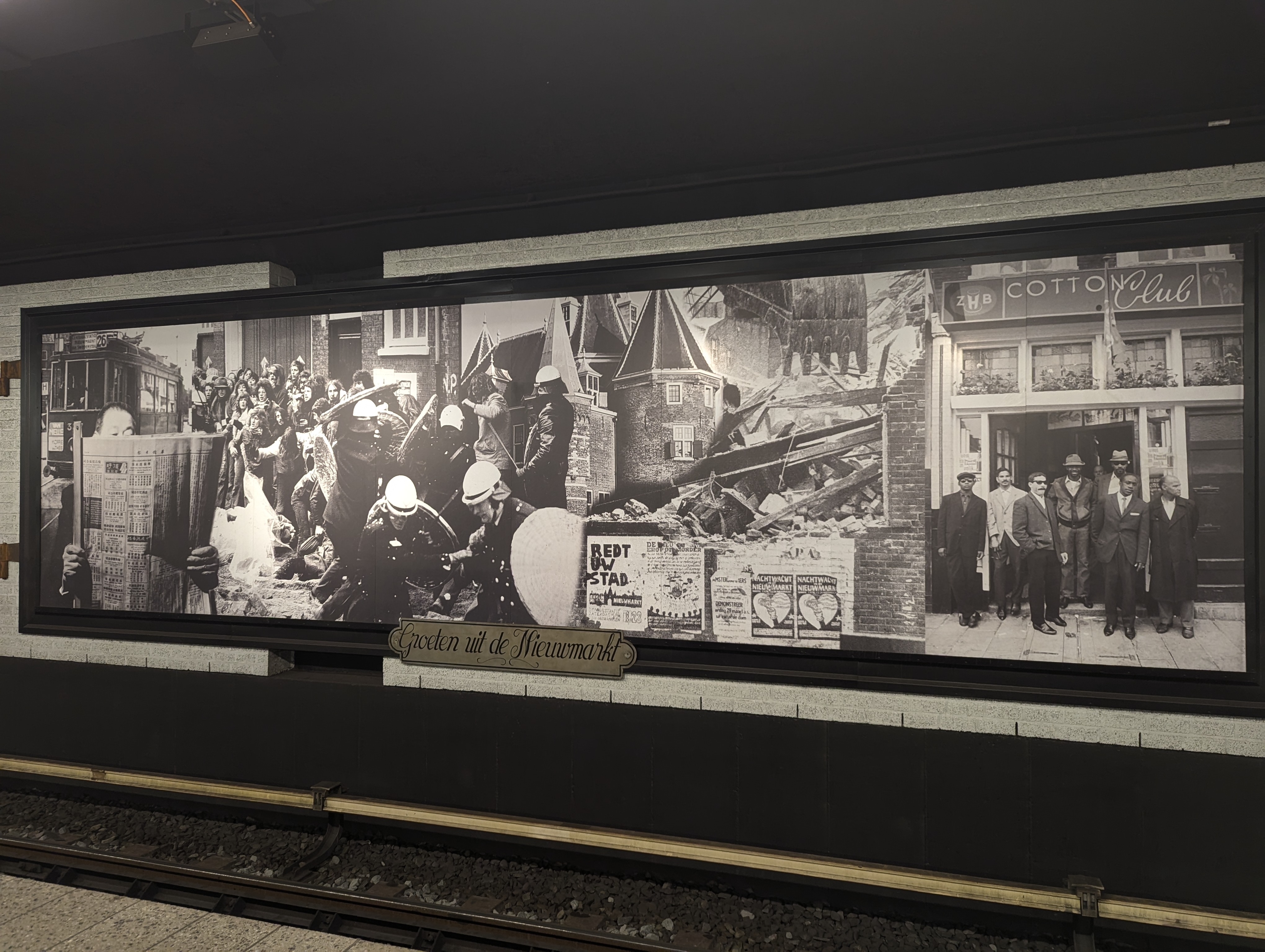
I posted about this station a little bit in the metro photography thread but a bit more here. When the Amsterdam Metro was constructed in the 1970s it was decided to build it cut-and-cover... through a built up neighborhood, requiring the demolition of entire blocks. Unsurprisingly this didn't go over terribly well but despite riots the city stayed the course and the metro was built. However it was decided to abandon any future metro plans (until the Nord-Zuid line in the 21st century) as a result. The station is filled with photos, sculptures, and artworks that reflect this. My favorite is the third photo, a giant picture frame filled with photos, both cheery and very not, labeled 'Greetings from the Nieuwmarkt.' On the floor (no photos, it was too big to really take a picture of) are tiles that write: 'Huisvesting is geen privilege, maar een recht' (Housing is not a privilege but a right).
It's a very powerful place to be, and it was impossible not to think of Scollay Square and Government Center too. I do not think nearly enough people are aware of the crimes committed by the BRA in the 1960s and I think some "greetings from Scollay Square" 'postcards' in Government Center station would go a long way towards helping that.
Platform Gates (Sofia)
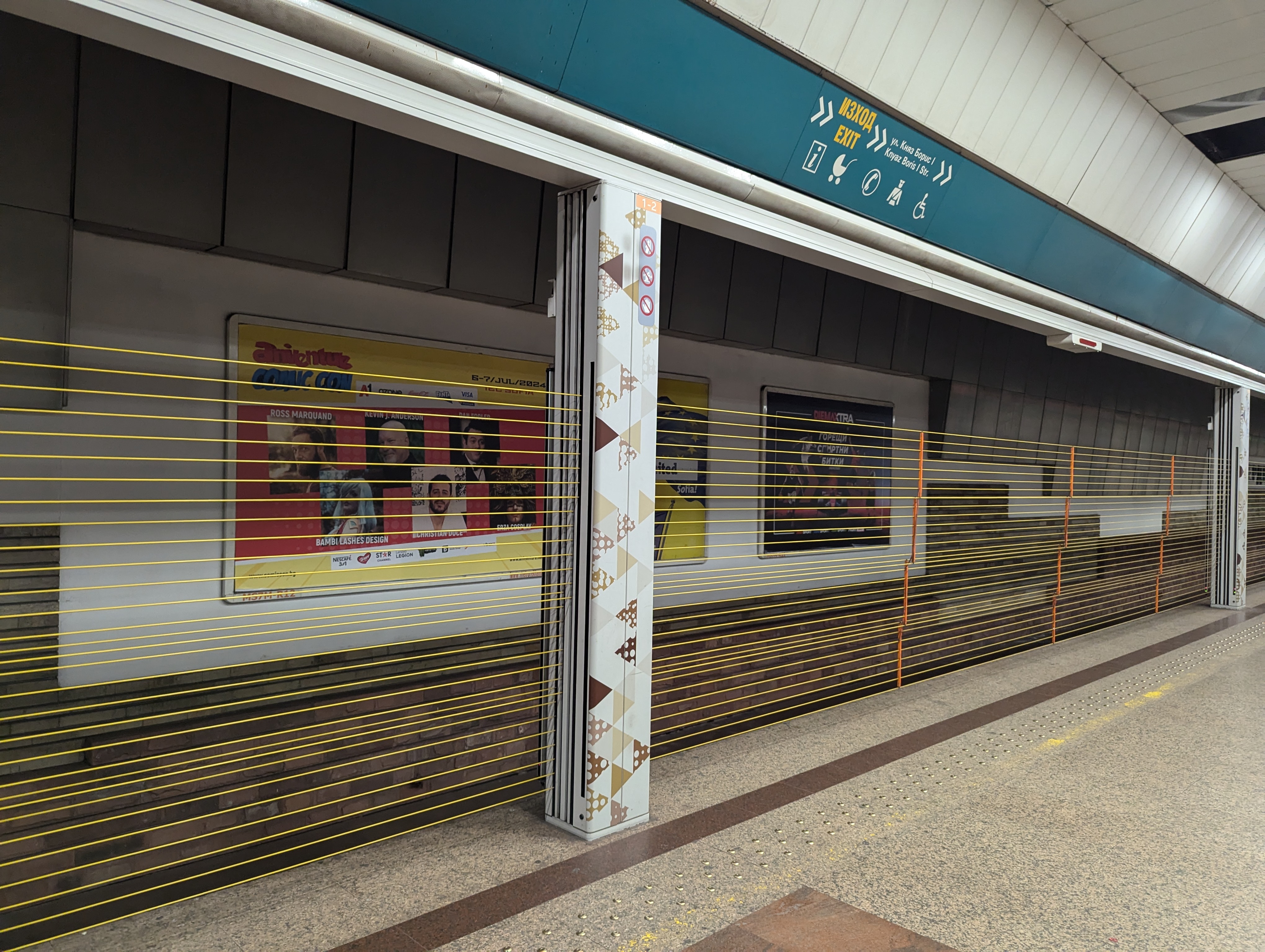
No precise train-control to allow for platform screen doors? Sofia says no problem, just install big gates across the whole platform instead. They roll up after a train comes in and roll back down as it leaves, like the grates in front of mall stores. The downside is that because train stopping locations are only precise-ish, the pilars will sometimes block some of the doors.
Wuppertal Schwebebahn
Obviously I had to make the pilgrimage, and it was 100% worth it. It's such an interesting and unique system I cannot recommend it enough. There are so many oddities that I'm probably missing some, but here are some thoughts and observations:
- The vehicles are actually one-way. This means they have to go around loops at the end of the line, which was presumably done to minimize the number of track switches. This is a true monorail (Unlike the SAFEGE and SIPEM systems), and it does need monorail switches where entire segments of track need to move. Definitely faster than the concrete ones but still. No you're not allowed to go around the loop, I tried.
- Because the vehicles are one-way, they have excellent large windows on the back (see picture 3). If you want to try and snag a window seat by getting on at the terminus there may be a line. Also popular with children because obviously.
- The cars sway noticeably when people are getting on/off. This means there needs to be more clearance between the platform and trains, so no step-free access.
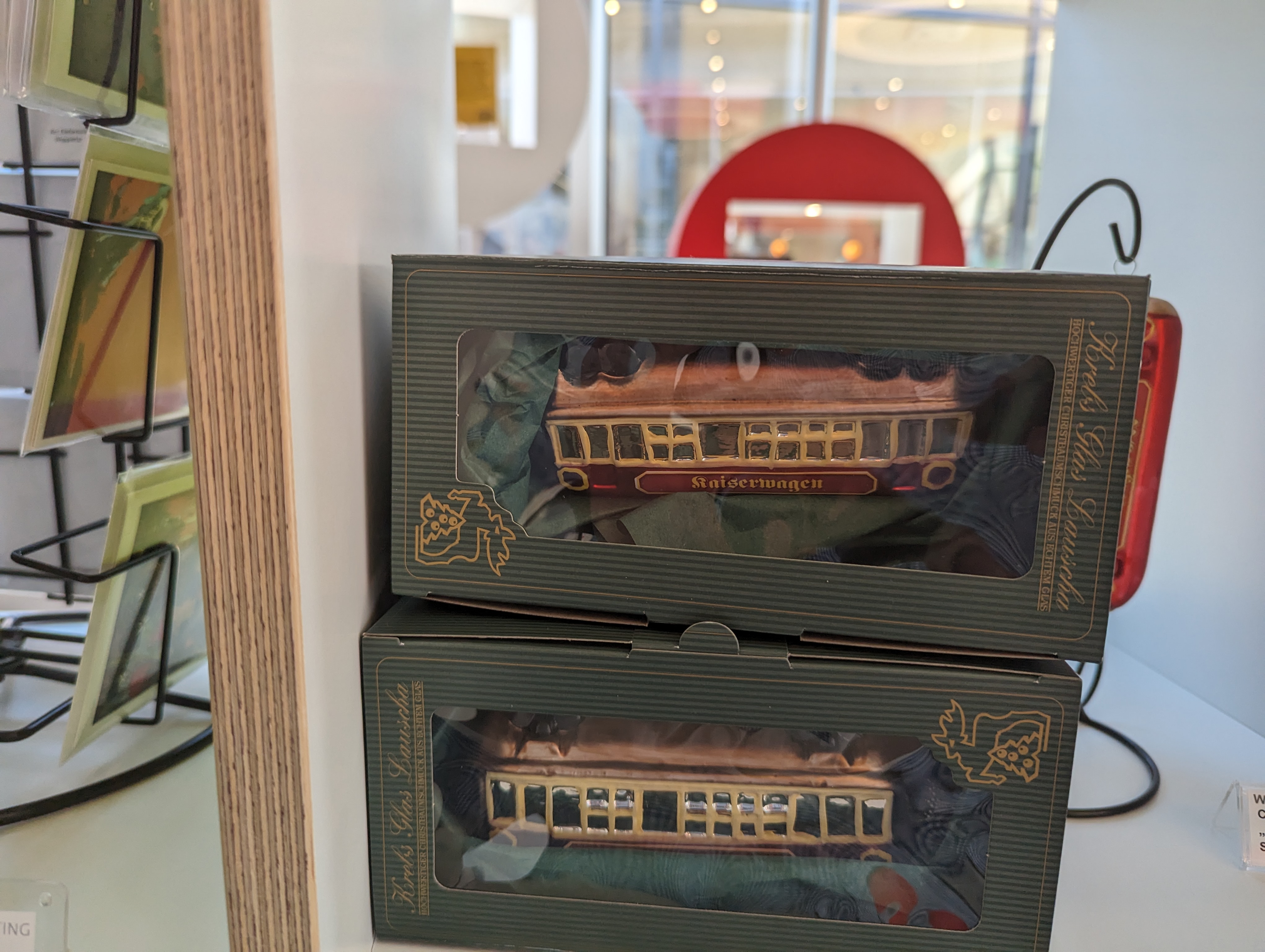
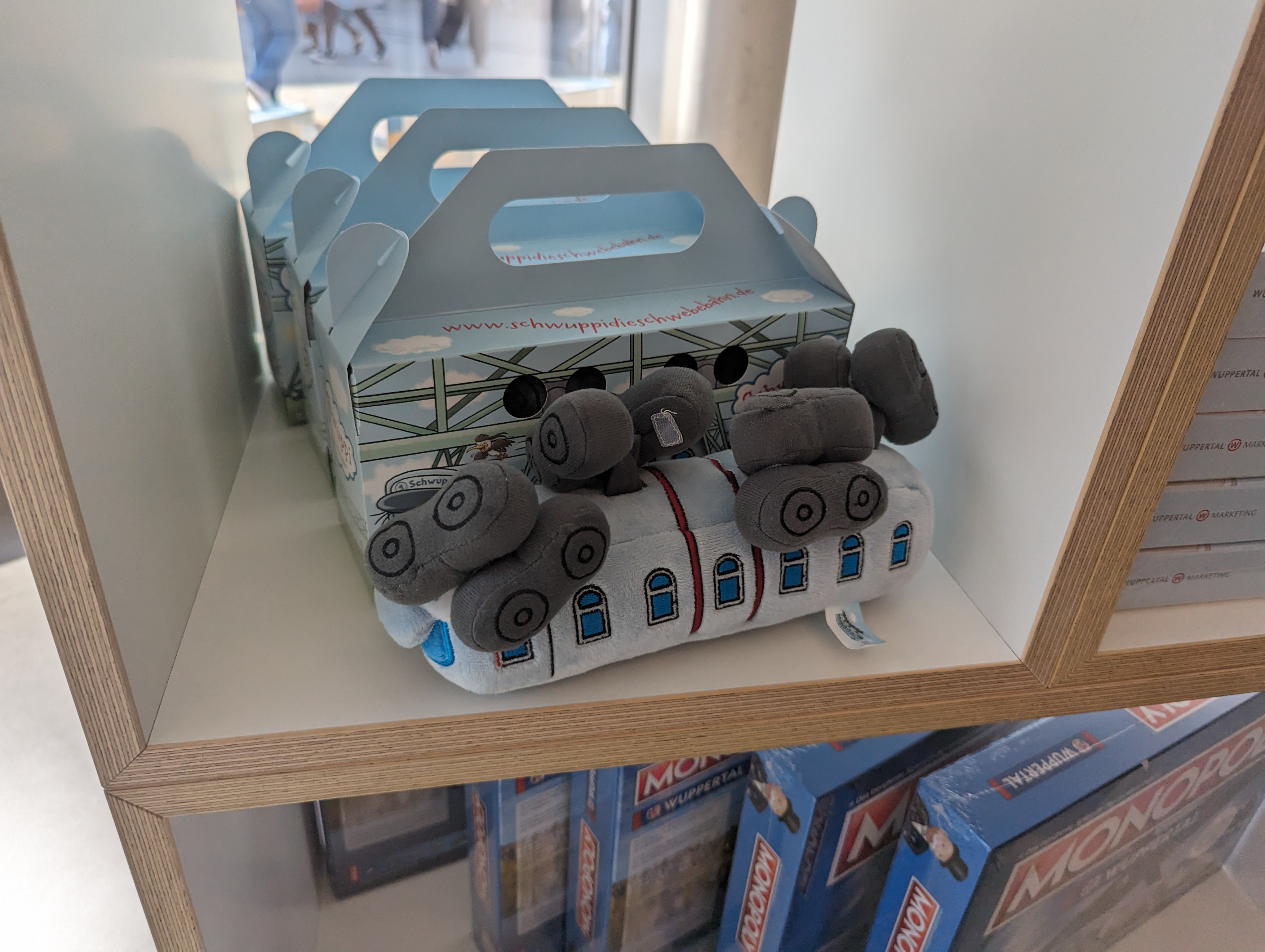
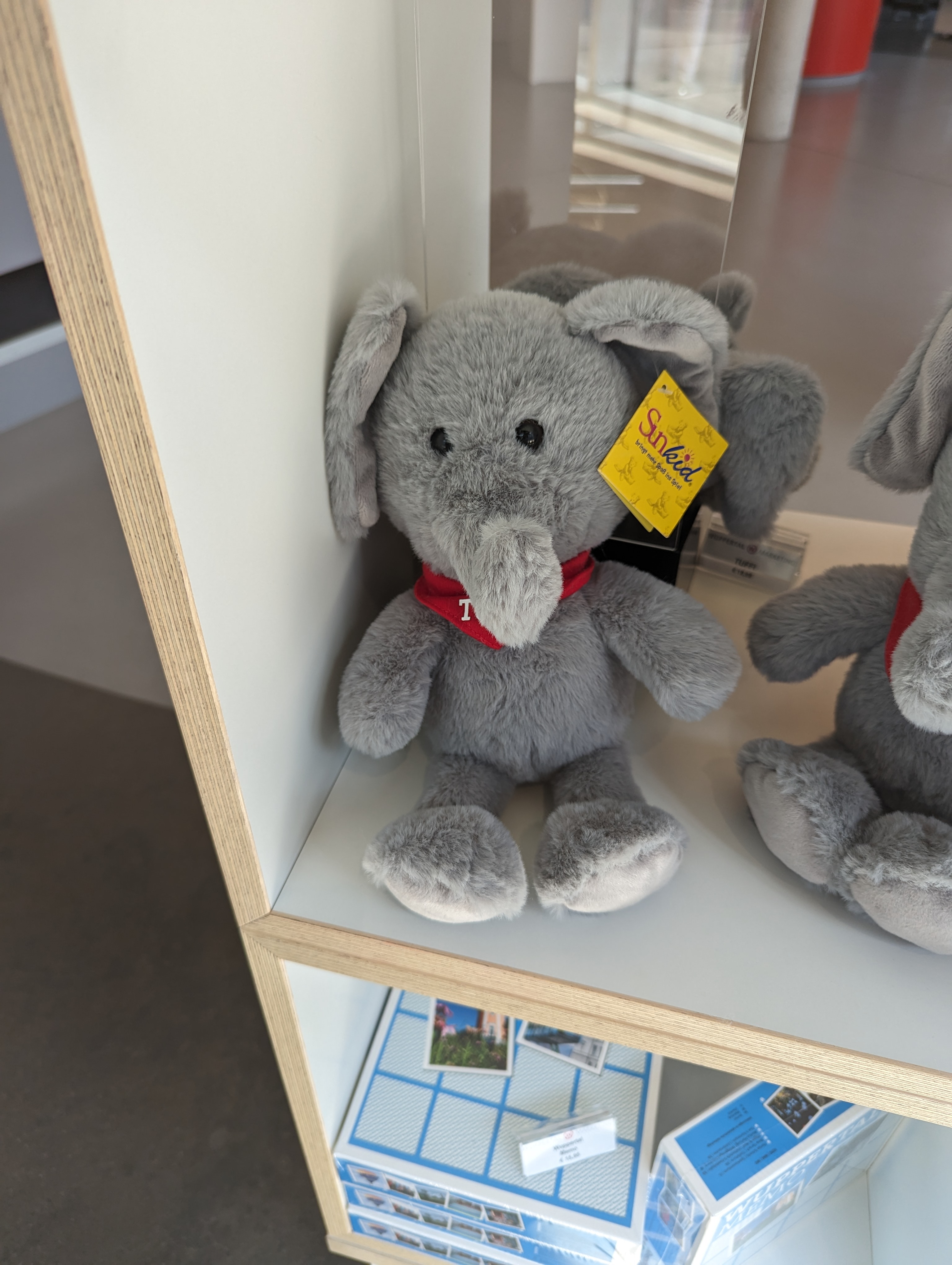
- There is a gift shop, and it is amazing.
Archeo-stations
Two examples of so-called 'Archeo-stations' which incorporate artifacts dug up during their construction. The left is San Giovanni in Rome, the right is Rokin in Amersterdam.
Side note, the Rome metro is up there with SEPTA for the worst, grimiest metro system I've ridden.
Christmas Market Tram (Bremen)
Pictured is a tram running down a very busy street at the Christmas Market in Bremen. The way they avoid hitting anyone is by literally having someone walk in front with a bell to clear the tracks. Once the tram passes everyone re-fills the street. There is also a Santa tram but I did not get a picture
How to avoid wasted space with tram loops (Dnipro)
For cities that operate unidirectional trams, either because they haven't bought new vehicles or other less sensible reasons, loops are a requirement. But this doesn't mean it needs to be wasted space, you could put a McDonalds in the middle.
Supercapacitor trams
Recently I rode my very first battery (okay, Supercapacitor) electric rail vehicle, the Luxembourg tramway. I can now very definitively say that this is not the future. Dwells at each stop were consistently 15-30s longer than they needed to be, and of course there's no skipping stops if it's not busy. This system is designed by CAF, it's their 'ACR' system. Alstom has a much better design which while still proprietary uses a continuous conduit rail with sensors that prevent power from flowing unless the vehicle is actually over it. If you must have a tram without overhead lines, that's a significantly better solution.
Nieuwmarkt station (Amsterdam)
I posted about this station a little bit in the metro photography thread but a bit more here. When the Amsterdam Metro was constructed in the 1970s it was decided to build it cut-and-cover... through a built up neighborhood, requiring the demolition of entire blocks. Unsurprisingly this didn't go over terribly well but despite riots the city stayed the course and the metro was built. However it was decided to abandon any future metro plans (until the Nord-Zuid line in the 21st century) as a result. The station is filled with photos, sculptures, and artworks that reflect this. My favorite is the third photo, a giant picture frame filled with photos, both cheery and very not, labeled 'Greetings from the Nieuwmarkt.' On the floor (no photos, it was too big to really take a picture of) are tiles that write: 'Huisvesting is geen privilege, maar een recht' (Housing is not a privilege but a right).
It's a very powerful place to be, and it was impossible not to think of Scollay Square and Government Center too. I do not think nearly enough people are aware of the crimes committed by the BRA in the 1960s and I think some "greetings from Scollay Square" 'postcards' in Government Center station would go a long way towards helping that.
Platform Gates (Sofia)
No precise train-control to allow for platform screen doors? Sofia says no problem, just install big gates across the whole platform instead. They roll up after a train comes in and roll back down as it leaves, like the grates in front of mall stores. The downside is that because train stopping locations are only precise-ish, the pilars will sometimes block some of the doors.