TheRatmeister's transit, and urbanism diaries

TheRatmeister

Senior Member
Joined
Sep 23, 2023
Messages
1,552
Reaction score
3,144
I travel a lot (arguably too much) and so I have a lot of random observations about transit and urbanism from various places, mostly Europe for now. This first batch is almost all transit-related but I'll post more things as I think of them while going through photos or encounter them out in the world. That does mean there is no particular order here, things are not sorted chronologically although everything is 2023 or later so nothing should be terribly out of date. Alright, let's begin.

Wuppertal Schwebebahn
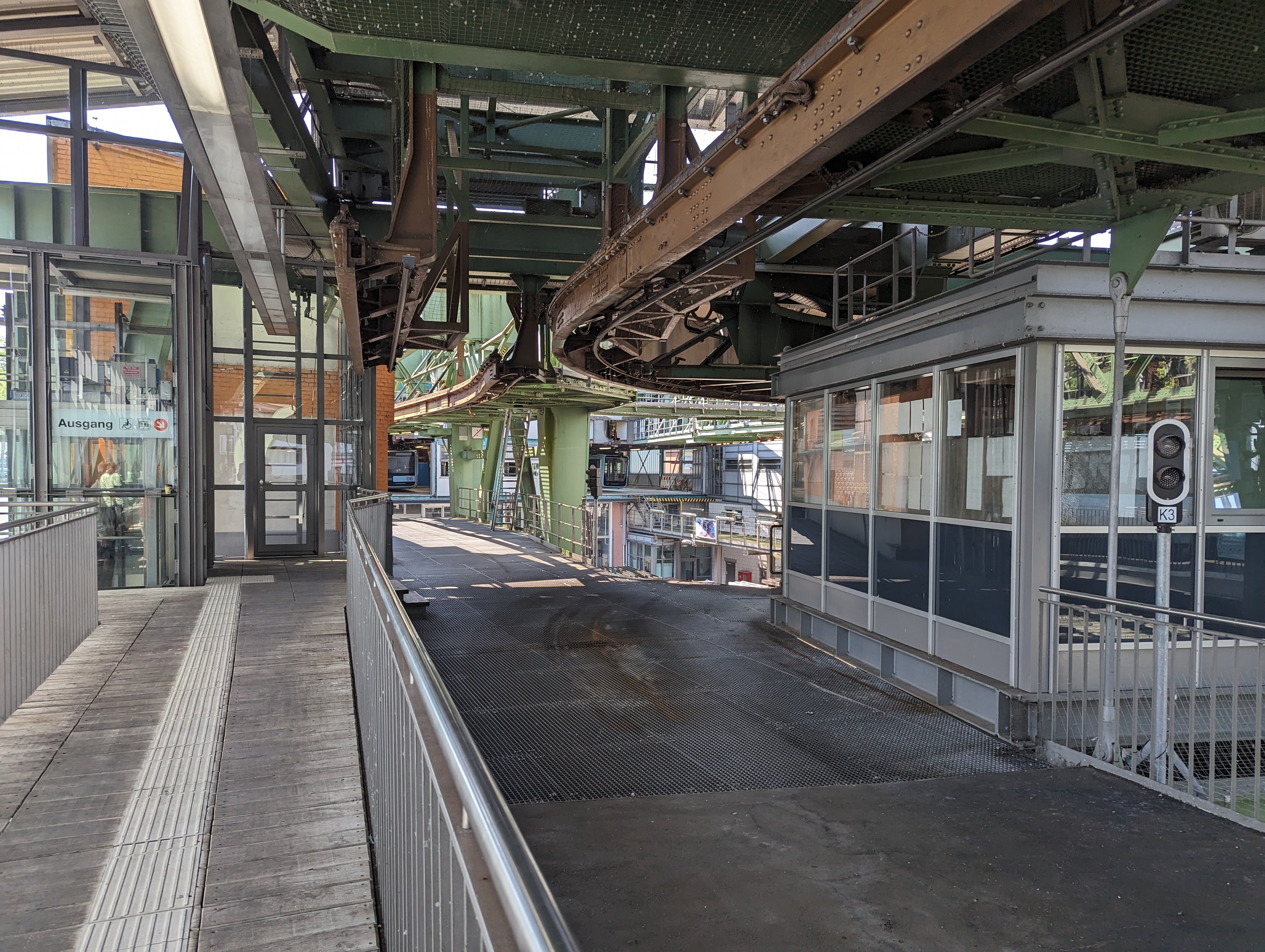
PXL_20230617_135448769.jpg
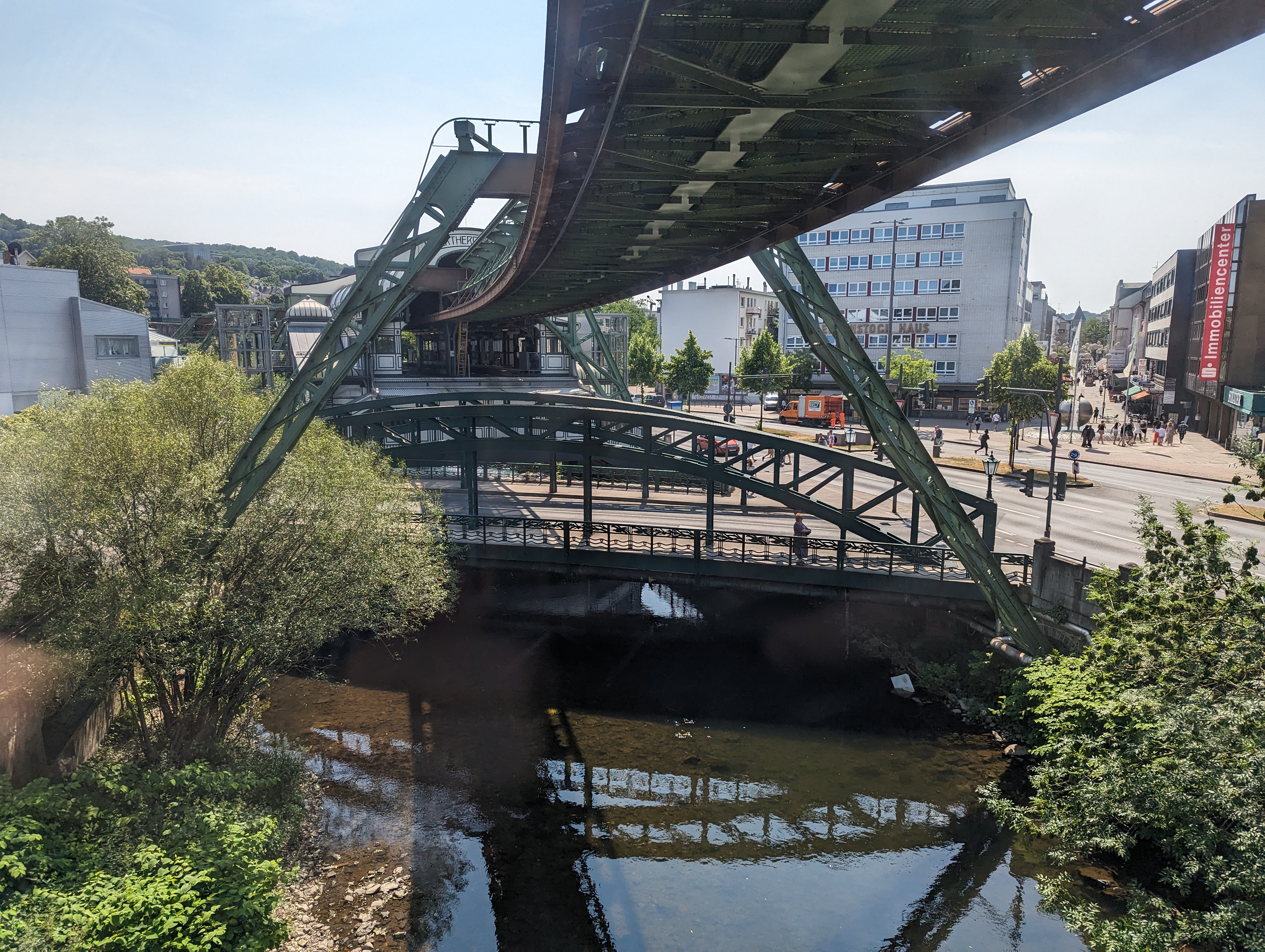
PXL_20230617_124957128.jpg
PXL_20230617_132901405.jpg

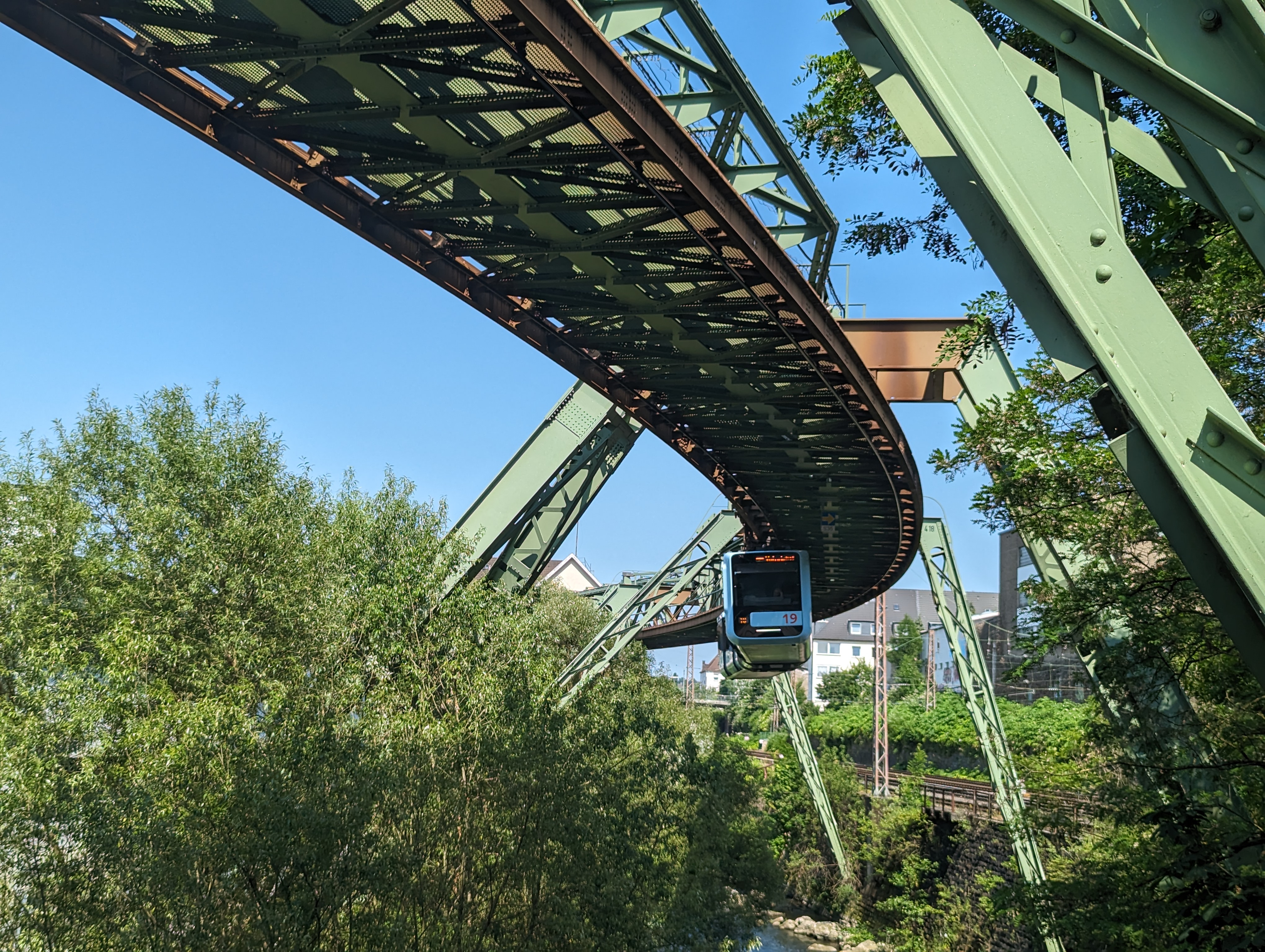
Obviously I had to make the pilgrimage, and it was 100% worth it. It's such an interesting and unique system I cannot recommend it enough. There are so many oddities that I'm probably missing some, but here are some thoughts and observations:
  • The vehicles are actually one-way. This means they have to go around loops at the end of the line, which was presumably done to minimize the number of track switches. This is a true monorail (Unlike the SAFEGE and SIPEM systems), and it does need monorail switches where entire segments of track need to move. Definitely faster than the concrete ones but still. No you're not allowed to go around the loop, I tried. :(
  • Because the vehicles are one-way, they have excellent large windows on the back (see picture 3). If you want to try and snag a window seat by getting on at the terminus there may be a line. Also popular with children because obviously.
  • The cars sway noticeably when people are getting on/off. This means there needs to be more clearance between the platform and trains, so no step-free access.
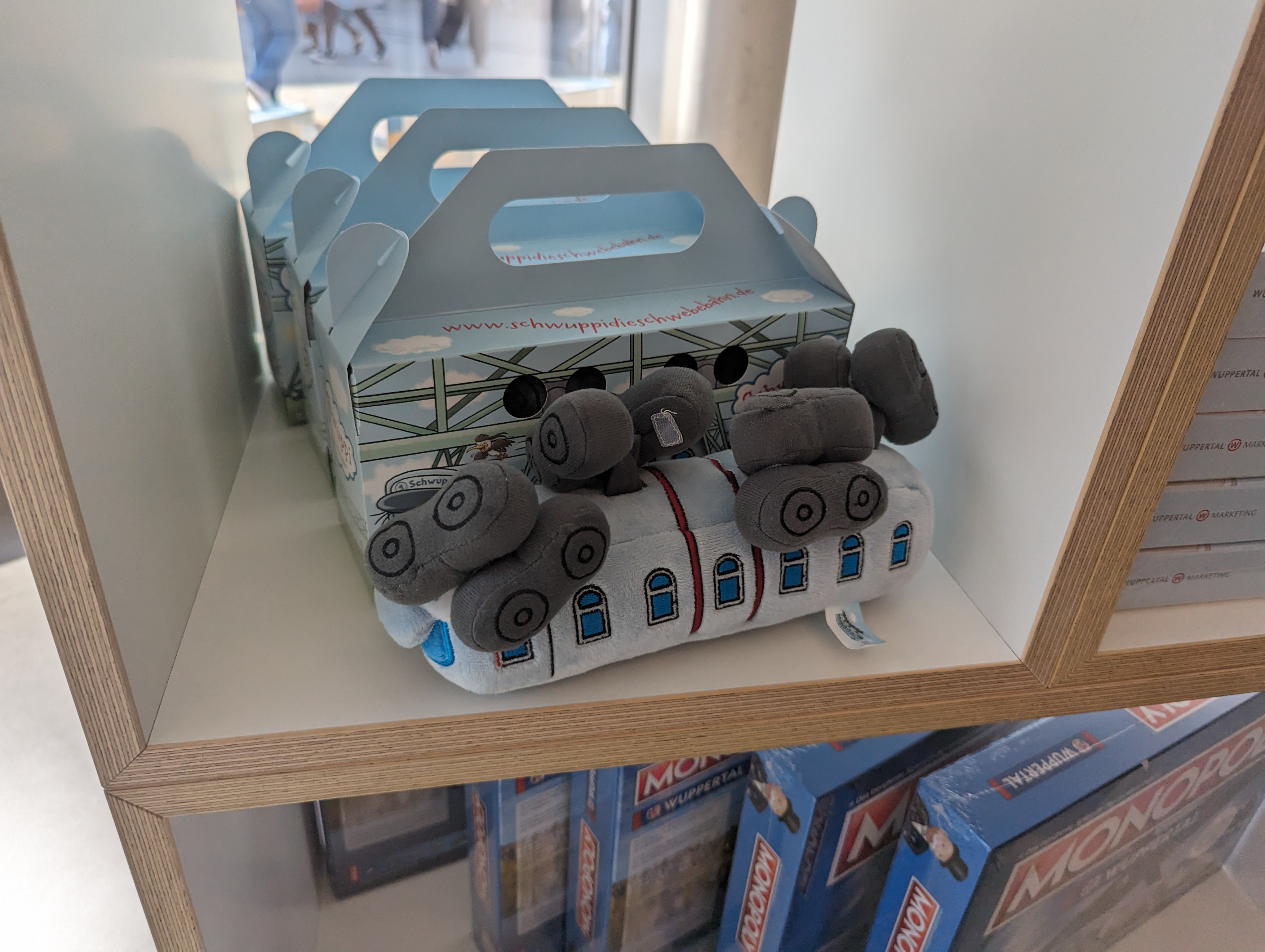
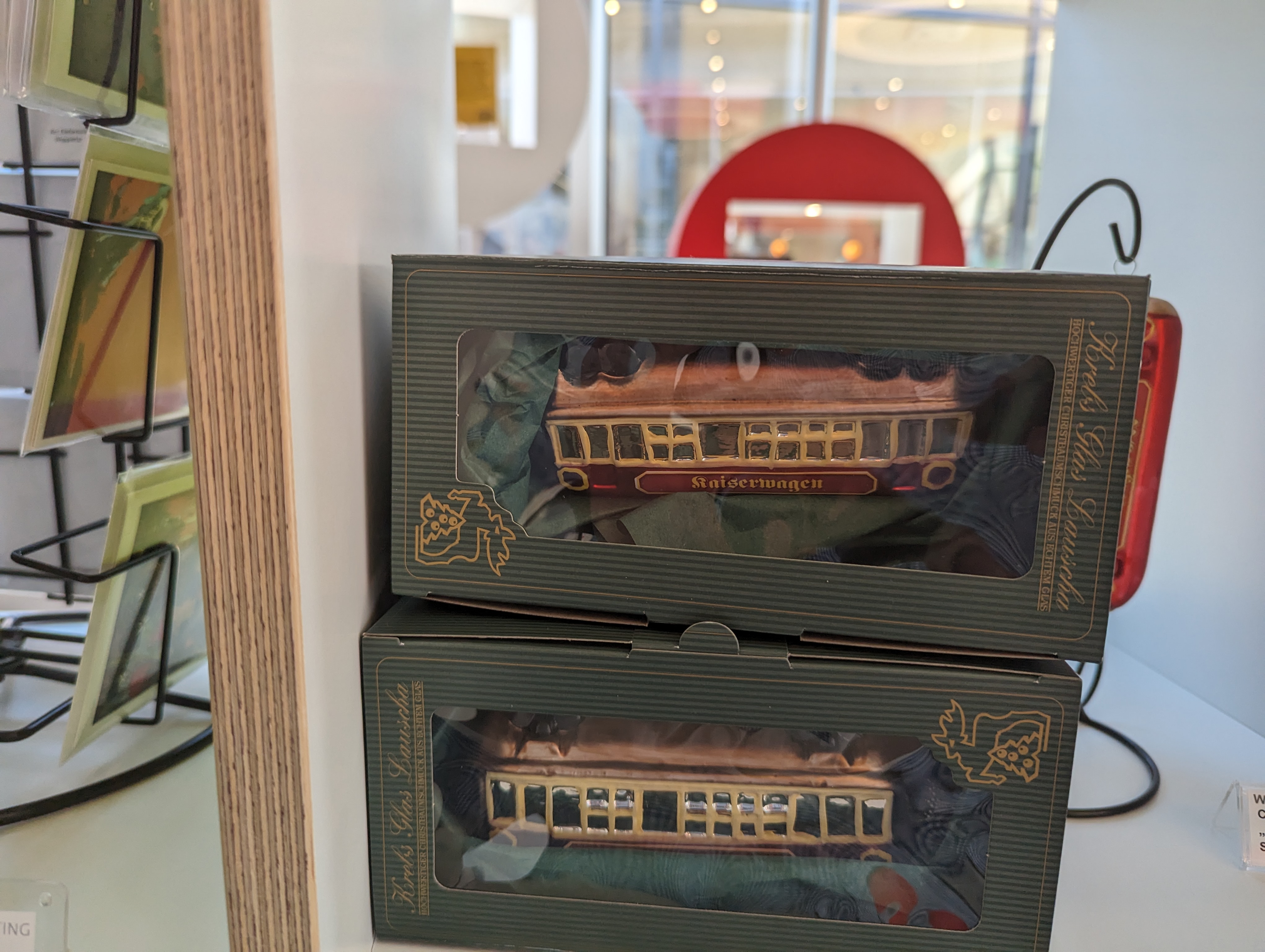
  • There is a gift shop, and it is amazing.
PXL_20230617_141659956.MP.jpg
PXL_20230617_141604704.jpg
pxl_20230617_141557411-jpg.69334


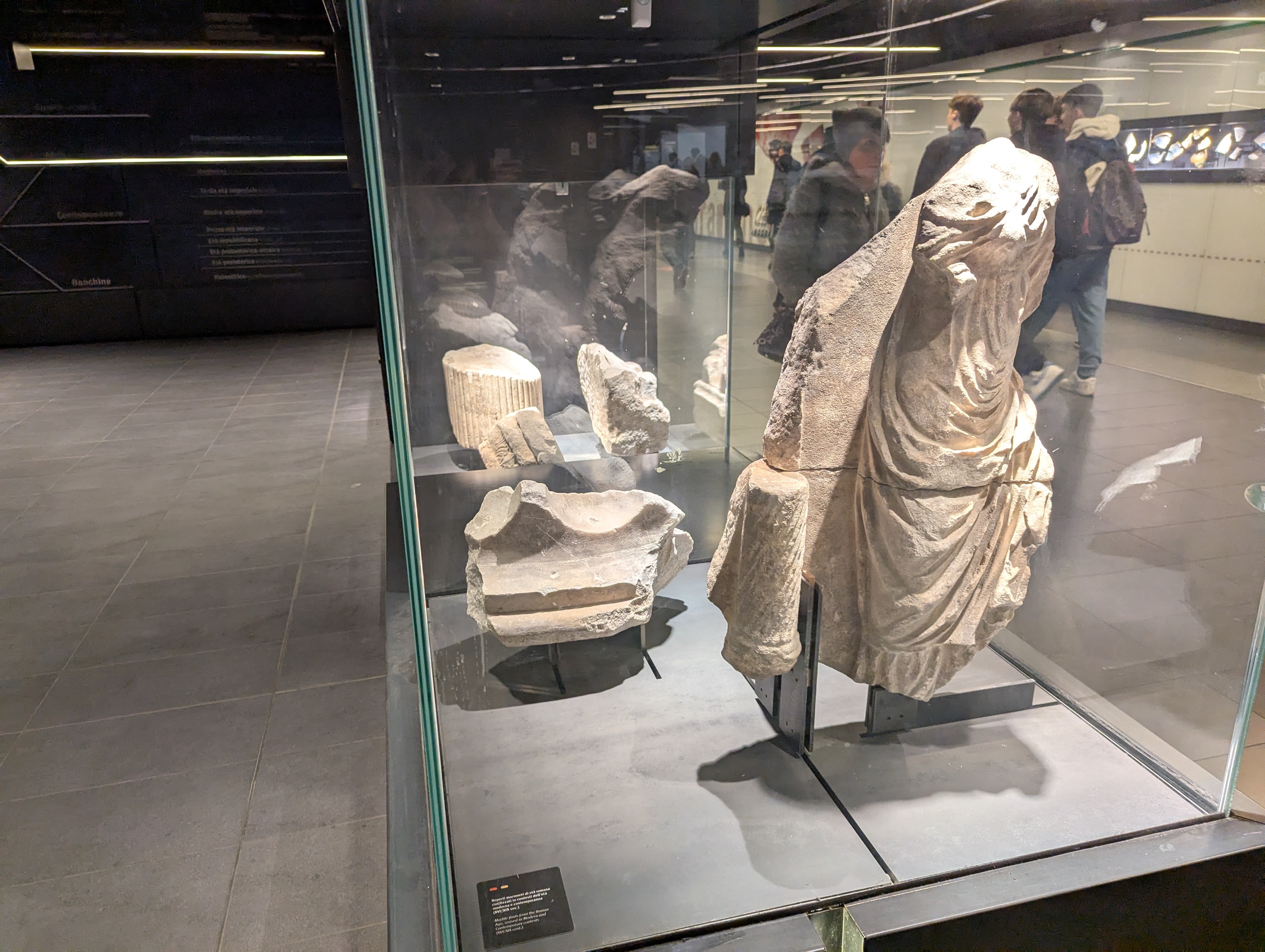
Archeo-stations
PXL_20250307_174053626.jpg
PXL_20250713_143310206.jpg

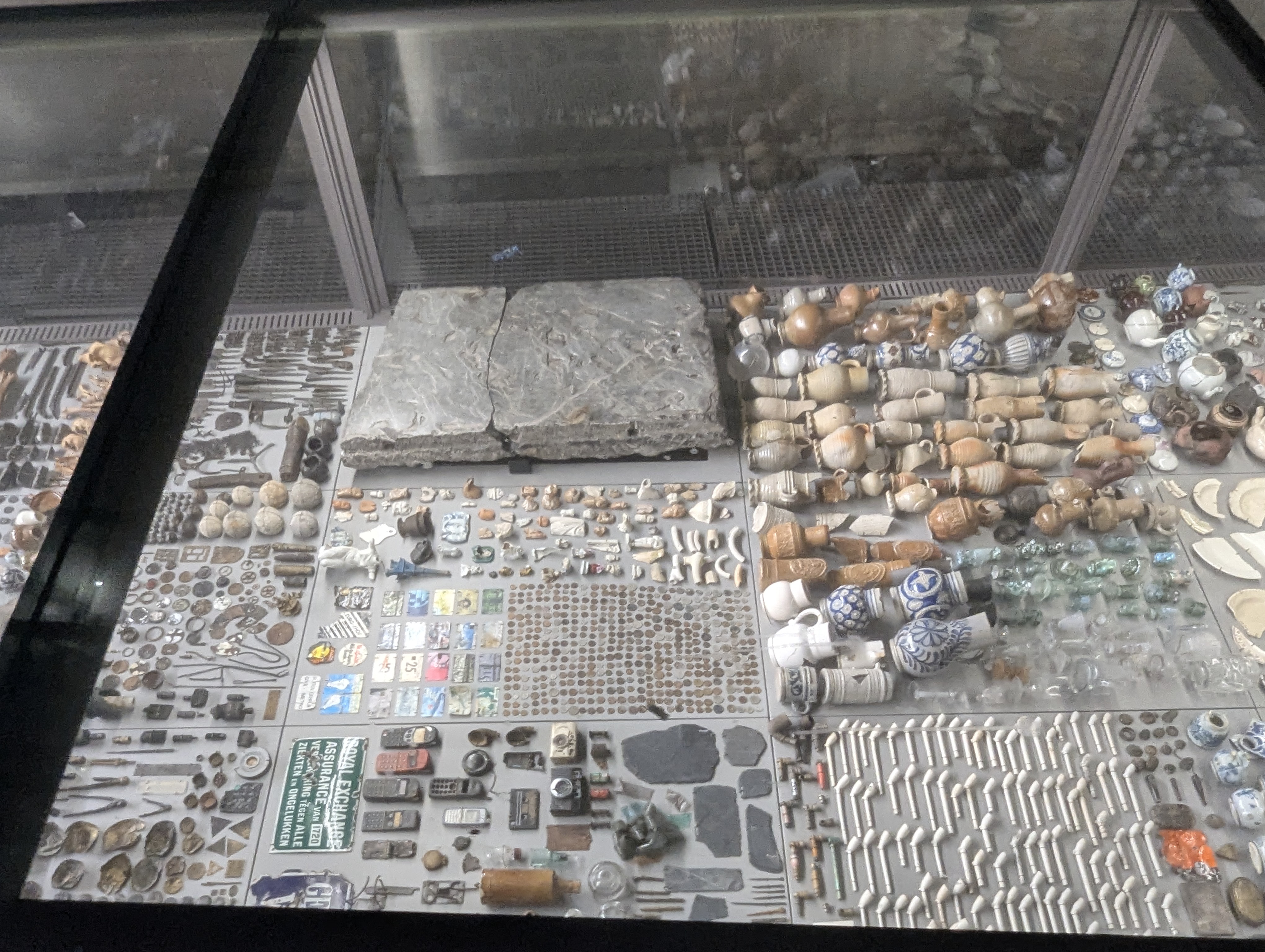
Two examples of so-called 'Archeo-stations' which incorporate artifacts dug up during their construction. The left is San Giovanni in Rome, the right is Rokin in Amersterdam.

Side note, the Rome metro is up there with SEPTA for the worst, grimiest metro system I've ridden.

Christmas Market Tram (Bremen)
PXL_20231217_150520772.jpg

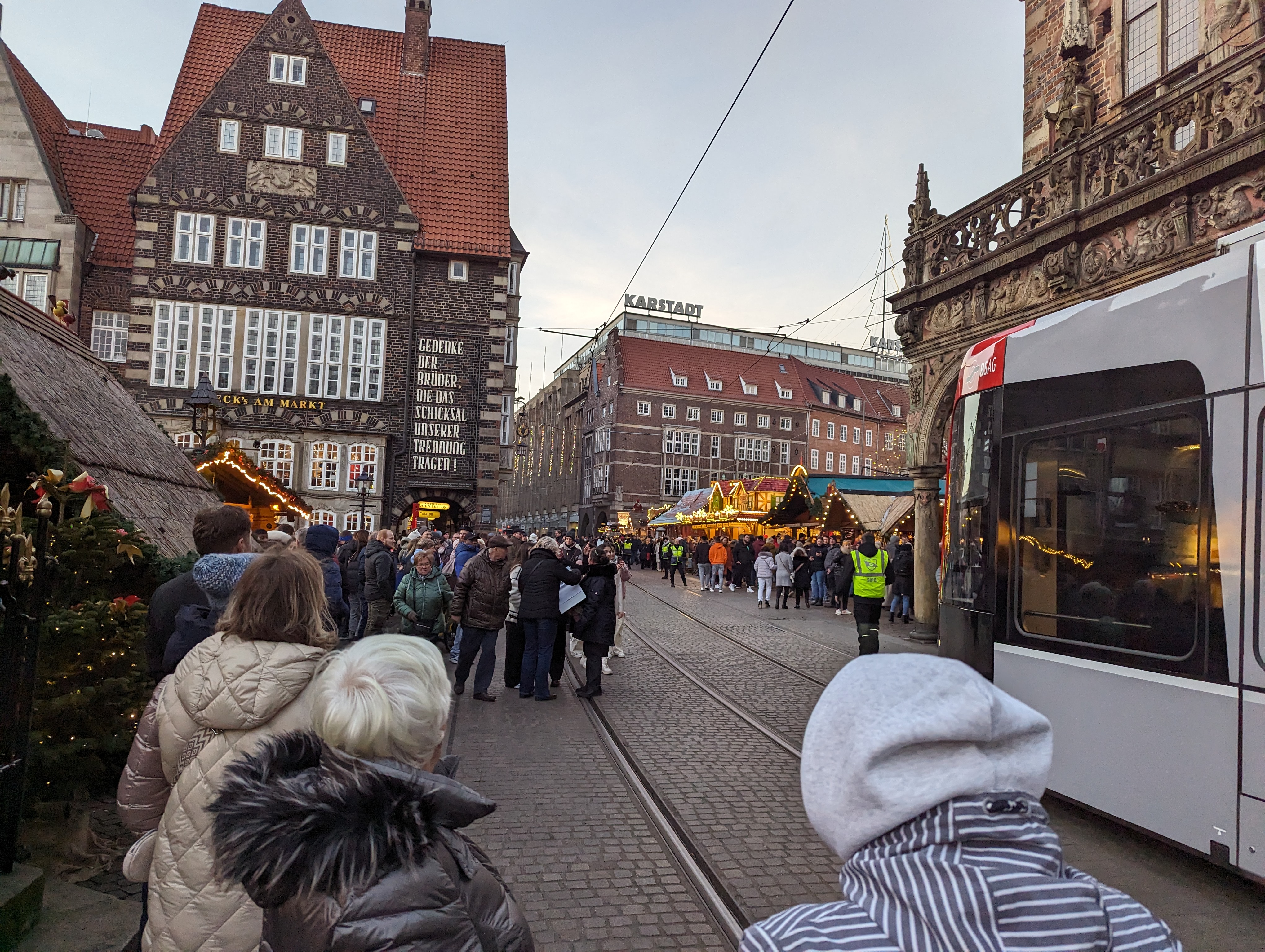
Pictured is a tram running down a very busy street at the Christmas Market in Bremen. The way they avoid hitting anyone is by literally having someone walk in front with a bell to clear the tracks. Once the tram passes everyone re-fills the street. There is also a Santa tram but I did not get a picture :(

How to avoid wasted space with tram loops (Dnipro)
PXL_20250420_134623390.RAW-01.MP.COVER.jpg

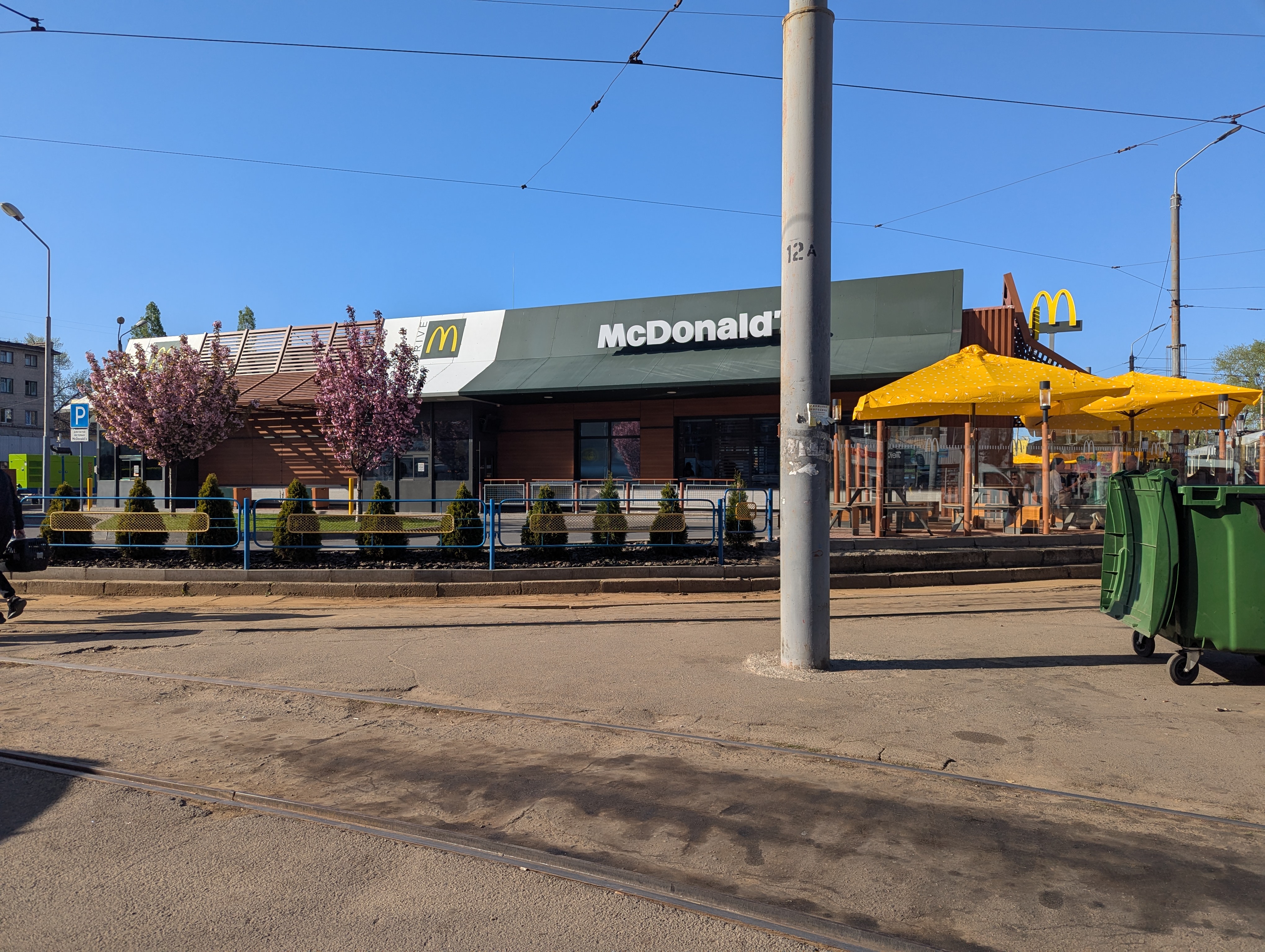
For cities that operate unidirectional trams, either because they haven't bought new vehicles or other less sensible reasons, loops are a requirement. But this doesn't mean it needs to be wasted space, you could put a McDonalds in the middle.

Supercapacitor trams
PXL_20251106_153544197.MP.jpg

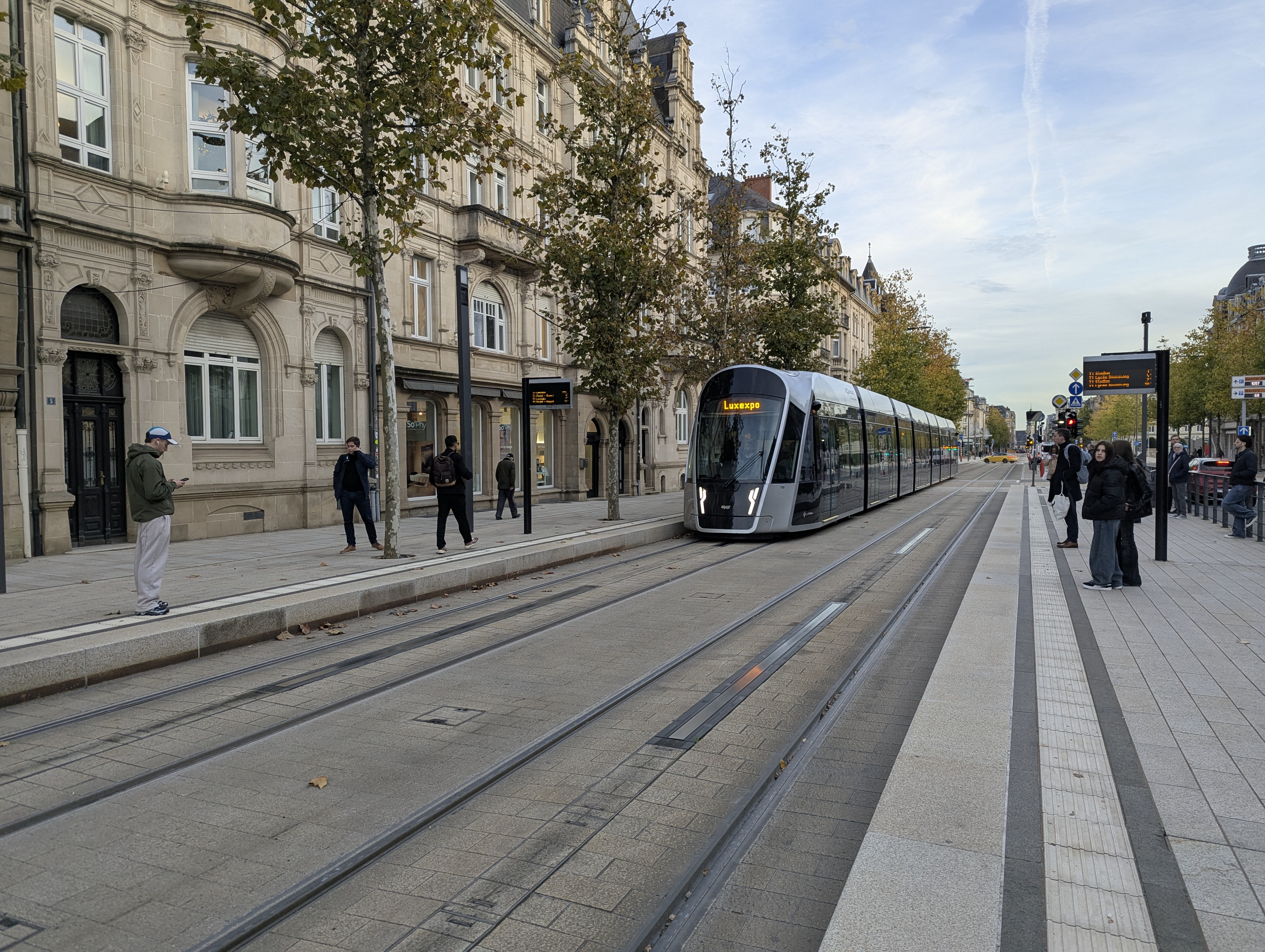
Recently I rode my very first battery (okay, Supercapacitor) electric rail vehicle, the Luxembourg tramway. I can now very definitively say that this is not the future. Dwells at each stop were consistently 15-30s longer than they needed to be, and of course there's no skipping stops if it's not busy. This system is designed by CAF, it's their 'ACR' system. Alstom has a much better design which while still proprietary uses a continuous conduit rail with sensors that prevent power from flowing unless the vehicle is actually over it. If you must have a tram without overhead lines, that's a significantly better solution.

Nieuwmarkt station (Amsterdam)
PXL_20250713_145336698.MP.jpg
PXL_20250713_144903135.MP.jpg
PXL_20250713_145045948.jpg

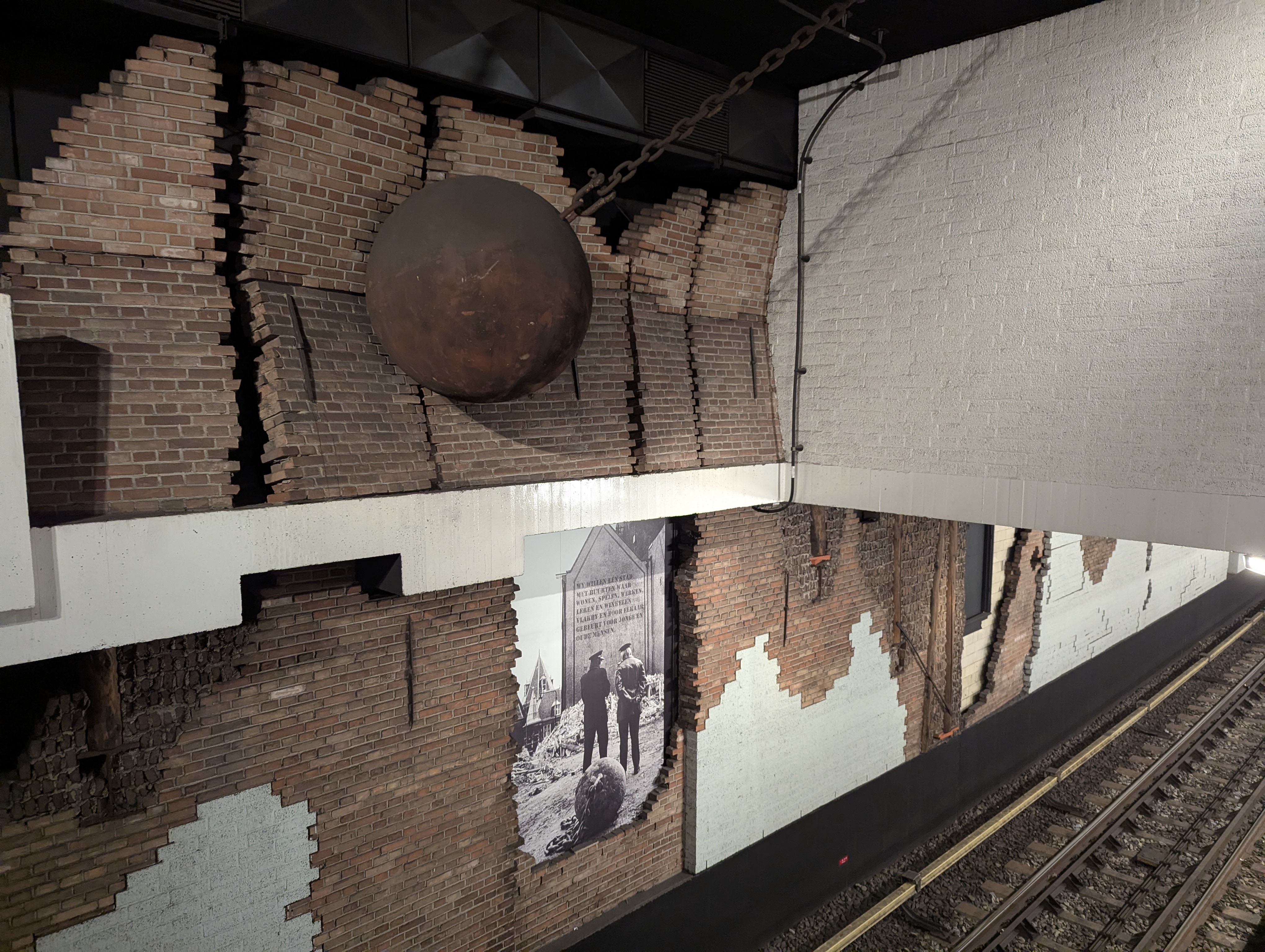
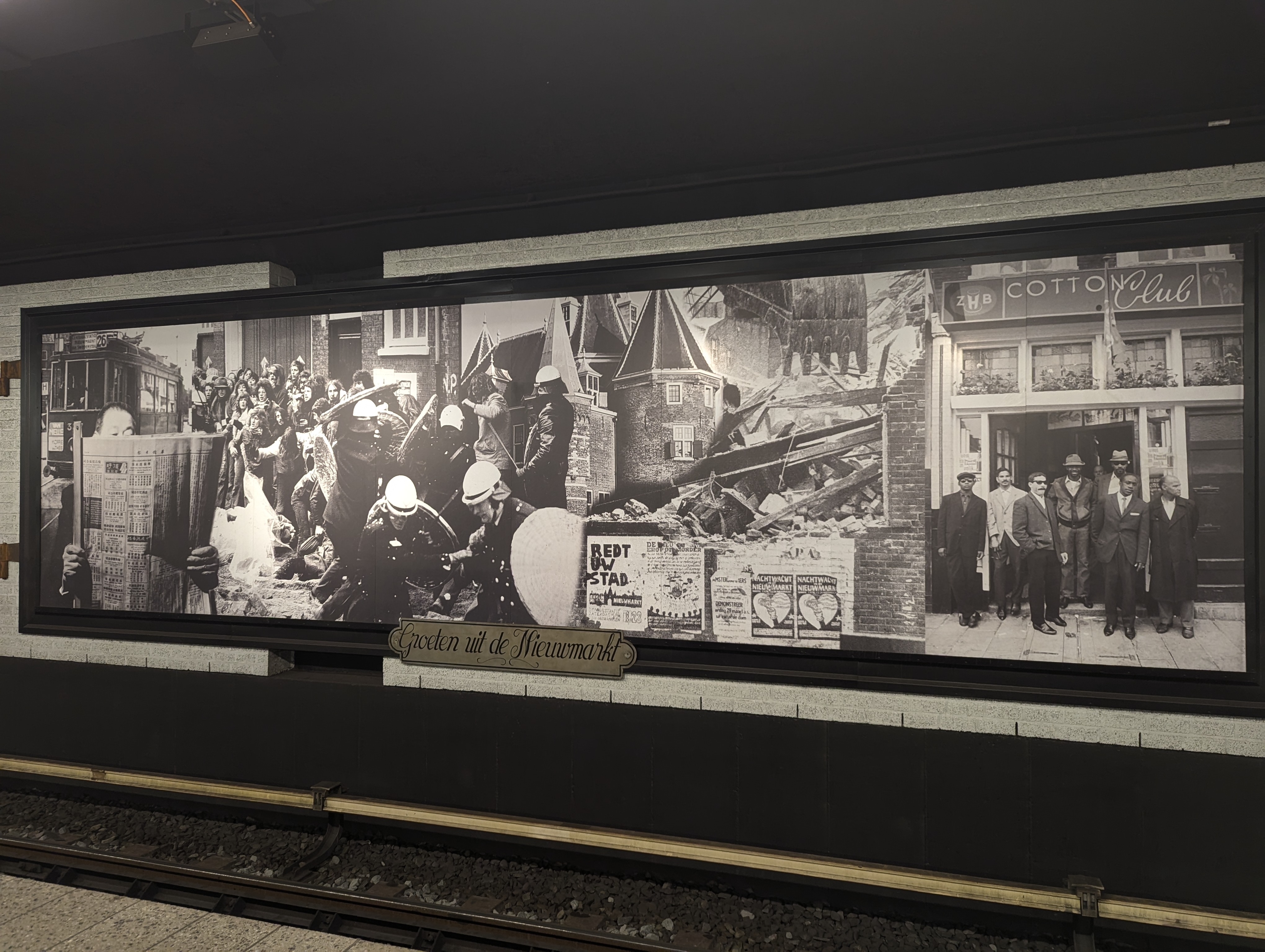
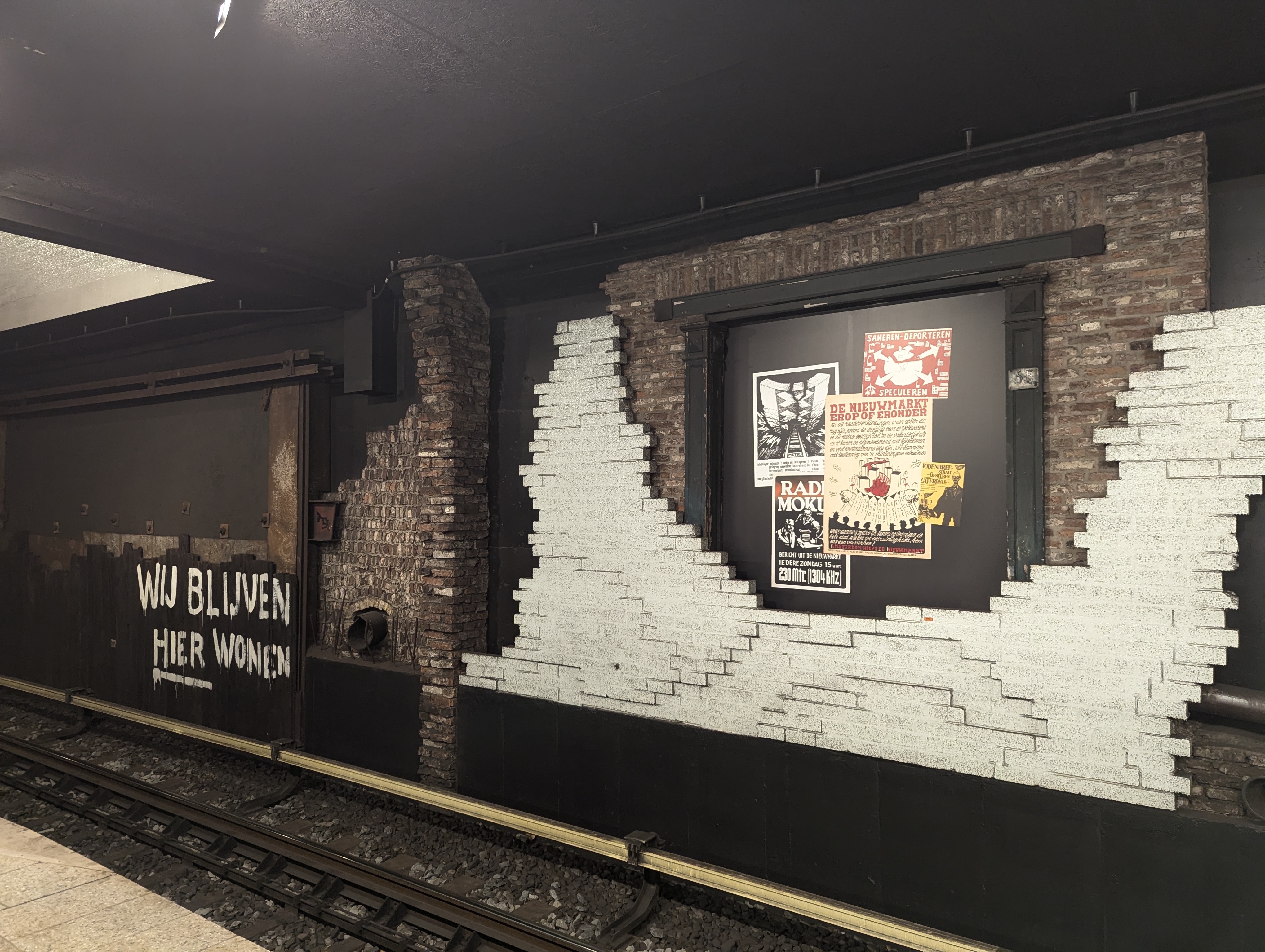
I posted about this station a little bit in the metro photography thread but a bit more here. When the Amsterdam Metro was constructed in the 1970s it was decided to build it cut-and-cover... through a built up neighborhood, requiring the demolition of entire blocks. Unsurprisingly this didn't go over terribly well but despite riots the city stayed the course and the metro was built. However it was decided to abandon any future metro plans (until the Nord-Zuid line in the 21st century) as a result. The station is filled with photos, sculptures, and artworks that reflect this. My favorite is the third photo, a giant picture frame filled with photos, both cheery and very not, labeled 'Greetings from the Nieuwmarkt.' On the floor (no photos, it was too big to really take a picture of) are tiles that write: 'Huisvesting is geen privilege, maar een recht' (Housing is not a privilege but a right).

It's a very powerful place to be, and it was impossible not to think of Scollay Square and Government Center too. I do not think nearly enough people are aware of the crimes committed by the BRA in the 1960s and I think some "greetings from Scollay Square" 'postcards' in Government Center station would go a long way towards helping that.

Platform Gates (Sofia)
PXL_20240813_131148450.jpg

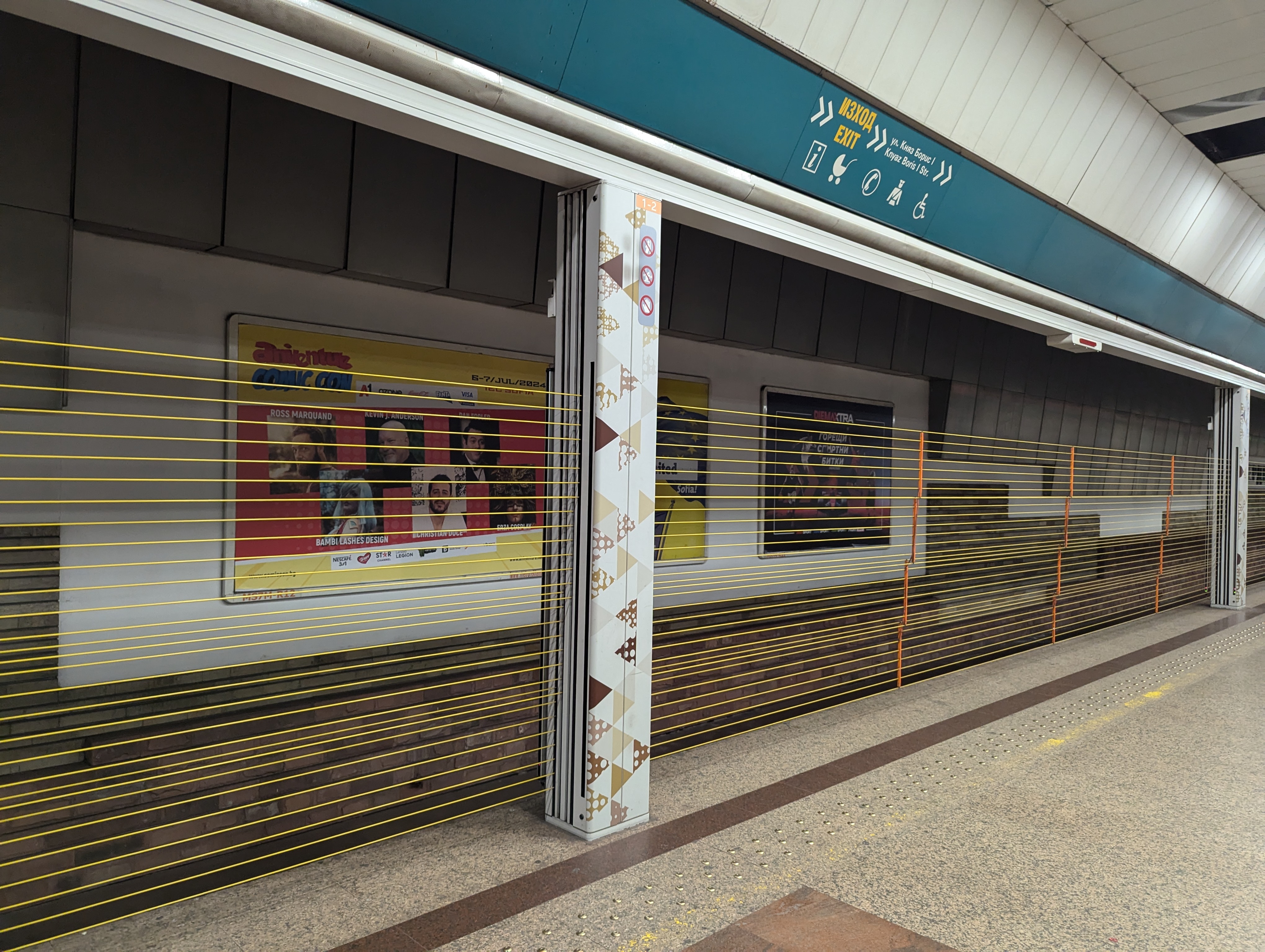
No precise train-control to allow for platform screen doors? Sofia says no problem, just install big gates across the whole platform instead. They roll up after a train comes in and roll back down as it leaves, like the grates in front of mall stores. The downside is that because train stopping locations are only precise-ish, the pilars will sometimes block some of the doors.

 

Attachments

  • PXL_20230617_141557411.jpg
    PXL_20230617_141557411.jpg
    1.9 MB · Views: 220
Hexagonal trains in Copenhagen
PXL_20240203_122705502.jpg
PXL_20240203_122900546.jpg

The DSB logo is a hexagon, so the regional trains in Copenhagen are too. They have a hilariously wide loading gauge and as a result have very spacious interiors though.

Art in Tiles (Berlin)
PXL_20240703_173557666.MP.jpg
PXL_20240703_174612470.jpg
PXL_20240704_160953955.MP.jpg
PXL_20240704_161457648.jpg

I started the Metro Photography thread because I think art in transit and in public spaces is important. I sometimes see this criticized on the basis of cost, that more art in transit means less transit. It really doesn't have to. Even just a fun color scheme for the wall tiles can really make a station pop, like these stations in Berlin show.
The (Second) Deepest Metro in the World (Kyiv)
PXL_20240315_080301530.jpg

If you're a trivia nerd you may have seen the fun fact that (until it was recently surpassed by a couple stations in Chongqing), Arsenalna in Kyiv was the deepest metro station in the world at 105m (~350ft) below ground. And yeah, that's a big number but just for reference, imagine taking the escalators down into Porter station, then getting to the bottom, going down the escalators again, then getting to the bottom of those, then going down again. That's what entering the deep stations on Kyiv's M1 is like. Even with 'health and safety second' escalators that move twice as fast as ones in Boston, it still takes almost 5 minutes to go from platform to street.

Soviet-Style sleeper trains
PXL_20250419_203429669.RAW-01.COVER.jpg

Here's a picture from my train from Kyiv to Dnipro in 3rd class. No closed compartments just a train-car packed full of berths. The benefit of this arrangement though is that you don't need to triple-stack like you do with cabins to get this capacity. Since air travel is suspended at the moment this is how people enter, exist, and cross Ukraine. You'll see pets, elderly, soldiers, families, young children, everyone.

Stations as Shelters (Dnipro and Kharkiv)
PXL_20250420_140009174.RAW-01.COVER.jpg
PXL_20240318_050434804.jpg

Anyone who's read or played Metro 2033 knows that (some) Soviet Metro stations were designed as shelters in case of nuclear war, that's why the deep stations are as deep as they are. While the ones constructed later are often much shallower they've still come to fulfill this purpose during the war. The left picture is benches and tables stacked at Vokzalna in Dnipro, the right picture is Maidan Konstytutsii in Kharkiv where the pillars have been decorated by children who where sheltering in the metro full-time in February/March of 2022. This article contains from then with the title 'METRO-2022' drawing the obvious comparison. It's absolutely horrifying. I'll post some more pictures and stories from Ukraine another time.

Soviet Urbanism in Dnipro
PXL_20250420_130618231.RAW-01.COVER.jpg

Still in Dnipro, while walking around the industrial, working-class left bank I was surprised at the quality of the Soviet Era urbanism. Even in a neighborhood of Khrushchevkas, the central green spaces were well maintained with small shops selling food that presumably would have been open had it not been Easter. A tram line runs between the buildings connecting to the right bank and the city center.

Trolleybus in Kaunas
PXL_20250802_172550587.jpg

One of my favorite things about traveling Eastern Europe is that you get to see trams and trolleybuses everywhere, like here in Kaunas. If anyone knows the actual reason why ex-Eastern Bloc countries remain so fond of them I'd love to hear it.

Lille's VAL Metro
PXL_20251107_095400784.jpg

Back to more light-hearted things, Lille is one of the cities in France that has a metro system, but unlike most metros it's build with VAL, the same thing used for some APMs at airports. This was actually one of the first automated railway systems. Here's some observations:
  • The rubber tires mean it accelerates like a sports car and can handle gradients like a cog-railway (hyperbole, obviously). While sometimes it feels like the gradients are steep because well, why not, the fast acceleration means that trains run more than once per minute during peak times.
  • And that's a good thing because the trains are tiny. They're very short and very narrow, and even with the high frequencies crowding is still a big problem during peak times.
  • There's something either wrong or strange about the door control. It's bad. Like, really bad. They constantly try and shut on people and/or close before people have even finished getting off let alone on. I've never noticed this on the other automated systems I've used so I have no idea what the problem is here.
  • Most of the stations have been lengthened to allow for double-length trains to be used, but the project has been endlessly bogged down and delayed. It cannot come soon enough from what I saw.
A big M in Warsaw
PXL_20250729_061853636.jpg

Most of the headhouses on Line 2 of the Warsaw Metro are giant glass Ms of various colors. Very clever.

Break time in Kortrijk
PXL_20251107_075140559.jpg

This De Lijn bus (or more likely the driver) is on a break and there is a lovely little hot coffee symbol that can be put up to show this. Both useful and delightful.
 
Just a show-off post, here's my transit card collection going into 2026. I'm hoping to expand it quite a bit this year, I have a week long trip to Turkey planned where I should be able to get 5-6 more.
PXL_20260106_093020614.jpg

SeattleBostonPortoLondonParis
ChicagoNYC (RIP Metrocard)Also PortoNetherlandsSkopje
DCPhiladelphiaLisbonBelgiumKyiv
Luxembourg (Discontinued)Nice/Côte d'AzurRomeLille/Hauts de FranceBrașov
RouenStockholmRigaHamburgLviv
WarsawVilniusKaunasSofiaBucharest
 
So, I have bad ideas sometimes, and one of those bad ideas was to go to Ukraine. (Twice.) I am not a journalist, but I'd like to show everyone here what I saw because I do think it's important. Before that, some practicalities.

Getting to/from Ukraine

Both times, I traveled by night train to/from Poland. There are other options though, here's a not-that-thorough list:
  • The 'Fancy' Direct Warsaw/Vienna/Budapest/Bucharest/Chisinau to Kyiv (Politicians are usually on Warsaw-Kyiv from what I understand)
  • Connections in Chop to/from Debrecen, Košice, Budapest, Bratislava
  • Connections in Przemysl to/from Rzeszow, Krakow, Katowice, and further (Joe Biden did this one)
  • Connections in Chełm to/from Warsaw
  • Connections in Sighetu Marmației/Solotvyno to/from Romania
  • Day/night buses from all across Europe. The longest (I think) is a grueling trip from Brussels, most come from neighboring countries like Romania or Poland.
For my first trip in 2024 I flew into Krakow and then took the train to/from Przemysl, for my second trip I traveled by train all the way to/from the Netherlands, going via Chełm on the way there and Przemysl on the return.

Safety in Ukraine
I never felt unsafe while I was in Ukraine, part of that was just luck and being there during 'quieter' times, part was from good planning. In general I'd say there are five 'categories' of place in Ukraine in terms of safety:
  1. Occupied territories. Do not go here, that should not really need to be stated. These are martial law of the Russian military, with locals and visitors subject to arbitrary and indefinite detention for basically any reason. As the only legal way to enter is via Ukraine (which is impossible), anyone who goes despite this will be denied entry into Ukraine for at least five years.
  2. Frontline areas: Again, do not go here. This includes all of unoccupied Donetsk Oblast, most of unoccupied Zaporizhzhia and Kherson Oblasts, and parts of Kharkiv and Dnipropetrovsk oblasts. Airstrikes and artillery bombardments are common in these areas and it's a common tactic of Russian forces to train drone operators by deliberately targeting civilians in cities like Kherson and Nikopol.
  3. Areas subject to nightly drone raids. This would be the rest of the country apart from Kyiv center and Zhytomyr/Vinnytsia oblasts and everything west. Being here is generally safe during the day but listen for sirens and have the AFU Air Force telegram channel loaded, they will provide details about air alarms there describing the reason for the siren there. The reasons can vary from 'basically nobody cares about this' such as a plane in Russia taking off to 'get to a shelter ASAP' such as an incoming ballistic missile strike. Those are generally rare but you can never be certain. Don't stay here overnight, there are regular nightly drone raids where residential buildings are commonly hit.
  4. Generally safe areas: This includes Kyiv City center and Zhytomyr/Vinnytsia/Khmelnytskyi/Ternopil/Rivne/Volyn/Lviv/Ivano-Frankivsk Oblasts. Daytime strikes basically never happen in these areas and nighttime strikes are quite rare and are generally not aimed at residential areas, mostly power infrastructure. Sirens do sound sometimes so pay attention to the telegram channel but it's not nearly as big of a concern. From here down while I can't recommend going, it's still not a good idea in the grand scheme of things, I won't strongly discourage it either.
  5. The 'as-safe-as-it-gets' areas. Strikes of any kind in these areas are very, very rare, with the totals in the low/mid single-digits since 2022. I'd put Zakarpattia and Chernivtsi oblasts in this category.
Note that this advice is generally applicable from 2025-Present, the situation may change in the future.
Where I went:
For my first trip, I stayed the whole time in Kyiv, apart from a single day trip to Kharkiv where I took a night train there arriving around 6AM and left on another train around 5PM. My second trip was longer, so I spent a few days in Kyiv, one day in Dnipro (arriving in the morning and leaving before sunset again), ~1.5 days in Uzhhorod, and a few days in Lviv.

Hotels/Transport
Book as normal, you can pay online with a card and shops/transport in the big cities, along with the chains like ATB, support contactless payment as well. You will still need cash for small things or bus/Marshrutka fares.

Morality of visiting Ukraine
There's no 'right answer' here but given that I went twice you can probably predict where I stand on the issue. In general any influx of foreign currency is good, and I think it's good to be able to share first-hand experiences of what Ukraine is actually like right now because news articles don't really give an accurate picture in my opinion. That being said, there are a few caveats and basic rules:
  • Rule 0: Don't be an ass. Should go without saying. There are a lot of memorials to fallen soldiers, be respectful.
  • Do not photograph or film anything military unless you're very sure it's abandoned and out of use like some trenchs I saw around Kyiv. This includes soldiers, checkpoints, security at railway stations, government buildings, etc.
  • Don't be stingy, especially in a country where things are already cheap. Go to restaurants, visit musems and paid attractions, always pay your transport fare, etc.
  • Do more than see the sights. Ukraine is an absolutely beautiful country and there are so many lovely things to see, but I think it's important to mix that with some exploration of 'normal' places, and I think visiting at least one military cemetery is obligatory.
  • Be mindful of language, literally. Before 2022 (and especially 2014) there was a pretty clear East/West divide between Ukrainian and Russian speakers. Since 2022 that has become a lot more blurred and Ukrainian is becoming more common. There are still Russian-speaking Ukrainians, especially in places such as Kharkiv, but don't default to Russian.
  • Learn basic Ukrainian words and the Cyrillic alphabet. Even Yes/No/Please/Thank you will go a long way, and Cyrillic isn't hard to learn especially if you know some greek letters already.
  • Do not go in winter, full stop. A preferred Russian tactic is to deliberately target civilian power stations and district heating plants, so energy is in short supply during winter. I would personally consider adding yourself to that energy burden to be immoral.
If you're especially concerned about morality, consider dedicating some time to volunteer work. There are very-little training necessary options such as weaving camoflauge netting, basic clearing and construction work, or basic food prep at volunteer kitchens.
 
So finally, some observations from Ukraine:

Firstly, it is immediately and overwhelmingly obvious the toll the war has taken in terms of blood spilled. One thing you notice about Kyiv is that a city that size should not be able to support that many flower shops, and that it's unusual to see that many people missing an hand, arm, or leg. I don't want to make it sound like every other person is an amputee but when's the last time you saw someone in Boston with a prosthetic arm/leg? I suspect it's been a minute and it's not an every day or every-other day thing. For a less ambiguous example go to Maiden Square in Kyiv. It's custom for family or comrades of a fallen soldier to place a flag on the square for them. Each flag (large and small, zoom in) represents a human with friends and a family. You'll also see flags of other countries (Lots of Georgians/Belarussians but others too) for foreign volunteers. Some are randomly spread, others are clustered by nationality. On the right is a photo of the 'mini Arlington' for Americans who have died in Ukraine. I hope someday they will get a memorial on the national mall, they deserve it.
PXL_20250417_142540892.RAW-01.COVER.jpg
PXL_20250417_141701321.RAW-01.MP.COVER.jpg

Photos really do not do this place justice, others have taken video tours which I forgot to do, find one on Youtube.

There are also smaller memorials across the country for local fallen defenders, such as this one in Dnipro:
PXL_20250420_055339114.RAW-01.COVER.jpg

And of course there are the cemeteries. Most large cities have several that have been created since 2022 for war dead. The photo below is the 'Field of Mars' in Lviv, which since I visited has filled up and a another site is being found for more graves.
PXL_20250423_092652733.RAW-01.COVER.jpg

Again, words and photos do not do this place justice, you can find other video tours online. Something I found especially striking was how well taken care of all the graves are. They all had flowers, flags, portraits, and lanterns. I saw many people (Mostly women, probably family) coming to sit by and tend to them. I had planned on leaving flowers if I there was a more barren one that was not being tended to but I didn't find one.

Also notice the black and red flag, that is/was? the flag of the UPA/OUN, the Ukrainian Insurgent Army and Organization of Ukrainian Nationalists, notably headed by Stepan Bandera during the Second World War. They're famous for fighting against the Red Army during and after the war, but also for sometimes collaborating with the Nazis and for genocides against Poles, Jews, Roma, 'communist collaborators', and others. The cemetery pictured actually sits next to some graves of UPA fighters and there is a statue of Bandera in Lviv.
PXL_20250424_121649563.RAW-01.COVER.jpg

It's a very complicated legacy made more complicated by the current war. A lot of people in Western countries will reflexively describe the black and red "Blood and Soil" flag as a fascist symbol described by a fascist phrase, but I really think that's too reductive. When you see the memorials and cemeteries it's hard to think of a more fitting symbol than blood spilt over the black soil of Ukraine.

That's enough for today, I'll write more later.
 

Back
Top