MBTA Buses & Infrastructure


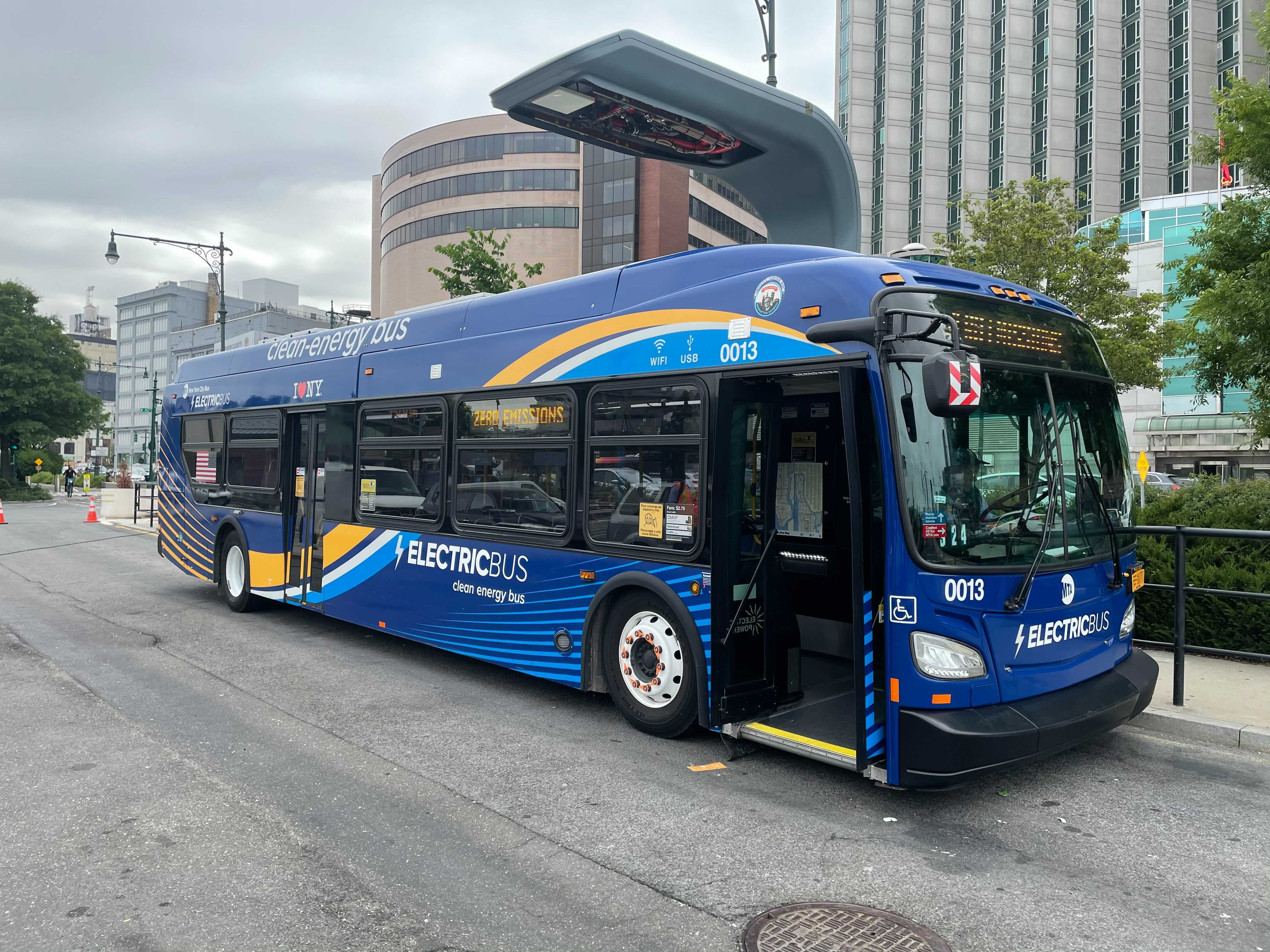
Ruh-roh! New York MTA went in big for the same New Flyer XE40 make BEB's that the T is buying, and the reliability stats on that model have turned out pretty dire: 70% worse MTBF than the diesels they replaced, and only 60% of the fleet able to stay in-service for a full day's duty cycles due to excessive battery drain and other component issues. The agency has paused option orders of +500 more BEB's because of the issues with that fleet.

The T has acknowledged that they're having issues with their XE40's too, per the Board's decarbonization presentation a couple months ago, but they've been very tight-lipped about what exactly isn't going well and how bad.
 
Here's the local angle: the MBTA may have a second-mover advantage here, and so far, internal performance data doesn't indicate the same rate of failures that MTA has had:

 
Here's the local angle: the MBTA may have a second-mover advantage here, and so far, internal performance data doesn't indicate the same rate of failures that MTA has had:

Thanks, as always, for the reporting. But a couple things look off here.

In the NYC Streetblog article, it says the MTA diesel buses average about 8,500 miles between failure, and the new battery-electric buses go 2,500. Your article says the MBTA's diesel buses go 30,574 miles and the battery-electric go 28,653 miles before failure. That doesn't make sense that the MBTA's diesel buses are 3-4 times more reliable than the MTA's. And it sounds too-good-to-be-true that some tweaks to the battery-electric buses make the MBTA's more than 10x more reliable. It makes me think there are maybe a couple different measurements or definitions they're using, and that can make it easier to lie with statistics. Are you sure about how the MBTA is using their numbers here? Something looks off.

That maybe doesn't matter as long as the T's measurements are internally consistent. Importantly though, the new buses have only been in service here since the very end of February(?). They weren't used through the cold winter when they are expected to perform worse.

Still, these numbers are promising. I hope they hold.

 
Thanks, as always, for the reporting. But a couple things look off here.

In the NYC Streetblog article, it says the MTA diesel buses average about 8,500 miles between failure, and the new battery-electric buses go 2,500. Your article says the MBTA's diesel buses go 30,574 miles and the battery-electric go 28,653 miles before failure. That doesn't make sense that the MBTA's diesel buses are 3-4 times more reliable than the MTA's. And it sounds too-good-to-be-true that some tweaks to the battery-electric buses make the MBTA's more than 10x more reliable. It makes me think there are maybe a couple different measurements or definitions they're using, and that can make it easier to lie with statistics. Are you sure about how the MBTA is using their numbers here? Something looks off.

That maybe doesn't matter as long as the T's measurements are internally consistent. Importantly though, the new buses have only been in service here since the very end of February(?). They weren't used through the cold winter when they are expected to perform worse.

Still, these numbers are promising. I hope they hold.
It's basically impossible to get accurate MTBF stats on the fleet until North Cambridge garage reopens and the XE40's are running full-time. Charlestown garage only has a couple charging bays for a 37-bus (32 North Cambridge + 5 early-delivery Quincy) active BEB fleet, so most of them are idle on a daily basis while the hybrids continue to be load-bearing for the Harvard routes, they aren't running full duty cycles because of the deadheading distance to the Charlestown chargers, and the buses are being rotated very judiciously between idle periods to give the individual units sparse but semi-regular work. And while they're sitting idle in the yard they're being inspected religiously, something that would not happen if they were being regularly rotated from in-service to charging to in-service. And they're still (though the agency won't say what) having undisclosed teething problems despite the babying.

So, no, it's not equivalent to the problems the MTA is experiencing. Because with New York they were failing under full-bore duty cycles. We haven't yet collected stats for full-bore duty cycles.
 
I suspect we'll get more information pretty soon from our friends in Canada - up in TTC land, they've got 200 NF eBuses, so they're definitely running them enough in worse conditions that we are. They've most recently reporting MDBF of ~35,000km (~22,000mi) across their eBus fleet, but while mostly XE40s they've also got 140 Novas confounding the data, and I'd love to know how the +43% (!) reliability change came to be. I know they've had reliability issues of their own, cumulating in a couple of stop-delivery orders. Interestingly enough, their now-retired pilot fleet of gen1 XE40s ran an average of 70k MDBF, so it may just be that 2025 was just a bad year for NFI component quality as they ramped up volumes of eBuses.
Screenshot_20260708_134515_Chrome.jpg

Last year they took a green bus program update at the end of July, which contained a bunch of data - hopefully they'll repeat that this year, but at that time, their gen 2 eBus fleet was almost all XE40s and they were reporting ~35k km (22k mi) MDBF.
4837.jpg
 

Attachments

  • Screenshot_20260708_134819_Chrome.jpg
    Screenshot_20260708_134819_Chrome.jpg
    521.6 KB · Views: 4
  • English_Report_-_Zero_Emission_Bus_Program_Update.pdf
    198.9 KB · Views: 1
Thanks, as always, for the reporting. But a couple things look off here.

In the NYC Streetblog article, it says the MTA diesel buses average about 8,500 miles between failure, and the new battery-electric buses go 2,500. Your article says the MBTA's diesel buses go 30,574 miles and the battery-electric go 28,653 miles before failure. That doesn't make sense that the MBTA's diesel buses are 3-4 times more reliable than the MTA's. And it sounds too-good-to-be-true that some tweaks to the battery-electric buses make the MBTA's more than 10x more reliable. It makes me think there are maybe a couple different measurements or definitions they're using, and that can make it easier to lie with statistics. Are you sure about how the MBTA is using their numbers here? Something looks off.

That maybe doesn't matter as long as the T's measurements are internally consistent. Importantly though, the new buses have only been in service here since the very end of February(?). They weren't used through the cold winter when they are expected to perform worse.

Still, these numbers are promising. I hope they hold.

I was confused about the differences in NYC vs. MBTA as well, but I'm just passing on the numbers that were reported to me. I suspect that the two agencies might have different standards for "failure", and MTA buses obviously operate in a much different environment as well.

But the main point holds: that by whatever standards the MBTA is using, the failure rate of the BEBs so far is pretty close to the failure rate of the fleet as a whole, albeit with a very small sample size.
 
I think that it's part of the Atc that's being installed. (automatic train control).
 

Back
Top