MBTA Buses & Infrastructure

The 214/216 had 75 trips pre-COVID weekdays and 46 on Saturdays. These are the values used to calculate pre-COVID percentages for the 214/216 bus. The current 216 bus includes both the 214 and 216.

There is not much of a service cut for the 214/216. The pre-COVID schedule called for every 16 minute interpeak midday service between 10:30am-3:00pm and hourly evening service after 6:30pm. The current schedule calls for service every 15 minutes midday and every 25 minutes in the evening after 8pm.

The loss of trips between 7:00am-9:00am and 4:00pm-6:30pm is counteracted by an additional 1.5 tph after 6:30pm. Additionally daytime service extends from 6:30pm to 8:00pm, so you get 4 extra trips between 6:30pm-8:00pm. Weekday evening service on the 214/216 is more than doubled at around 240% pre-COVID levels.

There is no 60% service cut on the 214/216, the service cut is only 8% on weekdays. Saturdays still have a heavy service cut about 40% and the MBTA has not yet restored Saturday service.
Mind if I ask a question about general methodology here? When you say the T is operating N% of its pre-COVID bus service, it appears that you're generally reading across the total local trips line. Can I ask why that line and trip count generally as a metric, rather than another metric? In my view a fair number of bus service changes wouldn't be captured in a trip count, such as additional bus service provided by new route mileage (104) or lost through truncation (86), or other changes to the service pattern that can leave the number and frequency alone, like eliminating short turns (87) or destination changes (65). The new 216 is kinda a perfect example of a replacement route that is a lot longer than the separate 214/216 it replaced, despite its modest frequency decreases. Are you applying any adjustment for route miles lost or gained?

If we were to, for example use your bus service hours metric, the MBTA exceeded 2019 service levels starting with the July schedule. The metric I've personally been using, the NTDs vehicle revenue mileage, would also say that the T, in total, operated more bus service beginning in July than the same month in 2019. That doesn't mean the T is perfect, or that service levels on some corridors is adequate, but agency wide?
Screenshot_20260906_003944_Excel.jpg
 
Last edited:
The 214/216 had 75 trips pre-COVID weekdays and 46 on Saturdays. These are the values used to calculate pre-COVID percentages for the 214/216 bus. The current 216 bus includes both the 214 and 216.

There is not much of a service cut for the 214/216. The pre-COVID schedule called for every 16 minute interpeak midday service between 10:30am-3:00pm and hourly evening service after 6:30pm. The current schedule calls for service every 15 minutes midday and every 25 minutes in the evening after 8pm.

The loss of trips between 7:00am-9:00am and 4:00pm-6:30pm is counteracted by an additional 1.5 tph after 6:30pm. Additionally daytime service extends from 6:30pm to 8:00pm, so you get 4 extra trips between 6:30pm-8:00pm. Weekday evening service on the 214/216 is more than doubled at around 240% pre-COVID levels.

There is no 60% service cut on the 214/216, the service cut is only 8% on weekdays. Saturdays still have a heavy service cut about 40% and the MBTA has not yet restored Saturday service.
I stand corrected on the 214/216! Did not realize that pre-COVID weekend service already ran as a single route; will update my previous post accordingly.

The reason I keep harping about the 34/34E is a T document from late 2023, which calls for a significant service reduction along Washington St south of Forest Hills during all service periods. This file is very much live and can be found mid-page here: https://www.mbta.com/projects/transit-priority-strategy (under "Bus Priority Vision and Corridor Profiles").
1788669320726.png

If I am interpreting this correctly, for the first row (Forest Hills to Roslindale Sq), the T is planning toward a "forever" future-state that includes:
  • AM/PM peak: 23 trips/hour (-11 tph vs baseline, i.e., 32% service cut)
  • Full day: 268 trips/day (-67 trips/day vs baseline, i.e., 20% service cut)
Obviously, the baseline isn't clearly spelled out here. But looking at the third row (34/34E/40), the baseline already seems to reflect a service cut compared to pre-COVID: it's 119 trips per day, rather than the pre-COVID 131 trips based on your service updates table. That would imply a planned 23% service cut (101 vs 131), which is much more than the 15% shown (101 vs 119).

And one last thing, to give credit where it's due: the T is finally restoring the 34's weekend late-night trips, running at 1:15am on Sat (instead of 12:50am), and 12:45am / 1:19am on Sun (instead of 12:17am). Those trips were cut in Fall 2025 without any mention on the quarterly schedule changes page - or for that matter, the PDF schedule card itself.
 
Mind if I ask a question about general methodology here? When you say the T is operating N% of its pre-COVID bus service, it appears that you're generally reading across the total local trips line. Can I ask why that line and trip count generally as a metric, rather than another metric? In my view a fair number of bus service changes wouldn't be captured in a trip count, such as additional bus service provided by new route mileage (104) or lost through truncation (86), or other changes to the service pattern that can leave the number and frequency alone, like eliminating short turns (87) or destination changes (65). The new 216 is kinda a perfect example of a replacement route that is a lot longer than the separate 214/216 it replaced, despite its modest frequency decreases. Are you applying any adjustment for route miles lost or gained?

If we were to, for example use your bus service hours metric, the MBTA exceeded 2019 service levels starting with the July schedule. The metric I've personally been using, the NTDs vehicle revenue mileage, would also say that the T, in total, operated more bus service beginning in July than the same month in 2019. That doesn't mean the T is perfect, or that service levels on some corridors is adequate, but agency wide?
View attachment 75451
Trip count is most useful for individual routes, the thing people care about is the headway wait time between trips, or the number of trips operated per day.

For the 86/109 issue, users that had their bus number changed would be best represented by using the 86 pre-COVID number and the 109 current service number.

For the 214/216, the frequency difference you would use the combined number if in the trunk; or the split routes on the branches.

At the system level it does get messy; but it is the only metric that I can update quickly. other metrics are much slower and more delayed to update. And for that matter the TransitMatters COVID recovery dashboard is also measuring total trip count.

And one thing; if a route is extended; using the same service hours would cause a frequency decrease that trip count would capture very well; but service hours would remain silent on that issue. The only way to ensure no reduction in trip count or frequency cuts is to run more service hours and more service mileage.
 
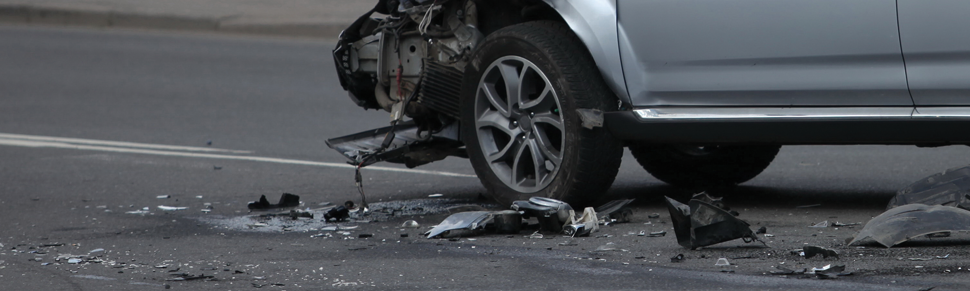
An MBTA bus driver behind the wheel of an out-of-service bus in Medford suffered a “medical emergency” on Thursday, slamming into a line of cars stopped at a red light and veering onto a sidewalk, police said.
The driver, a 62-year-old man, was taken to a local hospital with injuries that were not believed to be life-threatening, the MBTA Transit Police said.
Two people who were in vehicles struck by the bus also sustained injuries that were not life-threatening, police said.
The crash occurred just after 11 a.m. as the bus was heading east on the Fellsway, police said. As the driver approached the intersection of the Fellsway and Salem Street, he suffered an unspecified “medical emergency” that prevented him from being able to stop, officials said.
 
62?? The MBTA doesn't have an age limit?
How do you know age was a factor in this driver's particular medical emergency? 62 is neither too old for a CDL nor is the MBTA's normal retirement age (65).

Oh right...you don't know and you're just insinuating shit again to smear random people for cheap heat. Just like during this story from a few months ago! And this one!

:rolleyes:
 
You answered my question then about the age limit...
There is no "age limit" at the T; they do not have mandatory retirement. 65 is the elective age for the normal retirement package (and there's an early retirement option for workers 55+ with certain number of vested years), but nobody forces workers out at a certain age and electing retirement is fully optional.
 
Bus drivers -- like all CDL holders -- also have to pass regular (typically every 24 months) physical exams. And if a driver has an underlying health condition (say, high blood pressure) that triggers a requirement for more frequent exams.
 
I really hope this plan makes it so people no longer double park the entire way up BHA. Its always been the worst stretch in the whole city even worse than boylston.
 
You know statistically 62 year olds are actually the safest drivers? The info is old but you get the point, It's all about experience.

I hear you, but also wouldn't be surprised at all if this distribution is very different for full-time commercial drivers.
 
I hear you, but also wouldn't be surprised at all if this distribution is very different for full-time commercial drivers.
Maybe. We could speculate about any number of things but the AAA data set includes commercial drivers of all ages and is stated in millions of miles driven. It is interesting that Ed Markey is called too old but statistically he is probably the same or better driver than Seth Moulton and they are both way more responsible behind the wheel than the majority of twenty-somethings (but not as good as 62 yr olds). I would wonder how many fewer accidents there would be if they never let anyone drive a bus until they were 30
 
Maybe. We could speculate about any number of things but the AAA data set includes commercial drivers of all ages and is stated in millions of miles driven. It is interesting that Ed Markey is called too old but statistically he is probably the same or better driver than Seth Moulton and they are both way more responsible behind the wheel than the majority of twenty-somethings (but not as good as 62 yr olds). I would wonder how many fewer accidents there would be if they never let anyone drive a bus until they were 30
As my driving instructor reminded me all those years ago, it often takes two to tango - and defensive driving does mean that you drive as if there's a maniac-of-any-age behind the wheel of the other cars on the road.
 
I have also updated the 15 minute and 10 minute maps by time of day/week to the Summer 2026 schedule, (and fixed a few bugs).

View attachment 74732
The MBTA has published their new Fall 2026 system map PDF https://cdn.mbta.com/sites/default/files/2026-09/2026-09-06-system-map-brochure.pdf

As such the 10 and 15 minute maps can be updated.

Changes were made to the 15 minute maps, as well as the Saturday and Sunday 10 minute map. These maps only use data from the systemwide map PDF. As such any 16 minute gaps in the 34/34E, 74/75, or 220/222 on weekdays don't show up here, because the MBTA wrote "30" instead of "31" or "32" for frequency for the 34/34E/74/75/220/222

1789511699124.png
 
do you happen to have a 'full-service' map - at least every 30 from 6 to midnight?
I do not have such map. The MBTA has a practice of some routes that are upside down and have more service at 11pm Sundays than 11pm weekdays or 11pm Saturdays, the 225 is one of those routes.
 
Bus drivers -- like all CDL holders -- also have to pass regular (typically every 24 months) physical exams. And if a driver has an underlying health condition (say, high blood pressure) that triggers a requirement for more frequent exams.
Not to sound like im on the side of ageism just adding info: i was a bus driver from 18-22, now im 27 and still get the physical to maintain my CDL every two years. All you need to do is check your vision in both eyes (with corrective lenses if you use them which I do), then pee in a cup for a drug test, and finally they verbally ask you if you have trouble sleeping. There are other things they ask about that are easy to answer dishonestly but I did my renewal last July so I forget. We were told to always say yes to them in my training unless it is already a doctor diagnosed condition, otherwise you need to go through a whole sleep apnea screening protocol to determine if you are fit to drive and it can disqualify you from driving if theres any slight concern of falling asleep. Problem is, you only get there from answering yes, there are no further questions if you say no. Anyone of any age can suffer from sleep-related conditions. I know a guy younger than me with some. But it is more common amongst older adults and i wish screening for it was taken more seriously across all ages. Should be taken more seriously than marajuana usage in my opinion.
 

Back
Top