MBTA Buses & Infrastructure

I hope that any bus lane layout for Blue Hill Ave will be designed to accommodate future conversion to light rail, even though that would be decades off. At least lay out out a plan now for bus and bike lanes which doesn't geometrically make it harder to put in LRT in the future.
BHA is a case where you're always going to need a busway, because of the sheer number of varied routes that use it.

1789678484306.png


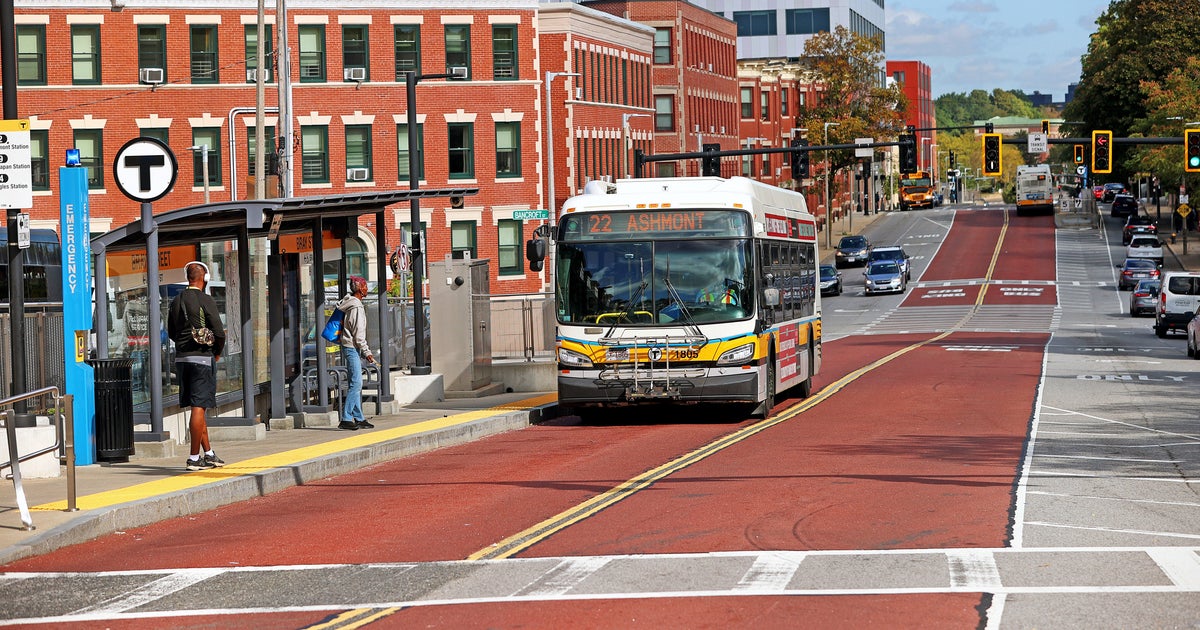
The 28 (current #1 in systemwide ridership) is the one that would be LRT'ed. But the 22 was #10 in the last Blue Book, the 31 was #15, and the 29 #60...and they collectively did a little bit more total ridership than the 28 alone in those counts. So there's always going to need to be a busway on the corridor. It can easily be an LRT-compatible busway, but even the Councillors' pie-in-sky Orange Line tunnel replacement for the 28 doesn't obviate the need for a busway on the entirety of the south-of-Grove Hall BHA corridor.
 
Burlington and Woburn's bounds are off by several hundred feet on that map. The bounds between Burlington and Woburn are offset to the north by about 2300 feet and to the west by about 1500 feet (the border between Burlington and Woburn does not run through the Mill Pond Reservoir, it runs east of it, just beyond the foot of the main dam and through part of the water treatment plant, just before it meets the Woburn/Burlington/Wilmington tripoint). Additionally, the bounds between Burlington and Lexington are shown a few hundred feet to the west of where they are. In real life the three towns meet in a tripoint that is Burlington's westernmost point and Lexington's northernmost point. Woburn's eastern border with Reading and Stoneham seems off, but I can't quite tell why. It could just be an effect of Woburn's new shape after stealing back a significant part of Burlington that is throwing my perspective off.
Oh wow, I just noticed it now and that is just plain wrong.
 
I think the main opportunity is to match bus capacity more closely with actual demand instead of simply cutting lower-ridership routes. Moving some service to busy routes could improve frequency while still keeping basic coverage where it is needed. In transportation whether it is MBTA buses or private services like Patriots Limousine handling different trip types understanding when and where vehicles are most needed makes a big difference. I wonder if the MBTA regularly reviews this at the individual route and time-of-day level when deciding where to adjust service.
I think the challenge with this type of analysis is low frequency service results in mode shift -- people just stop using transit. So it becomes a self-fulfilling prophecy.

There are minimum threshold levels of service for transit to be a viable mode of transportation.
 
Poor adjudicators - they're going to be overwhelmed by the appeals.
It's not going to be easy to appeal hard camera evidence. When other systems have deployed this technology, there's a quick rash of violations and then people quickly get the picture and violations drop off by up to 80% or more because they're not worth chancing or fighting. That's the logic behind the 3-month warnings-only grace period. They're getting ahead of the rash of violations so the compliance increases bigly by the time the appeals process has to go online.
 
Poor adjudicators - they're going to be overwhelmed by the appeals.
If I'm reading/assuming things from this and the MBTA page on the program correctly, at least for now, we're only ticketing people stopped/parked in the lanes + stops, not people who are driving in those lanes improperly.

I don't think there will be many successful appeals of that and I don't think that many people will try. Even if it wasn't a bus lane it's not like it was ever actually legal to double-park either.

If/when they try to start issuing tickets to people who are actively operating a vehicle in the lane, then you're going to get into the thornier topics about how well the city has actually done with markings + signage, and all the various spots where cars can reasonably be in or crossing those lanes for some reasons. (with an operator who's actively trying to drive somewhere).
 
Based on the verbal content of the meeting, there's some inconsistency with whats on the slide - per the presenter, stopping in bus stops (vs the lanes) won't get a warning period - "fines from day one." Also, despite it saying it's wholly automated, that's only true on the driver's part - there's still a human in the loop to review potential violations before citations go out. Again per the presenter, the automated system is only about 85% accurate - that's still a huge volume of citations to be reviewed by the T, especially if some of those false positives are permitted uses, like some of the right turns. That said, I believe the T is planning on running the appeals process through CEX and it's fare engagement appeals team.
 
I haven't read the law and the MBTA overview doesn't cover it, but yesterday I quickly stopped in a bus stop/lane to allow my wife to drop some books in a little library. I was only there ~45 seconds and in that time 3 busses passed going in the opposite direction. If this happened tomorrow, would I be expecting a warning in two weeks?
 
I haven't read the law and the MBTA overview doesn't cover it, but yesterday I quickly stopped in a bus stop/lane to allow my wife to drop some books in a little library. I was only there ~45 seconds and in that time 3 busses passed going in the opposite direction. If this happened tomorrow, would I be expecting a warning in two weeks?
Not specifically about the law, but practical implementation: I believe that the bus mounted cameras are monitoring the bus lane and bus stops in front of the bus -- where the specific bus is supposed to be able to operate unencumbered.
 
I haven't read the law and the MBTA overview doesn't cover it, but yesterday I quickly stopped in a bus stop/lane to allow my wife to drop some books in a little library. I was only there ~45 seconds and in that time 3 busses passed going in the opposite direction. If this happened tomorrow, would I be expecting a warning in two weeks?
Maybe find somewhere to park where you’re not blocking 3 busses and dozens of riders next time?
 
Frankly, I would be shocked if the cameras aren't able to pick up cars blocking opposing lanes - I'm absolutely certain that this is a computer vision/ machine learning powered system, and since It'll basically be a lite version of the same sort of obstacle & lane marking detection that powers Tesla autopilot, I'm sure it'll be able to detect it. I'm just not sure they'll have the camera setup to capture that evidence since it's a forward facing setup, or that it's programmed to do so - as deployed it appears premised on the idea that if you're captured by the system, you were in fact impeding a bus.
 
we're only ticketing people stopped/parked in the lanes + stops, not people who are driving in those lanes improperly.
even then, they caught 24k in a month just on Washington Street. Even if we assume that 80% of those folks will start resepcting the no parking in the bus lane, that's still 4-5k month or ~200 per working day to review verify submit to ticketing. And even if 10% of those appeal - that's 20 per day of appeals so a case load of 220 incidents per day for a single route.
 
Frankly, I would be shocked if the cameras aren't able to pick up cars blocking opposing lanes - I'm absolutely certain that this is a computer vision/ machine learning powered system, and since It'll basically be a lite version of the same sort of obstacle & lane marking detection that powers Tesla autopilot, I'm sure it'll be able to detect it. I'm just not sure they'll have the camera setup to capture that evidence since it's a forward facing setup, or that it's programmed to do so - as deployed it appears premised on the idea that if you're captured by the system, you were in fact impeding a bus.
You almost always restrict the field of view on this kind of system because you have to get a clear picture of the license plate for enforcement. The broader you pan across multiple lanes, the less likely you are to get a clear license plate capture.

It is different than obstacle detection -- you need to ID the very specific object.
 
The first new Green Line Type 10 has arrived for testing on the Green line tracks!!!!!!!!! :)
 
You almost always restrict the field of view on this kind of system because you have to get a clear picture of the license plate for enforcement. The broader you pan across multiple lanes, the less likely you are to get a clear license plate capture.

It is different than obstacle detection -- you need to ID the very specific object.
Oh to be clear I don't necessarily disagree, but albeit for different reasons - I think it's probably a more complex system than the motion based passing system installed on school buses. That doesn't mean that they'd be able to ignore what's happening "out of field" of what's immediately in front of the bus though - since it's a dynamic environment, and the system won't actually be able to know for certain that the bus is actually in the lane when it's passing stopped vehicles in bus stops/lanes, I'd think it'd have to scan the environment and process as a first order to determine those boundaries, to even determine if a possible offender is in fact encroaching. Since I'd expect that they do the compute on board, I'd actually expect that they perhaps don't have the compute power to actually process both lanes at once so it's probably virtually "fenced" to only process the imagery within its detection/ violation window, accounting for left/center/right running bus lanes - and it would have to be able to simultaneously distinguish lane markings and vehicles in that single pass for compute reasons. As the T has described it, that evidence package is generated on board and only the relevant segment is uploaded - it's reasonably computationally intensive, and I'd expect to happen as a second pass on recorded/saved footage after the first pass detects and flags the offender.

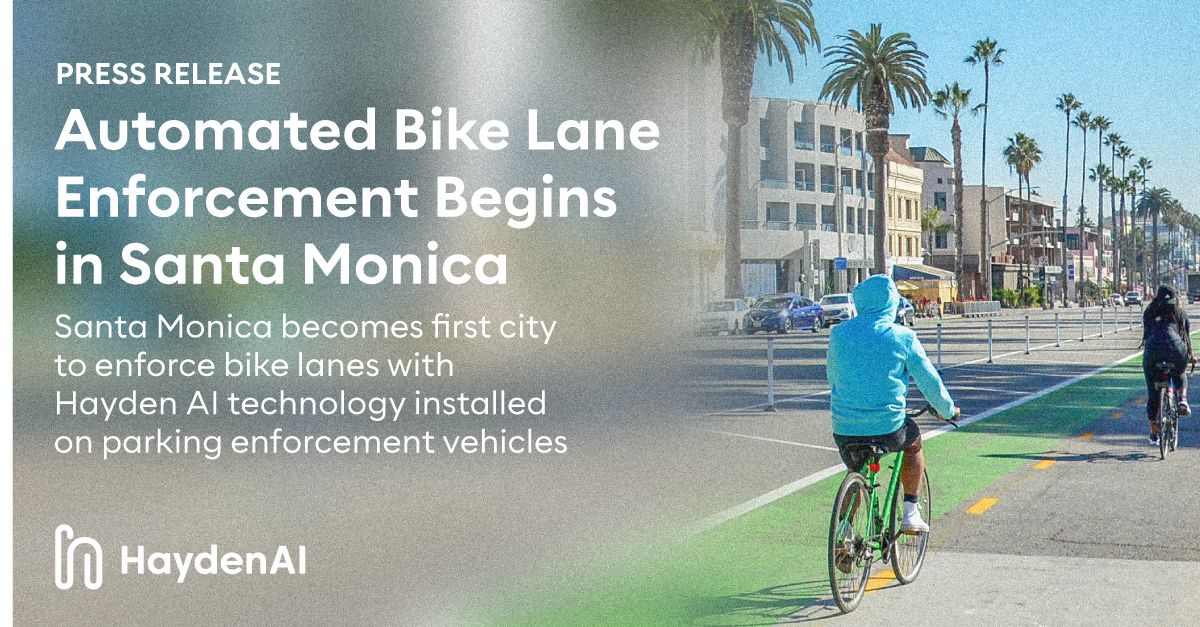
Edit: from SEPTA-Land, this is probably the best visualization I could find of what the computer sees, as I believe this is the same vendor the T contracted with - while it finds the lane edges for the buses direction of travel, and while it appears to disregard opposing lanes, it does identify vehicles in the opposing direction. Notably, this same vendor has an option to expand these bus mounted cameras to also conduct bike lane enforcement with the same onboard hardware. Hopefully, with the later success of the bus lane program, we can follow other municipalities in expanding it to bike lanes as well.
 
Last edited:
Oh to be clear I don't necessarily disagree, but albeit for different reasons - I think it's probably a more complex system than the motion based passing system installed on school buses. That doesn't mean that they'd be able to ignore what's happening "out of field" of what's immediately in front of the bus though - since it's a dynamic environment, and the system won't actually be able to know for certain that the bus is actually in the lane when it's passing stopped vehicles in bus stops/lanes, I'd think it'd have to scan the environment and process as a first order to determine those boundaries, to even determine if a possible offender is in fact encroaching. Since I'd expect that they do the compute on board, I'd actually expect that they perhaps don't have the compute power to actually process both lanes at once so it's probably virtually "fenced" to only process the imagery within its detection/ violation window, accounting for left/center/right running bus lanes - and it would have to be able to simultaneously distinguish lane markings and vehicles in that single pass for compute reasons. As the T has described it, that evidence package is generated on board and only the relevant segment is uploaded - it's reasonably computationally intensive, and I'd expect to happen as a second pass on recorded/saved footage after the first pass detects and flags the offender.

Edit: from SEPTA-Land, this is probably the best visualization I could find of what the computer sees, as I believe this is the same vendor the T contracted with - while it finds the lane edges for the buses direction of travel, and while it appears to disregard opposing lanes, it does identify vehicles in the opposing direction. Notably, this same vendor has an option to expand these bus mounted cameras to also conduct bike lane enforcement with the same onboard hardware. Hopefully, with the later success of the bus lane program, we can follow other municipalities in expanding it to bike lanes as well.
Clearly the system has to scan several lanes (since the bus needs to pass and also ID obstructions in the bus lane). But I would also point out that it is generally IDing vehicles traveling in the opposing travel lane, but not all the way over to the opposing bus lane. Particularly, when the bus with the video is in its own bus lane -- the opposite bus lane is a long way over in the field of vision. It would likely capture a lot more with center running bus lanes (close together).
 

Back
Top