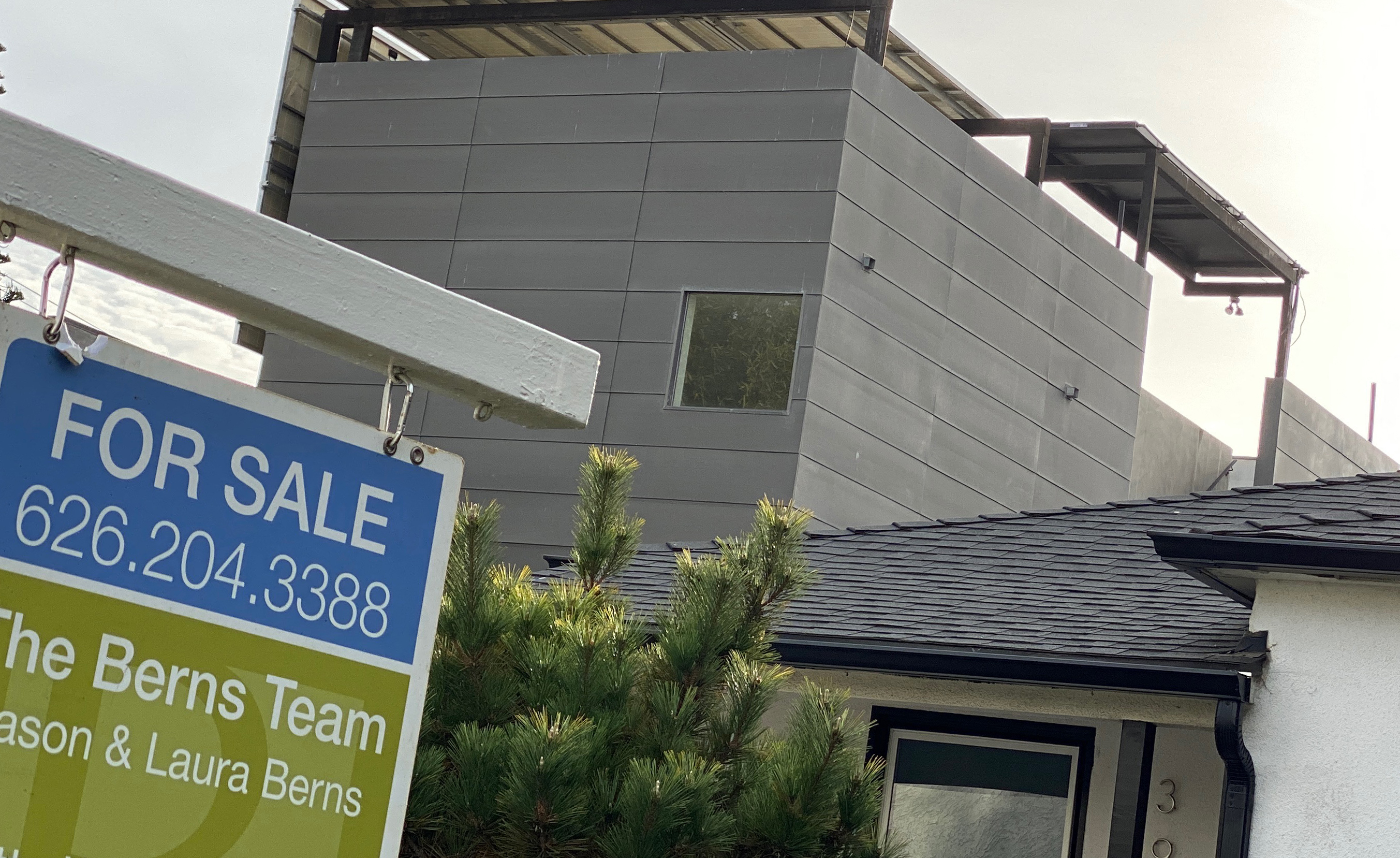
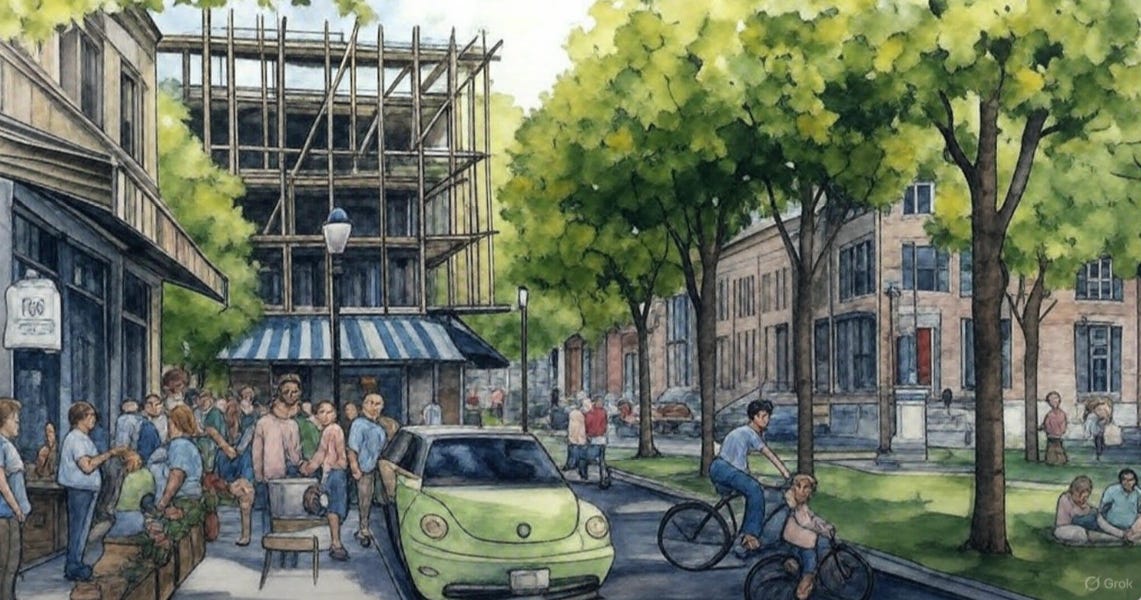
Addressing the nationwide housing crisis


The main reason is that 20,000 new apartments flooded the Denver market last year, said Cary Bruteig, a researcher with Apartment Insights who worked on the report for the association.

“That is a huge number … a 5% increase in a single year,” Bruteig said. “What that’s done is vacancies have moved up from 5.8% a year ago to 7% today. … And what happens when vacancy rates get over six is apartment communities start becoming much less aggressive in raising rents. In fact, they will often start flattening rents and offering concessions.”
 
Builder confidence in the U.S. housing market fell sharply in May, marking its lowest level since November 2023, according to a new report from the National Association of Home Builders (NAHB). Developers are contending with a sluggish selling season and mounting economic pressures.
[...]
Per the NAHB, persistent uncertainty around tariffs, rising building material costs, and sustained high interest rates have rattled builder sentiment. These headwinds have forced builders to slash prices during the peak homebuying season.
 
Baltimore held a single stair design competition. The winners can be viewed below, pretty cool.


Skimming some articles online and found this. Looks like there's a lot of housing legislation in the works in Texas. I saw there's a bill that cleared the senate legalizing single stairway buildings, also a bill headed to the governor's desk rezoning commerical to residential in major cities.

But more than 60% of Texas voters surveyed by YouGov and Texans for Housing said preserving local control isn’t as important as allowing property owners to build more kinds of homes “to meet the needs of their community.”
If only our politics were more like this 😭
 
Berkeley CA, where exclusionary single family only zoning was invented has now banned single family only zoning on most of the city. The wins are stacking up.

 
-Big news for CA

One of the biggest obstacles to building new CA housing has now vanished​


Construction of what will be one of the largest mass timber towers in the world at 1510 Webster St. in downtown Oakland on Aug 7, 2023. Of the 222 units 35 are designated affordable housing for households earning around 80% of the Area Median Income. Photo by Semantha Norris, CalMatters


“In a legislative battle a decade in the making, lawmakers just exempted infill urban development from the California Environmental Quality Act. That’s a big deal.
Welcome to CalMatters, the only nonprofit newsroom devoted solely to covering issues that affect all Californians. Sign up for WhatMatters to receive the latest news and commentary on the most important issues in the Golden State.

A decade-spanning political battle between housing developers and defenders of California’s preeminent environmental law likely came to an end this afternoon with only a smattering of “no” votes.

The forces of housing won.
With the passage of a state budget-related housing bill, the California Environmental Quality Act will be a non-issue for a decisive swath of urban residential development in California.

In practice, that means most new apartment buildings will no longer face the open threat of environmental litigation.

It also means most urban developers will no longer have to study, predict and mitigate the ways that new housing might affect local traffic, air pollution, flora and fauna, noise levels, groundwater quality and objects of historic or archeological significance…….”

 
Today explained did a podcast today called “how the yimbys won”. A lot of the episode was about california loosing up housing restrictions caused by CEQA, but they also talked about Ma and Boston.


The next big real-estate boom: Homes for people living alone​

Home developers are overbuilding the large and underbuilding the small

im-07667507


“Investment strategists often hurry to model interest-rate changes and evaluate the effects of geopolitical upheaval, inflation or the latest breakthrough in artificial intelligence. These developments move quickly and demand attention.

However, not everything that influences markets makes the headlines or is incorporated into investment models. Some of the most transformative forces are slow-moving and quiet, shaping the investment landscape beneath our feet.

One of those forces is the global rise in single-person households.

The one-person household is not just a lifestyle shift; it is a macroeconomic transformation hiding in plain sight. It reshapes consumption patterns and demands a rethinking of the infrastructure we invest in. Real estate is one of the most immediately affected asset classes.

A quiet demographic shift​

In 1940, only 7.7% of U.S. households were single-person. By 2023, that figure rose to nearly 30%, according to the U.S. Census Bureau. In cities like Washington, San Francisco and New York, living alone is quickly becoming the most common household type.

The U.S. is not unique. Over the past 35 years, the number of Canadians living alone has more than doubled. Across continents, one-person households are becoming increasingly common, with many cities where they now make up the majority.

The change is especially noticeable in parts of Europe. Countries like Sweden, Norway, Finland and Germany report that more than 40% of households are composed of a single person. In large metropolitan areas like Tokyo, Stockholm and Paris, solo households are nearing 50% of all living arrangements.

Even in fast-urbanizing economies such as China, the number of solo households is rising rapidly, driven by rural-to-urban migration, delayed marriage and low birthrates.

Yet much of the real-estate ecosystem — from investment models to product design to development — remains rooted in an outdated consumer unit: the two-person-plus-children family household. It’s time to adjust the models, recognize new demands and realize growing market opportunities……….”

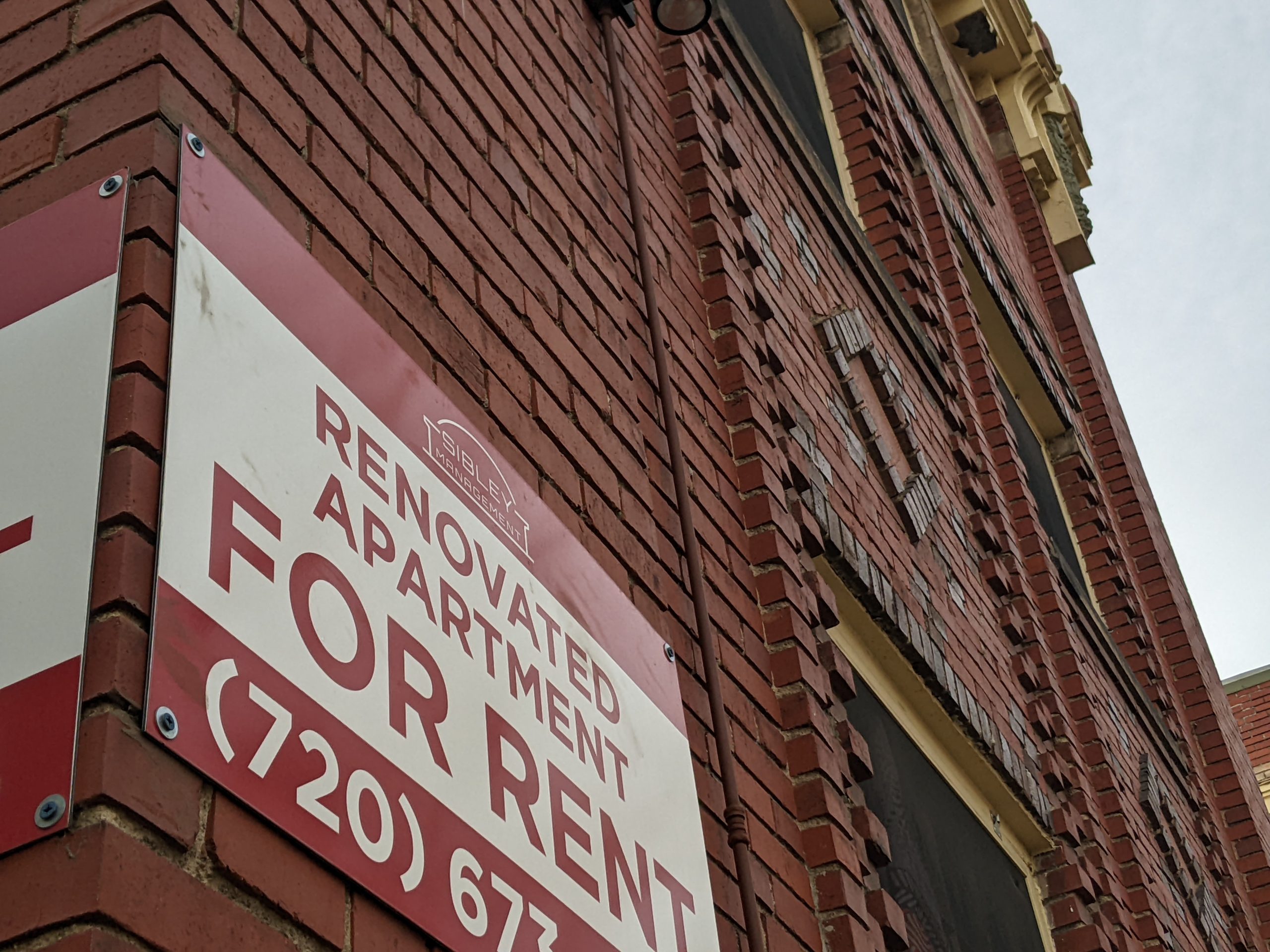


I looked at the Denver market a bit ago. The impression that I got was that while labor is pricey, land is cheap (and was probably dirt cheap before the pandemic). Even then, they are building most in the east outskirts, near the desert. Which looks very much non-developed. You're still talking about 400kish for a TH or SFH which is a lot.

It's not really comparable to Boston. I should add that I believe Aurora is like Suburbia Hell.
 
Yet much of the real-estate ecosystem — from investment models to product design to development — remains rooted in an outdated consumer unit: the two-person-plus-children family household. It’s time to adjust the models, recognize new demands and realize growing market opportunities……….”

In case it wasn't obvious, the marginal cost of 2b1b is not much more than 1b1b. There are, um... other benefits too.
 
So I did a random survey of NC apartments across the country, and this is what I came up with...

Denver
Built 2025, Studios $1483, 1's $1764

Atlanta
Built 2024, Studios $1585, 1's $1790

Arlington VA
Built 2024, Studios $1935, 1's $2180
There are a few cheaper NC units in DC itself.

Tampa
Built 2024, Small 1 $1752

Phoenix
Built 2025, Studio $1620, 1's $1795

Las Vegas
Built 2025, Studio $1485, 1's $1725

Philly
Built 2025, Studio $1425

Knoxville
Built 2025, 1's $1499

Cleveland
Built 2024, 1's $1500, 2 Townhome $2100

Boise
Built 2025, Studio $1692, 1's $1785

Seattle
Built 2025, Small 1 $1259/$1459, Small 2 $2301

Yeah I imagine if there were NC market rate apartments in the $1500 range, they would go pretty quick here. (Assuming they were located in popular areas with people who would be interested in Studios and 1bdrs)
 
So I did a random survey of NC apartments across the country, and this is what I came up with...

Denver
Built 2025, Studios $1483, 1's $1764

Atlanta
Built 2024, Studios $1585, 1's $1790

Arlington VA
Built 2024, Studios $1935, 1's $2180
There are a few cheaper NC units in DC itself.

Tampa
Built 2024, Small 1 $1752

Phoenix
Built 2025, Studio $1620, 1's $1795

Las Vegas
Built 2025, Studio $1485, 1's $1725

Philly
Built 2025, Studio $1425

Knoxville
Built 2025, 1's $1499

Cleveland
Built 2024, 1's $1500, 2 Townhome $2100

Boise
Built 2025, Studio $1692, 1's $1785

Seattle
Built 2025, Small 1 $1259/$1459, Small 2 $2301

Yeah I imagine if there were NC market rate apartments in the $1500 range, they would go pretty quick here. (Assuming they were located in popular areas with people who would be interested in Studios and 1bdrs)
Thanks for putting this together, always good to see what the experience is like in a more normal housing market lol.

Even in terrible locations without anything to do yet, these units would fill up instantly at 50% more ngl. Case and point being low vacancies in the post apocalypse (for now) that is the Everett commercial triangle for 2200/2600 for studios/1beds lol. I remember seeing a chart in my feed at one point that suggested cost of construction labor is ~50-80% higher in New England than in the heartland. But even with that I imagine unlimited market rate dev could still get us a little where the non-Boston New England NC city rents are:

Providence
2024, 1bed $1900

Worcester
2024, studio $1900, 1bed $2300

New Haven
2025, studio $1750, 1bed $2000

Everett
2025, studio $2100, 1bed $2700

Still way higher than all those other cities you point out, but like, at these prices in Boston, this wouldn't even qualify as a luxury.
 

Back
Top