
You are using an out of date browser. It may not display this or other websites correctly.
You should upgrade or use an alternative browser.
You should upgrade or use an alternative browser.
Biking in Boston
- Thread starter statler
- Start date
I agree. It's crazy that Brookline wants 3 lanes of parking (2 curbside parallel parking, and the angled back-in parking) right next to the Green Line. Probably some of the best transit access in the state here and they want a super car centric design. Removing that angled parking would really open up what can be done with that space.A crowded path is indicative of a need to build more/wider car-free infrastructure, not less. Though to your point, I'm a bit disappointed that despite the designers saying "there's plenty of room" in the ROW, there's no separated dirt walking/running path and dedicated cycle track. And instead reverting to the car-centric design of having everyone share a conflict-ridden 10 foot path.
The link below has the boards shown at the recent meetings, which include parking utilization by block.
Beacon Street Historic Bridle Path Reconstruction | Brookline, MA - Official Website
Inspired by the Olmsted's historic design of Beacon Street, the Town of Brookline is working with their consultant, Toole Design Group, to reimagine the restoration of the bridle path as a multi-use path along the MBTA C-Line tracks to transform the street into a multi-modal corridor providing...
 www.brooklinema.gov
Truthfully, I'm not all that surprised. I believe last year the city voted to connect the Community Path and Greenway via Taylor and Arsenal instead of the existing ROW (citing rising cost and parking loss). With the recent installation of the cycle track on Taylor Street, the path forward seems pretty much set in stone.It's a bit unfortunate the City isn't doing a taking of the RoW part for stitching together the various pieces of infrastructure in the area. I think Patten Street still has a bridge over the RoW. Currently it's used as a parking lot for the Dunks.
Last edited:
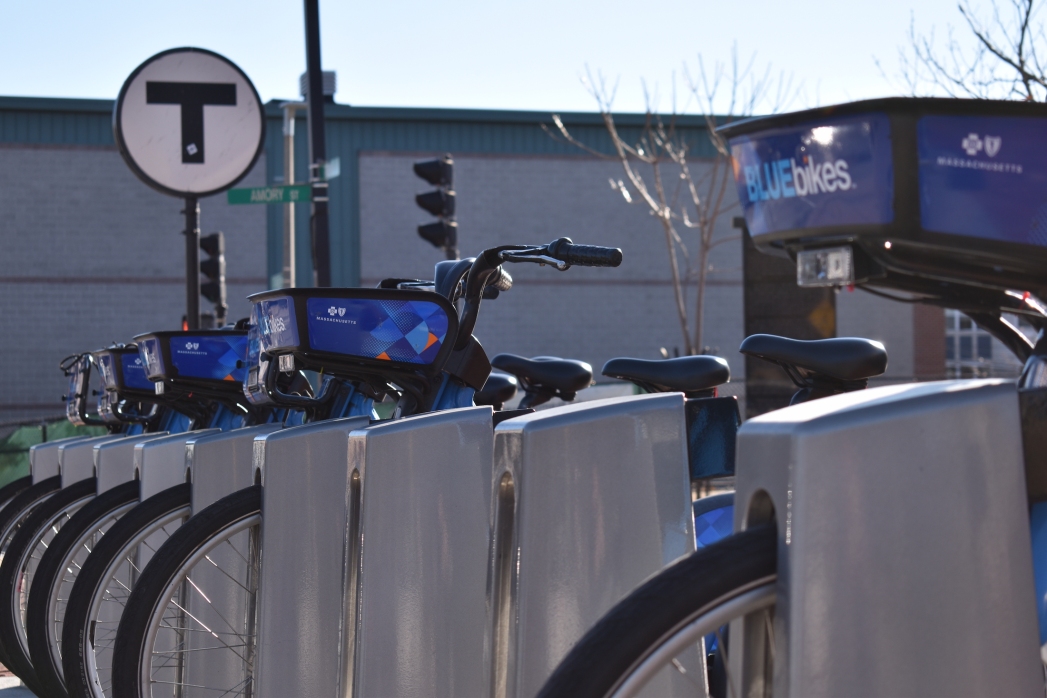
More E-Bikes, More Rides: Details From Lyft's Bluebikes Contract Proposal - Streetsblog Massachusetts
Lyft's bid aims for "50 percent growth in ridership, reaching 7 million annual trips by Year 3 of the new contract."
 mass.streetsblog.org
In other BlueBikes news:
 walthamtimes.org
Traffic Commission recommends moving forward with regional bikeshare initiative – Waltham Times
The Traffic Commission holds its meetings at City Hall. Photo by Emily Saperia. Bikeshare Initiative On Thursday, Metropolitan Area Planning Council’s
walthamtimes.org

BACsop
Senior Member
- Joined
- Jun 1, 2019
- Messages
- 1,919
- Reaction score
- 8,120

Bike Safety Slate Wins Strong Majority In Cambridge City Council Election - Streetsblog Massachusetts
Seven out of the nine Cambridge City Council members elected yesterday had received endorsements from Cambridge Bike Safety, the volunteer organization that’s working to improve bike infrastructure in the Commonwealth’s fourth-biggest city. Cambridge’s entire City Council was up for reelection...
mass.streetsblog.org
Elections were yesterday, and five of the nine elected to Cambridge City Council are committed to finishing the bike network on time. Burhan Azeem, Marc Mcgovern, Sumbul Siddiqui, Ayah Al-Zubi, and Jivan Sobrinho-Wheeler. Two more, Patty Nolan and Cathie Zusy, were given a lesser endorsement from Cambridge Bike Safety. Seven-ish pro bike people out of nine is pretty great.For Cambridge residents, early voting for the City Council begins this weekend. If you live in Cambridge and care about sustainable transportation and reducing congestion, please get out and vote for bike safety champions (Burhan Azeem, Marc Mcgovern, Sumbul Siddiqui, Ayah Al-Zubi, Dana Ray Bullister, and Ned Melanson), who have committed to finishing the CSO on time!
The other winner were Denise Simmons and Tim Flaherty.
(Edited. I missed one endorsment)
Badusername
Active Member
- Joined
- Dec 2, 2021
- Messages
- 262
- Reaction score
- 759
How does that compare to the current makeup of the council? Were the councilors who delayed the implementation punished electorally? I know Nolan was one of them.Elections were yesterday, and five of the nine elected to Cambridge City Council are committed to finishing the bike network on time. Burhan Azeem, Marc Mcgovern, Sumbul Siddiqui, Ayah Al-Zubi, and Jivan Sobrinho-Wheeler. Two more, Patty Nolan and Cathie Zusy, were given a lesser endorsement from Cambridge Bike Safety. Seven-ish pro bike people out of nine is pretty great.
The other winner were Denise Simmons and Tim Flaherty.
(Edited. I missed one endorsment)

stick n move
Superstar
- Joined
- Oct 14, 2009
- Messages
- 13,922
- Reaction score
- 26,457
Kind of hard to say. A weird mix.How does that compare to the current makeup of the council? Were the councilors who delayed the implementation punished electorally? I know Nolan was one of them.
The vote to delay bike lane projects was passed by Toner, Pickets, Wilson, Simmons, and Nolan.
Toner resigned from city council this year, charged in the brothel case. Pickets died in office last year. Wilson was just voted out. Simmons keeps her seat. And Nolan.... is odd. She's generally good on bike issues. It was a surprise when she voted for delay. The main Cambridge bike advocacy group still endorsed her, just not their top tier endorsement. Make of that what you will, but I think it's still a benefit to have her in office (at least on this issue).
Last edited:
RandomWalk
Senior Member
- Joined
- Feb 2, 2014
- Messages
- 3,992
- Reaction score
- 7,617
Nolan is a classic Cambridge politician: she listens and triangulates to minimize unranked ballots.

cubbe8
Active Member
- Joined
- Mar 18, 2022
- Messages
- 429
- Reaction score
- 763
Yesterday’s meeting for Chestnut Hill Ave
 brooklinema.zoomgov.com
CHA Neighborhood Meeting - 11/5/25 at 7:00 PM - Zoom
brooklinema.zoomgov.com
lainpimicaja
Active Member
- Joined
- Jun 28, 2021
- Messages
- 175
- Reaction score
- 675
Streetsblog’s on fire (again) with this one - unfortunately looks like Mayor Wu still has cold feet on bike infrastructure (even post a landslide reelection): https://mass.streetsblog.org/2025/1...successfully-shift-traffic-from-cars-to-bikes
millerm277
Active Member
- Joined
- Jun 25, 2013
- Messages
- 586
- Reaction score
- 814
This data looks pretty terrible and like it agrees more with the bike skeptics than the promoters. I don't get this headline at all or why Streetsblog thinks this is particularly positive.Streetsblog’s on fire (again) with this one - unfortunately looks like Mayor Wu still has cold feet on bike infrastructure (even post a landslide reelection): https://mass.streetsblog.org/2025/1...successfully-shift-traffic-from-cars-to-bikes
These are largely poor usage statistics and appear to strongly agree with those who argue that bike lanes (where they take the place of general traffic lanes, at least) are, at least to this point, not seeing enough utilization to replace the previous car throughput they've displaced, leading to a net decline in people actually moved by that street space.
If you're solely interested in increased bicycle utilization that's a win, but this seems like a strong counter-argument to many of the other arguments used to support bike lanes - most obviously the premise that they can reduce traffic and move more people. This illustrates that they largely can't be accomplishing that on the road segments in question so far, and likely are actually worsening traffic/decreasing net movement of people at this point due to their very low utilization.
I'm not sure how you're coming to that conclusion.This data looks pretty terrible and like it agrees more with the bike skeptics than the promoters. I don't get this headline at all or why Streetsblog thinks this is particularly positive.
These are largely poor usage statistics and appear to strongly agree with those who argue that bike lanes (where they take the place of general traffic lanes, at least) are, at least to this point, not seeing enough utilization to replace the previous car throughput they've displaced, leading to a net decline in people actually moved by that street space.
If you're solely interested in increased bicycle utilization that's a win, but this seems like a strong counter-argument to many of the other arguments used to support bike lanes - most obviously the premise that they can reduce traffic and move more people. This illustrates that they largely can't be accomplishing that on the road segments in question so far, and likely are actually worsening traffic/decreasing net movement of people at this point due to their very low utilization.
Here's the report for anyone who want to look at it:
Bike volumes went up on all the new bike lane streets they measured, and by amounts that can't really be explained by anything but the bike lane. Bike ups 83% on Boylston!
Car volumes were mixed, but the report specifically says the change in number of cars is all so small as to be in normal day-to-day variation. After the bike lanes were installed there were actually more cars on Boylston, for example. A couple others were basically unchanged. The streets with the biggest drops in car traffic, were Western Ave and South Street in Brighton, but it doesn't make sense that the bike lanes were the cause. On South Street, the city also put in speed bumps to specifically discourage cars from rat-running down that residential street. On Western, I'm pretty sure the bike lanes only took up what used to be on-street parking. There was no reduction in car travel lanes, so any change in car volume (which was in normal variations) was due to something else.
This report pretty clearly shows that the bike lanes encouraged lots more people to ride bikes. They also had no measurable effect on car volumes.
The metric they reported was # of bikes as a % of total vehicles (bikes + cars) on the roadway. The issue with this metric is that the denominator in this fraction also changes. So in the case of car volume staying the same (say 100 cars/hour) but bike volume doubling from 5 >> 10 bikes/hour, your % of bikes is still only ~10% but the roadway is now effectively moving 5 extra people.This data looks pretty terrible and like it agrees more with the bike skeptics than the promoters. I don't get this headline at all or why Streetsblog thinks this is particularly positive.
These are largely poor usage statistics and appear to strongly agree with those who argue that bike lanes (where they take the place of general traffic lanes, at least) are, at least to this point, not seeing enough utilization to replace the previous car throughput they've displaced, leading to a net decline in people actually moved by that street space.
If you're solely interested in increased bicycle utilization that's a win, but this seems like a strong counter-argument to many of the other arguments used to support bike lanes - most obviously the premise that they can reduce traffic and move more people. This illustrates that they largely can't be accomplishing that on the road segments in question so far, and likely are actually worsening traffic/decreasing net movement of people at this point due to their very low utilization.
And in the case of most of these new bike lanes, all that was removed is a lane of parked cars (or in the case of boylston st, a car lane that was always filled with double parked cars). So it makes sense that car volumes did not decrease in the study.
And while we're at it, it's also a state mandate and goal to reduce overall vehicle miles traveled, especially in the city. So even if the new road config encourages more people to mode shift by reducing car throughput and making driving slightly less convenient (even though the study above has very little evidence that is happening), that legitimately is a success story of these bike lanes, not a failure.
Not sure how you get to the conclusion that this is counter to the propositions of bike lanes? Congestion itself is seemingly changed little in these streets. And, in some ways lessened, because there are less people taking car trips (or perhaps, they just didn't keep on circling the block trying to double-park or park on Boylston, specifically). And in some cases as the vehicle counts dip and the bikes lane rise, you could be moving more people on net. Milk St/Washington St appears to be something like that.This data looks pretty terrible and like it agrees more with the bike skeptics than the promoters. I don't get this headline at all or why Streetsblog thinks this is particularly positive.
These are largely poor usage statistics and appear to strongly agree with those who argue that bike lanes (where they take the place of general traffic lanes, at least) are, at least to this point, not seeing enough utilization to replace the previous car throughput they've displaced, leading to a net decline in people actually moved by that street space.
If you're solely interested in increased bicycle utilization that's a win, but this seems like a strong counter-argument to many of the other arguments used to support bike lanes - most obviously the premise that they can reduce traffic and move more people. This illustrates that they largely can't be accomplishing that on the road segments in question so far, and likely are actually worsening traffic/decreasing net movement of people at this point due to their very low utilization.
I echo as02143's comments. It's really not intended to be a direct person in car to person on bike change. People circling blocks for parking is a real issue, not to mention ride share trips.
Personally I know that I use the bike lane streets when biking more than I used to and now I visit those businesses more often as well. For example, now it's much easier to pop over from Mass Ave to the Copley library via Boylston St then use the Tremont St lanes to get back to Mass Ave and on my way. I used to walk or drive to a library branch closer to my house (the branch is now closed for construction, however). Once I'm in the Back Bay, I usually grab something to eat or visit a couple more places since I'm already there.
I do think a missing (though not critical piece) of the report is transit changes. I love being a bike commuter, but I find myself pivoting to transit more on those edge weather days as the MBTA's on time percentage and frequency have improved so dramatically over the last 1-2 years. There is also late night T again! Both of these have an impact on car use too (mostly ubers/lyfts). The existence of Bluebikes also allows me to take the T in the morning when it might be raining, but Bluebike home, or vice versa.
Ultimately, this report isn't intended to be the "state of transportation in Boston", it's intended to tabulate the basic impacts these specific lanes have had. Lanes that we hear continuous (false) anecdotes about. The reality is that people biking are coming out of the woodwork and traffic is either the same or better. And this doesn't even touch on the safety goals yet.
Personally I know that I use the bike lane streets when biking more than I used to and now I visit those businesses more often as well. For example, now it's much easier to pop over from Mass Ave to the Copley library via Boylston St then use the Tremont St lanes to get back to Mass Ave and on my way. I used to walk or drive to a library branch closer to my house (the branch is now closed for construction, however). Once I'm in the Back Bay, I usually grab something to eat or visit a couple more places since I'm already there.
I do think a missing (though not critical piece) of the report is transit changes. I love being a bike commuter, but I find myself pivoting to transit more on those edge weather days as the MBTA's on time percentage and frequency have improved so dramatically over the last 1-2 years. There is also late night T again! Both of these have an impact on car use too (mostly ubers/lyfts). The existence of Bluebikes also allows me to take the T in the morning when it might be raining, but Bluebike home, or vice versa.
Ultimately, this report isn't intended to be the "state of transportation in Boston", it's intended to tabulate the basic impacts these specific lanes have had. Lanes that we hear continuous (false) anecdotes about. The reality is that people biking are coming out of the woodwork and traffic is either the same or better. And this doesn't even touch on the safety goals yet.
MAPC and the Neponset River Watershed Association are hosting a meeting on January 15th to review designs for Blue Hills Parkway in Milton, with the goal being improving walking/biking connections to the Blue Hills. https://lp.constantcontactpages.com/ev/reg/dmfnddv/lp/54b498f8-4e72-4c82-93b0-3270108669c3
A bit old news - but Grove St in Belmont is getting a restriping, which will connect to Cambridge's existing bike projects on Mt Auburn St and Huron Ave. Unfortunately, they are only going with paint-buffered lanes (still with parking on the curbside) despite there being plenty of ROW width for curbside parking-separated lanes. This means cars will freely cross over and block the bike lanes when idling, parallel parking, etc.
 www.belmont-ma.gov
Quite a missed opportunity to connect Belmont proper to the rest of the safe infrastructure network, but still an improvement nonetheless.
Grove Street Redesign Project | Belmont, MA
Gather information on the Grove Street Redesign Project.
www.belmont-ma.gov
Quite a missed opportunity to connect Belmont proper to the rest of the safe infrastructure network, but still an improvement nonetheless.