Boston and the Homeless

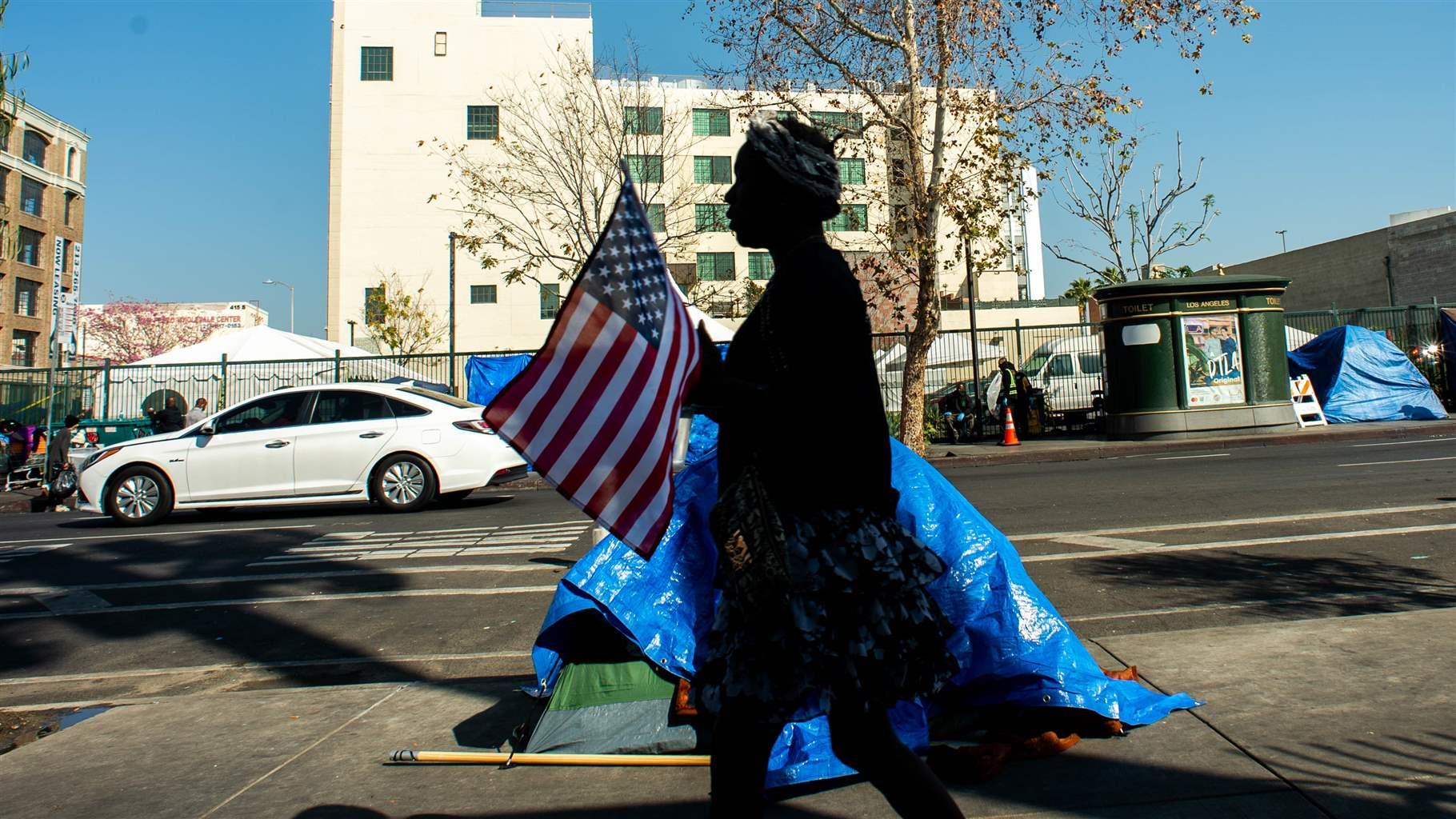
Having spent a lot of time running around the country, I'd argue Boston has done a much better job of handling the homeless population than most, with much less of a "street" homeless / unhoused problem than many many other cities. Yes, Boston has the 2nd highest rate of homelessness amongst large US cities, but we have the 8th lowest rate of "unsheltered" homeless. The national average is 40%; LA's is 73%, while the rate in Greater Boston is 6% - Boston proper is just 3%. The last citywide census was just over 130 individuals; that's smaller than many individual encampments elsewhere. The other metric is chronic homelessness - that lasting more than a year or repeatedly due to mental illness or substance abuse. Boston's is 9% compared to a national average of 22%. Long Island would absolutely be a incredibly valuable resource, but Boston & our local orgs are doing as good of a job as you'll find in the US.

Societally, we need to stop assuming that everyone who is homeless is mentally ill / a criminal / a drug addict - those are factors at the individual level which don't translate to population level. Greater Boston notably has substantially lower rates of such factors than most cities, even amongst the homeless - but what does have a huge body of research is that housing affordability is absolutely the key factor.
 
Boston has cleared one of the last major permitting hurdles in its longstanding quest to rebuild the Long Island Bridge, and is preparing to move ahead even as Quincy’s staunch opposition continues.
The Massachusetts Department of Environmental Protection granted Boston a key state permit on Jan. 7, siding with the city over Quincy, which had previously appealed the authorization.
 
Last edited:
I was just thinking about the status of the bridge this morning. As the mayoral race heats up I hope all candidates are really pressed on this issue. Where do you stand, how do you plan to address the homeless and vagrant crisis, and should the bridge be built. I expect the anti-Wu candidates will be in a bit of a tough spot on it, but this needs to happen and soon.
 
I get the arguments against rebuilding Long Island but there is not a mayor or governor who is going to advocate for a new central treatment center within a few miles of a residential area. Barring a new compound in Widett or Newmarket there will be abutters galore the moment a plan drops.

We're in election season so everyone should have their pencils sharpened. Wu is clearly in support of Long Island and has made incremental progress getting there, but with huge obstacles remaining. Someone should put Kraft's feet to the fire here and see if there's alignment or some daylight between the two. Now is the perfect time to get creative.
 
 
I have a personal thesis on this that I'm working on expanding, but my opinion is that our small new england town model of governance has lead to balkanization of interests. Compare and contrast our 351 towns and municipalities to say Florida, Virginia or North Carolina - in turn, they have 412, 138 and 552, while having 6, 4, and 7 times the area of MA. For the moment, let's set aside unincorporated land and consider what governmental structures outside of New England has that we generally don't - County level services and planning. In many places, the county provides services like planning, transportation engineering, schools, fire... and human services like homeless shelters and care.

Some of those uses are less controversial- a community is unlikely to oppose a new elementary school, or a fire station. But say a jail, homeless shelter or sewage plant? On the scale of a place like say Fairfax County Virgina, the political interests are spread out far enough across the jurisdiction that someone in Lorton VA likely won't have a strong opinion to commercial development in Tysons Corner - the minimal impact to the vast majority of their constituency may mean that a county commissioner may well be OK with siting a project somewhere that a local majority would oppose. What's left of our historical county system is the various county houses of corrections - usually located in some out of the way corner, but they had a whole county to site the thing where no one would object to it. Its why Boston wants to use Long Island - none of its constituency cares. But Quincy's does.

Now, in general I think our regional structures are too weak. Look at our many small towns that are each trying to provide and staff services - as expectations get higher and the complexity grows, its less possible for a town to sustain what it's citizens expect. There's a reason we have a ton of hyphenated school districts the further out you get from Boston, since schools alone are usually the single biggest line on a municipal budget, and you're increasingly seeing ad-hoc departmental mergers because a town didn't have the resources - I think as a state we need to think about how some critical services can be managed collectively instead of independently. It's hardly a perfect analogy to Boston, Long Island, Quincy and Squantum, but a regional authority just feels like it'd be one step removed and more empowered to take on unpopular decisions, much like the MWRA - no one town wanted to host a sewage plant or foot the bill, but pointing up allowed political leaders to deflect. If Long Island were not solely for Bostons needs, and instead was a regional facility that serviced the entire South Shore including Quincy rather than excluding it?
 

QUINCY ‒ One in 35 students in Quincy experienced homelessness, according to the most recent data from a full academic year.

Over the 2023-24 academic year, 280 of 9,769 students enrolled in Quincy Public Schools received services under the McKinney-Vento Act, federal legislation passed in 1987 to protect homeless children's constitutional right to an education.

Leslie Bridson, the district's full-time homelessness liaison, said 280 is the highest figure she’s seen since assuming the role 11 years ago.

Around 2014, when Bridson began, the number of Quincy’s homeless students was in the mid-100s. In the past four years, the figure has hovered in the low- to mid-200s. Last year was a spike, Bridson said.

So far this year, numbers are fortunately down, with 132 recorded through March 12, Bridson said, on pace for about 200 for the full year.
 
At this week’s funeral of Carvell Curry, a homeless man found frozen outside South Station on a brutally cold night, some mourners wondered if this could happen again. Yes, it can.
When temperatures fall below freezing, homeless people sheltering inside South Station have been allowed to stay overnight. That’s no longer the case. Even during the Jan. 25 storm that brought two feet of snow, private security guards told three dozen homeless people sheltering in South Station that they had to leave.
[...]
A spokesperson for Ashkenazy Acquisition, the New York firm that holds a long-term lease to manage the South Station concourse, referred questions to the MBTA. An MBTA spokesperson reiterated that the concourse is closed between midnight and 5 a.m. and said that the MBTA Transit Police are available around the clock to help connect anyone in need to housing services, especially during extreme weather. And, it was noted, the lease with Ashkenazy gives leeway for the company to open the concourse up for additional hours beyond the typical schedule.Yet somehow the biggest snowstorm in years didn’t count as one of those times.
[...]
The last time I was at South Station this late was in January 2023 with Dr. Jim O’Connell, cofounder of Boston Health Care for the Homeless. He wanted to show me how homeless people were being locked out after midnight, even when temperatures fell below 32 degrees. This violated a 2015 agreement between the city and state to allow homeless people to stay there overnight. After Governor Maura Healey read my column on the issue, she decided the state would continue to honor that agreement, calling it a “matter of basic humanity.” But somehow that unwritten policy, struck long before she was governor, has once again been forgotten.
 
Has there been reporting on how many total people have died from this cold snap in Boston? NYC is up to 17, which is pretty unbelievable.

I was also surprised recently that when it's a "Cold Blue" in NYC, a lot of homeless outreach is foisted upon NYPD. I placed a call to 311 recently for a man that was sleeping outside on a below freezing night, and they forwarded me to police dispatchers, instead of having Homeless Services handling it. Not sure how that compares to Boston's outreach.
 
Has there been reporting on how many total people have died from this cold snap in Boston? NYC is up to 17, which is pretty unbelievable.

I was also surprised recently that when it's a "Cold Blue" in NYC, a lot of homeless outreach is foisted upon NYPD. I placed a call to 311 recently for a man that was sleeping outside on a below freezing night, and they forwarded me to police dispatchers, instead of having Homeless Services handling it. Not sure how that compares to Boston's outreach.
Unfortunately, our civic leaders aren't as considerate as Mayor Mamdani. I honestly think they don't care enough (thanks, Melania) to make this as much an emergency as he has.
 

Back
Top