
You are using an out of date browser. It may not display this or other websites correctly.
You should upgrade or use an alternative browser.
You should upgrade or use an alternative browser.
Boston to update its zoning code
- Thread starter stick n move
- Start date
They are absolute lying losers who serve no real purpose in life.
I’m sure it felt cathartic to say this but I doubt it’ll bring anyone over to your side.

type001
Senior Member
- Joined
- Jun 29, 2006
- Messages
- 1,845
- Reaction score
- 401
Didn’t write it to feel anything. Side of what?I’m sure it felt cathartic to say this but I doubt it’ll bring anyone over to your side.
type001
Senior Member
- Joined
- Jun 29, 2006
- Messages
- 1,845
- Reaction score
- 401
Sorry, that was a late night strong response to your comment. I personally don’t see any strong sides in this matter. Just the same few people pushing a false narrative and agenda.Didn’t write it to feel anything. Side of what?
Justbuildit
Senior Member
- Joined
- Nov 27, 2022
- Messages
- 1,134
- Reaction score
- 3,984
Cowardice. Set a schedule and vote!

 www.bostonglobe.com
Shen said the Planning Department would aim to have the zoning amendment in front of the BPDA board in September.
The zoning changes are part of PLAN: Downtown, which the board adopted about a year and a half ago, but haven’t yet been formalized into city code.
Rules for 700-foot skyscrapers across downtown will have to wait - The Boston Globe
The Wu Administration delayed a long-awaited vote on new zoning rules for a big swath of downtown.
www.bostonglobe.com
Shen said the Planning Department would aim to have the zoning amendment in front of the BPDA board in September.
The zoning changes are part of PLAN: Downtown, which the board adopted about a year and a half ago, but haven’t yet been formalized into city code.

stick n move
Superstar
- Joined
- Oct 14, 2009
- Messages
- 13,924
- Reaction score
- 26,460
Big surprise, look whats happening in cities enacting pro-housing legislation. We dont need to look far for examples, Providence had the 2nd largest drop.
“Rental prices in some of the country's largest cities are falling—some by almost 45 percent, according to new data from Five Star Cash Offer, a real estate investment firm that operates as a direct cash homebuyer. The dataset, which includes the top 65 metropolitan areas in the United States, reveals that cities that have recently enacted pro-housing policies have experienced the most significant year-over-year decline in rental prices nationwide.
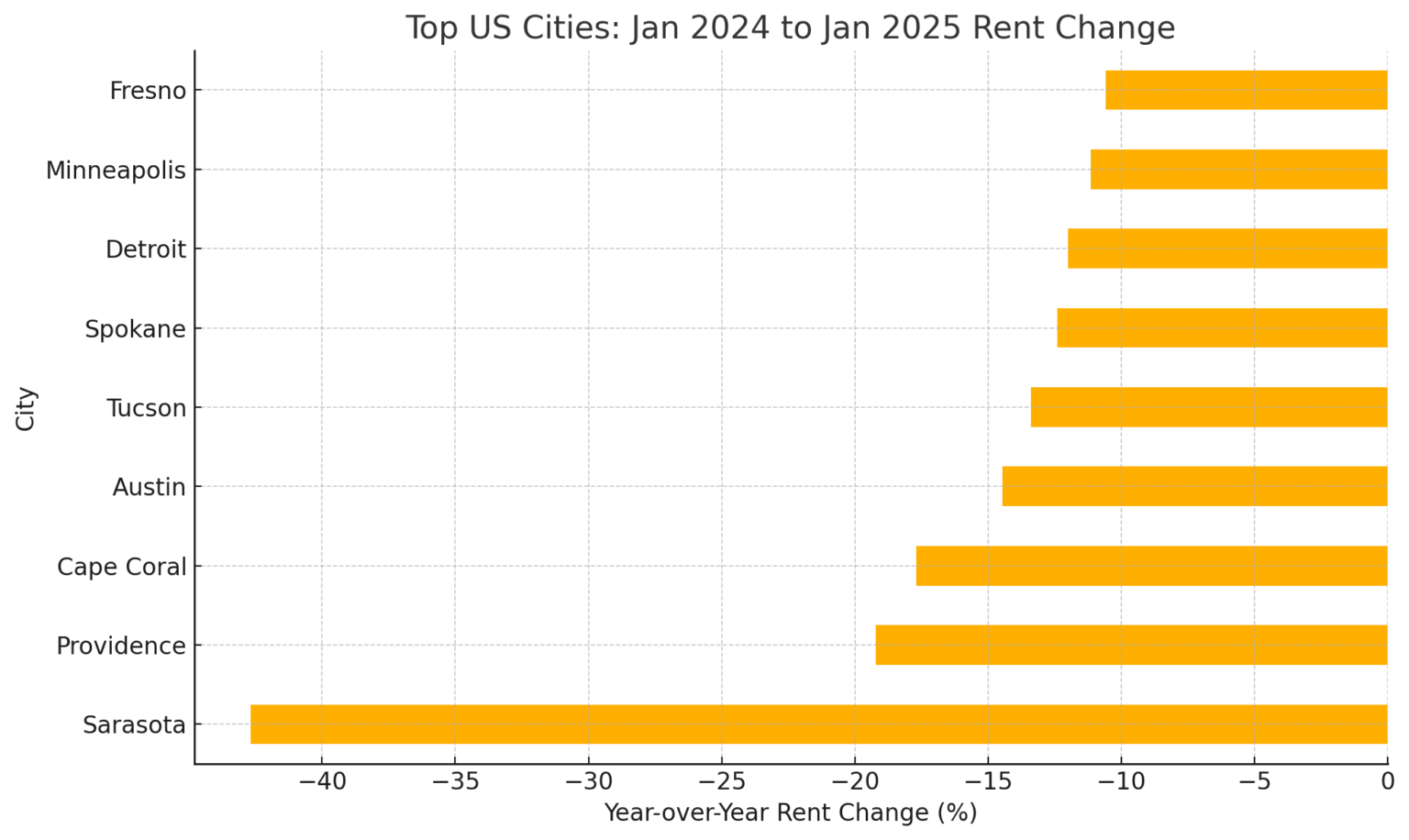
The data from Five Star Cash Offer supports recent reports from online real estate brokerages Redfinand Realtor, which detail a decline in rent prices across some of the largest metropolitan areas in the United States. Sarasota, Florida, is the city with the highest annual decline, with a 42.67 percent drop (from $3,290 to $1,886) in average rent from January 2024 to January 2025. In recent years, the City Commission has adopted a series of pro-housing policies aimed at addressing the city's housing crisis, such as the easing of restrictions on mixed-use and higher-density developments in 2022. In 2024, the commission passed several additional measures to relax density restrictions and allocated $40 million for affordable housing projects.
Providence, Rhode Island, the city with the second-highest year-over-year decline, saw a 19.22 percent drop in monthly rent, from $2,513 to $2,030. Some of this decline may be attributed to policies aimed at deregulating the housing industry. In 2023, the state passed a package of housing legislation to "address the long-lagging housing production rates" in the state by streamlining permitting for land use and land development and easing restrictions around repurposing existing structures for housing. In 2024, the city of Providence streamlined its construction application process……”
 reason.com
Rent Prices Are Falling Fast in America's Most Pro-Housing Cities
From January 2024 to January 2025, average rent in Sarasota fell from $3,290 to $1,886 per month.
“Rental prices in some of the country's largest cities are falling—some by almost 45 percent, according to new data from Five Star Cash Offer, a real estate investment firm that operates as a direct cash homebuyer. The dataset, which includes the top 65 metropolitan areas in the United States, reveals that cities that have recently enacted pro-housing policies have experienced the most significant year-over-year decline in rental prices nationwide.
The data from Five Star Cash Offer supports recent reports from online real estate brokerages Redfinand Realtor, which detail a decline in rent prices across some of the largest metropolitan areas in the United States. Sarasota, Florida, is the city with the highest annual decline, with a 42.67 percent drop (from $3,290 to $1,886) in average rent from January 2024 to January 2025. In recent years, the City Commission has adopted a series of pro-housing policies aimed at addressing the city's housing crisis, such as the easing of restrictions on mixed-use and higher-density developments in 2022. In 2024, the commission passed several additional measures to relax density restrictions and allocated $40 million for affordable housing projects.
Providence, Rhode Island, the city with the second-highest year-over-year decline, saw a 19.22 percent drop in monthly rent, from $2,513 to $2,030. Some of this decline may be attributed to policies aimed at deregulating the housing industry. In 2023, the state passed a package of housing legislation to "address the long-lagging housing production rates" in the state by streamlining permitting for land use and land development and easing restrictions around repurposing existing structures for housing. In 2024, the city of Providence streamlined its construction application process……”
Rent prices are falling fast in America’s most pro-housing cities
Rental prices in some of the country's largest cities are falling—some by almost 45 percent, according to new data.
reason.com
Can someone help me to understand the larger picture of what's going on here? Reports/articles like this come out talking about how rent prices are falling in specific metro areas and they attribute that directly to building more housing. But I also find reports from reputable websites saying seemingly the complete opposite in the same areas.
These are both pretty recent:
https://www.providencejournal.com/s...ro-area-for-renters-redfin-ranks/79069023007/
https://www.mysuncoast.com/2025/07/...ota-becoming-more-scarce-rent-costs-increase/
Am I just misunderstanding the different metrics? Are the different articles just spinning the data different ways? Is this just the rental market adjusting post-covid leading to chaotic swings?
Additionally, wouldn't policies to encourage more market-rate housing production take longer to bear fruit? It takes a long time to build a significant amount of units and then for the market to adjust. I was under the impression that it would take something like 5-10 years to really start seeing a slowing of rents increases in large metro areas under consistent circumstances. The article above references a number of policies that came into play in the last two years in Sarasota and Providence.
These are both pretty recent:
https://www.providencejournal.com/s...ro-area-for-renters-redfin-ranks/79069023007/
https://www.mysuncoast.com/2025/07/...ota-becoming-more-scarce-rent-costs-increase/
Am I just misunderstanding the different metrics? Are the different articles just spinning the data different ways? Is this just the rental market adjusting post-covid leading to chaotic swings?
Additionally, wouldn't policies to encourage more market-rate housing production take longer to bear fruit? It takes a long time to build a significant amount of units and then for the market to adjust. I was under the impression that it would take something like 5-10 years to really start seeing a slowing of rents increases in large metro areas under consistent circumstances. The article above references a number of policies that came into play in the last two years in Sarasota and Providence.
sean99090900
Active Member
- Joined
- Jan 18, 2024
- Messages
- 291
- Reaction score
- 1,122
I felt like the data was pretty suspect as well lol. Redfin (also linked in the article) has the price increasing 2% YoY for Providence instead of -20%. Someone correct me but it looks like this is some kind of data internal to the house flipper Five Star Cash Offer, maybe they just bought all the stupidest houses in Providence county and are getting hosed this yearCan someone help me to understand the larger picture of what's going on here? Reports/articles like this come out talking about how rent prices are falling in specific metro areas and they attribute that directly to building more housing. But I also find reports from reputable websites saying seemingly the complete opposite in the same areas.
These are both pretty recent:
https://www.providencejournal.com/s...ro-area-for-renters-redfin-ranks/79069023007/
https://www.mysuncoast.com/2025/07/...ota-becoming-more-scarce-rent-costs-increase/
Am I just misunderstanding the different metrics? Are the different articles just spinning the data different ways? Is this just the rental market adjusting post-covid leading to chaotic swings?
Additionally, wouldn't policies to encourage more market-rate housing production take longer to bear fruit? It takes a long time to build a significant amount of units and then for the market to adjust. I was under the impression that it would take something like 5-10 years to really start seeing a slowing of rents increases in large metro areas under consistent circumstances. The article above references a number of policies that came into play in the last two years in Sarasota and Providence.

As an aside I was flipping through census data (through 2024) and it looks like there has been an uptick in Providence multifamily permitting, but I don't think attribution is as easy as the article above would suggest.
stick n move
Superstar
- Joined
- Oct 14, 2009
- Messages
- 13,924
- Reaction score
- 26,460
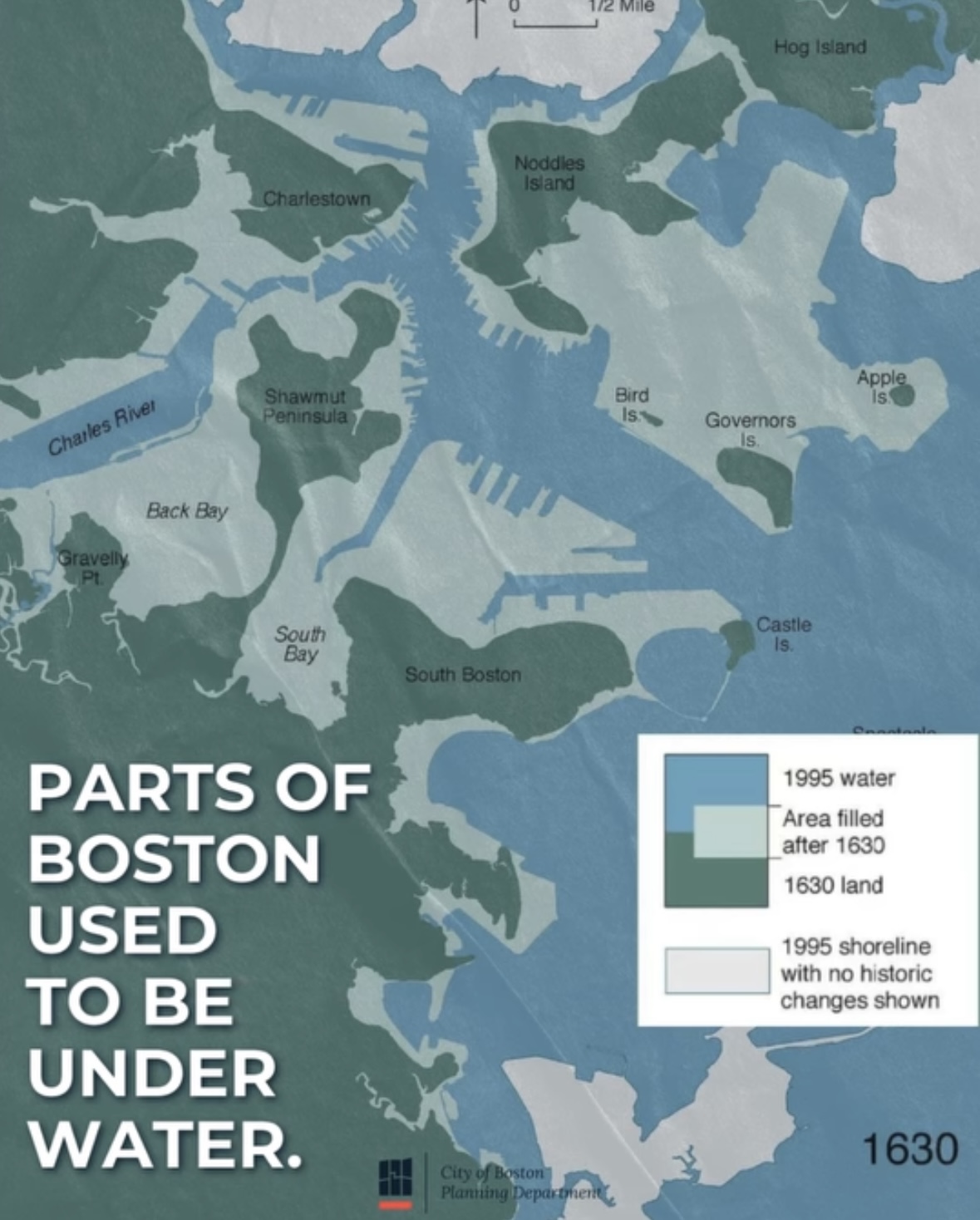
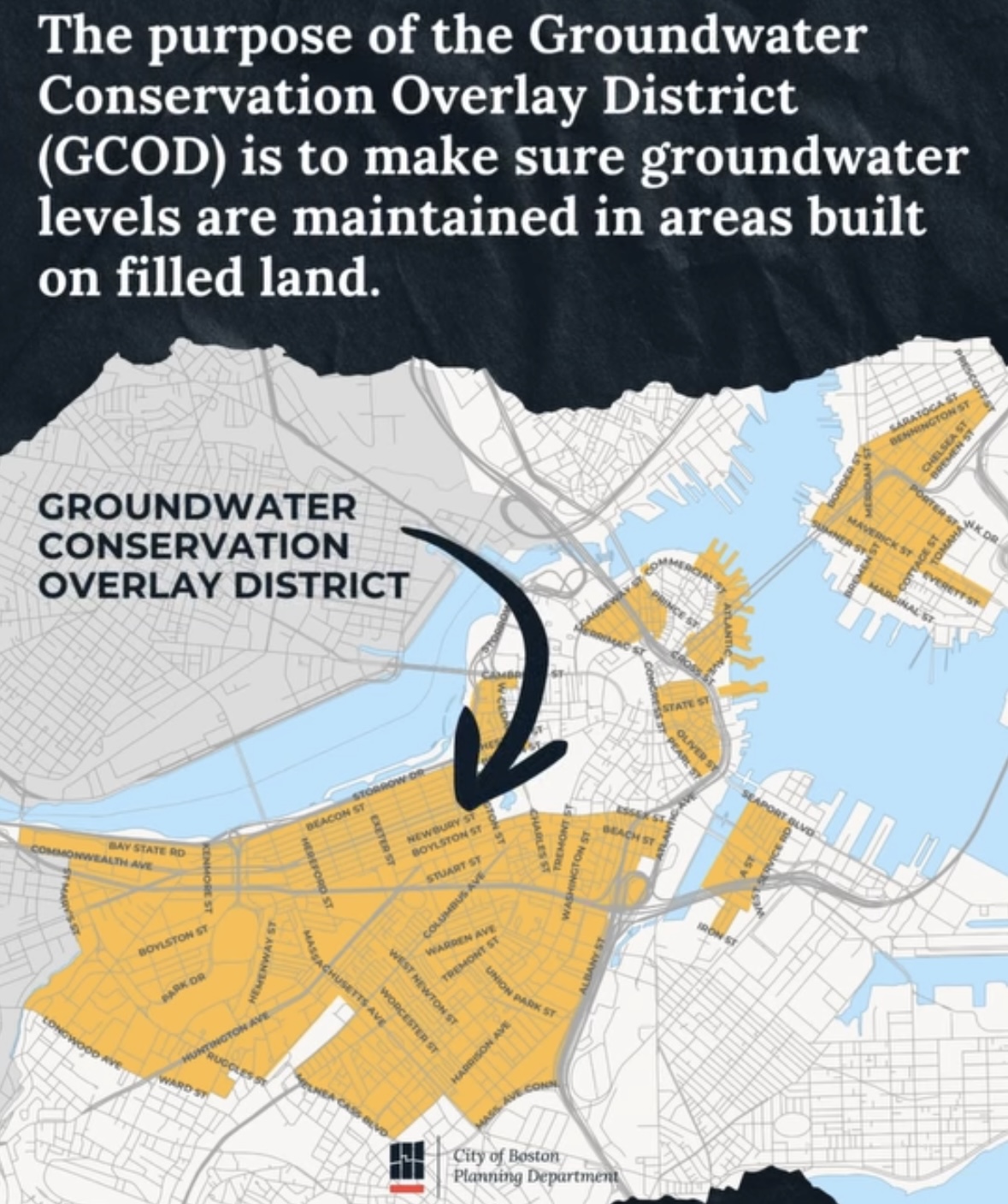
“Renovations to buildings in certain areas of the city in the Groundwater Conservation Overlay District often get caught up in what can sometimes be a lengthy Zoning Board of Appeal process, even though they do not impact groundwater levels.
The City is working to change that so these types of projects are able to proceed more quickly.
These renovations, also known as Substantial Rehabilitation projects, will still need to be approved by the Boston Groundwater Trust and Boston Water and Sewer Commission. If there are other zoning violations for the project, it must still go to the Zoning Board of Appeals.
Interested in learning more? Join a virtual public meeting about these updates on August 19 from 6 PM - 7:30 PM.”

 www.bostonplans.org

 www.facebook.com
The City is working to change that so these types of projects are able to proceed more quickly.
These renovations, also known as Substantial Rehabilitation projects, will still need to be approved by the Boston Groundwater Trust and Boston Water and Sewer Commission. If there are other zoning violations for the project, it must still go to the Zoning Board of Appeals.
Interested in learning more? Join a virtual public meeting about these updates on August 19 from 6 PM - 7:30 PM.”
Updating the Groundwater Conservation Overlay District | Bostonplans.org
Active zoning initiatives being coordinated by the Planning Department. Find more information inside each initiative, including details, associated files, and contact information.
www.bostonplans.org
Planning Department - City of Boston
Renovations to buildings in certain areas of the city in the Groundwater Conservation Overlay District often get caught up in what can sometimes be a lengthy Zoning Board of Appeal process, even...
www.facebook.com
stick n move
Superstar
- Joined
- Oct 14, 2009
- Messages
- 13,924
- Reaction score
- 26,460
stick n move
Superstar
- Joined
- Oct 14, 2009
- Messages
- 13,924
- Reaction score
- 26,460
Boston councilors look to bring triple deckers back
By adamg on Thu., 9/11/2025 - 11:10 am
Rare breed: New triple deckers that went up on Washington Street in Roslindale in 2020.
“Boston city councilors agreed yesterday it's time to modify city zoning regulations to make it easier to build more of the city's iconic triple deckers as a way to help ease the city's housing shortage.
Councilor Henry Santana (at large), who introduced the proposal, said that triple deckers once provided a relatively inexpensive way for families, immigrants and others to get their start in Boston and that there's no reason not to try to encourage mass production of the units once more, save the prejudices of a century ago against poor people.
It now goes to the council's Committee on Planning, Development and Transportation for a hearing and possible drafting of a zoning change.
"Boston needs triple deckers and other forms of affordable housing more than ever," Santana said. Triple deckers would be ideal for people seeking to pool resources to build their own homes, or for multi-generation families seeking to stay together, he said.
Boston still has roughly 15,000 triple deckers, but building new ones now can be an arduous task because the areas where they might fit in generally have zoning that restricts buildings to 2 1/2 stories.
Developers who persist can seek zoning variances, as one developer did on Washington Street in Roslindale in 2018, but that can be an expensive process that favors larger developers, many from out of town, who tend to seek to maximize their profits by putting up larger apartment buildings or condos on lots rather than triple deckers, councilors said.
Councilor Enrique Pepén (Hyde Park, Mattapan, Roslindale) said he's all in. He said he grew up in his Dominican family on the first floor of a triple decker, with a Jamaican family on the second floor and a Trinidadian family on the third - and that, he said, pretty much encapsulates the multi-cultural city that Boston is becoming……”
stick n move
Superstar
- Joined
- Oct 14, 2009
- Messages
- 13,924
- Reaction score
- 26,460
BPDA board OKs Mayor Wu’s downtown Boston skyscraper plans over objections
“The Boston Planning and Development Agency Board approved a zoning plan that would clear the way for new buildings to tower up to 700 feet over the historic downtown, after hearing objections raised by a number of elected officials.
The board on Thursday took two votes, 4-1 on the plan itself and unanimous to advance it to the Zoning Commission, wrapping up a key part of a contentious months-long process that began last January when plans for additional downtown towering were first revealed by the Wu administration…..”

 www.bostonherald.com
“The Boston Planning and Development Agency Board approved a zoning plan that would clear the way for new buildings to tower up to 700 feet over the historic downtown, after hearing objections raised by a number of elected officials.
The board on Thursday took two votes, 4-1 on the plan itself and unanimous to advance it to the Zoning Commission, wrapping up a key part of a contentious months-long process that began last January when plans for additional downtown towering were first revealed by the Wu administration…..”
BPDA board OKs Mayor Wu’s downtown Boston skyscraper plans over objections
The Boston Planning and Development Agency Board approved a zoning plan that would clear the way for new buildings to tower up to 700 feet over the historic downtown, after hearing objections raise…
www.bostonherald.com
"...for new buildings to tower up to 700 feet over the historic downtown..."
It's truly funny how ass-backwards so many this city -- which I love, to be clear -- can be when compared to others. Would anyone in Chicago, NYC, San Fran, and pretty much every other American city with historic downtowns be so terrified of relatively short "skyscrapers" downtown?
At least this passed. Now we just have to see when someone will have the capital and the inclination to build that tall. Not for a while in this climate.
It's truly funny how ass-backwards so many this city -- which I love, to be clear -- can be when compared to others. Would anyone in Chicago, NYC, San Fran, and pretty much every other American city with historic downtowns be so terrified of relatively short "skyscrapers" downtown?
At least this passed. Now we just have to see when someone will have the capital and the inclination to build that tall. Not for a while in this climate.
BeansTheCat
Active Member
- Joined
- Aug 14, 2024
- Messages
- 219
- Reaction score
- 710
The 700 feet commonly sited in these articles commonly cite is technically true, but very misleading. The only place that will allow 700' skyscrapers is already fully built out with 500+ foot buildings. The map final map of zoning changes is below and will allow a number of more 500' buildings, but very little beyond that."...for new buildings to tower up to 700 feet over the historic downtown..."
It's truly funny how ass-backwards so many this city -- which I love, to be clear -- can be when compared to others. Would anyone in Chicago, NYC, San Fran, and pretty much every other American city with historic downtowns be so terrified of relatively short "skyscrapers" downtown?
At least this passed. Now we just have to see when someone will have the capital and the inclination to build that tall. Not for a while in this climate.
stick n move
Superstar
- Joined
- Oct 14, 2009
- Messages
- 13,924
- Reaction score
- 26,460
ADU applications surge statewide under Governor Healey's Affordable Homes Act Update09/29/25
ADU applications surge statewide under Governor Healey's Affordable Homes Act
“New survey data from the Executive Office of Housing and Livable Communities shows that homeowners across Massachusetts are embracing accessory dwelling units (ADUs) following Governor Maura Healey’s Affordable Homes Act, which allows ADUs to built by-right on single-family properties statewide.
ADUs, also known as in-law apartments, are one strategy for building new homes and lowering costs. In the first six months of 2025, homeowners in 170 communities filed 844 applications to build ADUs on their properties, of which at least 550 had been approved as of July 2025.
"Massachusetts needs more homes to drive down costs for everyone. That’s why, with the Legislature, we legalized ADUs by right in the Affordable Homes Act," said Governor Maura Healey. "ADUs can help seniors afford to stay in the communities they love, give families a chance to earn some extra income or provide an individual with disabilities more independence. It’s great that hundreds of people across Massachusetts are taking advantage of this effective way to build more reasonably-priced homes – which will benefit us all."
"We’re moving quickly to add homes that fit every kind of household, at every stage of life," said Lieutenant Governor Kimberly Driscoll. "The Affordable Homes Act gave cities and towns straightforward tools, and they’re already working."……….”

Homeowners across the state are jumping at the opportunity to add supplemental rental income, add value to their homes, and provide new living space for tenants, aging family members, and adult children with complex needs. The top 10 communities for ADU applications are:

ADU applications surge statewide under Governor Healey's Affordable Homes Act
ADU applications surge statewide under Governor Healey's Affordable Homes Act
 www.bldup.com
stick n move
Superstar
- Joined
- Oct 14, 2009
- Messages
- 13,924
- Reaction score
- 26,460
We don’t need 100 different septic system rules
Statewide regulations should be updated then used by all towns.
“The tension between state needs and local control was at the heart of the debate over the MBTA Communities Act of 2021, which imposed requirements on local zoning. It arose again last year with Governor Maura Healey’s Affordable Homes Act, which allowed building accessory dwelling units statewide without a special permit, overriding local rules. And it’s through that lens that state policy makers ought to be considering whether to restrict municipal regulation of septic systems.
Most large cities have municipal sewer systems, where waste is treated in a central location. But smaller and more rural communities may not have sewer systems, or may not connect all of their homes to a system. As a result, many Massachusetts homes have private septic systems, where wastewater is treated on site.
These types of systems can be less expensive, but need to be properly maintained to avoid environmental contamination. Many cities and towns have their own rules governing septic systems to avoid contamination of water and soil — and they can have a drastic impact on the cost and practicality of building more of the housing Massachusetts needs.
When researcher Amy Dain surveyed 187 eastern Massachusetts municipalities in 2004, only 26 communities were entirely served by a municipal sewer system, while all the other cities and towns had at least some homes served by septic systems. A 2021 map by the Metropolitan Area Planning Council identified more than 30 greater Boston communities that relied at least partly on septic systems…..”

We don’t need 100 different septic system rules - The Boston Globe
Statewide regulations should be updated then used by all towns.
 www.bostonglobe.com
stick n move
Superstar
- Joined
- Oct 14, 2009
- Messages
- 13,924
- Reaction score
- 26,460
Boston Housing Crisis: New law prioritizes converting city property into affordable homes

“It’s been more than a year since The Pryde opened its doors in Boston’s Hyde Park neighborhood. And in that time, the former school building has become more than just an affordable housing option for older LGBTQ+ adults.
It’s become “the heart of Hyde Park," Boston City Councilmember Enrique J. Pepén, who represents the neighborhood at City Hall, said.
Bostonians could soon see more projects like The Pryde popping up across the city under a new ordinance that prioritizes converting surplus city property into affordable housing.
Flanked by advocates, Pepén, and other members of the City Council, Mayor Michelle Wu signed the language into law during a news conference at City Hall on Wednesday……”
Boston Housing Crisis: New law prioritizes converting city property into affordable homes
The new ordinance is part of an ongoing effort to "root families in Boston," Mayor Michelle Wu said Wednesday.
 www.masslive.com
I love what they did with the libraries in Uphams Corner and Chinatown, more of that across the state please! I wish they had listed some actual potential sites for this to happen more in the article, until then its just fairydust, like most Massachusetts housing policyBoston Housing Crisis: New law prioritizes converting city property into affordable homes
“It’s been more than a year since The Pryde opened its doors in Boston’s Hyde Park neighborhood. And in that time, the former school building has become more than just an affordable housing option for older LGBTQ+ adults.
It’s become “the heart of Hyde Park," Boston City Councilmember Enrique J. Pepén, who represents the neighborhood at City Hall, said.
Bostonians could soon see more projects like The Pryde popping up across the city under a new ordinance that prioritizes converting surplus city property into affordable housing.
Flanked by advocates, Pepén, and other members of the City Council, Mayor Michelle Wu signed the language into law during a news conference at City Hall on Wednesday……”
Boston Housing Crisis: New law prioritizes converting city property into affordable homes
The new ordinance is part of an ongoing effort to "root families in Boston," Mayor Michelle Wu said Wednesday.