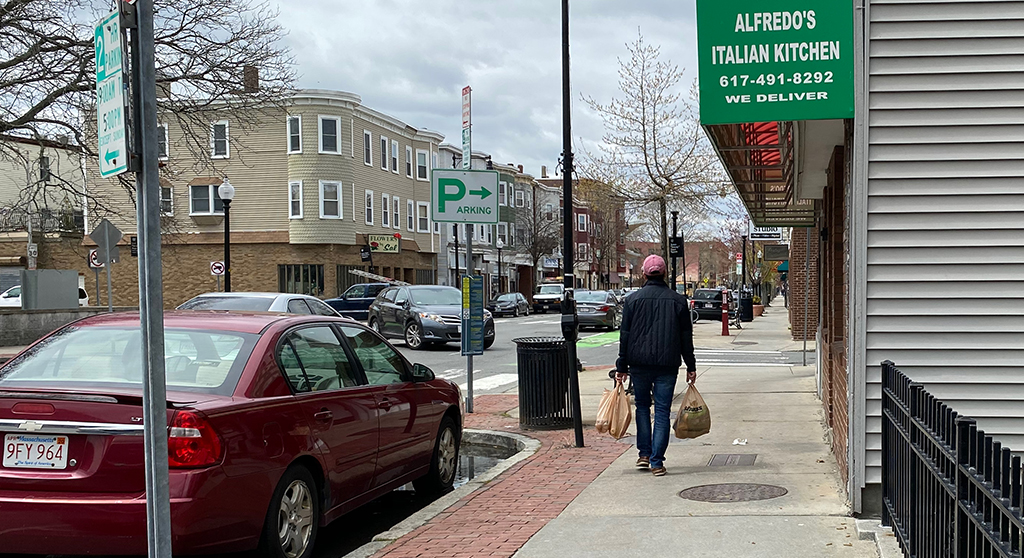
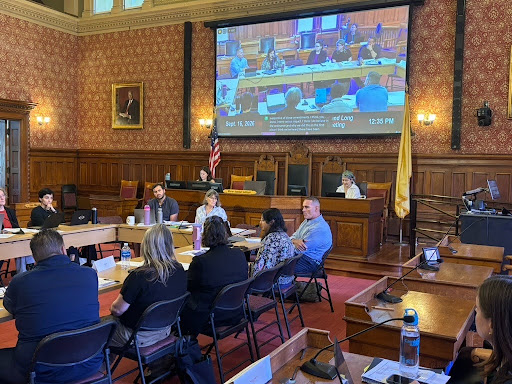
Cambridge Multi-Family Zoning Reform

Does anyone here read Matt Yglesias lmao, I'm not a subscriber but occasionally I skim the intros to his blog.
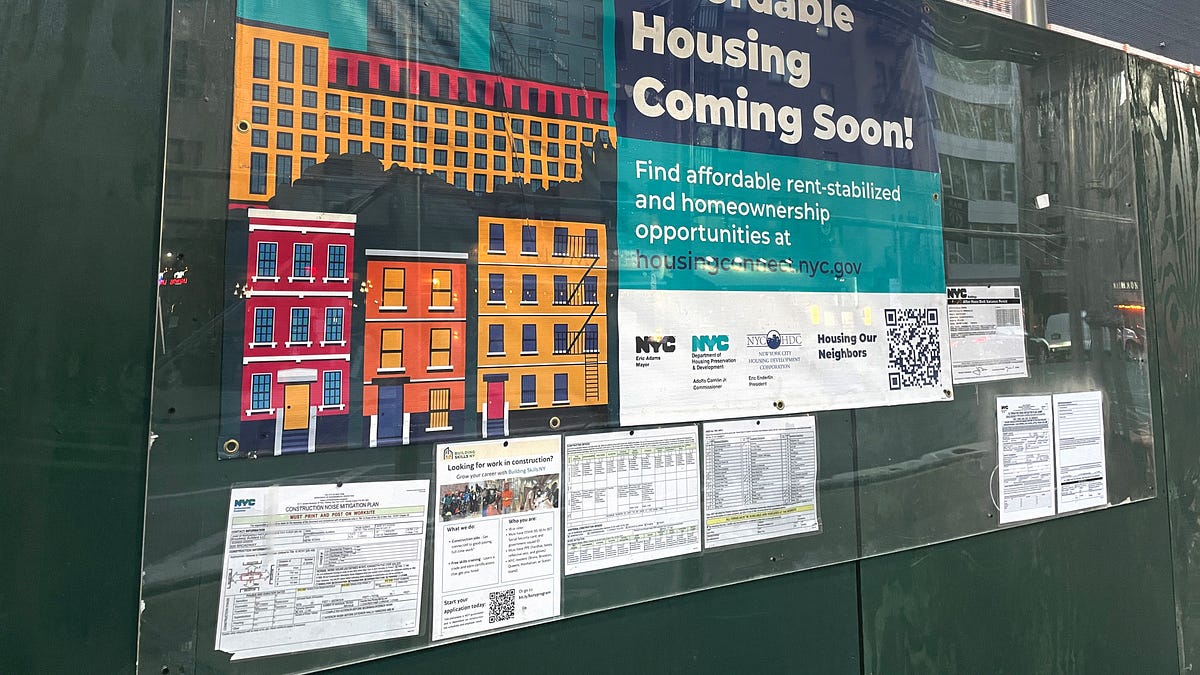

What makes housing more affordable is increasing the supply of housing. Affordability requirements do generate some quantity of subsidized units, which is nice for the people who get them. But it finances their construction in what has to be the most destructive possible way: a focused tax on nearby new construction. If Cambridge wants more subsidized housing, the way to do that is to zone as permissibly as possible, then use general tax revenue to pay for the construction of subsidized units.
 
Does anyone here read Matt Yglesias lmao, I'm not a subscriber but occasionally I skim the intros to his blog.

Just a guess, but I assume almost all forum members understand this dynamic. Even most of the general public, if you're patient with them, can come around to the idea that IDP requirements increase new housing costs.

The bigger issue, IMO, is that nobody trusts local/state governments to build decent public housing, especially here. The state of BHA properties is frankly abysmal, and Cambridge is only doing somewhat better. Until the public sector proves it can build and maintain quality sub-market rate housing, it will be pretty hard to scrap inclusionary zoning policies (40B zoning exemptions don't help either). Making more public housing mixed-income housing, with units for varying income levels and even some rented at market rates, is one solweution to this. Revenues increase which makes maintenance and upkeep easier, and market rate renters won't put up with the shenanigans that public housing authorities often pull. The only drawback, which is mostly political, is that the property as a whole is "less affordable" than it could theoretically be. The rebuttal is that more public housing, and therefore more affordable units, can be built overall, even if there are less at any one particular site.

There is another conversation to be had about the downsides of affordable units at large, as opposed to providing cash assistance to renters (like Section 8 vouchers). I'm not going down that rabbit hole here, but it does provide another set of arguments against IDP.
 
Does anyone here read Matt Yglesias lmao, I'm not a subscriber but occasionally I skim the intros to his blog.


I do and have found him fairly convincing in his arguments over the years (whatever left orthodoxy might say about the super rationale left-centrist). He's absolutely right that IZ is a tax on housing and will reduce the total number of units that are produced vs a true "do whatever you want" free market.

The question that local boards need to take head on is "are the taxes you're levying on new construction worth it for what you get?" There can't be a single percentage requirement that will always be the right number across all towns in all states, so you find yourself making a pretty thin argument about a flat threshold that was arrived at for...reasons. To be clear, I think there should be some level of affordability requirements or other mandates that run to affordability, but they do not in any way spur housing production and through my most cynical lens, they're another tool in the kit of "how can New England be as slow as possible to build housing". It's also pretty clear that it is a giveaway to the most progressive part of the party that thinks developers are bad and expensive housing is inherently immoral.

There are real tradeoffs and my take is basically we should structurally incentive development to lean more heavily towards "build" than "this makes it really hard to build". Blue cities aren't currently doing a great job at that while Austin has put up a metric ton of housing and rents have fallen in real terms.

My pet project, and one that's a total pipedream, is having a micro free trade zone on the least developed and most depressed parts of the city. We will let you do whatever you want (except for slaughterhouses and heavy chemical manufacturing etc) if you agree to lid Widett or build on every square inch of Newmarket, or make the Pike invisible from the sky. Go crazy with the architecture, build to FAA limits, put a bowling alley above a grocery store. Have fun.

Cambridge has decided the path to affordability is by mandate and so we'll see to what extent housing affordability changes. My guess is prices will not go down, the few affordable units will be snapped up, and housing will continue to be more expensive than ever.
 
I do and have found him fairly convincing in his arguments over the years (whatever left orthodoxy might say about the super rationale left-centrist). He's absolutely right that IZ is a tax on housing and will reduce the total number of units that are produced vs a true "do whatever you want" free market.

The question that local boards need to take head on is "are the taxes you're levying on new construction worth it for what you get?" There can't be a single percentage requirement that will always be the right number across all towns in all states, so you find yourself making a pretty thin argument about a flat threshold that was arrived at for...reasons. To be clear, I think there should be some level of affordability requirements or other mandates that run to affordability, but they do not in any way spur housing production and through my most cynical lens, they're another tool in the kit of "how can New England be as slow as possible to build housing". It's also pretty clear that it is a giveaway to the most progressive part of the party that thinks developers are bad and expensive housing is inherently immoral.

There are real tradeoffs and my take is basically we should structurally incentive development to lean more heavily towards "build" than "this makes it really hard to build". Blue cities aren't currently doing a great job at that while Austin has put up a metric ton of housing and rents have fallen in real terms.

My pet project, and one that's a total pipedream, is having a micro free trade zone on the least developed and most depressed parts of the city. We will let you do whatever you want (except for slaughterhouses and heavy chemical manufacturing etc) if you agree to lid Widett or build on every square inch of Newmarket, or make the Pike invisible from the sky. Go crazy with the architecture, build to FAA limits, put a bowling alley above a grocery store. Have fun.

Cambridge has decided the path to affordability is by mandate and so we'll see to what extent housing affordability changes. My guess is prices will not go down, the few affordable units will be snapped up, and housing will continue to be more expensive than ever.

I like that blogs seem to be making a comeback with younger readership in my anecdotal experience. I wasn't around for the golden age of blogging in the early 2000s and find it funny that people seem to be returning lol

I agree with Beans here about how bad government run housing is. Still I think the general point that funding affordable housing needs to be decoupled from a mechanism that directly suppresses housing production is a good one. I can't say I'm exceedingly familiar with the particulars of the process in Cambridge as is ngl. Maybe some kind of stronger tax writeoff or even a direct compensation from the city/state for the provision of income restricted units. The marginal cost of adding a unit to an existing project is definitely lower than the average cost per unit in a whole new public housing project right. Plus that would avoid the deprioritization of construction cost that leads to really expensive public housing as seen in the past right.

My pet project, and one that's a total pipedream, is having a micro free trade zone on the least developed and most depressed parts of the city. We will let you do whatever you want (except for slaughterhouses and heavy chemical manufacturing etc) if you agree to lid Widett or build on every square inch of Newmarket, or make the Pike invisible from the sky. Go crazy with the architecture, build to FAA limits, put a bowling alley above a grocery store. Have fun.
This reminds me of a news story I read a while ago about one of the first nations in Vancouver using their independent legal authority to make a shit ton of money developing huge residential towers in what would otherwise be a very NIMBY jurisdiction :ROFLMAO:
 
The The rezonings in the two petitions would incentivize active ground floors with uses such as food halls and nightclubs, encourage open space and, in a city struggling for more housing, extend height limits.
Massachusetts Avenue could see up to 12 stories of residential uses along its length, and up to 18 stories of residential in Porter Square in exchange for increased open space requirements and minimum retail density; Cambridge Street could see up to eight stories of residential uses along its length, and up to 10 stories in parts of Inman Square; up to 12 in the Webster Avenue and Windsor Street area; and up to 15 stories in the Lechmere area.
 

Back
Top