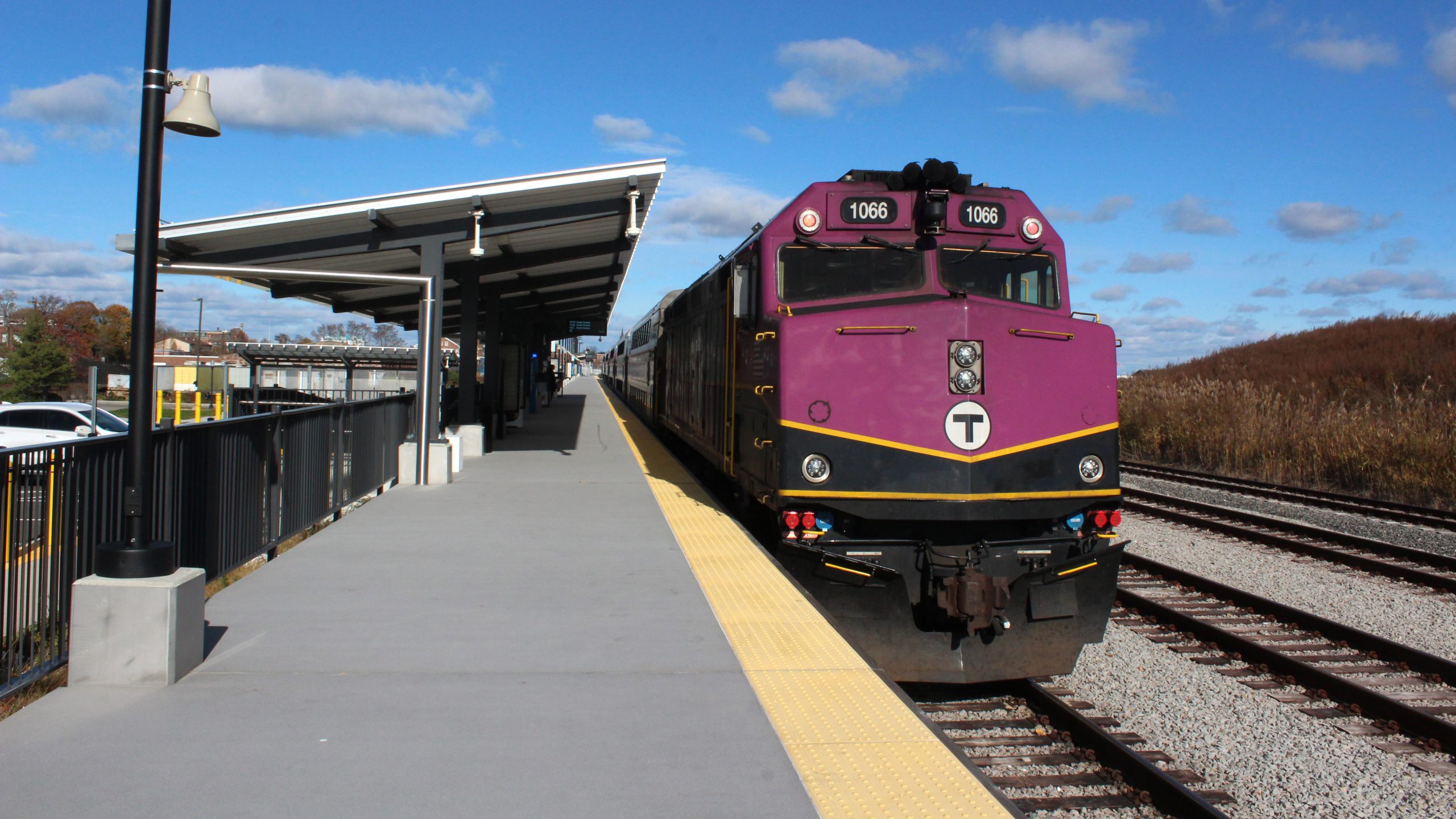
Fall River/New Bedford Commuter Rail (South Coast Rail)

For SCR Phase 2, why did the most recent plans include a park and ride station at North Easton (behind Roche Bros.) instead of a station in South Easton on Route 123? Was there a lot of NIMBY opposition to a station in South Easton or something like that? A park and ride behind Roche Bros is kind of an odd place for a station, unless there's going to be a lot of TOD to boost ridership (or is it intended to pull ridership from the western part of Brockton?).
It's confusing. There was never historically a South Easton station on the Stoughton main. "South Easton" station existed on the lightly-used Old Colony West Bridgewater Branch that spanned the Cape Main in West Bridgewater and the Stoughton main junctioning at a more centrally located Easton station (which is not the same stop as the proposed Easton Village station with its historic H.H. Richardson building...that was old "North Easton"). SCR Phase II's "North Easton" is roughly equivalent to the old "Stoughton Junction" spacer stop between Stoughton and Easton Village, at the junction of the former Randolph Branch. The Old Colony used to alt-route service in this area like crazy between its various mainlines to mix and match service patterns. Once the NYNH&H culled the various branchline alt patterns in the late 1920's trains went Stoughton--(North) Easton (Village)--Raynham using only the Stoughton Main and Whittendon Branch to Taunton, leaving pretty large coverage gaps in its wake.

I'm guessing they didn't advocate for it because the history of those 100-year-ago service pattern blender was simply forgotten, and they were starting from a template of the last NYNH&H service in 1958. Given that the ridership at the other Easton stops was not exactly outstanding in the 2013 FEIR due to the crippled rush-hour skip-stop patterns on the single track, there wasn't much of an advocacy starting point for it.

RE: North Easton...the abandoned-and-forgotten 2009 Corridor Plan called for fairly aggressive mixed-use redev around the parking lot, including infilling the parcels north of Roche Bros. with commercial development and redeveloping the Roche Bros. plaza into residential with ground-floor retail. So they were at least thinking of upzoning it bigly at the time before the Task Force lost all interest in the plan across-the-board.
 
For SCR Phase 2, why did the most recent plans include a park and ride station at North Easton (behind Roche Bros.) instead of a station in South Easton on Route 123? Was there a lot of NIMBY opposition to a station in South Easton or something like that? A park and ride behind Roche Bros is kind of an odd place for a station, unless there's going to be a lot of TOD to boost ridership (or is it intended to pull ridership from the western part of Brockton?).
100% agreed.

MA-123 or MA-106 would both be better locations for stop spacing. I'll naively assume that TOD has been explored at all of those sites and it was determined that the site behind the Roche Bros was the most feasible.
 
100% agreed.

MA-123 or MA-106 would both be better locations for stop spacing. I'll naively assume that TOD has been explored at all of those sites and it was determined that the site behind the Roche Bros was the most feasible.
Stop spacing really didn't figure into anything they were studying for TOD because of the way the Army Corps' single-track anvil wrecked the schedules. All Fall River peak period trains in the Phase II FEIR skipped Easton Village, Raynham, Downtown Taunton, and East Taunton to make time for their meets with New Bedford peak period trains that were always skipping Canton Junction, Canton Center, and Stoughton. Only North Easton for some reason featured on all schedules at all times, and that was more a byproduct of where the Train Sim printout said all the meets would line up than informed by ridership or TOD or any real-world conditions. The expressing kludge decimated the ridership projections at all stops, and made any evaluation of additional village infills a completely futile exercise so they never embarked on it. South Easton was an impossibility as another insta-skip, and North Easton had to be there because reasons (i.e. Train Sim go brrrrrrrrrrr... on the single-track meets).

Detail like this are just another reminder of why the 2013 FEIR has to be burned to the ground and started anew before there can be any progress on it. ALL stops have to feature on ALL schedules so there's no service inequities like the peak vs. off-peak insanity of the FEIR, and the track capacity has to allow for it constipation-free. When all stops at least have the capability of getting all-day Regional Rail service levels, then you open up a new world where South Easton can be evaluated on its merits. But not until then.
 
Phase 2 needs to happen.
On average, riders are taking 2,000 more trips each day on the MBTA’s Fall River/New Bedford line than they did last year, when the route was the Middleborough/Lakeville line. The new trips amount to a 33% increase in ridership along the line, even as ridership across the MBTA commuter rail network overall decreased by 6%.
[...]
If the 2,000 new daily trips are coming mainly from South Coast riders, that would exceed previous estimates that the extension would generate 1,600 new daily trips.
Local museum and business owners told The Light this spring that they saw an uptick in Bostonian visitors. But the data suggests that commuting workers, rather than leisure travelers, make up most of the increased ridership. Weekday ridership increased by 36%, while weekend ridership increased by only 13%.
Ridership on Memorial Day, Independence Day, and Labor Day — federal holidays when many workers have the day off — looked more like what you’d see on a typical weekend day.
 
Last edited:
Well thats surprising. I remember most people were saying the ridership on this was going to be abysmal. Its even exceeding their expectations. As far as the rest of the commuter rail being down 6% I wonder what thats about.
 
2,000 daily riders is not a lot for a billion-dollar spend, and that's assuming that all of those are coming from SCR. It's approximately 10x the capital cost per rider of the GLX, or 7x the projected (and wildly inflated) cost for Red-Blue.

The graph they show doesn't inspire confidence in me either. Certainly we need time to be sure, but the last 4 months of data looks like the year-over-year gap getting smaller per my annotations. That would suggest people trying it over the first few months but not becoming regular riders.

1763673923503.png
 
Well thats surprising. I remember most people were saying the ridership on this was going to be abysmal. Its even exceeding their expectations. As far as the rest of the commuter rail being down 6% I wonder what thats about.
I know I've been beating this drum for over a decade, but I'm not even a little bit surprised. As-is, Southcoast rail is a crap service. It's wildly overpriced, it took too long to build, and it's not nearly as fast and frequent as it should be. But there are hundreds of thousands of people in the Taunton/Fall River/New Bedford triangle who want/need to get to Boston. And even the half-baked version of SCR that currently exists is an improvement over most of the other options.
 
It's interesting the 2024 ADB show a dip in June and July, while the 2025 data, not so much. I would expect a summer dip, with universities largely out of session and summer vacations. I'm curious what drove the 2025 average daily boardings to reflect much less seasonal variation.
 
I don't think GLX and SCR cost per ridership is an apples to apples comparison. An inner city subway line is cheaper, more frequent and travels shorter distances. I'm more curious how it compares to the Greenbush line.

As a long departed south coaster, I wrote repeatedly that it's up the people of that area to use it or lose it. I'm glad that they're stepping up. Good for them and good for the state as we need to connect the good paying jobs with places where it's a little cheaper to live.
 
All of the rail extensions (ie not infills) from the past 35 years:

ProjectCost (at opening)Cost (inflated)Daily one-way ridersCost/rider
South Coast Rail$1,047 million (2025)$1,047 million~2,000 (2025)~$524k
Greenbush Line$534 million (2007)$776 million3,741 (2024)$207k
Old Colony Lines$560 million (1997)$1,013 million11,979 (2024)$85k
Wachusett extension$93.3 million (2016)$119 million164 (2024)$726k
Wickford Junction extension$336 million (2012)$452 million562 (2024)$804k
Worcester extension$97 million (2002)$161 million5,466 (2024)$29k
Newburyport extension$55 million (1997)$100 million822 (2024)$116k
Forge Park/495 extension$12.3 million (1990)$28 million970 (2024)$29k
GLX$2,280 million (2022)$2,424 million12,894 (2024)$188k

Some caveats:
  • Ridership for all but the top 3 rows is daily station boardings, doubled. It double-counts the small number of trips between stations on the extension
  • GLX ridership does not include Lechmere (which is about another 4k, albeit with some trips to/from the branches). It is also believed to be a substantial underestimate due to farebox noninteraction at ungated stops.
  • Wickford Junction costs are for the whole project, which included significant non-rail elements (like the garage and skyway primarily used for rental cars). Actual cost per rider is closer to $400k.
  • Costs are inflated by GDP (using the Wikipedia inflation tool) and may not exactly reflect changes in construction costs
 
Very helpful info but I'm curious (and not asking you to pull the data) what the initial ridership was before these lines were established. I recall a lot of bleating about nobody riding the Greenbush line when it opened. I found an article from 10-12 years after opening where it had hit half it's initial projections (about 2100 riders). It's great that apparently the line is almost up to original expectations and I suspect SCR will also achieve a growth trajectory.
 

How many people ride South Coast Rail? MBTA 'super happy' with service

Ridership figures provided by the MBTA show the service provided over 1.7 million rides from April to October 2025, compared with 1.26 million during the same period last year.
Last year, the Middleboro/Lakeville Line averaged about 181,000 rides a month. The Fall River/New Bedford Line has handled an average of about 242,000 rides every month — about 62,000 more rides since South Coast Rail came online.
Weekday service has proven popular. The line provides an average of estimated 10,240 rides per day. In February, the month before South Coast Rail opened, the Middleboro/Lakeville line had an estimated 6,183 rides per day.
1766423830057.png
 
New Bedford Light December 18 article.

Signs suggest South Coast Rail is boosting tourism, development
The extension has brought more visitors, and it seems to be attracting more developers to build here.

"...As 2026 approaches, the MBTA’s Fall River/New Bedford Line is about to enter its 10th month of service. The extension has brought more visitors to the region, and it seems to be one factor attracting more developers to build here, observers say. But it’s still too early to tell if the train is boosting businesses or helping more South Coast residents connect to jobs.

"At the New Bedford Whaling Museum, Boston-area specific ticket sales are up 30% compared to last year. President and CEO Amanda McMullen says the train is the only explanation for the sudden spike...

"Mike O’Sullivan, CEO of the One Southcoast Chamber, said the business community is excited about the train. But so far, he’s seeing bigger impacts on housing than businesses. Developers are more interested in building badly needed housing here because of the train, he said.

"A cluster of new restaurant openings are early signs that increased travel is stimulating the local economies of New Bedford and Fall River, O’Sullivan said. In just the past year, Servedwell Hospitality has opened two restaurants in walking distance of New Bedford Station — Candela Cucina and the National Club.

"“It’s starting to do what it said it would do,” O’Sullivan said of the extension. “It’s changing the economy all for the better.”..."
 

Taunton neighbors say 'quality of life has gone to zero' due to trains​

The MBTA may be touting South Coast Rail as a big success — but that's not the way neighbors of the new East Taunton train station view it.
“Our quality of life has gone to zero now,” said Cheryl Monteiro, a resident of Debra Drive in Taunton for 33 years, regarding noise, fumes, and vibrations from trains coming and going from the County Street train station in East Taunton.
Debra Drive is located directly behind the train station.
“It’s 10 feet from my deck to the tracks,” said Paul Monteiro, Cheryl's husband, who can hear, see and smell the trains coming and going from the station daily — as there’s only vinyl fencing and some tree brush separating their backyard from the train tracks.
[...]
In an Oct. 9 letter to the City Council, O’Connell said her administration is communicating with the DOT and MBTA on establishing “quiet zones” in Taunton for neighborhoods along the train line — meaning train horns wouldn’t be activated at railroad crossings.
“The City has received the MBTA’s assessment regarding the potential implementation of quiet zones in Taunton, and that report is currently under review by our internal team, including the Department of Public Works, public safety officials, the Finance Department, and the City Engineer,” said O’Connell in an emailed statement dated Dec. 18.
The spokesperson for the MBTA told the Gazette quiet zones would be the city's responsibility, and the city “would need to work with the Federal Railroad Administration to determine what additional safety measures would be required.”
 
South Coast Rail was in planning for 25 years and in construction for 4 years. Every single alignment used that section of track. The station was planned for that site beginning in 2018. I'm not really sure what they expected.
 
I'm firmly in the "no sympathy" camp for people who live in close proximity to the tracks. This has been in the works for decades, so there's no strong reason that anyone should have been caught off guard by the service.

That said, the Taunton station is something of an exception. I've been there several times and always catch myself thinking about how frustrating it must be for those abutters (particularly Debra Dr.). They're right on top of the station. Elevated above it, actually, so the walls do little to alleviate the noise. What makes it worse is that the Taunton station is where the shuttle train meets the terminus-bound train. So they often have multiple trains dwelling at once, for longer periods of time than a typical station (10 minutes or more, in some cases). It can be really loud. It's not your typical suburban station, and it's a far cry from the fleeting noise of a train passing by. I can actually see how it would have a real impact on the quality of life of those living right there. And I can also see how knowing this was coming still may not have prepared them for the reality. Electrification would almost completely solve the problem, however. Yet another reason to support it.
 
I'm firmly in the "no sympathy" camp for people who live in close proximity to the tracks. This has been in the works for decades, so there's no strong reason that anyone should have been caught off guard by the service.

That said, the Taunton station is something of an exception. I've been there several times and always catch myself thinking about how frustrating it must be for those abutters (particularly Debra Dr.). They're right on top of the station. Elevated above it, actually, so the walls do little to alleviate the noise. What makes it worse is that the Taunton station is where the shuttle train meets the terminus-bound train. So they often have multiple trains dwelling at once, for longer periods of time than a typical station (10 minutes or more, in some cases). It can be really loud. It's not your typical suburban station, and it's a far cry from the fleeting noise of a train passing by. I can actually see how it would have a real impact on the quality of life of those living right there. And I can also see how knowing this was coming still may not have prepared them for the reality. Electrification would almost completely solve the problem, however. Yet another reason to support it.
I wanna know what brainiac in 1990 (when Debra Dr was constructed) decided a brilliant idea was to build a cul-de-sac right up to one of the few remaining quite active freight railroad ROWs in the state at the time to get 6 homes. Right around the corner from an intermodal at a junction, too.

Even more reason to electrify the commuter rail. The noise and pollution are WAY better than with diesel.
I'm always surprised when standing on a SWC OL platform, such as Roxbury Crossing, and a whole NER appears suddenly from behind the wall. It's remarkable the difference in noise produced by the diesels that you can hear coming from a half mile away while the ACS-64s are only audible for the second they're right in front of you
 

Back
Top