
MassDOT Rail: Springfield Hub (East-West, NNERI, Berkshires, CT-Valley-VT-Quebec)

Actually, that reminds me. I believe that Downeaster service had been capped at 6RT trips, due to the limits of FRA PTC waivers which went away when CSX bought Pan Am. I know that any additional service is beholden to the current lack of equipment availability, but I believe they opted for I-ETMS, despite connecting to the ACSES Haverhill Line, probably thanks to centralized CSX dispatch. Also, the press release seems to indicate that Amtrak is funding all of the signal work. Any clue on how Amtrak ended up with the bill when its an FRA mandate for all Class Is?

It's I-ETMS because CSX wants to run 60 MPH freights to Maine, which you can't physically do on ACSES because of its inability to detect train lengths. Expect a MassDOT announcement in the coming months that they'll be co-installing I-ETMS on the Haverhill and Fitchburg Line CSX overlaps as well, because they badly want that 60 MPH to be inclusive of MBTA territory too. The I-ETMS on the Downeaster route wouldn't preclude a future MBTA extension to Plaistow (or even Dover) because CSX has to traverse cab signal territory on the Fitchburg and Haverhill overlaps to get there at all, so a cab signal + ACSES co-install past the border wouldn't inconvenience them one bit more than they're already inconvenienced on those runs. It's a bigger deal for them to get rid of cabs on the western B&A because of all the West Springfield, East Brookfield, and Worcester traffic--a significant majority of their overall New England train schedules and carloads--that would get out from under having to have specialty signal-equipped power at all.

Amtrak is throwing in the $50M not for the PTC, but for the general signal renewal on the Downeaster. Most of the route from the MA state line north (excepting Yarmouth-Brunswick, ME which was all-new for the Brunswick extension) is truly ancient B&M-era signal plant that Pan Am didn't maintain for shit for 40 years and only put on a band-aiding show at its most oft-failing spots when the Downeaster began service 24 years ago. Signal reliability is the #1 terror threat to the Downeaster's daily schedule adherence the system is getting so frail, so for there to be any expansion of schedules like NNEPRA plans there has to be a belated state-of-repair blitz to the signals. CSX is already replacing all the signal heads (most of which were B&M semi-mechanical searchlights that are safety-grandfathered by the FRA and not up-to-code) with LED's and higher-visibility overhead gantries, but most of the cable plant between signal heads is still the same old shit and needs to go pronto before it tanks everybody's OTP. That's what Amtrak is funding.
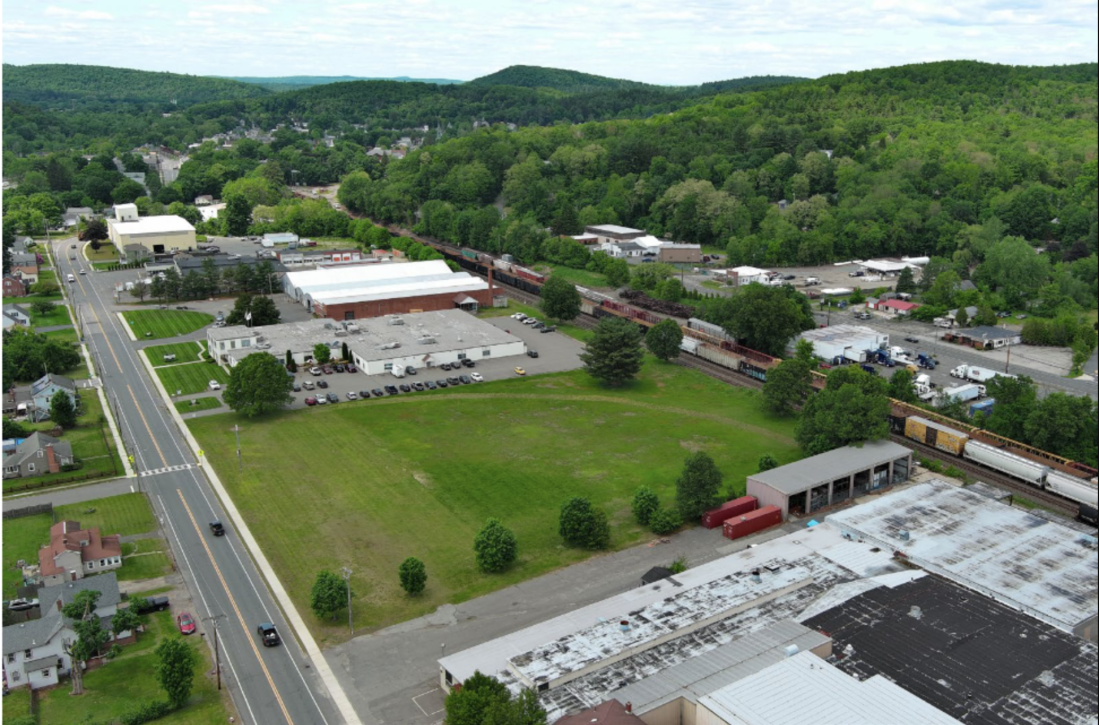
 
  • Work will start on upgrading speed limits between Worcester and Springfield from Class 3 (59 MPH passenger, 40 MPH freight) to Class 4 (79 MPH passenger, 60 MPH freight). Most of that involves re-tensioning the rail, but the state is also paying for some cycled maintenance like select rail/tie replacement where replacement is coming due. Some curves will get superelevation work for the higher speed limits, and some signals will be re-timed. This will reduce Lake Shore Ltd. Boston-Springfield travel times from 2:35 to 2:03 (that's 2:03 with a future Palmer infill stop...probably 1-2 minutes faster without).
I note that beyond the general niceness of faster schedules, that's IMO about the tipping point for being more attractive than the bus for travel time. BOS-SPG buses are generally scheduled at 1:30-2:30 today.

Doesn't mean a lot without frequency increases, but IMO at a 2hr mark + decent OTP, the train would easily eat the bus market on the the corridor, especially at peak hours.
 

MassDOT faces lawsuit over Palmer train station location​

A group of Palmer residents has filed a lawsuit against MassDOT, alleging a lack of transparency in the design process of the Palmer train station.
The Central Corridor Passenger Rail Coalition claims that MassDOT violated the Massachusetts Public Records Law and manipulated the site selection process for the Palmer train station by excluding community input.
MassDOT has selected a site south of Palmer Yard, approximately a mile from downtown, as the preferred location for the train station.
Scarlet Lamothe from the Central Corridor Passenger Rail Coalition stated, “It’s benefiting eastern Mass yet again and not western Mass. You are sending people to eastern Mass., and that’s it. This is no benefit to western Mass—if it’s outside of the downtown, there’s no economic development. This is just a parking lot for Boston yet again.”
The coalition argues that the historic Palmer Union Station in downtown would be a better site for the train station, benefiting the city’s economy as part of the future Compass Rail Service Line.
 
I read this whole damn thing the other day which was published and presented back in January of this year. I can only see this as another case of people supposedly very invested and concerned about the project not actually engaging with it any more than minimally. According to the planning documents for selected site B, its about .6mi from Steaming Tenders which I'd consider to be the start of downtown Palmer. Not ideal but not a mile. Their reasonings make sense for its final location with CSX and other freight movements being the limiting factor for the historic location. They hang on that theyre the "Town of Seven Railroads" and how important that is to them whilst completely ignoring/disregarding that it is still an important interchange point for multiple freight railroads. Taking that into consideration, the site location that next best meets the desires of the residents and project needs is that South of Yard location. They couldve went with some far less accessible options if they only wanted to build the station cheap and easy out of the way of CSX ops. I am skeptical of CSX's need to maintain that "seldom used siding track" though
 
I read this whole damn thing the other day which was published and presented back in January of this year. I can only see this as another case of people supposedly very invested and concerned about the project not actually engaging with it any more than minimally. According to the planning documents for selected site B, its about .6mi from Steaming Tenders which I'd consider to be the start of downtown Palmer. Not ideal but not a mile. Their reasonings make sense for its final location with CSX and other freight movements being the limiting factor for the historic location. They hang on that theyre the "Town of Seven Railroads" and how important that is to them whilst completely ignoring/disregarding that it is still an important interchange point for multiple freight railroads. Taking that into consideration, the site location that next best meets the desires of the residents and project needs is that South of Yard location. They couldve went with some far less accessible options if they only wanted to build the station cheap and easy out of the way of CSX ops. I am skeptical of CSX's need to maintain that "seldom used siding track" though
If they really want to complain they should complain to CSX, not Mass. But that would require them to actually understand the restrictions and why it was not selected

The folks complaining about not being informed haven't even read the info available to them already and they want even more to ignore
 
Now…while the merits of the lawsuit are dubious at best, I do feel sorry for the people behind it and can appreciate how/why they might have felt their situation was desperate enough to give a lawsuit a try.

One of the people quoted in that article, Scarlet Lamothe, is the daughter of Blake Lamothe, who according to this article bought the old station building almost 40 years ago, spent almost two decades restoring it, and then opened the Steaming Tender restaurant inside it, all the while participating in local rail advocacy groups and looking forward to the day that trains would once again stop at the old station.

If I poured decades of my life into chasing a dream like that, and came within a hair of seeing it achieved…except once I got to the end of the rainbow, I found MassDOT’s already eliminated the station site I prepared for them from consideration because of XYZ pre-defined standards…I could imagine being upset enough to try anything (including first getting letters of support from far-flung communities in Vermont and Connecticut, and now opening a lawsuit) to get MassDOT to change its mind.

Now that the sympathizing is out of the way, we’re back to the same issue that the proponents of the historic station site haven’t been able to address so far, which is: how do you square your desire to put the new platform at the old station site when modern standards don’t allow it?

The only thing I can really think of would be to build a substandard-length platform in that area. Looks like you have about 400 feet to work with between the South Main Street bridge and the signal for the diamond crossing. Palmer probably wouldn’t be so busy that having only a few doors open would create major dwell time issues. But what’s the mission-critical reason for MassDOT to impose that kind of constraint on itself?

The old station site’s proximity to downtown Palmer is cited as an advantage over MassDOT's preferred site, but how many people are going to be making car-free trips to Palmer? If there is such a large group of them, why couldn’t there be a free shuttle bus taking them from the station on South Main St to downtown? If having a platform near downtown is the overriding priority, and you could get away with a mini-high platform, wouldn’t the Highway Department site off Bridge St be an even closer walk to downtown than the old station site?

A portion of this article says:

But Blake Lamothe and his family — owners of the Steaming Tender Restaurant in a restored 103-year-old station dropped from consideration — are demanding answers from the Massachusetts Department of Transportation and documents from the site selection process.

The conflict, brewing for years, has other rail boosters worried. MassDOT’s “Compass Rail“ plan for improved east-west and north-south passenger service calls for construction to break ground in two years and for trains to start arriving there in four years.

“We don’t want the process slowed down,” said Ben Hood, of Citizens for a Palmer Rail Stop. “This timetable is about as good as it can be.”

So we have at least two different factions of Palmer-area rail boosters taking opposing stances on the proposal MassDOT has put forward, with the unsatisfied faction filing a lawsuit. There's a real risk that MassDOT could decide Palmer doesn't know what it wants, and therefore it's easier to defer the whole project until there's clearer consensus.
 
It's *possible* to get a 600 ft. platform on the B&A side in front of the Steaming Tender if the diamond were double-tracked and enough interlockings were tweaked/added to make the mainline track in front of the restaurant a de facto turnout. That's why it was at least evaluated as a site under the NNEIRI study. It might be too expensive to do, because if you interlocked the extant extra interchange track as a mainline passing track you'd force NECR and Mass Central to have to have PTC-equipped locomotives for their interchange moves into the CSX yard paid for by MassDOT (that interchange track is currently unsignaled). But it can be done on terms that at least CSX would probably agree to, if not necessarily the other two.

The problem is (in addition to the lack of parking at the historic site) the NECR side and all the hopes and dreams people are having about the Central Corridor making it a true union station again. There is no freaking way you are ever putting a platform...any platform...on the southern side of the restaurant ever again. You have less than 200 ft. between the first NECR yard switch and the diamond for a platform, which won't berth more than 2 cars. It's yard limits, so NECR is using that switch to reverse locomotives in and out of the yard tracks all day...meaning it's unsafe to berth a passenger train in the vicinity of the restaurant because single-digit MPH collisions are still theoretically possible even with PTC. And the way the yard is laid out there's no way to put a passenger-only turnout of sufficient length anywhere on the south side of the diamond. If that's what they're truly holding out for, the opponents should just be ignored and steamrolled because they're holding out for a physical impossibility. They're already holding out for an extreme improbability given that the Central Corridor service plan is decades away from being ready for prime time. The only place you can physically do a true union station is the northwest side of the diamond on Foundry St...which is not all that convenient a walk to downtown and would have even less parking than the problematically small Steaming Tender site. But at least if they wanted to listen about operational constraints vs. future dreams, it's an advocacy pivot they can turn attention to. But they're not pivoting. They're just blindly assuming that since the Steaming Tender was a union station 78 years and eons of safety regs ago that it can be today, evidence and legally permissible ops practices be damned. One would think getting educated about physical impossibilities would be a prudent prerequisite to spending the money on lawyers to file a lawsuit, but never underestimate the stupidity of the general public.
 
Having a pool of dual I-ETMS equipped locos like Amtrak is possible, but that's awkward fleet fragmentation they'd be loathe to try. It sucked for them before in the pre-PTC days when they had fragmentation in the loco and cab car fleets between cab signal-equipped and cabless equipment which had to be segregated north vs. south putting a big strain on the overall fleet flexibility. And there's really no place except Springfield on our fantasy crayon maps where that would ever have to come into play. All other studied expansion proposals including on CSX trackage to Nashua-Manchester-Concord would be cab signaled with ACSES because traversing some cab signal+ACSES territory is required to get any train--pax or freight--to there in the first place. The problem with Springfield is that if the T has to dispatch any I-ETMS territory they'd incur an onerous and expensive back-office installations of the broadcasting tech, and they definitely don't want to incur those expenses for an edge case. So as long as this CSX arrangement lasts on the B&A, they are likely to keep CSX as the dispatcher even if the state someday ends up buying the property. But it really doesn't constrain us for Springfield, because if we ever wanted to run a more commuter-flavored service with more local stops we can just take the Springfield Shuttles/ConnDOT template and subsidize some commuter fares under the Amtrak banner and get pretty much the same thing as if it were 'real' Purple Line.
I've been meaning to ask a fairly niche fleet question, which only occurred to me when checking the Amtrak roster - Would it not be presumed that MassDOT would need to provide the equipment for Compass Rail service? I realize this is probably for the curently WiP service development plan to answer, but outside of Inlands which would use NEC Airos I feel like even with pending orders that its improbable that the Amtrak national pool would have enough equipment for a full East West, compared to the limited fleet used by the Flyers, especially since both those are +1 extensions to otherwise existing routes.

As far as I know, the newer set of Amtrak state supported routes operate with state owned equipment - Amtrak Midwest, NCDOT, etc, and here I'm really thinking about the next step in MBTA CR equipment. Its quite likely that the CR will order a set of new diesel push-pull locomotives, and if they do it'll likely be Chargers. There's no reason to hold onto the single level coaches since they're all worn out, but would it be reasonable for the T to specify intercity/Amtrak specs for its Chargers instead of the commuter flavor with the expectation that they'll be passed into MassDOT East West service if/when we get our CR electrification house in order? Same for the coaches - I would assume they're quicker and more generally available to purchase, but in the event they're not are the bilevels retrofittable into something more suited for that speed / distance profile? Something like an extra PTC system can and probably should be retrofitted in later if and when that happens, but otherwise is it worth planning for?
 
which is not all that convenient a walk to downtown and would have even less parking than the problematically small Steaming Tender site.
Are we sure about this? A station there would (probably) have an exit onto Bridge St, possibly right across the street from where you'd put an exit for a rebuilt Union Station. And if parking space is what you're after, the Palmer Highway Dept is right next door with a large gravel lot, or you could use the other side of the diamond by the Steaming Tender and just have people walk a couple minutes.
 
Not expressing my personal opinions one way or another, just responding to a few points...
Now…while the merits of the lawsuit are dubious at best, I do feel sorry for the people behind it and can appreciate how/why they might have felt their situation was desperate enough to give a lawsuit a try.

One of the people quoted in that article, Scarlet Lamothe, is the daughter of Blake Lamothe, who according to this article bought the old station building almost 40 years ago, spent almost two decades restoring it, and then opened the Steaming Tender restaurant inside it, all the while participating in local rail advocacy groups and looking forward to the day that trains would once again stop at the old station.

If I poured decades of my life into chasing a dream like that, and came within a hair of seeing it achieved…except once I got to the end of the rainbow, I found MassDOT’s already eliminated the station site I prepared for them from consideration because of XYZ pre-defined standards…I could imagine being upset enough to try anything (including first getting letters of support from far-flung communities in Vermont and Connecticut, and now opening a lawsuit) to get MassDOT to change its mind.
I've dined out at Steaming Tender before, and they have a pamphlet, together with the menu, that introduces two lovely ladies at the restaurant with a few paragraphs for their self-introductions. One of them was Scarlet Lamothe. While not the entire focus of her intro, she did mention the East-West Rail efforts at the end, and I could clearly feel her passion in advocating for restoration of rail service. This was without any knowledge that her father played such a pivotal role in restoring and maintaining the old station.

So I do feel that the good intentions of local groups are worth acknowledging, even if they might ultimately go nowhere or lead to bad outcomes (which we all know can happen).

The old station site’s proximity to downtown Palmer is cited as an advantage over MassDOT's preferred site, but how many people are going to be making car-free trips to Palmer? If there is such a large group of them, why couldn’t there be a free shuttle bus taking them from the station on South Main St to downtown? If having a platform near downtown is the overriding priority, and you could get away with a mini-high platform, wouldn’t the Highway Department site off Bridge St be an even closer walk to downtown than the old station site?
True, even if you build a station close to downtown, not all passengers will get there car-free.

But if you don't build a station close to downtown and other walkable locations... Almost nobody will get there car-free.
 
I've been meaning to ask a fairly niche fleet question, which only occurred to me when checking the Amtrak roster - Would it not be presumed that MassDOT would need to provide the equipment for Compass Rail service? I realize this is probably for the curently WiP service development plan to answer, but outside of Inlands which would use NEC Airos I feel like even with pending orders that its improbable that the Amtrak national pool would have enough equipment for a full East West, compared to the limited fleet used by the Flyers, especially since both those are +1 extensions to otherwise existing routes.

As far as I know, the newer set of Amtrak state supported routes operate with state owned equipment - Amtrak Midwest, NCDOT, etc, and here I'm really thinking about the next step in MBTA CR equipment. Its quite likely that the CR will order a set of new diesel push-pull locomotives, and if they do it'll likely be Chargers. There's no reason to hold onto the single level coaches since they're all worn out, but would it be reasonable for the T to specify intercity/Amtrak specs for its Chargers instead of the commuter flavor with the expectation that they'll be passed into MassDOT East West service if/when we get our CR electrification house in order? Same for the coaches - I would assume they're quicker and more generally available to purchase, but in the event they're not are the bilevels retrofittable into something more suited for that speed / distance profile? Something like an extra PTC system can and probably should be retrofitted in later if and when that happens, but otherwise is it worth planning for?
The regions that don't have captive fleets (a la Midwest, California, and North Carolina) pay for a % ownership of the national fleet, so it's not true that MassDOT would be on its own procuring equipment. They don't have any Amtrak-certified maintenance bases (Southampton St. is too small even post-expansion to maintain any statie fleets apart from its national/NEC fleet duties) to service them, so it simply makes more sense to chain off the national fleet and national equipment bases. The Downeaster is getting the same configuration New York is for the Empire Corridor, because the route's home assigned heavy-maint shop is Albany. That's probably how East-West would break out. The Airos also have many remaining option orders on the contract, with the new single-level Long Distance RFP also containing lots of single-car corridor "expansion" cars so everyone who buys Airo sets has capability of expanding capacity on them by +1 car increments to handle ridership growth. If they want to throw in for the cars, they will be available for manufacture for many more years before the contract options expire.

It's very unlikely--and not recommended--for the T to buy intercity-oriented Chargers. The gearing is different on the intercity flavors to orient them to fewer starts and stops and higher top speed. It would handicap the T on in-district locals to buy the variant that accelerates more poorly out of a dead stop and reaches a speed that their own stop spacing would never allow them to reach, and there just would never be enough of them in the fleet assigned to intercity runs to fragment the gear settings for maintenance purposes. They'll be buying the same commuter-configuration ones that so many other commuter rail agencies have...full-stop.
 
So there is no way that route will need more than five cars. Is there any reason you couldn't put a 500ish ft single platform on the north side of the ROW on the siding? connecting NEC and CSX?
 
So there is no way that route will need more than five cars. Is there any reason you couldn't put a 500ish ft single platform on the north side of the ROW on the siding? connecting NEC and CSX?
Few reasons:
  1. The siding is yard limits for the interchange. That means lengthy pauses while the Palmer yardmaster checks to ensure that all switching activity in the CSX yard is temporarily halted. This is why the Vermonter's pre-2014 Palmer reverse had such daily excruciating delays beyond simply the time it took to change ends. It would be a recipe for disaster for OTP.
  2. Re-interlocking the passing track to shear it off from yard limits entails installing Positive Train Control (I-ETMS) on what's now an unsignaled track. NECR and Mass Central don't use PTC, so that's going to incur a bunch more MassDOT expense to outfit both RR's entire fleets with PTC with a wad of annual maintenance money so they can maintain them.
  3. The interchange track is a freight clearance route for both NECR and Mass Central, so you wouldn't be able to put a full-high platform there without some convoluted passing options that probably invoke Problem #2 with the signals.
  4. All Springfield Line trains including the future Inlands are going to use the 6-car configuration Airo trainset because of the NEC maintenance bases they're sourced from, so you need at least a 6-car platform.
 
All Springfield Line trains including the future Inlands are going to use the 6-car configuration Airo trainset because of the NEC maintenance bases they're sourced from, so you need at least a 6-car platform.
Will six-car Airos also be used for Springfield Shuttles / Hartford Line trains into / out of New Haven?
 
From an RR.net spotter. . .
file.php


Work finally underway on the service-suspended Amtrak Post Road Branch outside Albany to re-stabilize the hillside that's been sliding away under the ROW. Latest rumors are that the Lake Shore Ltd. Boston section might resume sometime in November after this work is completed.
 
Will Amtrak trains be able to travel faster in MBTA territory when the triple-track project is complete? Most of the Framingham/Worcester line trackage is currently limited to 60 MPH, except for three short stretches of track (in Newton, Westborough, and Grafton) where trains can go a bit faster. What improvements are necessary to allow trains to travel at 79 MPH (or even 90 MPH) through Wellesley, Natick, Ashland, and Southborough?
 
Last edited:

Back
Top