MBTA Commuter Rail (Operations, Keolis, & Short Term)

Is there no way to get a waiver/exception here? It also should not be much of a problem to only open half of doors on the Union Station side of the train given conductors are manually opening doors at most stops already.
Id understand the reason to be a combination of the stated change from the side platform being the responsibility of the WRA who owns the station, to the MBTA, making it something not in the original budget plans, and the unknown of East-West Rail/Albany service characteristics causing ADA regulation conflicts.

The first point is pretty self explanatory, the T thought the station would renovate the side platform, they then handed it over to the T who didnt want to spend more on all the design and construction with that so they left it unused.

The second point though, is a hangup on USDOT's 2011 platform rule mandating all substantially renovated and new platforms be full high-level boarding. If the station-side only has 435' to fit a platform, that would be fine for the proposed 400' Worcester Line trains as well as the existing 340' Lake Shore Limited trains, but what about the in-the-works Boston-Albany trains and more particularly Inldand Route trains. For BOS-ALB, Holyoke's 2015 station can be an example that a service getting as much riders as Vermonter + Valley Flyer would only require 400' platforms (im doubtful such a short consist would be sufficient), but running Inland Route trips would surely need a longer trainset. Its that unknown that would probably call a waiver's validity into question Since that’d be a pretty key service and have a higher likelyhood to have more passengers requiring ADA accommodations. The planning/study documents for East-West Rail actually stated that a service scenario could likely have a few Worcester Line round trips each day extended to Springfield so thats something to consider as well.
 
I suspect the actual internal reasoning is more a desire to separate passenger flow from the second-floor office space, and to avoid dealing with opening different sets of doors on each side of the train, both of which are reasonable albeit not fatal flaws. I don't understand why this is such a big deal, though. The actual distance from the waiting area in the rotunda is only marginally different, since there's not really any waiting area in the upper part of the rotunda.
 
The MBTA warned passengers of "severe delays" along the Haverhill Line, and that passengers would be bused between Lawrence and Ballardvale stations "due to police activity on the right of way." Essex, School and Pearson streets were closed in the area of the crossing, and drivers should seek alternate routes.
The crash remains under investigation.
 

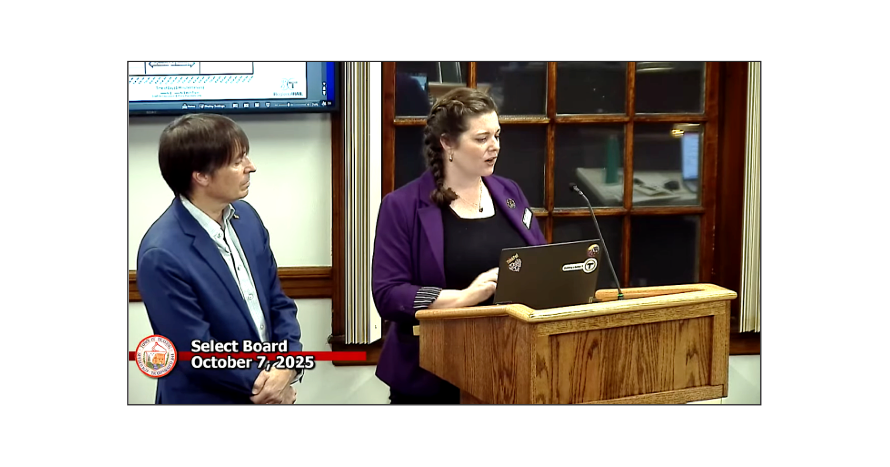
NIMBY's carpet-bomb the meeting about the Reading turnback track again at a Reading select board meeting, though the T amusingly told them that they don't need select board approval at all to do this. Lots of pearl-clutching about locomotive noise in spite of the T's revised plan to plant more trees as a sound barrier, and even some facepalm-worthy comments that Reading ridership isn't worthy of service increases to begin with so why have nice things.

I dunno if the transparency has necessarily been ideal on this project, but given that they don't have to bow to the locals for approval to do this on their own property it's probably getting nigh time to cull the futile dog-and-pony show and just do it already. The yelling-at-clouds demographic that attends town meetings is never going to come around on this no matter what the T offers up.
 
Between the T buying the A-B site and this turnback in Reading, it seems like they don't have the right government relations operation going on. I don't think they seem to know how to deal with anyone other than the Mayor of Boston and their bosses in Mass Highway and the Governor's office.
 
Between the T buying the A-B site and this turnback in Reading, it seems like they don't have the right government relations operation going on. I don't think they seem to know how to deal with anyone other than the Mayor of Boston and their bosses in Mass Highway and the Governor's office.
I get how you feel, but I think they're probably doing the right thing - here and in many local CR cases they're required by the WPA to have consulted with the local ConComm, which as a general rule are more NIMBY than not. It happens everytime the T does something and is in front of a local ConComm - Foxborough full high & temp platform, the 5 year vegetation management plan... The T is there to tell them politely that they're doing this, but those committees have to do business in open public session with public comment. Them coming back with even minor improvements can satisfy the towns stakeholders - even if the T doesn't necessarily have to, theres easy things to implement to stay on the good side of the municipalities that pay into it - 16 trees and a drip tray are a very minor cost to pay here.

The AB site in Medford was, IMO, leveraged for public opinion amongst her electorate by the mayor. The timeline just doesn't work. She made her initial statement about it on Aug 14, communicating her concerns and desire for a Market Basket, and announcing that no sale was imminent. The sale closed just 12 days later on the 26th, with a land swap in hand for the objectively better for redevelopment 7 acres of Wellington parking lot and the Fellsway garage? It takes longer to close on a condo. Note the P&S by the T's own presentation was dated May 7th - she just likely wasn't blindsided by the T buying the garage. The deal to keep Medford happy with the property transfers was probably negotiated in private long before the sale was public - IMO she either used the announcement to create some leverage, or took the opportunity to create a politcal "win" at the expense of the MBTA. To quote the estimable Jim Hacker, "Nobody knows it's not true. Press statements aren't delivered under oath."
 
Last edited:
The T has converted two MBB single-levels, cars 535 and 536, into revenue track geometry cars. They're outfitted with automatic sensors underneath to autonomously measure track alignment, but unlike the rental geo cars the T previously used which could only run on non-revenue consists these take turns on real revenue trains and carry actual passengers.

Reddit has photos of it in-service:
 
The T has converted two MBB single-levels, cars 535 and 536, into revenue track geometry cars. They're outfitted with automatic sensors underneath to autonomously measure track alignment, but unlike the rental geo cars the T previously used which could only run on non-revenue consists these take turns on real revenue trains and carry actual passengers.

Reddit has photos of it in-service:
Any speculation behind the business case? It likely wasn't particularly cheap to build two of these, given the class I freight roads still only seem to have single digits of these themselves to deploy across much larger footprints - CSX has what, 8 of these, and here the T is deploying them as a pair? It'd be nice not to need a dedicated train and corridor clipper time for the geometry tests, but those were, I believe two or three times a year. I would tend to assume that absent reports to the contrary that the T wants/needs more regular/continuous monitoring of its CR trackage and this is supplemental, rather than a replacement for the manned & dedicated corridor clipper inspection runs. It certainly seems like the CR is picking up the trappings and capabilities of a much larger railroad.

Also, this feels like something that would be particularly useful on the RT fleet, though I would understand if there wasn't the space underbody to mount yet another gubbin.
 
Last edited:
Any speculation behind the business case? It likely wasn't particularly cheap to build two of these, given the class I freight roads still only seem to have single digits of these themselves to deploy across much larger footprints - CSX has what, 8 of these, and here the T is deploying them as a pair? It'd be nice not to need a dedicated train and corridor clipper time for the geometry tests, but those were, I believe two or three times a year. I would tend to assume that absent reports to the contrary that the T wants/needs more regular/continuous monitoring of its CR trackage and this is supplemental, rather than a replacement for the manned & dedicated corridor clipper inspection runs - it certainly seems like the CR is picking up the trappings of a much larger railroad using its MBB fleet.

Also, this feels like something that would be particularly useful on the RT fleet, though I would understand if there wasn't the space underbody to mount yet another gubbin.
It probably was pretty cheap, because these are the lightly refurbbed MBB's so they've got some life left in them (especially at the low reps they'll get as geo cars). All the T needed to pay for was the sensor rigs, which are a lot more self-contained and automated than they used to be. And Keolis running a lot of CR systems worldwide meant they probably had access to cost-effective sources for those sensor rigs and the know-how for installing them. They probably figured being able to do it on revenue trains that were generating money was worth saving the cost of doing non-revenue extras and paying Amtrak ever-escalating rent to borrow the Corridor Clipper geo car. The T and MassDOT have a lot of self-owned trackage, beyond just T revenue territory and including places like the Conn River Line, Berkshire Line, Cape Cod lines, Framingham Secondary, Milford Branch, Ware River Secondary, Watuppa Branch, Grand Junction Branch, and Adams Branch. They were having to rent the Amtrak car a lot to cover their in-state track inspection requirements for the FRA. At a certain threshold it just makes sense to bring it in-house, and the state probably passed that threshold some time ago with the buying spree of lines they've been on the last 20 years.


There's 5 other single-level cars down in Rochester for modifications into specialty cars: 2 Pullmans and 3 MBB refurbs. It's not known as of yet what function they'll have, whether it's more bike and cafe cars or something for the work fleet. We're probably going to have a glut of specialty cars for the next 10-15 years as the single-level fleet gets phased out and the best-of-the-rest get picked over for cheapie conversions that'll last decently long from the more miserly reps they'll get.
 
The T has converted two MBB single-levels, cars 535 and 536, into revenue track geometry cars. They're outfitted with automatic sensors underneath to autonomously measure track alignment, but unlike the rental geo cars the T previously used which could only run on non-revenue consists these take turns on real revenue trains and carry actual passengers.

Reddit has photos of it in-service:

They had one of these running on the Haverhill line last week. I was working near the Bradford station, but didn't get a chance to take a photo.
 
They had one of these running on the Haverhill line last week. I was working near the Bradford station, but didn't get a chance to take a photo.
Apparently the bathrooms have been replaced in them with computer racks for the sensor rigs. Might not be the most comfortable place to sit if you're the ride-along tech monitoring the computer output, but I guess that's one way to do it and the reason why they chose MBB's for the task instead of the bathroom-less Pullmans.
 
Apparently the bathrooms have been replaced in them with computer racks for the sensor rigs. Might not be the most comfortable place to sit if you're the ride-along tech monitoring the computer output, but I guess that's one way to do it and the reason why they chose MBB's for the task instead of the bathroom-less Pullmans.
Erm, not to be pedantic... but wouldn't the "autonomous" part of this imply that there isn't a ride along tech? I would assume they're sitting in an office waiting for data to be sent back via a celluar connection - I've figured these are basically equivalent to the autonomous geometry boxcars the class Is have running around their systems, and those definitely don't have someone sitting inside, which as far as I know aren't a full replacement for the interval manned geometry inspection.
 
The proposed site, located near Vine Street and Hancock Street, borders the Maillet, Sommes, and Morgan Conservation Area - a space that underwent extensive restoration with more than $5 million in state, federal, and local funding. The representatives cited concerns about environmental impacts, noise pollution, and air quality, particularly due to the area’s proximity to sensitive conservation land and residential neighborhoods.
While both legislators reaffirmed their support for improving public transit access and expanding commuter options, they urged the MBTA to reconsider the current proposal and evaluate the existing Reading Depot location as an alternative site, even if it takes additional time to permit and construct.
 
To do it at Reading Depot you'd have to double-track the station so there's a passing opportunity for thru Haverhill trains to get by an idling Reading turn. Which would actually be a preferred way of doing this operationally vs. having the turnback track at all. Such mods would be fine for the would-be outbound side as there's a blank track berth and existing 800 ft. platform you can raise to full-high. But to do that you'd automatically trigger the MAAB regs to raise the current platform to a full-high, and that can't be done without jacking up the historic station building 4 feet on its foundations. That's going to turn a would-be $10.9M project on the turnback track into a much >$50M station renovation as a substitute. Which is why they're pursing the vastly cheaper, easier-reach method in the first place. Do these lawmakers feel like taking a gander at identifying a funding source for their preferred alternative? Of course not! Why do that when you can just impotently scream at the T for the pure dopamine hit of it.
 
To do it at Reading Depot you'd have to double-track the station so there's a passing opportunity for thru Haverhill trains to get by an idling Reading turn. Which would actually be a preferred way of doing this operationally vs. having the turnback track at all. Such mods would be fine for the would-be outbound side as there's a blank track berth and existing 800 ft. platform you can raise to full-high. But to do that you'd automatically trigger the MAAB regs to raise the current platform to a full-high, and that can't be done without jacking up the historic station building 4 feet on its foundations. That's going to turn a would-be $10.9M project on the turnback track into a much >$50M station renovation as a substitute. Which is why they're pursing the vastly cheaper, easier-reach method in the first place. Do these lawmakers feel like taking a gander at identifying a funding source for their preferred alternative? Of course not! Why do that when you can just impotently scream at the T for the pure dopamine hit of it.

This is not a project that should require any municipal hearings or approvals at all. It is nuts to me that the Reading Conservation Commission, and now the Select Board and local state lawmakers, is holding up a regionally important commuter rail infrastructure project. These hearings become a NIMBY convention when reviewed at the municipal level. The State should make reforms; obtain permits at the state level and then start building, already.
 
This is not a project that should require any municipal hearings or approvals at all. It is nuts to me that the Reading Conservation Commission, and now the Select Board and local state lawmakers, is holding up a regionally important commuter rail infrastructure project. These hearings become a NIMBY convention when reviewed at the municipal level. The State should make reforms; obtain permits at the state level and then start building, already.
It likely doesn't need their approval at all, since adding a second track back to a formerly two-track railbed goes under federal railroad regulation and not the town. It's just that if the NIMBY's aren't appeased here, they'll come back to ratfuck the T on something else that does require their cooperation...like redoing grade crossings in town (the planned MassDOT reconfig of the Ash/Main/Bolton intersection and its associated crossings being a particularly vulnerable attack vector) or the eventual renovation of Reading Station to 2-track full-highs for :15 service (as this current action is only for enabling :30 service). The T is stretching, stretching that olive branch so there isn't a full-on declaration of war, or at the very least a frivolous lawsuit or three causing delays. The outreach is attempting to cut off at the pass a lot of potential ugliness that could arise later if the working relationship is broken beyond repair.

As much as we advocates would just prefer that the T steamroll them all (and hell, it may yet reach a point where that's the most prudent thing), there are real costs and aggravations down the line to royally pissing off a member community and their politicians. So it behooves them to try their darndest to keep up appearances. We'll have to see where this leads, because it's getting close to the end of where more appearances can potentially resolve this conflict.
 
It likely doesn't need their approval at all, since adding a second track back to a formerly two-track railbed goes under federal railroad regulation and not the town. It's just that if the NIMBY's aren't appeased here, they'll come back to ratfuck the T on something else that does require their cooperation...like redoing grade crossings in town (the planned MassDOT reconfig of the Ash/Main/Bolton intersection and its associated crossings being a particularly vulnerable attack vector) or the eventual renovation of Reading Station to 2-track full-highs for :15 service (as this current action is only for enabling :30 service). The T is stretching, stretching that olive branch so there isn't a full-on declaration of war, or at the very least a frivolous lawsuit or three causing delays. The outreach is attempting to cut off at the pass a lot of potential ugliness that could arise later if the working relationship is broken beyond repair.

As much as we advocates would just prefer that the T steamroll them all (and hell, it may yet reach a point where that's the most prudent thing), there are real costs and aggravations down the line to royally pissing off a member community and their politicians. So it behooves them to try their darndest to keep up appearances. We'll have to see where this leads, because it's getting close to the end of where more appearances can potentially resolve this conflict.

Actually this does need municipal approvals. The MBTA has been trying to get a permit from the Reading Conservation Commission since late 2024 because portions of the turn-back track fall within a wetland buffer zone. The Reading Conservation Commission has held at least 5 public hearings and counting and it remains tied up there.

Massachusetts is one of only two states where municipal Conservation Commissions, instead of state agencies, review and regulate these types of permits. In the vast majority of states, state environmental agencies approve wetlands permits. Local Conservation Commission may be able to provide comments, but that’s typically the extent of it - State infrastructure projects are often exempt from municipal zoning/wetland requirements.

Massachusetts is doubly unique - in a notorious way - in that a group of 10 residents can appeal a wetland permit by simply alleging it would hurt the environment without having to allege any direct harms to themselves. So if Reading eventually approves a permit, there’s a high likelihood it will be further delayed by appeals.

Questioning this ‘process’ - where a Conservation Commission is holding a permit hostage over issues it should have no jurisdiction of - is not me advocating that the MBTA ‘steamroll’ through permitting. By all means, the MBTA should obtain wetlands permits, but they should be issued by state bodies and not municipal ones with reasonable limits on appeals. Several states have made reforms to speed up infrastructure projects - including California, which just reduced environmental permitting for major transit projects (AB 2503). If we want to see projects advance in a more timely way, Massachusetts should consider reforms here.
 
Service will be suspended on the Framingham/Worcester Line between Framingham and South Station on the first two weekends of the month. On the weekends of Nov. 15-16 and Nov. 22-23, services will be suspended between Framingham and Worcester.
Four free shuttle bus routes will be in place to replace train service. The shuttles will not stop at Wellesley Farms and Lansdowne, so riders that use those stations are encouraged to go to Riverside or Kenmore respectively. The suspensions are due to signal upgrade work, hoping to improve the Framingham/Worcester Line’s “operational efficiency and reliability.”
 
In contrast to the constant disruptions and delays they’ve been having during the week?
Anyone knows what they’re working on?
I don't know for sure, but I'm assuming it's related to the proposed 30-minute headways on the line. The T hasn't published much information on it, but here's some CIP info:
Commuter Rail Infrastructure Improvements (P1257):

Upgrades to track and signal infrastructure on the Framingham/Worcester Line to reduce journey times and enable 30-minute service frequency. Includes new interlocking construction, crossover installation, and track modifications at CP-16 to support increased train speeds and operational efficiency.
The announcement also mentions that "crews will also perform culvert upgrade work near Westborough", so you have that too.
 

Back
Top