MBTA Commuter Rail (Operations, Keolis, & Short Term)

$6.5 million per locomotive seems a little much, no?

Edit: watching the actual meeting, Wabtec was the only bidder, and includes a 15-year contract to support the electronics.
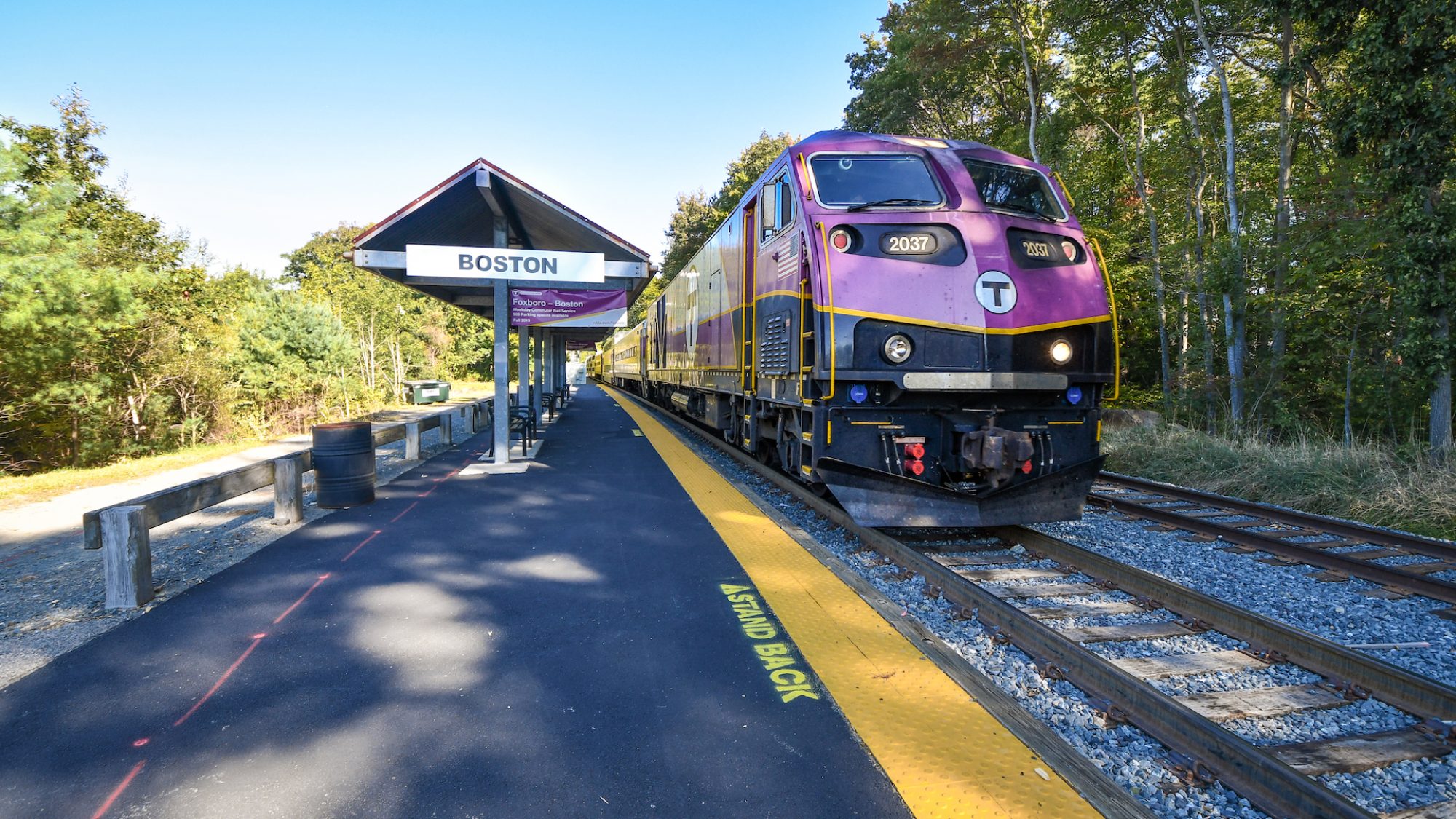
Wabtec bought GE's locomotive division, which made the prime mover and a bunch of other components for the HSP's, so they're a logical choice to work on those unicorns when nobody else (including original builder MPI, who do a healthy amount of business on overhauls) would touch them with a 10-foot pole.

Yeah, it's a high price. But we're way into sunk cost territory already with this misfit batch of locos.
 
Wabtec bought GE's locomotive division, which made the prime mover and a bunch of other components for the HSP's, so they're a logical choice to work on those unicorns when nobody else (including original builder MPI, who do a healthy amount of business on overhauls) would touch them with a 10-foot pole.

Yeah, it's a high price. But we're way into sunk cost territory already with this misfit batch of locos.
Err, please correct me if I am mistaken, but I believe that MPI has been the locomotive division of Wabtec even when they built the HSPs the first time. They have since merged with / bought GE Transportation, but GE Transportation and MPI are both Wabtec companies; MPI's move to its Erie plant from Boise was born out of the merger as a consolidation into what was a GE facility.
 
The MBTA today announced that three qualified teams have been short-listed to submit proposals as the MBTA considers its Commuter Rail operating contract successor. The MBTA’s current Operating Agreement for managing, operating, and maintaining the Commuter Rail system will expire on June 30, 2027.

The three shortlisted qualified teams are (in alphabetical order):

-Keolis - Alstom JV Partners: a joint venture of Keolis America Inc. and Alstom Transport USA Inc.
-Mass Regional Rail: a consortium of Alternate Concepts Inc., TransitAmerica Services Inc. and RATP Développement S.A.
-A consortium of Transdev North America, Inc. and Transport UK Holdings Limited.
Final bids due Fall 2026. Interesting list of bidders. Notably all through bidders are in some way owned by the French government. Keolis is majority owned by SNCF who is owned by the govt, RATP is fully owned by the French govt, Transdev is 1/3 owned by the govt. Alstom, TransitAmerica, and Transport UK are all fully private.

 
Even if they spend billions of dollars to electrify the regional rail system, that doesn't change the fact that people still need to pay hundreds a month on a car to be able to access their basic necessities in most of the state. Keeping the cost of the regional rail the exact same won't move the needle too much if it's still out of budget for suburbanites to use regularly. If the goal is to get more people riding the train more regularly then they need to actually be able to afford it for more than just a trip or two a week. And if the subsidy is already so high then the additional subsidy needed in order to reduce fares isn't much of a financial hit that diminishes as it gets more buts in seats and fills the existing capacity.
There's another issue with suburban riders using it for anything other than commuting. I was talking to a recently retired friend over the weekend, who lives in the northwest quadrant of the 90/495 junction. She said that she likes the idea of taking the train to Boston for various activities, but it takes her 30 minutes to drive to a station. Add that to the 60 minute train ride, and driving is a much better use of her time (off peak driving takes an hour). I don't think better schedules or lower fares solve that problem. They are definitely great ideas for those of us who live closer to the core, though!

Many midday trains have more than 100 passengers now that clockface service is a thing. Start selling tickets at reduced off-peak rates like Metro-North does and that should see the already healthy off-peak ridership further fill up those empty seats. With the South Station fare gates coming then the lack of midday conductors for ticket checking across multiple coaches is also less of an issue.
I'd certainly use it more for off peak trips if the fare were discounted. I have the option of walking to a zone 1 station, or taking a bus to the subway. I find the Zone 1 fare quite galling, and usually opt instead for the more reasonably priced, but less time efficient option of bus/subway. A lot more Zone 1 and Zone 2 people would ride midday if the tickets were more equitably priced.
 
Does anyone know if there have ever been proposals to interline the Stoughton branch with the Fairmount Line?

To be clear, I’m not saying I think it would be a good idea. This was purely a “shower thoughts” kind of moment where I took a quick glance at the map and wondered if anyone ever evaluated whether there would be any merits to linking these two very short routes into a single route of somewhat-more conventional length.

EDIT: updated to say I’m *not* suggesting it’s an idea to jump for. Forgot to include the word “not” in the original post…just a minor oversight, right?
 
Last edited:
Does anyone know if there have ever been proposals to interline the Stoughton branch with the Fairmount Line?

To be clear, I’m saying I think it would be a good idea. This was purely a “shower thoughts” kind of moment where I took a quick glance at the map and wondered if anyone ever evaluated whether there would be any merits to linking these two very short routes into a single route of somewhat-more conventional length.
While I like the idea, it could bring weekend service to Stoughton, the problem is it'd eliminate the Stoughton Branch's pretty unbeatable time to South Station. It's only 40min to South Station and 30 to Ruggles. The only way driving is matching that is in the dead of night. Tacking on the Fairmount to that throws an additional 30min on the journey, making it take as much time as coming from Providence and losing its reason for so many commuters to take it. You could time it for Providence Line transfers at Canton Junction but then you'd lose both the doubled-up Canton/128 headways into Boston via the NEC and the Providence Line is already at passenger capacity during peak.

If we had the proposed Stoughton electrification and 15min service to key stations, I think the next logical step would be to diversify the trips to bring more utility to train travel. Have some Stoughton Line trips run via Fairmount say hourly, some Providence Line trips run via Foxboro and Dedham, a daily Worcester-New Bedford round trip via Back Bay skipping South Station and seasonally to the Cape, so on and so forth. Truly connect our state via rail. These are all possible with the current infrastructure, entirely within MBTA-owned rails, they just require investment, personnel, and initiative so as not to detract from any existing service to the primary commuting demographic.

 
While I like the idea, it could bring weekend service to Stoughton, the problem is it'd eliminate the Stoughton Branch's pretty unbeatable time to South Station. It's only 40min to South Station and 30 to Ruggles. The only way driving is matching that is in the dead of night. Tacking on the Fairmount to that throws an additional 30min on the journey, making it take as much time as coming from Providence and losing its reason for so many commuters to take it. You could time it for Providence Line transfers at Canton Junction but then you'd lose both the doubled-up Canton/128 headways into Boston via the NEC and the Providence Line is already at passenger capacity during peak.

If we had the proposed Stoughton electrification and 15min service to key stations, I think the next logical step would be to diversify the trips to bring more utility to train travel. Have some Stoughton Line trips run via Fairmount say hourly, some Providence Line trips run via Foxboro and Dedham, a daily Worcester-New Bedford round trip via Back Bay skipping South Station and seasonally to the Cape, so on and so forth. Truly connect our state via rail. These are all possible with the current infrastructure, entirely within MBTA-owned rails, they just require investment, personnel, and initiative so as not to detract from any existing service to the primary commuting demographic.
My apologies, I didn’t realize til I read your reply that I omitted the word “not” in my post when I said “To be clear, I’m [not] saying I think it would be a good idea.”

In other words, I didn’t meant to come across as being strongly in favor of combining Stoughton and Fairmount. I’m sure if it was a slam-dunk great idea, it would have been either already implemented or already studied in some detail. Increased travel time is definitely one drawback; loss of one-seat ride to Ruggles and Back Bay would be another.
 
For years, officials in Needham have been hoping their MBTA Quiet Zone project would gain traction, and the town says it's back in talks with the MBTA after a pause in communication. While some residents might be thrilled about the update, others say they have become accustomed to the noise.
"I'm kind of used to it. It's never really bothered me. It's just kind of like what I'm, it's like my usual hearing. I like, I don't even register it anymore," one local said.
The town is in its design phase of the project, which includes identifying infrastructure changes and safety measures to bypass the need for a horn.
In a statement to WBZ NewsRadio, town manager Katie King said the Needham select board hopes that quiet zone will reduce train noise "while maintaining the highest standards of public safety. The Town is currently in the design phase of this project, identifying specific infrastructure changes and additional safety measures required at each of the five public rail crossings in Neeham to meet Federal Railroad Administration regulations. The Town is working closely with the MBTA, who owns the railway infrastructure, on how the project could be constructed once the design is finalized.”
 
They don't legally have a choice but to rehab. The T accepted federal funding to originally purchase the HSP's, and there were stipulations attached to that funding that the fleet had to fulfill its rated 25-year lifespan. Well...they're apparently so flawed and unreliable that they need an overhaul at half that age to even have a puncher's chance of making it to 25. Completely and utterly non-optional, and raising a stink about it misses the point.

If electrification advocates want to criticize a T diesel procurement, they should be making a stink that we've made so little progress to-date on decarbonization efforts that the next GP40MC-replacement diesel purchase has to go on the CIP at all before those units all crap out from too-advanced age. But that's crying about spilt milk at this stage because we would've had to start doing something 10 years ago to make that next order functionally optional, though that upcoming procurement is at least ripe for a little circumspect second-guessing because of all the wasted time.
 
They don't legally have a choice but to rehab. The T accepted federal funding to originally purchase the HSP's, and there were stipulations attached to that funding that the fleet had to fulfill its rated 25-year lifespan. Well...they're apparently so flawed and unreliable that they need an overhaul at half that age to even have a puncher's chance of making it to 25. Completely and utterly non-optional, and raising a stink about it misses the point.

If electrification advocates want to criticize a T diesel procurement, they should be making a stink that we've made so little progress to-date on decarbonization efforts that the next GP40MC-replacement diesel purchase has to go on the CIP at all before those units all crap out from too-advanced age. But that's crying about spilt milk at this stage because we would've had to start doing something 10 years ago to make that next order functionally optional, though that upcoming procurement is at least ripe for a little circumspect second-guessing because of all the wasted time.
Speaking of decarbonization and fleet procurement, are there any realistic arguments that can still be made in support of pursuing electrification via overhead catenary and EMUs? I’m wondering how easy/hard it would be to upgrade Fairmount from BEMU to EMU service in a future where you manage to convince the T that it’s worth adding an EMU class to their fleet. For example, could EMUs be maintained at the facility they’re building for the BEMUs? I assume they could redeploy the BEMU fleet to another line, but would it be possible to relocate the battery charging stations, or would they have to be junked?
 
Speaking of decarbonization and fleet procurement, are there any realistic arguments that can still be made in support of pursuing electrification via overhead catenary and EMUs? I’m wondering how easy/hard it would be to upgrade Fairmount from BEMU to EMU service in a future where you manage to convince the T that it’s worth adding an EMU class to their fleet. For example, could EMUs be maintained at the facility they’re building for the BEMUs? I assume they could redeploy the BEMU fleet to another line, but would it be possible to relocate the battery charging stations, or would they have to be junked?
The Fairmount BEMU trial is really kooky in that it's wholesale-outsourced to Keolis, who will own and manage the fleet and the maintenance shed they're building for it in-total. It goes by T specs, but they won't be the T's vehicles. I'm not even sure that Fairmount fleet could be made "portable" to other lines the way it's worded...which is why there's still crickets about electrifying Providence/Stoughton service despite that being a duh-obvious segue. We might actually be backing ourselves into a corner with this type of procurement method despite it being upsold so heavily by T brass as "easier", because the follow-on process for adding other lines would be so potentially cumbersome in its legal machinery to implement.

Wiring up Fairmount is not hard. They could pivot to doing just that right now if they wanted to and not lose a lot of time on their projected build timetables. They just don't want to, because "battery magic" has poisoned so many brains at the T including Eng's and they're still making every excuse in the world for not stringing up wires and savagely overestimating the costs of wires.

The charging stations are just regular wired segments at the Readville Station platform, Readville layover, and Widett Circle layover chaining off the NEC's existing electrification. If continuous electrification comes to the line they just get subsumed into the surrounding electrification system. These aren't like bus chargers or layover ground power that require specialty equipment; they're just discrete segments of regular old 25 kV wire.
 
So much institutional resistance to physical plant changes. They all seem to want to switch out vehicles to upgrade the tech.
 
If the new operating contract gets awarded to someone other than Keolis, but the Fairmount BEMU program has already been awarded to Keolis, could there be a situation where you have two different operators having to work around one another on the same corridor? (Thinking of how some Franklin Line trips are routed over the Dorchester branch.) Would that create potential problems or inefficiencies?
 
Well...they're apparently so flawed and unreliable that they need an overhaul at half that age to even have a puncher's chance of making it to 25.

Looking at the NEtransit roster, 12 years is not that atypical for a mid-life overhaul. The original F40PH's were overhauled at 9-12 years old, the F40PHM-2C's got their first overhauls at 12-13 years, and the F40PH-2C's got their first overhauls at 13-16 years. So the HSP46's aren't that out of the ordinary.
 
You would think Eng of anyone would advocate for just building the overheat catenary wires.
I'm not convinced that he's opposed to catenary. I can't find the article right now, but Eng said in an interview (maybe 18 months ago), that the Fairmont BEB was a test, and not necessarily the final solution for decarbonization. That and some other comments led me to think he was playing a long game that would let the politics shift over time. I almost got the idea that he saw BEB as a negative proof of concept. If it proves ineffective or unworkable in some fashion, then the case for wire is stronger.
 
I'm not convinced that he's opposed to catenary. I can't find the article right now, but Eng said in an interview (maybe 18 months ago), that the Fairmont BEB was a test, and not necessarily the final solution for decarbonization. That and some other comments led me to think he was playing a long game that would let the politics shift over time. I almost got the idea that he saw BEB as a negative proof of concept. If it proves ineffective or unworkable in some fashion, then the case for wire is stronger.
Wouldnt it make more sense to just strongly advocate for ocs and tell people the reasons why its so much better since hes the expert and his opinion carrier a lot of weight compared to playing these weird games of picking something to let it fail so we can just get the correct thing later on after wasting everyones time and tons of money? Eng could give interviews to the globe and other local channels explaining how we can save money and just do the right thing off the bat, but I havent seen much of this at all. If anything Ive seen articles talking about the shitty battery trains popping up here and there. Nobody has really made a case for ocs to the public.
 
Wouldnt it make more sense to just strongly advocate for ocs and tell people the reasons why its so much better since hes the expert and his opinion carrier a lot of weight compared to playing these weird games of picking something to let it fail so we can just get the correct thing later on after wasting everyones time and tons of money? Eng could give interviews to the globe and other local channels explaining how we can save money and just do the right thing off the bat, but I havent seen much of this at all. If anything Ive seen articles talking about the shitty battery trains popping up here and there. Nobody has really made a case for ocs to the public.
It's because the Executive Director of Commuter Rail Mike Muller is a full-throated battery stan, and he's the usual agency mouthpiece for CR decarbonization when somebody needs to be interviewed. Eng has delegated a lot of the talking points to Muller, who's never going to come around on the "get it done already" front because he believes too hard in battery magic and the icky-poo'ness of stringing up wires. Eng can stay neutral in direct comments all he wants, but by delegating that authority to a true zealot he's pretty much put his stamp on the process all the same.
 

Back
Top