Multi-Family Zoning Requirements for MBTA Communities

Would a better proposal have been flat upzoning statewide? I think the X housing units on Y acres is a bit convoluted, but the concept of "if you have state-funded transit you need to build more housing" is pretty straightforward.

My preference would be a statewide override that allowed some multiple of average existing zoning density (3x?) anywhere within 1/4 mile of a rail station of any kind up to FAA limits.
Probably not a good idea, land use is not something you can just apply a formula to, it's a very individual thing. I don't think there's a shortcut to the state making a new, integrated, state-wide zoning map.
 
Yeah I think that's the only real solution here, but responsive to the comment above that MBTA Communities was too convoluted, a detailed statewide zoning map would be orders of magnitude more complex.
 
I do think the basic thesis of rail service should equal walk up densities anywhere so served is sound, but it also doesn't need to be a full statewide map. I think there's a middle ground between a statewide map and the MBTA communities model, where we can also alleviate some municipal concerns - specifically, a case to be made where the state legislature accepts value capture as a funding model for Regional Rail.

It could be a sufficiently discrete program of creating state/mbta -created upzoning districts around each station site, accompanied by a model of DIF or LVT incremental taxes and/or CH23L LIDP district assessments. It doesn't have to be a multilevel complex. A dense group of triple deckers should also be permitted, and works in places like Ayer and western Long Island. A somewhat higher tax band for TOD with a local/authority revenue split could allow the T to both fund its expansion plans and "pay off" the local municipalities. I realize that the incremental tax revenues of new development, in general even without increased taxes are already enough to pay for the increase in resident services and infrastructure, but are a long standing source of NIMBY pushback. One of the places I think the MBTA communities act erred is that its enforcement mechanism was much more stick, than carrot - withholding future speculative grants is both hard to quantify until awards are denied and can build resentment communities. Present it with a bonus carrot with new money for the impacts? Maybe the conversation is different.

While the most valuable time to do so would be rapid transit expansions, vs regional rail, - GLX would have been the most valuable example - but all future transit adds should include value capture and upzoning simultaneously.
 
Last edited:
The danger with anything less than a statewide plan is that you are simply going to end up choosing where to place the stockade. Folks will sort themselves to their favored side of it, and they will advocate for disinvesting from the other side.
 
Im pretty in agreement with @DZH22 on this. The state should have written this law to encourage density and height in its core cities. Sprinkling housing randomly over all these little towns and villages is not a good solution to the areas housing crisis.

When I say "core cities" Im also including Worcester, Framingham, Lowell, Salem, Lynn, Brockton etc. All places that could be much denser and more tightly tied to Boston with improved transit.

"Towns may not refuse to confront the future by building a moat around themselves and pulling up the drawbridge."

That is a line from a NH court case (requiring communities to zone for multi-family housing), but it is very relevant in Mass where so many towns have been pulling up the drawbridge for decades...

The problem is that housing isn't just a Boston/Cambridge/Somerville problem. It's a statewide problem. It's not like housing is only expensive in Somerville; it's expensive everywhere. The Lexington's and Weston's of the world have just as much a responsibility to help address it than the Boston/Somerville/Cambridges. Arguably, they have a greater responsibility to help address this because historically they have suppressed housing production much more so than the cities have. And morally, I also take issue with telling towns that have restricted multi-family housing through snob zoning and other measures that they have no responsibility to help fix this. I mean, they helped break it in the first place.

The crux of the MBTA Communities Act - that we should encourage denser housing opportunities around transit facilities - is not bad policy. It's just that the administrative requirements - really the guts of the law - were watered down beyond recognition by the EOHLC during the public hearing process and the requirements were made much more complicated and technical than they needed to be. People don't understand it and are thus naturally suspicious of it. Additionally, the state needs to invest more in public transit. It's hard for towns with a commuter rail stop to believe that people can live there car-free or car-light when the MBTA has done so little in recent years to increase transit reliability and transit frequencies and transit connections.
 
The problem is that housing isn't just a Boston/Cambridge/Somerville problem. It's a statewide problem. It's not like housing is only expensive in Somerville; it's expensive everywhere.

And the bill isn't going to help that, nor was it intended to.

They just used the MBTA to sell the idea to people who are upset at rising rents. But New Construction is even more expensive.

Building only in the Inner Core and "Encouraging" people to take in roommates is about the only thing you could do, short of an economic disaster.
 
Additionally, the state needs to invest more in public transit. It's hard for towns with a commuter rail stop to believe that people can live there car-free or car-light when the MBTA has done so little in recent years to increase transit reliability and transit frequencies and transit connections.

It's a chicken and egg problem. You can't build dense housing without effective public transit, but you can't justify funding effective public transit without dense housing, or at least a plan to build it. This is why I'm of the belief that you need one all-encompasssing bill that does everything at once:

Upzoning around stations
-> allow density to exist
Land value tax
-> incentivize density
Transit upgrades
-> paid for by LVT, prevents downsides of density
 
And the bill isn't going to help that, nor was it intended to.

They just used the MBTA to sell the idea to people who are upset at rising rents. But New Construction is even more expensive.

Building only in the Inner Core and "Encouraging" people to take in roommates is about the only thing you could do, short of an economic disaster.
Are you assuming the expense of new construction cannot go down? Because there are a LOT of regulations at the state and local level that, if changed, would allow for significantly cheaper new construction. I don't know if projections exist on exactly how much that could bring down cost, but it would likely make new construction very competitive with going market rates.
 
And the bill isn't going to help that, nor was it intended to.

They just used the MBTA to sell the idea to people who are upset at rising rents. But New Construction is even more expensive.

Building only in the Inner Core and "Encouraging" people to take in roommates is about the only thing you could do, short of an economic disaster.

New construction, by definition, is always going to be more expensive. It is, after all, new. It’s not like when you buy a new car you expect to get a discount over a used one. The cost of new construction is irrelevant. What matters is the effect of new housing on the overall market. Suddenly, the housing built 2 to 3 years ago isn’t so new and can’t charge the same premiums.

Housing affordability isn’t especially complicated. It is primarily controlled by supply and demand. Massachusetts is expensive because there is a strong demand with minimal new supply. The state routinely ranks in the bottom 10 states for new housing construction every year. West Virginia can get away with that, Massachusetts can’t. We don’t need more complicated affordable housing requirements, we don’t need huge government subsidies, we just need to make it a lot easier for anybody to build new housing.

Cities that significantly increase housing supply consistently and very rapidly reduce housing costs. This is true even in hot markets with seemingly insatiable demand. Take Austin —

Austin built the most single-family units and the third most multifamily units of any metro area in 2022. Rent prices dropped6.3 percent from 2023 to 2024 after a 5.1 percent decrease from 2022 to 2023. Of the top 150 metro areas in the country, Austin had the slowest rent growth in the first quarter of 2025.


The City of Austin can almost single-handedly reduce housing costs because it is massive, clocking in at about 50 times the land area of Cambridge. Combined, Boston/Cambridge/Somerville make up about 18% of Austin’s land area. So it’s not enough for the core cities to do it alone. We are going to have to build more housing across the metro from Fenway to Foxborough.
 
But New Construction is even more expensive.

Your refusal to learn the basics of how a market works and dog whistling about section 8 renters isn't any more endearing than it was a year and a half ago.

Oh wild I had no idea that college grads weren't going to move to a municipality that has a share of adults with a degree 13.4 percentage points higher than the state as a whole. Oversimplifying how the market works isn't proving your point, it's putting your own ignorance on display. Sure, very few if any are directly deciding between Holden and Davis Sq. But some are deciding between Holden and Worcester. Others are deciding between Worcester and Framingham, and those people now have less competition for Worcester because some of that demand has been shifted to Holden. Now there's less competition for Framingham for those people deciding between Framingham or Newton. So on and so forth. This is also EXACTLY why the issue cannot be left to individual municipalities, because no one municipality can put a dent in regional level demand on its own.

I don't know what you're implying with the "may as well be refugees" bit. It seems we're dealing with Schrödinger's renter. Simultaneously a displacing college grad living in a luxury condo and a section 8 family with 8 special needs kids about to enroll in the school district.
 
Austin built the most single-family units

You know, if they did build tons of modest, cookie cutter SFH in like 495... maybe you would at least keep the people from leaving for NH and Maine. That of course is not happening here. Nor was the point of the bill.

Your refusal to learn the basics of how a market works

I know how it works. The market here is broken. And the main problem is FOMO and loose mortgage regulations. The pols are capitalizing on this.

Sometimes you just gotta let it happen.
 
"Fun" fact: Did you know Texas has no State Min Wage? Yep, it's true.

So yeah, lets buy up cheap land in the outskirts of town and hire people (who make less than the guy who screwed up your Dunks order) to make houses like this: https://www.redfin.com/TX/Hutto/503-Stonebrook-Dr-78634/home/198351234

And then people move in, to get away from renting and "throwing money away". Until they realize that living in Texas sucks.

You can't do that here.
 

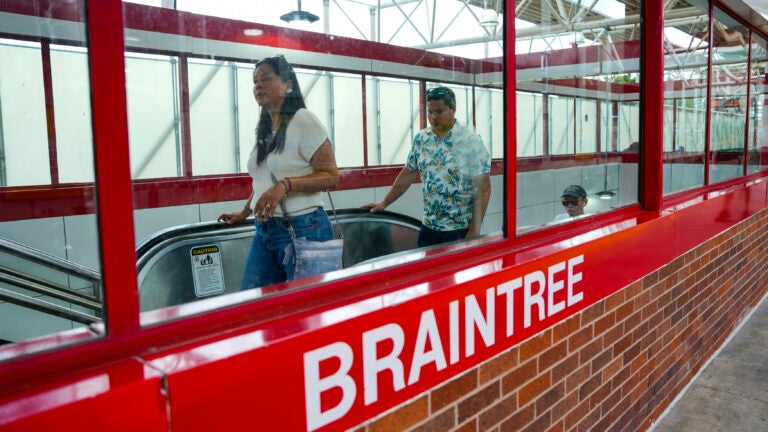
I was super enthusiastic about this one until I read "1.5 parking spaces per unit" - which in this case equates to over 1,100 parking spaces. This site is not the most transit accessible, but it is only a mile from the Braintree Red Line station. We should be aiming a bit higher.
 

I was super enthusiastic about this one until I read "1.5 parking spaces per unit" - which in this case equates to over 1,100 parking spaces. This site is not the most transit accessible, but it is only a mile from the Braintree Red Line station. We should be aiming a bit higher.

Definitely agree about the parking. Besides that though this is awesome, 752 new units in one project. Whens the last time you heard that? In braintree nonetheless.
 

I was super enthusiastic about this one until I read "1.5 parking spaces per unit" - which in this case equates to over 1,100 parking spaces. This site is not the most transit accessible, but it is only a mile from the Braintree Red Line station. We should be aiming a bit higher.

"We should be aiming a bit higher" boils down to people need to be pressuring their local commissions/staffs/electeds.

I got the opportunity to contribute to some road safety audits funded by the developer of this project, and when I brought up a bike/ped bridge over the rail tracks to connect to the grocery store (but also Marshalls, a supercuts, a pediatric urgent care, and an in-general more direct pathing to the red line) I was patronizingly dismissed.

Don't get me wrong, this development needs parking, but the difference between 1 per unit and 1.5 per unit is that vocal pressure.
 
I was super enthusiastic about this one until I read "1.5 parking spaces per unit" - which in this case equates to over 1,100 parking spaces. This site is not the most transit accessible, but it is only a mile from the Braintree Red Line station. We should be aiming a bit higher.

Braintree is too far out to expect to attract the carless crowd. You should expect the (market rate) people who would in theory consider this to want parking. Even if they do take the Red Line to work they will still want a car for other trips.

That is one of the biggest problems of this bill if it was on the up and up.
 
I don't think the expectation was ever that these multi-family developments around more peripheral towns would ever be for true car-free living. But a car-light lifestyle has the opportunity to be very easy, especially in a location like this that is close to the heart of South Braintree retail and a (somewhat) functioning rapid transit station.

Building off what KCasiglio was saying, it's unfortunate that there wasn't better planning around the whole stretch from this property to the RL station that would have created provisions for a more convenient bike/ped network like a ped bridge and a shared-use path. All that stuff can really move the needle when electing to walk or drive.
 
If they added a ped connection to pearl street at the north of the site theres a plaza right there with a gamestop, marshalls, shaws, supercuts…etc. Then youve got a tj maxx, dunkin, plus if they go left down pearl theres restaurants and bars right there. Walk a little bit north from there and youre right at the RL station. Also since most of these big new developments usually have their own gym and pool someone could really walk to 99% of the things they need day to day. If they work in the city the RL would be a huge bonus. Obviously theres other things people need and visiting family probably requires a car, but they really could make it so the people here can get most of their day to day needs done without having to make trips in a car.
 
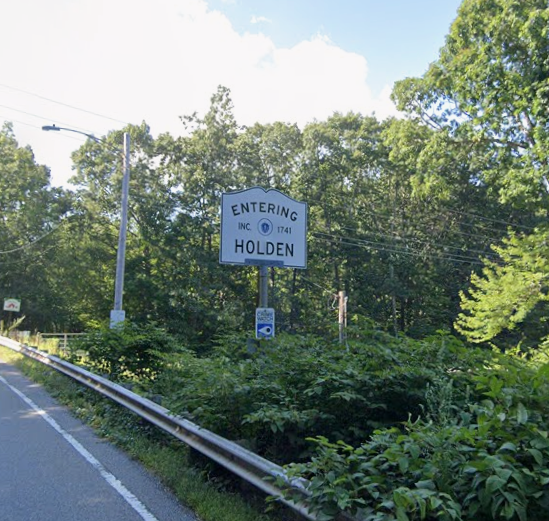
The noncompliant towns are Carver, Dracut, East Bridgewater, Freetown, Halifax, Holden, Marblehead, Middleton, Rehoboth, Tewksbury, Wilmington and Winthrop. All faced compliance deadlines of either July 14, 2025, or Dec. 31, 2025.
[...]
In its July guidance to cities and towns, which also gave notice that lawsuits could begin this month, Campbell’s office pointed out that January 2026 will mark five years since Gov. Charlie Baker signed the zoning-reform requirements into law as part of a larger economic bond package.
“By that point, every MBTA Community will have had ample time — and considerable state support — to establish the legally mandated zoning. Because facilitating additional residential housing development is a foremost state priority — in the interests of those who reside in the Commonwealth and those who hope to, and essential to the success of our state economy — five years is more than sufficient time for each community to have achieved compliance,” the office wrote. “That is especially true because rezoning is but an initial, necessary step towards building the new housing that the Commonwealth so badly needs. The remaining steps will take time before additional housing is built, and we have no time to waste in addressing the Commonwealth’s continued housing shortage; nor in addressing impediments to that important work.”

 

Back
Top