themissinglink
Senior Member
- Joined
- Jan 13, 2018
- Messages
- 2,199
- Reaction score
- 6,279


According to the CRRC "recovery" schedule, the Pullmans should've been fully retired this month with the 66 delivered car. They're a full 12 cars behind that pace.A few more stats…
- At 46 active cars, new cars now make up 23% of the active Red Line fleet (46/198).
- Legacy fleet retirement continues apace, with only 18 Pullmans (14 01500s and 4 01600s) remaining on the active roster. Conventional wisdom has been that the 01600s were all but retired, but I happened to ride on one last week, so they're apparently still legitimately active.
- Another pair of 01700s has also been retired, leaving 52 on the active roster (out of 58 originally).
- The 01800 fleet is holding steady at 82 active.


 scottvanvoorhis.substack.com
Chicago, too. Although both Chicago and L.A. passed on large option orders in favor of RFP's for all-new vehicles from different manufacturers, so both their orders are winding down. Pretty unlikely there'll be any more U.S. customers given that L.A.'s were pretty late, the T's catastrophically late, and SEPTA's commuter rail cars turned complete vaporware by the cancellation they were so late.Yes for the LA metro and they were supposed to build commuter rail cars for Philly but SEPTA terminated the contract (wisely) before their first delivery.
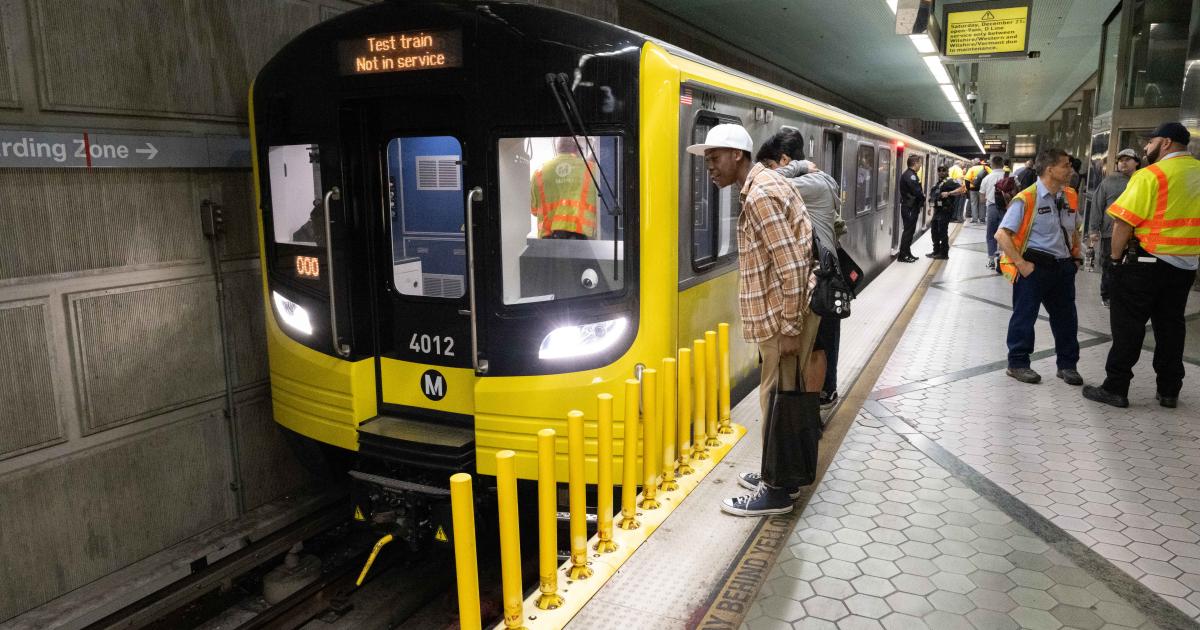
Metro's new subway cars enter service
It took a few years longer than expected, but Metro's HR4000 heavy rail subway cars finally entered service last week.la.urbanize.city
Although, CTA's board voted in June this year to extend and reindex their options - they had a cost estimate done such that that all-new procurement of 9000 series cars would run the CTA ~$4.2M per car, with the reindexed CRRC options being 1.5M + 1.2 for ~$2.7M. Based on the transcript, it looks like they're "anticipat[ing] the first option to go into production somewhere -- two years out," which is reinforced by the FY26 budget request.Chicago, too. Although both Chicago and L.A. passed on large option orders in favor of RFP's for all-new vehicles from different manufacturers, so both their orders are winding down. Pretty unlikely there'll be any more U.S. customers given that L.A.'s were pretty late, the T's catastrophically late, and SEPTA's commuter rail cars turned complete vaporware by the cancellation they were so late.

Does that mean the springfield factory will be closing?Chicago, too. Although both Chicago and L.A. passed on large option orders in favor of RFP's for all-new vehicles from different manufacturers, so both their orders are winding down. Pretty unlikely there'll be any more U.S. customers given that L.A.'s were pretty late, the T's catastrophically late, and SEPTA's commuter rail cars turned complete vaporware by the cancellation they were so late.
Notably however, Chicago's ex CSR CRRC plant is the one managing to deliver cars - Between Sept 2024 and August 2025 they've delivered 124 cars, for a rate of 10+/month. CNR was better at getting orders (SEPTA, LACMTA) but the Springfield plant has been lucky to produce 4-6 a month (2-3 Married pairs.)The CTA order is being built at a different factory (in Chicago) by a different division of CRRC, so the CTA picking up their options won't make a difference in keeping the Springfield plant open. (CRRC was formed by a merger of two companies, CNR and CSR. The Springfield factory is part of the former CNR side, while the Chicago factory is part of the former CSR side. Both CNR and CSR bid on the MBTA contract, but CSR was disqualified after the technical evaluation.)
The rules of the procurement was that you had to meet the technical specifications to be a valid bidder. CSR didn't do that, so they weren't allowed to bid at all and got culled before that process even started. It doesn't make much difference if their assembly process went corporately smoother; their cars weren't a technical fit for the Orange and Red Lines and the OLT/RLT improvements to begin with. I'm pretty sure it would've been illegal by state procurement rules to "aww, shucks!" them and grant a mulligan on not meeting the base requirements, so ultimately it's a moot point. We were never getting their cars because they didn't pitch a make the T could actually use.It rather begs the question if we would have our fleet by now if we hadn't disqualified CSR - the CTA seems happy with their fleet thus far.
You're not wrong that by procurement rules it would have been very improper - but I'd say it was largely inexperience at bidding in the US and the western world generally, and thus at preparing the paperwork and less their technical ability to deliver a trainset that would have worked for the T.The rules of the procurement was that you had to meet the technical specifications to be a valid bidder. CSR didn't do that, so they weren't allowed to bid at all and got culled before that process even started. It doesn't make much difference if their assembly process went corporately smoother; their cars weren't a technical fit for the Orange and Red Lines and the OLT/RLT improvements to begin with. I'm pretty sure it would've been illegal by state procurement rules to "aww, shucks!" them and grant a mulligan on not meeting the base requirements, so ultimately it's a moot point. We were never getting their cars because they didn't pitch a make the T could actually use.

 www.wbur.org
The manufacturer of new MBTA Red and Orange Line fleets missed the September deadline to complete all 152 Orange Line cars, after U.S. Customs officials detained multiple shipments of train shells and components under a federal forced-labor law. Transit officials say the builder, China Railway Rolling Stock Corporation MA (CRRC), remains on pace to finish the Orange Line order by year’s end.
The MBTA expects to receive another pair of Orange Line cars on Thursday, bringing the total to 150. The final two cars are scheduled to arrive next month, closing out the 152-car order required under the contract.
The new Orange Line fleet, which began entering service in September 2022, has been large enough to support reliable operations, officials said, allowing the T earlier this year to direct CRRC to prioritize Red Line production instead.
So far, the T has received 58 new Red Line cars, with two more expected in December. Those vehicles — part of a 252-car replacement fleet — are running years behind schedule.

 www.bostonglobe.com
“It appears some older legacy fleet Red Line trains are experiencing propulsion power problems — the ability to move forward — as they travel southbound near Harvard,“ an MBTA spokesperson said. ”This has presented enough of a pattern that the decision was made to access the track in this area today to diagnose the issue and make a plan for repairs if needed."
The first signs of trouble arose just before 7:30 a.m., when the MBTA reported a disabled train at Harvard Square. By 8:45 a.m., the broken train had been removed from service; about 30 minutes later, the residual delays had cleared, the MBTA said.
Less than an hour later, the MBTA reported a “power problem” between Alewife and Porter Square. By 10:55 a.m., officials announced that it was single-tracking trains on the stretch between Alewife and Harvard “due to an ongoing track problem at Harvard.”
[...]
The Red Line has experienced hours of delays in recent months, according to data compiled by research and advocacy group TransitMatters. The bulk of the delays were attributed to disabled trains.
On the Orange Line, meanwhile, a train broke down at North Station just before 7 a.m., according to the MBTA. The delay cleared around 8:30 a.m.
According to agency alerts posted to X, the MBTA has documented at least 150 instances of disabled Orange Line trains delaying service since September 2022, when officials say the line’s fleet consisted only of newer cars produced by the Chinese company CRRC.