Other People's Rail: Amtrak, commuter rail, rapid transit news & views outside New England

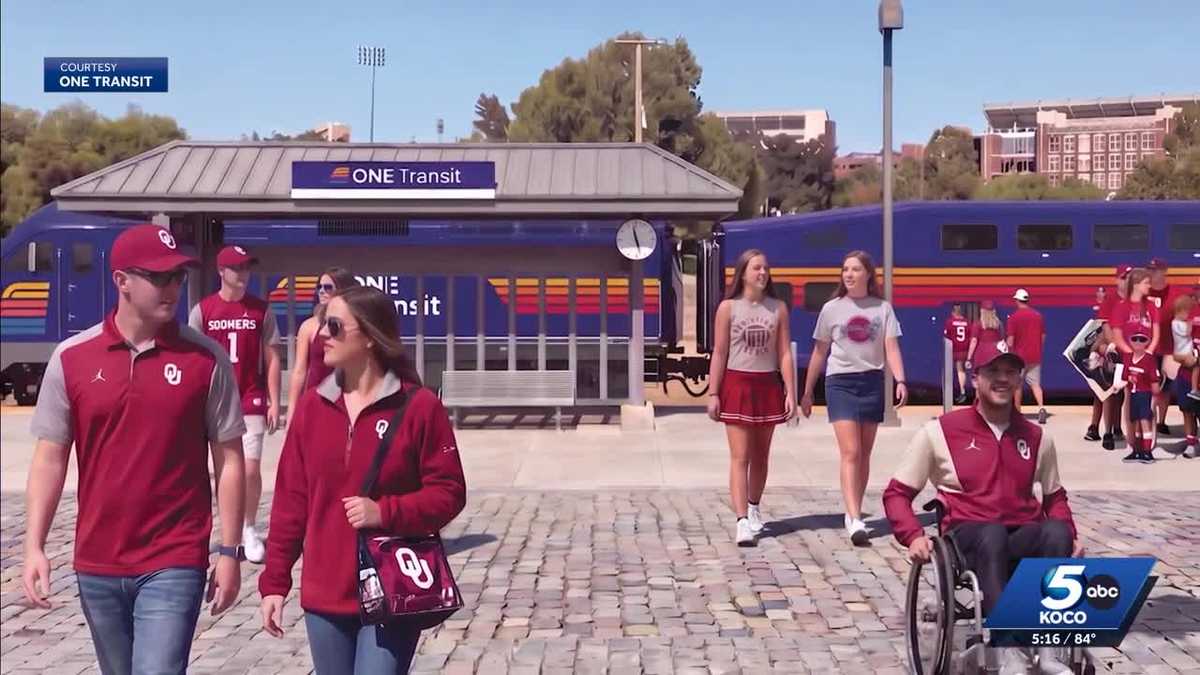
So jealous of states where its legal to add a half cent tax or whatever to fund transit lines. LA is going buck wild building transit all over the place and now freaking OKC will even be able to fund a whole new commuter rail line. Then theres us over here just twiddling our dicks hoping that one day a billion will fall from the sky and then maybe we can build 15 feet of tunnel for red blue… not to mention olx/green, nsrl, blx, rlx, grand junction, west station…. fml.
 
VIA is buying 45 new hybrid battery-diesel locomotives from Stadler, with up to 36 of them completing final assembly in Canada.
1785342346016.png
 
They haven't liked the performance of their Corridor fleet of Siemens Chargers in frigid or snowy weather, though I can't fathom it's been bad enough to make spending 5x as much for a 'Prius' diesel for their Long Distance routes anything but a no-good awful overall value. There's a reason why diesel hybrids have never caught on in train-land. The costs don't scale nearly as well as they do with hybrid cars and buses.
 
Under the memorandum of understanding announced on July 15, the Schuylkill River Passenger Rail Authority confirmed its intention for Amtrak to operate the proposed service.
Amtrak has committed to prepare ridership and revenue forecasts as well as operating and maintenance cost estimates during the second step of the federal corridor-development program. The operator began that work in April 2026 and will complete the tasks at no cost to SRPRA.
[...]
SRPRA’s phased plan for the corridor calls for four to six daily round trips between Reading and Philadelphia at launch, with approximately eight or more as ridership grows. Amtrak Thruway bus connections would complement the rail service.
The first phase would serve Reading, Pottstown and Phoenixville. A later phase envisions a one-seat ride through Philadelphia to New York, but SRPRA says that option depends on completion of Gateway Program projects around 2035 and delivery of new Amtrak rolling stock.
 
calls for four to six daily round trips between Reading and Philadelphia at launch, with approximately eight or more as ridership grows.
Can Reading really warrant that many round trips? I'm seeing a high population online (not including the catchment area), but with how car-centric we are, I just see 4-6 trips at launch being overkill. Maybe I'm drastically wrong though.
 
Can Reading really warrant that many round trips? I'm seeing a high population online (not including the catchment area), but with how car-centric we are, I just see 4-6 trips at launch being overkill. Maybe I'm drastically wrong though.
This is basically replacing the SEPTA service that was cut in 1981 when they ended all their diesel lines, so it's definitely a Philadelphia commuter market. The distance to Philly is comparable to the Worcester and Fitchburg lines. I'm just not sure why this is being floated under the Amtrak banner instead of SEPTA, because Pottstown-Reading is no one's idea of a New York commuter market. They're probably only doing this because SEPTA is such a dumpster fire of an agency that nobody wants to deal with them, so for general competence purposes the Schuylkill River Passenger Rail Authority is hitching its ride to Amtrak.
 
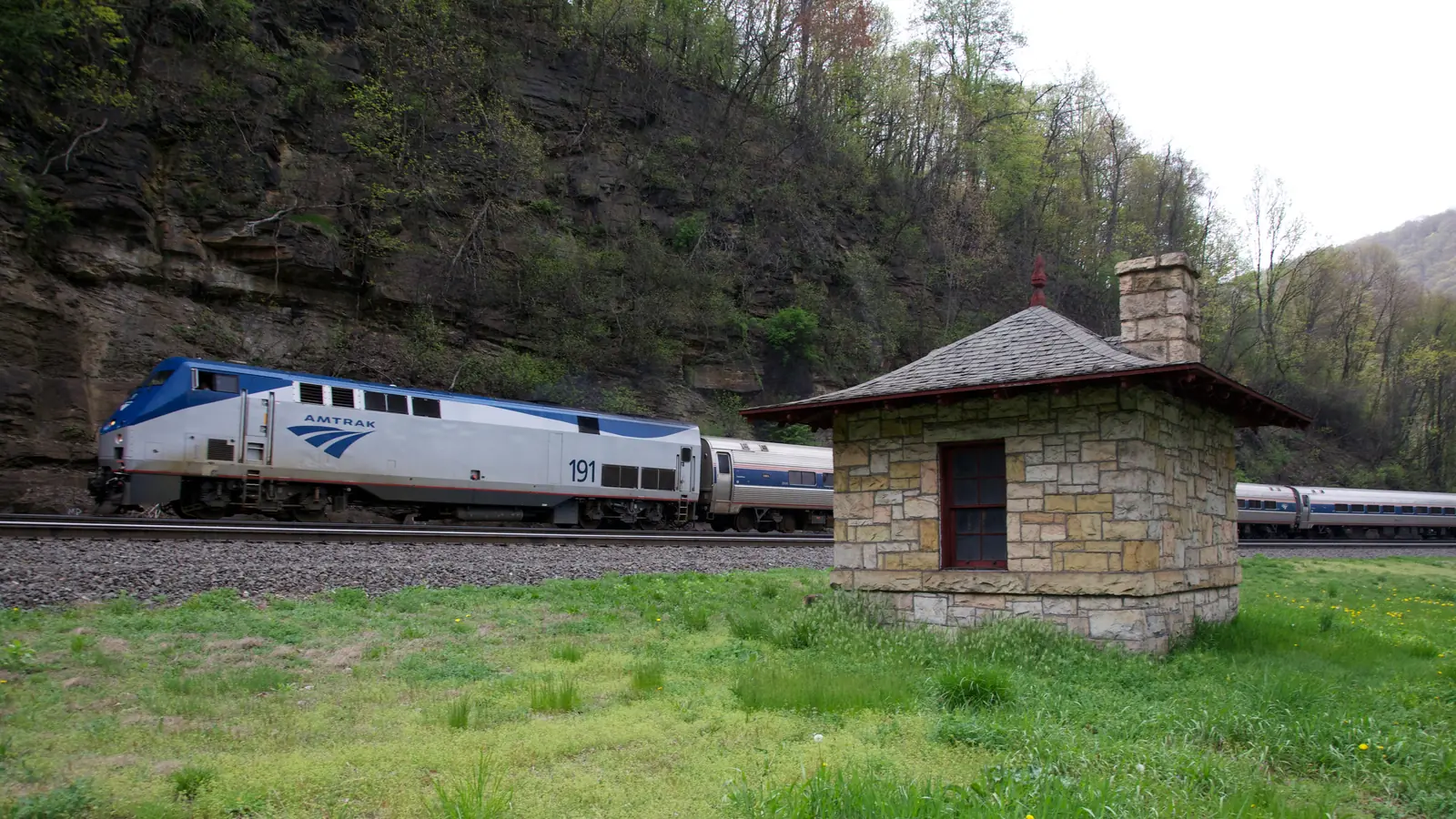
Outgoing Amtrak president Roger Harris confirmed the additional train during the company’s July 29 board meeting. He said it would begin later this year but did not announce an exact start date or timetable. An Amtrak station update published in April placed the frequency increase in fall 2026.
The Pennsylvanian currently operates one daily round trip between Pittsburgh and New York City via Harrisburg and Philadelphia. The eastbound train leaves Pittsburgh at 7:30 a.m. and reaches New York at about 5 p.m.
Along the route, Amtrak serves Greensburg, Latrobe, Johnstown and Altoona before continuing through central and eastern Pennsylvania. Pittsburgh passengers can also use the Floridian for travel toward Chicago or Washington, D.C. Adding a second round trip will give passengers another daily departure in each direction rather than relying on the route’s single existing schedule.
PennDOT and Norfolk Southern finalized their operating agreement in 2023 because the Pittsburgh–Harrisburg section uses Norfolk Southern infrastructure. The Keystone West program involves more than $200 million in infrastructure and safety investment, supported in part by federal funding.
The broader scope covers main-line, interlocking and connector-track work at locations including Harrisburg, Enola, Camp Hill, Altoona, Johnstown and Pittsburgh. The upgrades are intended to create more opportunities for freight and passenger trains to pass, helping the additional service operate on a busy mixed-traffic corridor. The work is now reported as nearly complete.
 
^^That's nice and all, but the fact that "doubling" means two trains per day shows that this is kind of an irrelevant travel mode on the corridor. Until we can get Pittsburgh-NYC under, idk, ~3 hours--which is to say an Appalachians base tunnel, which isn't happening probably ever--it can't matter all that much.
 
Most days in East Harlem, a massive pile driver on Second Avenue slams into the ground, sending out thunderous bangs as workers build the city’s newest subway. Businesses along the street are covered in scaffolding and fences, making it more difficult to attract customers. The construction worsens traffic in the area, which is one of Manhattan’s largest subway deserts. It’s all part of a new way of life in the neighborhood that began earlier this year, when the MTA started heavy construction on its project to extend the Q line from East 96th Street to East 125th Street.
Many East Harlem neighbors and business owners said the short-term pain is worth the addition of a subway up Second Avenue, which has been promised for nearly a century. The new line aims to shave time off commutes and bring more commerce to Manhattan’s poorest neighborhood.
The construction is expected to last at least another five years, a timeline that highlights how hard it is to build a new subway in the country’s most densely populated city, below a neighborhood with more than 130,000 residents.
“[There’s] lots of banging, the trucks moving back and forth, and people talking with a loud tone of voice,” said Peter Mercado, who lives a couple blocks away from an MTA construction site on East 120th Street where crews are using the pile driver to dig out a space to install a tunnel-boring machine. “But you know, it's a bad thing now, but once they’re done, it'll be beneficial for the community.”
 
Joining the ranks of Milwaukee and Tampa, Florida, the Oklahoma City Streetcar is now fare-free indefinitely after a successful six-month pilot program, which significantly increased ridership.
The Central Oklahoma Transportation and Parking Authority, which oversees the streetcar, voted to adopt the fare-free policy on Friday. The authority had originally planned to do so in June, a month before the pilot program was set to expire, but the board chose to delay until more ridership data was available.
From March to June 2026 alone, the streetcar averaged more than 30,000 riders each month. Compared to January through June 2025, streetcar ridership during the pilot program increased by an average of 71% month over month. For the 2026 fiscal year, which ended in July, nearly 274,000 people rode the streetcar, roughly a 12.6% increase over FY 2025.
 
^^That's nice and all, but the fact that "doubling" means two trains per day shows that this is kind of an irrelevant travel mode on the corridor. Until we can get Pittsburgh-NYC under, idk, ~3 hours--which is to say an Appalachians base tunnel, which isn't happening probably ever--it can't matter all that much.
Strong disagree. Let’s break down your claim that rail will not be relevant on this corridor unless “we can get Pittsburgh-NYC under, idk, ~3 hours”

Obviously, the Philly - NYC stretch of the Pennsylvanian is a very high ridership corridor, with trips provided by the Northeast Regional, Acela, Keystone Service, Palmetto, Carolinian, Silver Meteor, Crescent, etc. I'm going to assume you aren't calling rail an irrelevant travel mode on that corridor.

Even the Harrisburg - Philadelphia corridor is a high ridership corridor with trips provided by the Keystone Service. I'm also assuming you aren't calling it an irrelevant travel mode on that corridor.

So, the stretch that doesn't have high ridership, the only stretch over which the Pennsylvanian is a major share of passenger rail ridership, is Pittsburgh - Harrisburg. That's the only section you could defensibly call rail "irrelevant.”

At present, the Pittsburgh - Harrisburg portion of the route takes 5.5 hours of the 9hr 15min Pittsburgh - NYC trip. Claiming that we need to shave 6+ hours off of this 5.5 hour trip is obviously impossible. So, you are either claiming either:
  • that for passenger rail to matter, trains need to be able to travel backwards through time
  • that rail is irrelevant between Harrisburg - Philly - NYC, despite the high ridership spread across multiple routes, using for whatever reason a route that only supplies a very small minority of the passenger rail trips over that corridor as evidence.
Bad take. That's obvious.

 
Last edited:
Strong disagree. Let’s break down your claim that rail will not be relevant on this corridor unless “we can get Pittsburgh-NYC under, idk, ~3 hours”

Obviously, the Philly - NYC stretch of the Pennsylvanian is a very high ridership corridor, with trips provided by the Northeast Regional, Acela, Keystone Service, Palmetto, Carolinian, Silver Meteor, Crescent, etc. I'm going to assume you aren't calling rail an irrelevant travel mode on that corridor.

Even the Harrisburg - Philadelphia corridor is a high ridership corridor with trips provided by the Keystone Service. I'm also assuming you aren't calling it an irrelevant travel mode on that corridor.

So, the stretch that doesn't have high ridership, the only stretch over which the Pennsylvanian is a major share of passenger rail ridership, is Pittsburgh - Harrisburg. That's the only section you could defensibly call rail "irrelevant.”

At present, the Pittsburgh - Harrisburg portion of the route takes 5.5 hours of the 9hr 15min Pittsburgh - NYC trip. Claiming that we need to shave 6+ hours off of this 5.5 hour trip is obviously impossible. So, you are either claiming either:
  • that for passenger rail to matter, trains need to be able to travel backwards through time
  • that rail is irrelevant between Harrisburg - Philly - NYC, despite the high ridership spread across multiple routes, using for whatever reason a route that only supplies a very small minority of the passenger rail trips over that corridor as evidence.
Bad take. That's obvious.
It's really pretty simple: most people will pick the best combination of price and time they can get.

A lot of NYCers don't have cars, so it's obviously a more expensive thing to get one to make the trip to Harrisburg. From what I can tell, car ownership is a lot higher in Philadelphia, so that's not a factor. In either case, the time from NYC/Philly to Harrisburg is close enough to the same car vs. Amtrak that that's probably the determining factor for which mode is chosen.

But Pittsburgh to either place? Rail is one and a half to two hours slower than driving. Car ownership is the norm there. Even from a practicality perspective, I can see leaving your car in Pittsburgh for the train to NYC because where are you going to park when you get to the city, but then even after this service increase, you have only two trains per day; what are you going to do if you miss your train? From what I know, by contrast parking in Philadelphia is a challenge, but not to the same level as New York.

Of course, this all ignores any flights/buses to/from Pittsburgh. The numbers tell the story, ultimately: the Keystone service to Harrisburg is on track to hit its pre-covid high of 1.5 million. The Pennsylvanian? Barely a quarter million in its best years. For most people it's just too slow to go from Pittsburgh-Harrisburg (and by extension Philadelphia and NYC) by train.

The argument I'm making about the overall time NYC-Pittsburgh obviously entails that NYC-Philly-Harrisburg ought to be faster, too; there's every reason that ALL of the NYC-Philly stretch should be ~300kph, and most of Philly-Harrisburg should be >200kph. Why you're being silly and not making these assumptions, too, I don't know. That my comment about "irrelevance" of the route applied only to ridership to Pittsburgh wasn't clear is my bad.
 
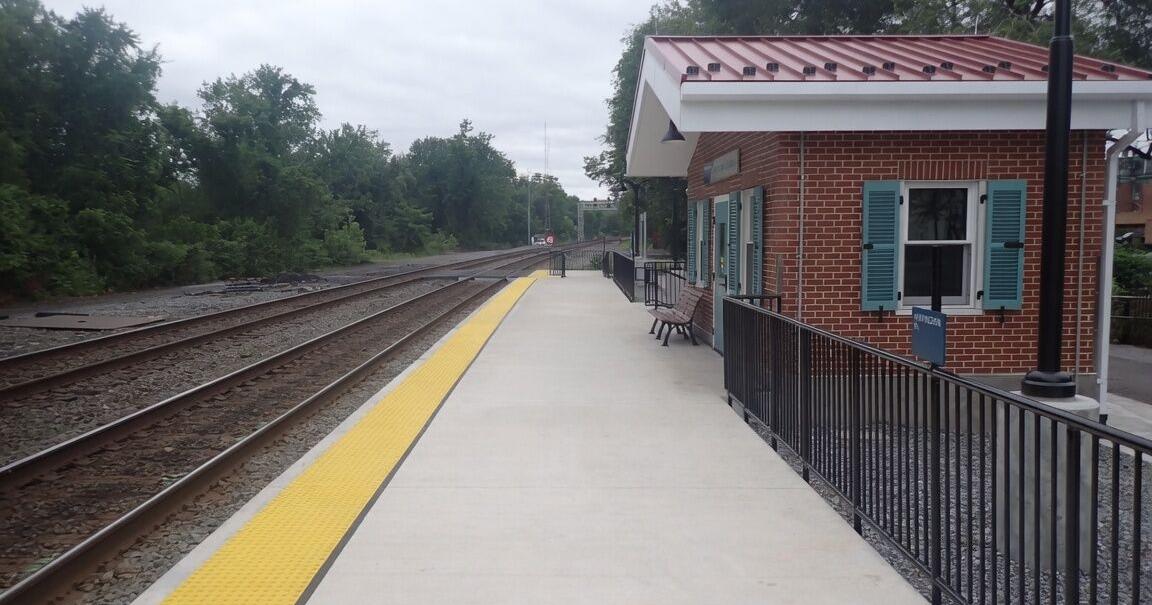
Passengers using Huntingdon’s Amtrak station now have improved accessibility, lighting and passenger amenities following the completion of a $3.5 million improvement project.
The project includes a new Americans with Disabilities Act (ADA)-compliant boarding platform, a new passenger shelter, upgraded lighting and electrical systems, improved pedestrian crossings and new ADA-compliant signage.
Additional work included drainage and stormwater management improvements, along with other site, utility and customer amenity upgrades.
Beth K. Toll, senior public relations manager for Amtrak, said the Huntingdon station was included in Amtrak’s nationwide ADA Stations Program, which is working to bring stations where Amtrak has ADA responsibility into compliance.
Before the project, passengers faced several accessibility and customer experience challenges, Toll said. The station had deteriorated platform and pedestrian walking surfaces, a platform that did not meet current ADA standards, inadequate lighting and noncompliant signage.
“The project addressed these issues to create a safer, more accessible and more user-friendly station environment for all travelers,” Toll said. One of the most significant changes is the new boarding platform, which is 8 inches above the top of the rail.
 
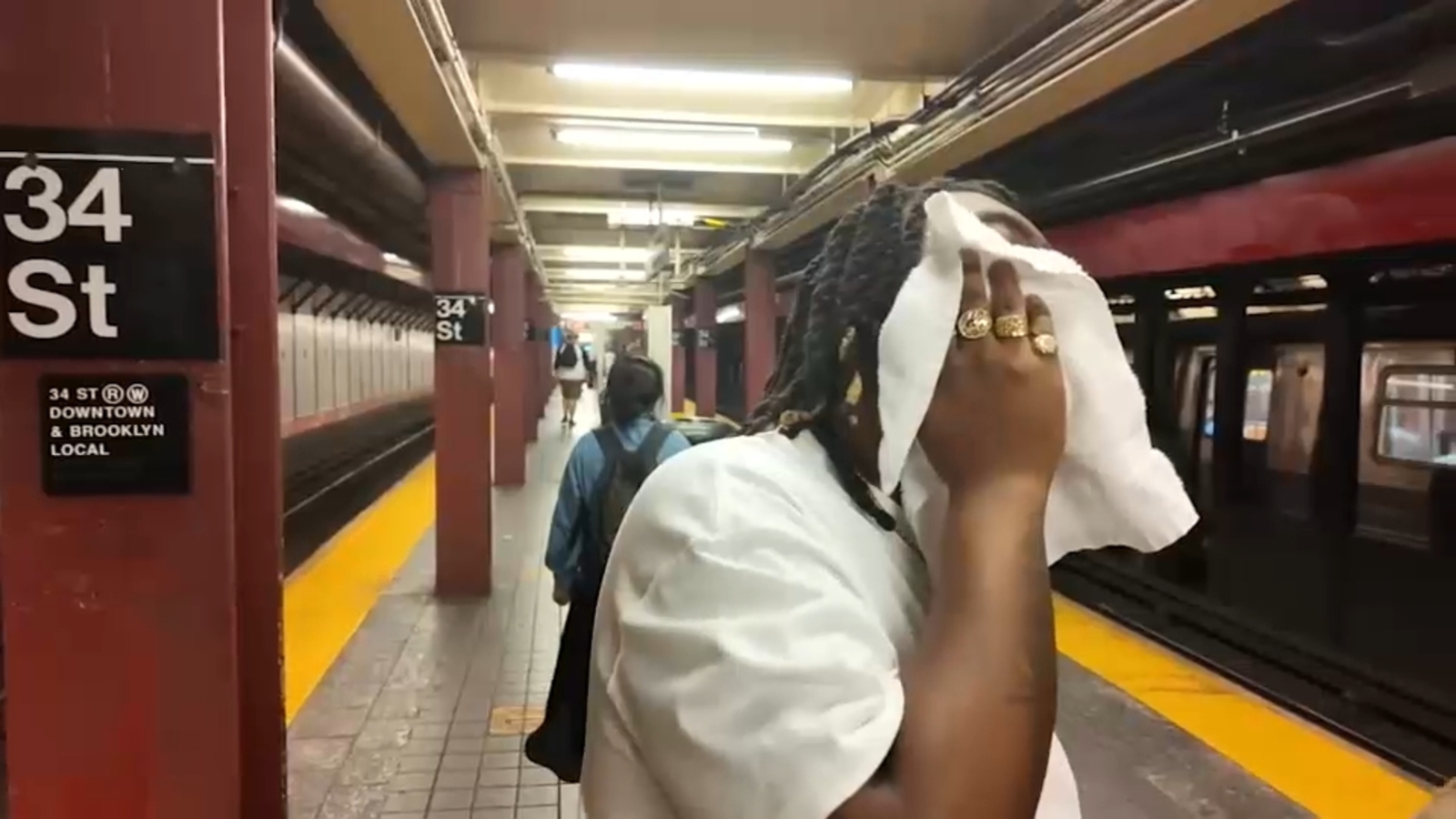
With platform temperatures reaching 96 degrees, one of the hottest subway stations in New York City could soon become the testing ground for a first-of-its-kind effort to cool riders underground while recycling heat above ground.
On Monday, Mayor Zohran Mamdani, Gov. Kathy Hochul and the Metropolitan Transportation Authority announced a partnership to study a new technology that could cool subway platforms and reuse excess heat to warm nearby city buildings during the winter.
The proposed thermal energy network would be tested at the Brooklyn Bridge-City Hall 4/5/6 and Chambers Street J/Z station complex. Officials said it would be the first project of its kind in a U.S. transit system.
The study comes as the MTA prepares a major overhaul of the aging Chambers Street station. Officials said the location offers a chance to explore ways to address extreme heat, a growing challenge across the subway system.
[...]
The study is expected to cost about $800,000 and will be fully paid for using congestion pricing funds.
 

Back
Top