
You are using an out of date browser. It may not display this or other websites correctly.
You should upgrade or use an alternative browser.
You should upgrade or use an alternative browser.
Other People's Rail: Amtrak, commuter rail, rapid transit news & views outside New England
- Thread starter F-Line to Dudley
- Start date

themissinglink
Senior Member
- Joined
- Jan 13, 2018
- Messages
- 2,180
- Reaction score
- 6,189

Amtrak’s Keystone line, connecting NYC, Philly, and Harrisburg, may get axed under SEPTA cuts
U.S. Rep. Brendan Boyle said Amtrak's Keystone Service line is at risk because the railroad could lose $71.1 million in annual payments from SEPTA.
 www.inquirer.com
Boyle said Amtrak president Roger Harris told him last week the railroad could lose $71.1 million in annual payments from SEPTA because of a delay in state operating funds for the transit agency.
If that happens, the Keystone Service line will “cease to exist,” Boyle said.
themissinglink
Senior Member
- Joined
- Jan 13, 2018
- Messages
- 2,180
- Reaction score
- 6,189

Boring in El Barrio: The 700-ton machine that’ll dig NYC’s Second Avenue subway extension
The MTA’s new tunnel boring machine is about as exciting as it gets.
 gothamist.com
The transit agency’s board on Monday inked a nearly $2 billion contract for a private company to extend the Q line by three stations into East Harlem as part of the second phase of the Second Avenue subway.
The crown jewel of this contract: the delivery of an approximately 700-ton tunnel boring machine from Europe at the start of 2027. The behemoth is a marvel of technology that will simultaneously dig and build the tunnel between 120th and 125th streets along Second Avenue before turning west toward Lexington Avenue.
[...]
When assembled underground, the machine will measure between 250 and 300 feet. The circular cutter will excavate a hole 22 feet in diameter. It can dig about 35 to 40 feet per day, while installing the tunnel lining at the same time by injecting a mix of clay, cement and water into the tunnel face during excavation. The material, called “pressurized slurry,” stabilizes the loose earth below East Harlem to prevent the hole from caving in.
The equipment will be built by Herrenknecht in Germany, according to the MTA. Workers on the Gateway Project are preparing to use a different type of boring machine from Herrenknecht to dig new tubes beneath the Hudson River next year.
Just getting the machine underground at 120th Street and Second Avenue is a huge undertaking that the MTA anticipates will take at least three months. Workers will then assemble it belowground.

Errr... out of curiosity, is there precedent anywhere globally for this? There's plenty of precedent for abandoning one in place because its job is done, but has one ever been reactivated? While I can see how entombing it could preserve it, I don't see how a mechanical device as complex as a TBM doesn't deteriorate over time.Interesting that they're going to leave part of the TBM down there in anticipation of a future extension. I suppose that also means they don't have to dig a big pit to extract it.

TheRatmeister
Senior Member
- Joined
- Sep 23, 2023
- Messages
- 1,618
- Reaction score
- 3,323
I can find some companies that claim to do TBM reuse that seems to involve digging it up again, presumably leaving it down there isn't different. Even if it needs significant refurbishments not needing to dig the shaft and having the big parts already down there probably makes it worth it.Errr... out of curiosity, is there precedent anywhere globally for this? There's plenty of precedent for abandoning one in place because its job is done, but has one ever been reactivated?

HenryAlan
Senior Member
- Joined
- Dec 15, 2009
- Messages
- 4,521
- Reaction score
- 5,400
I haven't either, and honestly, it's probably not necessary to continue along 2nd Ave. There are other options for expanding rail transit in the Bronx that might be more effective. That said, if they could turn the machine under 125th, and tunnel to Broadway, you'd get a cross town line in a location that could totally use it, with transfers to the 1, 2, 3, 4, 5, 6, A, B, C, D, and all MetroNorth lines with just 1.5 miles of additional tunnel.Has there ever been talk of building the SAS past 125th? I’ve never heard of that.
F-Line to Dudley
Superstar
- Joined
- Nov 2, 2010
- Messages
- 10,092
- Reaction score
- 12,805
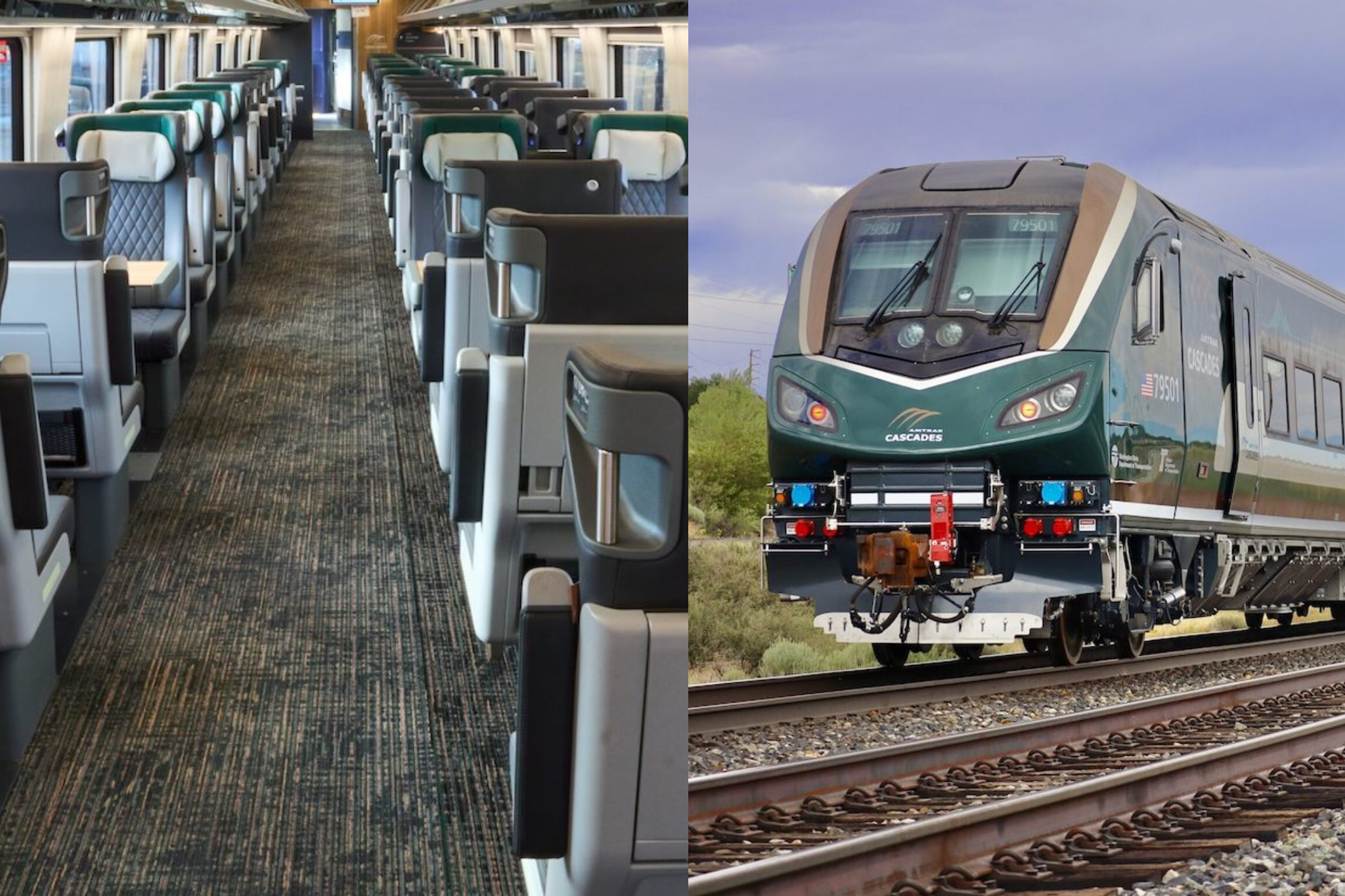
Inside the new Amtrak Cascades trains now being tested ahead of launch | Urbanized
The first new generation Amtrak Cascades train has left the factory, and is now being tested ahead of its 2026 service launch.
 dailyhive.com
Lots of pics, interior and exterior, of the first complete Amtrak Airo testing set for the Cascades route. Pretty swank.

stick n move
Superstar
- Joined
- Oct 14, 2009
- Messages
- 13,823
- Reaction score
- 25,995
Beautiful trainsets. These look as nice inside and out as any commuter trains anywhere imo.
themissinglink
Senior Member
- Joined
- Jan 13, 2018
- Messages
- 2,180
- Reaction score
- 6,189
Yes. There's been talk of building a crosstown subway underneath 125th St.Has there ever been talk of building the SAS past 125th? I’ve never heard of that.
But if you mean a northern extension into the Bronx, I don't believe there's been any official talk of such an extension.
Last edited:
themissinglink
Senior Member
- Joined
- Jan 13, 2018
- Messages
- 2,180
- Reaction score
- 6,189
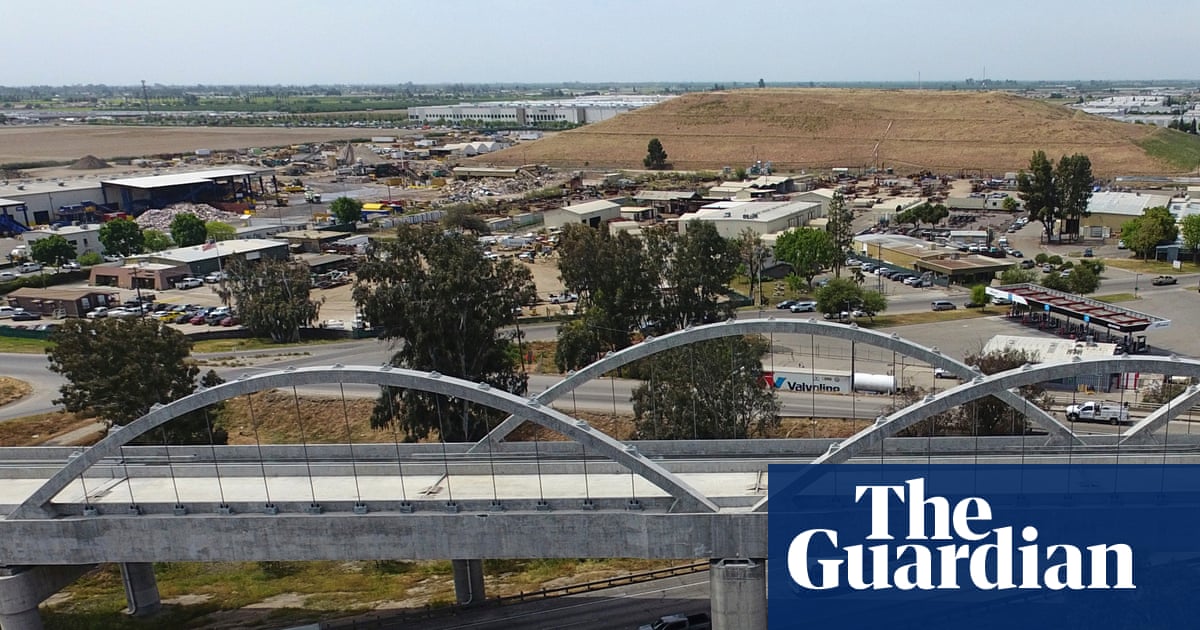
Trump administration pulls another $175m from California’s high-speed rail
Move follows cancellation earlier this summer of $4bn in federal grants for state’s ambitious but long-overdue plan
 www.theguardian.com
The US transportation department said on Tuesday it was withdrawing funding the $175m for grade separation, over-crossing and design work and to build a high-speed rail station in Madera. The move follows the cancellation earlier this summer of $4bn in federal grants for the state’s ambitious but long-overdue plans.
I almost have sympathy with pulling money from CAHSR. The project has been so badly managed, so below-par-planned. I still have some faith that, if they ever actually run trains from SF to LA under the ~3 hours they proposed--so many years ago--it'd work out, eventually. But it's been under construction for nine years already, and all that's happened is that the project's scope has gone down and down, the costs have gone up and up, and we're now looking at an initial opening after a grand total of 16-18 years for barely a third of the first phase of the project.
You can only build infrastructure so inefficiently before someone says, "hey, hold on a second". It's a shame it's Trump, and of course it's for all the wrong reasons, but this whole thing needs a serious reexamination. Of course, if that was ever likely to happen, it would've already, and to a probable and quite large extent, the waste of time and money is the point; those consultants and shoddy engineering firms have to make their money somehow. But this is a national problem, which I feel safe in saying that I (36 yrs old) am unlikely to see a substantial resolution of. The roots of this particular rot are deep.
I'd only feel good about this if I thought that the money Trump's pulling would go to a good cause, but it won't--almost couldn't possibly--so I'll just toss this up on the pile of rail planning/construction disappointments without any silver lining, for the time being, anyway.
You can only build infrastructure so inefficiently before someone says, "hey, hold on a second". It's a shame it's Trump, and of course it's for all the wrong reasons, but this whole thing needs a serious reexamination. Of course, if that was ever likely to happen, it would've already, and to a probable and quite large extent, the waste of time and money is the point; those consultants and shoddy engineering firms have to make their money somehow. But this is a national problem, which I feel safe in saying that I (36 yrs old) am unlikely to see a substantial resolution of. The roots of this particular rot are deep.
I'd only feel good about this if I thought that the money Trump's pulling would go to a good cause, but it won't--almost couldn't possibly--so I'll just toss this up on the pile of rail planning/construction disappointments without any silver lining, for the time being, anyway.
Brightline and FEC evidently aren’t getting along at the moment
stick n move
Superstar
- Joined
- Oct 14, 2009
- Messages
- 13,823
- Reaction score
- 25,995
JeffDowntown
Senior Member
- Joined
- May 28, 2007
- Messages
- 5,094
- Reaction score
- 4,344
Reporting yesterday on Japan's new 310 MPH (yes MPH) Maglev train in trial.
Tokyo Shinagawa-Nagoya section of the line is scheduled to go into commercial service in 2027. Extension to Osaka is planned.
Last edited:
TheRatmeister
Senior Member
- Joined
- Sep 23, 2023
- Messages
- 1,618
- Reaction score
- 3,323
Hasn't it been delayed an indeterminate amount?Tokyo Shinagawa-Nagoya section of the line is scheduled to go into commercial service in 2027.
JeffDowntown
Senior Member
- Joined
- May 28, 2007
- Messages
- 5,094
- Reaction score
- 4,344
Yes, but seems more or less back on track. It is really out on the edge technology -- although the delays seem more political (NIMBYs) about the tunneling and station locations, and some geotechnical bad luck (unstable ground where tunneling was needed). 90% of the line from Tokyo to Nagoya is in tunnels. Rather the opposite of the Green Line, the minimum curve radius is 8,000 meters.Hasn't it been delayed an indeterminate amount?
themissinglink
Senior Member
- Joined
- Jan 13, 2018
- Messages
- 2,180
- Reaction score
- 6,189
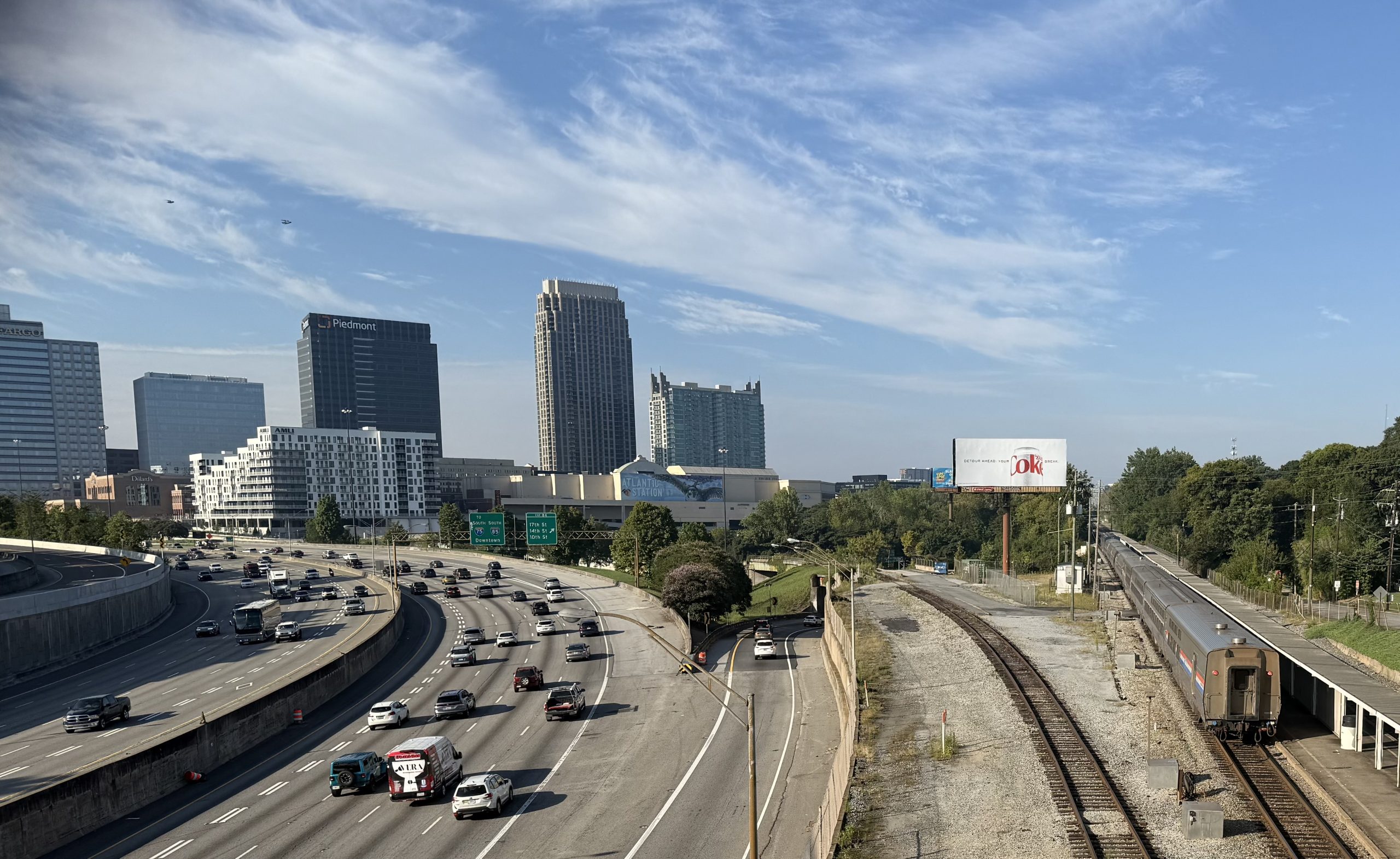
Atlanta leaders exploring best site for new Amtrak station - SaportaReport
Read Atlanta leaders exploring best site for new Amtrak station by Maria Saporta for SaportaReport here.
 saportareport.com
The Atlanta Regional Commission (ARC) and the City of Atlanta have joined forces to conduct an in-depth $625,000 Passenger Rail Station Alternatives Study to determine where a new Amtrak station should be built in Atlanta. ARC, through federal funds, allocated $500,000 towards the study, while the City of Atlanta is contributing $125,000.
[...]
Currently, the region’s only Amtrak station is Brookwood Station — also called Peachtree Station — a facility that is woefully inadequate to serve a major metro area like Atlanta.
Designed by renowned Atlanta architect Neel Reid, Brookwood Station was built in 1918 as a suburban stop at a time when Atlanta had two magnificent railroad palaces, Union Station and Terminal Station, located within blocks of each other in downtown Atlanta. Both stations were shamefully torn down in 1971 and 1972, respectively.