Other People's Rail: Amtrak, commuter rail, rapid transit news & views outside New England

Passenger service to the new stations is scheduled to begin at 12:30 p.m. Friday.
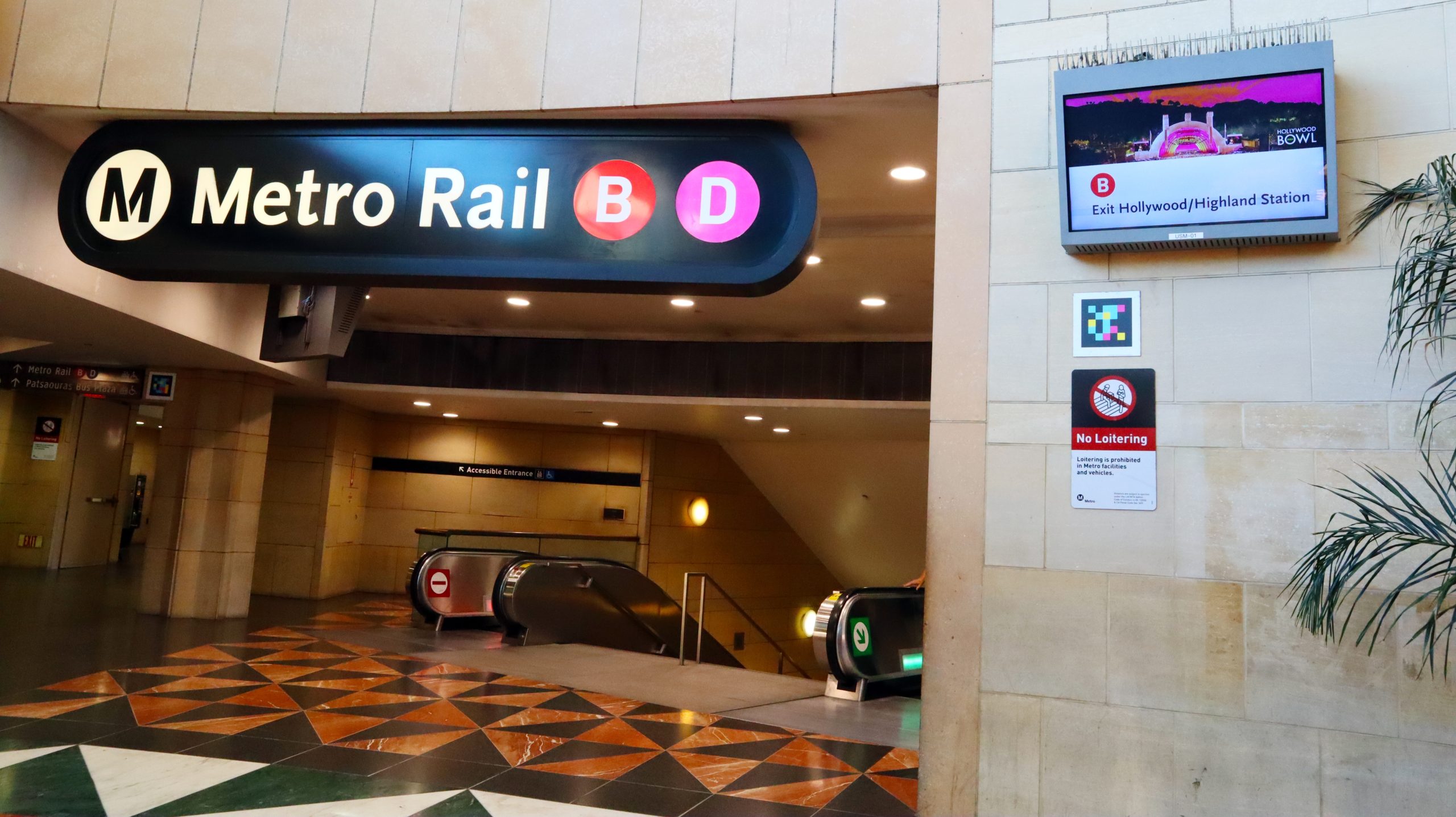
The first phase of the project will bring stops at Wilshire/La Brea, Wilshire/Fairfax and Wilshire/La Cienega, providing a direct rail link from downtown Los Angeles to the edge of Beverly Hills.
The opening of the Wilshire/La Cienega station will give Beverly Hills its first rail passenger service since Sept. 26, 1954, when the Pacific Electric Railway closed its Hollywood Line streetcar line.
Transit officials said the expansion is expected to significantly improve travel times along Wilshire Boulevard, one of the region’s busiest corridors, with trips from Union Station to the new western terminus taking about 20 minutes without transfers.
The extension runs nearly four miles through neighborhoods including Hancock Park, the Fairfax District and Carthay Circle, connecting riders to major cultural and commercial destinations such as Museum Row and the La Brea Tar Pits.
Metro officials said each station will feature public art installations and full accessibility, along with enhanced security measures including surveillance systems and transit personnel.
 
How can LA build a new 4 mile subway with stations, when we can't even build the short BLX Red-Blue connector?
 
How can LA build a new 4 mile subway with stations, when we can't even build the short BLX Red-Blue connector?
California has an almost incomprehensibly thick web of local, county, and state-level authorities that all have the power through the state's infamously permissive ballot measure system to raise their own tax revenues for specific purposes. Such that any geographical area that really really wants something infrastructural can self-fund it without it getting blocked by far-flung other parts of the region or state. Los Angeles County passed not one but two tax measures to fund the D Line extension. Here everything is run top-down through the Legislature, with even the Governor not having much of a bully pulpit to push things along. And there isn't a whole lot of taxation mechanisms that don't hit the whole state equally, so it's incredibly hard to micro-target spending to one purpose (and thus, spending gets diluted because every special interest in every region of the state needs their piece). If suburbs far away from a core-region transit project either don't want the spending associated with said transit project...or worse, want to outright spite Greater Boston for the self-satisfying lulz...nothing ever gets done. And it's way easier here to NIMBY stuff because you don't necessarily have to answer to your immediate neighbors who support the project...you can just stealth-nuke it by having your local Legislator concern-troll behind the scenes.

I'm not sure we'd really want California's system of governance here. It's extremely chaotic, and in worse times it can really hamstring efficiency to have so many sub-agencies and tax districts to deal with on a large, overarching problem. Plus the short-attention span theater with annual ballot measures constantly changing funding mechanisms for the better and the worse like a weathervane. California is definitely a governance basket case. But their system is letting them get things like major infrastructure builds done when our ossified and monolithic top-down Legislature can't muster up the give-a-crap to think big on nearly anything. I guess the lesson is that extremes in governance structure correlate with worse overall outcomes.
 
Section 3 ends the extension of the D Line with UCLA and VA Hospital stations. The D Line is scheduled to be complete in time for the 2028 Olympics.

According to the L.A. metro.net website, much of the subway lines constructed was funded by sales tax measures.

“A two-thirds majority of LA County voters approved the Measure R half-cent sales tax in 2008 to finance new transportation projects and programs, and accelerate those already in the pipeline.”

“The Measure R Expenditure Plan devotes its funds to seven transportation categories: 35% to new rail and bus rapid transit projects; 3% to Metrolink projects; 2% to Metro Rail system improvement projects; 20% to carpool lanes, highways and other highway related improvements; 5% to rail operations; 20% to bus operations; and 15% for Local Return programs.”

“LA County voters approved Measure M with 71.15% support in 2016. The no sunset half-cent sales tax measure funds projects to ease traffic, repair local streets and sidewalks, expand public transportation, earthquake retrofit bridges and subsidize transit fares for students, seniors and persons with disabilities. Measure M partially funds many Metro projects”

I last visited Los Angeles in November 2024 and used the subway system extensively. I was impressed.
 
55260178935_5b27ffcf3e_z.jpg


55259779756_f26468152c_z.jpg


55259920403_fd194e1c52_z.jpg


55259915153_cf08cd6599_z.jpg


55258877212_0c9dec1a68_z.jpg


55260160975_6ef121149b_z.jpg


55259997354_c9838ae4f0_z.jpg


55259902468_2018dbb7a5_z.jpg


33877516401_f5abaff192_z.jpg


27194673076_43323e43b5_z.jpg


55260198925_98c30d1d80_z.jpg


55260202920_c16b43935f_z.jpg


55260202955_b38d9d05f1_z.jpg


55260045574_99b51b9d26_z.jpg


55259810656_6fd127f9c2_z.jpg


55258914382_0ef58db33d_z.jpg


55258917467_441163418f_z.jpg


55260211905_166ec8dffe_z.jpg


55260191800_756f5365e4_z.jpg


55259819231_2876012c92_z.jpg
 
Last edited:
How can LA build a new 4 mile subway with stations, when we can't even build the short BLX Red-Blue connector?
To add to what @F-Line to Dudley and @EdMc have said, another distinction is that the MBTA is a state agency, whereas the LAMTA is locally controlled. Even if Boston had the local taxing authority that Los Angeles has, it would not be able to use it to fund MBTA rail expansion, or at least not as easily use it for that purpose. I am very jealous of what L.A. has been able to do over the past 30 years.
 
Yea its honestly pretty awesome they have such a simple funding mechanism for transit expansion and theyve done a massive amount of expansion in such a short amount of time. Very long overdue that LA has an extensive metro system.
 
^^Worth remembering, though, that their ridership numbers remain ~70% of pre-covid. Meaning, their ridership per mile is dropping ever more as their expanding their network. Crappy land use continues to be a major impediment, as it seems does the non-fair-check nature of how their doing things. It's become a shelter for people who really need somewhere permanent to stay (no doubt in part because housing is stupid there; thanks, prop 13), so "regular" people are staying away.

Soooo much of what's wrong with our transportation systems just feels metaphorical for American society, generally.
 
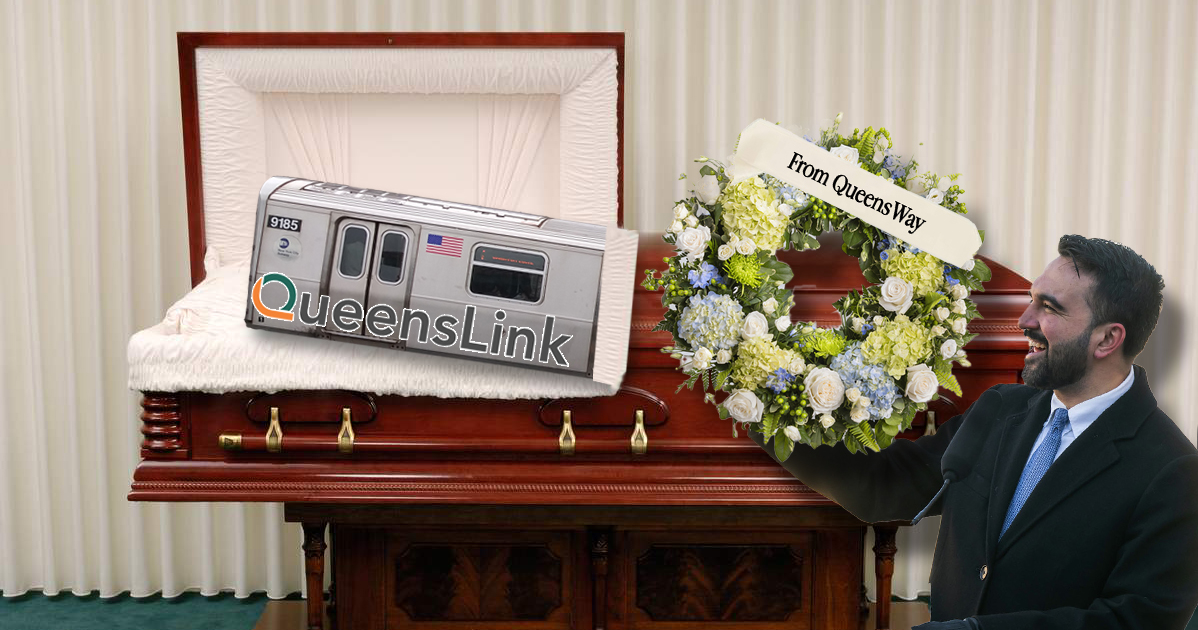
Mayor Mamdani is going full speed ahead with his predecessor’s plans to build the QueensWay park over abandoned train tracks in Central Queens, after his administration decisively told advocates for bringing transit to the right of way that he won’t change course from his budget proposal to fund the park’s construction.
Advocates for the proposed passenger transit reactivation known as QueensLink got the hard “no” after making their case last Friday to Mikelle Adgate, chief of staff to Deputy Mayor of Operations Julia Kerson.
“She said, ‘After reviewing your initial business case study and the statistics that you provided, we are moving forward with Queensway Phase One,'” said QueensLink spokesperson Noelle Hunter, who added that the administration insists that building QueensWay won’t block transit service in the future.
The transit organizers had hoped to convince City Hall to “pause” work on the green space, which Mamdani funded in his executive budget to the tune of $43 million. They argue that once a piece of the park goes in, it will be impossible to bring train service to the area.
[...]
Almost 75,000 people per day would use the QueensLink, replacing almost 15,000 daily car trips in the area, the latest study QueensLink supporters estimated. In making their case to City Hall, QueensLink organizers specifically cited cases of the Purple Line in Maryland and the Beltline in Georgia, where rails-to-trails projects either drove up costs or prevented proposals to bring train service back to unused tracks.
That history and the latest study in support of the QueensLink wasn’t enough to sway the mayoral representative, Hunter said. Mayor Mamdani supported QueensLink as a member of the Assembly and as a candidate for mayor; his reversal this year came as a surprise to the proposal’s proponents.
 
Can't Cut N Cover? Guess that would drive up the cost even more.

$40M just for the Rail Trail is something.

Gonna have the same issue here if they try to do the Minuteman without burying it.
 
Honestly, we just can't compare to really anywhere in East Asia, at all. They build new transit lines, stations, bridges, transmission infrastructure, housing developments for hundreds or thousands of people, as a matter of course. I swear to god, if people in California saw the scale of housing development that occurs in e.g., South Korea, they'd just start convulsing and never stop.
 
Honestly, we just can't compare to really anywhere in East Asia, at all. They build new transit lines, stations, bridges, transmission infrastructure, housing developments for hundreds or thousands of people, as a matter of course. I swear to god, if people in California saw the scale of housing development that occurs in e.g., South Korea, they'd just start convulsing and never stop.
There can be comparisons especially in South Korea and Japan, but, yes, on density (and thus ridership) it's all a different ball game. Both of those countries, though, at least have pretty stringent building code, regulations, and worker protections. What is put up quickly in China is completely different and not comparable at all - there is little to no code or worker protections, and shoddy sub-par construction of buildings and infrastructure is pretty normal.
 
I've seen pictures and news stories about a few giant Chinese rail stations like this one, and some just seem... odd. This one has been open since 2020, but I can't find any pictures of people actually using it. I can't find passenger count numbers. It's such a massive station, but it seems like they only planned to have one subway line go through it. So it's large enough to handle a million people a day, but... one subway line? That isn't even built yet?

Obviously China is building a mind-bogglingly incredible HSR network. So maybe I'm missing something, or I'm reading poorly translated news sources, or something. But this station (and some others like it) look kind of useless. Or at least, they were made giant for the sake of bragging about making a giant building, and not for much practical transit needs.
 

Back
Top