Regional New England Rail (Amtrak & State DOT & NEC)


A full draft of Vermont’s State Rail Plan update was posted online within the last month. Recommended Initiatives are listed beginning on p.56.

Restoring passenger rail service to Montreal is described as “the top priority of the state,” but the article linked above notes the lack of progress on building the customs preclearance facility in Montreal’s Gare Centrale. One of the state’s more prominent rail advocates is quoted in the article suggesting that if the state doesn’t see a breakthrough on Gare Centrale in another year or so, they should think about building the facility near the border in Lacolle (Cantic), Quebec.

That idea doesn’t really make sense to me. Would it even be preclearance anymore if it’s not happening at the beginning/end of the route? The border check already happens in Lacolle, so what kind of time savings would be realized by maintaining the border check in its current location?

As for extending the Valley Flyer northwards (as @themisssinglink was asking about a few posts up), the article points to lack of available cars as the first reason an extension to White River Junction probably has to wait, but they seem more optimistic that Brattleboro is within reach in the near term even with Amtrak’s currently reduced fleet.
 

A full draft of Vermont’s State Rail Plan update was posted online within the last month. Recommended Initiatives are listed beginning on p.56.

Restoring passenger rail service to Montreal is described as “the top priority of the state,” but the article linked above notes the lack of progress on building the customs preclearance facility in Montreal’s Gare Centrale. One of the state’s more prominent rail advocates is quoted in the article suggesting that if the state doesn’t see a breakthrough on Gare Centrale in another year or so, they should think about building the facility near the border in Lacolle (Cantic), Quebec.

That idea doesn’t really make sense to me. Would it even be preclearance anymore if it’s not happening at the beginning/end of the route? The border check already happens in Lacolle, so what kind of time savings would be realized by maintaining the border check in its current location?

As for extending the Valley Flyer northwards (as @themisssinglink was asking about a few posts up), the article points to lack of available cars as the first reason an extension to White River Junction probably has to wait, but they seem more optimistic that Brattleboro is within reach in the near term even with Amtrak’s currently reduced fleet.
It wouldn't be pre-clearance, it would be the a 'normal' one-hour border stop like existed on the last incarnation of the Montrealer. It would be an overt concession to the fact that the Canadians haven't held up their end of the preclearance treaty signed in 2017 and that the U.S. Federal government (for all its tariff bluster of late) can't be arsed to get its hands dirty trying to hold the Canadians accountable for not living up to their promises. As a state-level actor, Vermont almost has to state that as a Plan B because it's the only thing they have any measure of control over. They can lobby the feds for a funding stash to open a local Customs stop at their border; they already host a huge regional Customs office in St. Albans, and Customs funding is plentiful in this current political climate. They can't as easily lobby the feds to get tough with Canada over being delinquent on the 2017 treaty.

Frankly, that's only the start of their problems with the Montrealer. Canada won't intervene either on Canadian National's negligent maintenance of the Rouses Point Subdivision's Class 2/30 MPH tracks, which is why the Adirondack has been suspended the last 2 summers (though so far not this one) for heat restrictions. The Adirondack runs out of crew hours if they have to crawl 10 MPH between the border and the Montreal suburbs, and the Montrealer would likely be in the same boat. PM Carney hasn't been in office long enough to leave a mark, but Justin Trudeau...despite talking a good game about public transit through much of his tenure...was basically an unrepentent shithead when it came to withholding funding for transit works. A relatively minor sum of grant money sent CN's way could fish that shared Adirondack/Montrealer trackage out of the gutter and a Class 3/59 MPH uprate would lop a no-foolin' hour off the schedules (to go along with the hour saved at the border by preclearance), but inept Transport Canada refuses to do it. I definitely don't see anything happening for the rest of the Trump Administration given how frosty international relations are right now, and the Carney Administration kind of has to show it's a different animal than its predecessor and tend to the optics of the obstruction of that preclearance treaty and letting the Rouses Point Sub. tracks rot on the vine. Vermont can pretty much only do what it's doing...keep the NECR mainline tracks in tip-top condition to the border with incremental freight grants, and try like it is here to goose the top line of the whole corridor with things like the Valley Flyer Brattleboro/WRJ extension so Montreal looks even more duh-obvious than it already does.
 
It wouldn't be pre-clearance, it would be the a 'normal' one-hour border stop like existed on the last incarnation of the Montrealer. It would be an overt concession to the fact that the Canadians haven't held up their end of the preclearance treaty signed in 2017 and that the U.S. Federal government (for all its tariff bluster of late) can't be arsed to get its hands dirty trying to hold the Canadians accountable for not living up to their promises. As a state-level actor, Vermont almost has to state that as a Plan B because it's the only thing they have any measure of control over. They can lobby the feds for a funding stash to open a local Customs stop at their border; they already host a huge regional Customs office in St. Albans, and Customs funding is plentiful in this current political climate. They can't as easily lobby the feds to get tough with Canada over being delinquent on the 2017 treaty.
To be fair to the Canadians, funding the construction of a US preclearance facility in Gare Centrale would primarily be a US responsibility, even if CBSA would also have to sign on to operate their side - after all, it's a US outpost. To date, my understanding is that CBP hasn't committed to it, but my understanding is that, as of May, the provincial government of Quebec was doing new planning studies and potentially coordinating the parties. While I share your opinion that politics are getting in the way, I think it's something thats still moving forward and new CBP funding may help move that along.
 
To be fair to the Canadians, funding the construction of a US preclearance facility in Gare Centrale would primarily be a US responsibility, even if CBSA would also have to sign on to operate their side - after all, it's a US outpost. To date, my understanding is that CBP hasn't committed to it, but my understanding is that, as of May, the provincial government of Quebec was doing new planning studies and potentially coordinating the parties. While I share your opinion that politics are getting in the way, I think it's something thats still moving forward and new CBP funding may help move that along.
Thanks for linking that presentation. It's good to see the agencies are apparently meeting monthly as a working group; they wouldn't be doing that if they'd officially given up on the Gare Centrale preclearance facility idea.

Much as I'd love to gripe about how long it's taking and claim it's being studied to death, I honestly don't blame them for doing a second feasibility study last year, because in the time since they did the first one in 2014, the REM cannibalized multiple platforms/tracks as well as the entire Mount Royal Tunnel. Gare Centrale's heavy rail throughput is probably much-reduced from what it was pre-REM, so I could understand them wanting to make sure they could spare one of the remaining platforms/tracks solely for international trains' use.


Brief semi-off-topic sidebar: for anyone interested in wrapping their heads around how insane the Quebec government was to give away the Mount Royal Tunnel, this technical paper by transit advocate Anton Dubrau is a great read. He argued that Montreal would have been better served by upgrading its existing commuter rail system along Regional Rail principles. Just as Montreal's metro drew inspiration from Paris, they could have built their own version of the RER for vastly less money than they spent to build an automated light metro that, even at 90-second headways, couldn't move as many passengers as an RER system could. He went through the math to demonstrate it.

Go to the transit threads on Canadian forums like agoramtl.com and you'll find rich discussions on where/how to build a new heavy rail tunnel so Gare Centrale can offer through-running. Nothing like dreaming about multi-billion-dollar transit projects when the Canadian government can't even get CN to maintain the tracks into the city!
 
Brief semi-off-topic sidebar: for anyone interested in wrapping their heads around how insane the Quebec government was to give away the Mount Royal Tunnel, this technical paper by transit advocate Anton Dubrau is a great read. He argued that Montreal would have been better served by upgrading its existing commuter rail system along Regional Rail principles. Just as Montreal's metro drew inspiration from Paris, they could have built their own version of the RER for vastly less money than they spent to build an automated light metro that, even at 90-second headways, couldn't move as many passengers as an RER system could. He went through the math to demonstrate it.

Go to the transit threads on Canadian forums like agoramtl.com and you'll find rich discussions on where/how to build a new heavy rail tunnel so Gare Centrale can offer through-running. Nothing like dreaming about multi-billion-dollar transit projects when the Canadian government can't even get CN to maintain the tracks into the city!
Exo got royally ratfucked by the major reorganization of Montreal transit agencies about 8-9 years ago. Their predecessor agency AMT once housed the mighty planning arm for all Greater Montreal transit, but that function was stripped away from them at exactly the time the private group behind REM was lobbying the province for permission to steal away the tunnel. Lots of slimy backdoor dealing involved, which from my limited understanding of Quebecois transpo politics is apparently par for the course up there. What emerged from the blender...Exo, just a lowly suburban bus and CR operator...was an agency that was the shell of its former self and which lacks the wherewithal to even buy up its own lines from CN and CP to be able to self-determine running more frequencies. AMT, before its dismemberment, had a long-term vision of self-ownership so they could pursue a Regional Rail transformation akin to what GO Transit in Toronto is trying (falteringly, but trying) to implement. As first salvo in that effort they bought the Deux-Montagnes line and the tunnel in 2014...a mere 2 years before the province gifted those assets to the REM consortium. Now those expansion plans are no more. They're basically just treading water now with their shredded network, trying to keep things status-quo with equipment renewal while their freight landlords give not an inch, and with a retreat from a number of service expansion studies that were kicking around prior to the great ratfucking. Even their new name--"Exo" = exurban--is a de facto mark of surrender, an afterthought.

REM might yet end up a good thing for the city, but the politics behind it were all kinds of wrong. Transit expansion shouldn't be modal warfare, but that's exactly what happened here. Commuter rail had to be explicitly defeated...subjugated...so a private consortium could lock up a bunch of extremely lucrative build and operation contracts.
 
It wouldn't be pre-clearance, it would be the a 'normal' one-hour border stop like existed on the last incarnation of the Montrealer. It would be an overt concession to the fact that the Canadians haven't held up their end of the preclearance treaty signed in 2017 and that the U.S. Federal government (for all its tariff bluster of late) can't be arsed to get its hands dirty trying to hold the Canadians accountable for not living up to their promises. As a state-level actor, Vermont almost has to state that as a Plan B because it's the only thing they have any measure of control over. They can lobby the feds for a funding stash to open a local Customs stop at their border; they already host a huge regional Customs office in St. Albans, and Customs funding is plentiful in this current political climate. They can't as easily lobby the feds to get tough with Canada over being delinquent on the 2017 treaty.

Frankly, that's only the start of their problems with the Montrealer. Canada won't intervene either on Canadian National's negligent maintenance of the Rouses Point Subdivision's Class 2/30 MPH tracks, which is why the Adirondack has been suspended the last 2 summers (though so far not this one) for heat restrictions. The Adirondack runs out of crew hours if they have to crawl 10 MPH between the border and the Montreal suburbs, and the Montrealer would likely be in the same boat. PM Carney hasn't been in office long enough to leave a mark, but Justin Trudeau...despite talking a good game about public transit through much of his tenure...was basically an unrepentent shithead when it came to withholding funding for transit works. A relatively minor sum of grant money sent CN's way could fish that shared Adirondack/Montrealer trackage out of the gutter and a Class 3/59 MPH uprate would lop a no-foolin' hour off the schedules (to go along with the hour saved at the border by preclearance), but inept Transport Canada refuses to do it. I definitely don't see anything happening for the rest of the Trump Administration given how frosty international relations are right now, and the Carney Administration kind of has to show it's a different animal than its predecessor and tend to the optics of the obstruction of that preclearance treaty and letting the Rouses Point Sub. tracks rot on the vine. Vermont can pretty much only do what it's doing...keep the NECR mainline tracks in tip-top condition to the border with incremental freight grants, and try like it is here to goose the top line of the whole corridor with things like the Valley Flyer Brattleboro/WRJ extension so Montreal looks even more duh-obvious than it already does.
It doesn't help that Quebec has an Anti-Rail govt in power at the moment... They scrapped a bunch of regional rail projects like Service to Sherbrooke which would have addressed the CN track issues.
 
Circling back to the Vermont State Rail Plan, what condition is the Connecticut River Subdivision’s trackage in? How feasible would it be to extend the Valley Flyer north to St. Johnsbury instead of stopping at White River Junction?
 
Circling back to the Vermont State Rail Plan, what condition is the Connecticut River Subdivision’s trackage in? How feasible would it be to extend the Valley Flyer north to St. Johnsbury instead of stopping at White River Junction?
Most of it's Class 1/10 MPH. Not nearly good enough condition for passenger service, and the freight volumes up there are on the decline so it doesn't tend to get much share of VTrans' fairly aggressive statewide rail improvements funding.
 
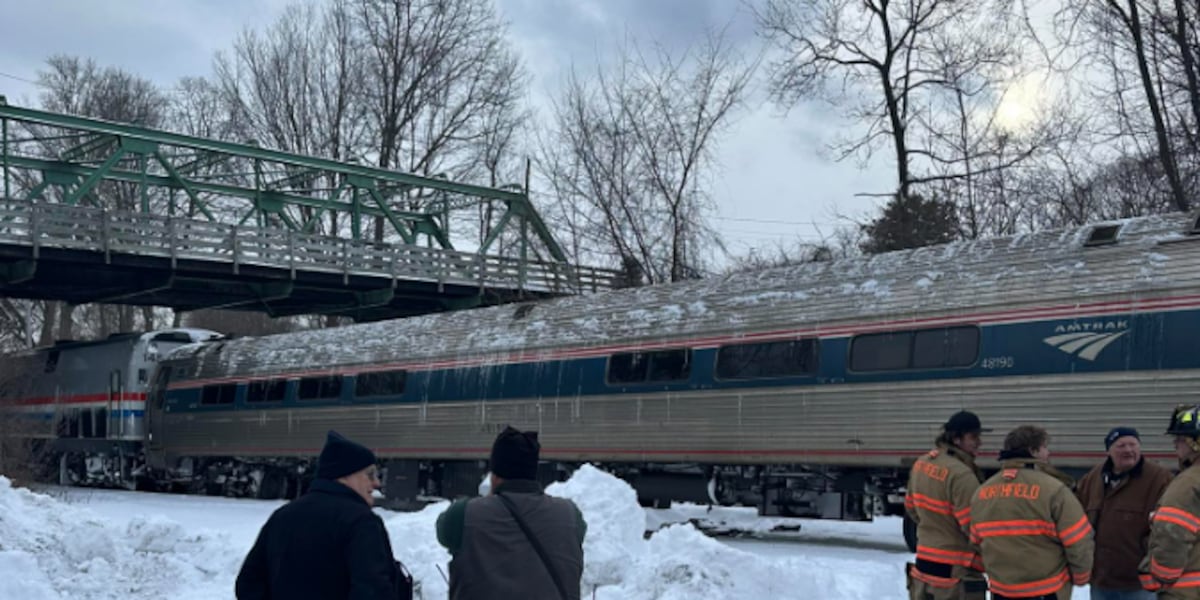
Northfield Fire Chief Floyd Dunnell said that an Amtrak passenger train, with 113 passengers on-board, derailed near West Northfield Road while going at a slow speed southbound from Vermont.
He added that there is a switch that connects the Central Vermont Railway to the New England Railway and it’s believed that, as the train went over the icy switch, the engine car slipped off the track.
No injuries have been reported and the passengers remain on the train, with the engine car still running to provide heat. In addition, there are no fuel leaks or hazardous material situations.
 
Loco and front-most Amfleet derailed. Passengers were moved into the other cars, rescue loco was sent to the scene, rear cars were uncoupled from the derailed pair, and passengers were brought back to Brattleboro for shuttle buses. NECR switcher and a couple hi-rail re-railing trucks from R.J. Corman came to Northfield this morning and backed the Amfleet + P42 gingerly back onto the tracks (it apparently wasn't much of a derailment), with the switcher towing them to Brattleboro to be reunited with the rest of the set. Whole train was supposed to deadhead at restricted speed to Springfield today for inspection before being sent on its way, and it appears today's Vermonter ran on-schedule.

That automatic switch at the junction of the Conn River and Central Vermont lines only gets thrown a couple times a day, so it getting jammed with ice is a legit hazard with that inherent risk probably being why the train was (fortunately) crawling through in a severe speed restriction that's not normally present there.
 
Hourly service between Springfield and NYC would be great! I hope the New Haven-Springfield line gets electrified sooner rather than later.
In a detailed update to MassDOT's board of directors Wednesday afternoon, Meredith Slesinger, the agency's Rail and Transit Administrator, revealed that Massachusetts and Connecticut are in talks to significantly expand Amtrak service between Springfield and New York City.
Slesinger told board members that MassDOT is "working with Amtrak and Connecticut to develop a service plan that would expand Springfield to New York service to operate hourly, and that would increase annual ridership on the corridor by a projected one million passengers."
[...]
Slesinger did not offer a timeline for implementing hourly service, and she stressed that it would be contingent on the state finishing numerous other infrastructure projects, including new maintenance facilities, layover yards, and track improvements.
Almost none of those projects have begun construction, and some (like the planned track and platform expansion at Springfield Union Station) still haven't secured funding. The additional service will also hinge on Amtrak's ability to acquire new trains.
 
Last edited:
I hope the New Haven-Springfield line gets electrified sooner rather than later.
Wouldn't bet on it soon. The last ConnDOT study on electrification of the Metro-North branches and Hartford used Caltrain electrification budgeting math, which completely blew it out to boondogglish proportions that broke the cost-benefit calculation. Just another example of how Caltrain building with maximum stupidity has poisoned the well on decarbonization efforts in North America, as GO Transit's much scaled-back electrification goals and the T's and MARC's asinine battery fetishes telegraph a general state of terror at the cost prospect of stringing up wires. The T could've been the one to prove them wrong if its commitment to decarbonization were actually honest, but...magic battery beans FTW.

It does get much easier once you've got hourly Amtrak throughout the day + clockface CTrail Regional Rail established. Trains per hour across the Springfield Line then starts getting very tasty for full electrification. So establishing the service levels is a necessary first step.
 
Wouldn't bet on it soon. The last ConnDOT study on electrification of the Metro-North branches and Hartford used Caltrain electrification budgeting math, which completely blew it out to boondogglish proportions that broke the cost-benefit calculation. Just another example of how Caltrain building with maximum stupidity has poisoned the well on decarbonization efforts in North America, as GO Transit's much scaled-back electrification goals and the T's and MARC's asinine battery fetishes telegraph a general state of terror at the cost prospect of stringing up wires. The T could've been the one to prove them wrong if its commitment to decarbonization were actually honest, but...magic battery beans FTW.

It does get much easier once you've got hourly Amtrak throughout the day + clockface CTrail Regional Rail established. Trains per hour across the Springfield Line then starts getting very tasty for full electrification. So establishing the service levels is a necessary first step.
In terms of far-future possibilities, is there any chance of electrification ever being extended north of Springfield to Greenfield or White River Junction? (Assuming there are significant service increases north of Springfield in the long-term)
 
In terms of far-future possibilities, is there any chance of electrification ever being extended north of Springfield to Greenfield or White River Junction? (Assuming there are significant service increases north of Springfield in the long-term)
Unlikely there'd be the service levels to merit it to Greenfield. The Valley isn't super-dense, so I doubt better-than-hourly service would draw enough. The NECR mainline north of Northfield is also an autorack-clearance (19'6") route and VTrans-identified future double-stack (20'6") route so electrification clearances would be brutally difficult, especially in the Bellows Fall tunnel that was already disruptively enlarged for the autoracks.
 
Depends. Are you trying to build an electric rail line to serve the existing valley communities? Cost/Benefit seems dubious.

Are you trying to build an electric rail line to stimulate development paired with an integrated land-use plan? The cost/benefit there is going to be a lot better, the Valley has good bones after all, but it's also a way more ambitious undertaking.
 
Depends. Are you trying to build an electric rail line to serve the existing valley communities? Cost/Benefit seems dubious.

Are you trying to build an electric rail line to stimulate development paired with an integrated land-use plan? The cost/benefit there is going to be a lot better, the Valley has good bones after all, but it's also a way more ambitious undertaking.
There's a finite amount of transit and land-use potential on the Conn River Line on account of the uniformly extremely closeby river itself. You don't have many bridges crossing the navigable river meaning the line has half-catchments over most of its length, and there's a lot of wetlands along the still naturally-flooding river that limit development potential within walkshed of stations. And I-91 or I-391 are laid out a few feet astray from the rail line most of the way up, making the cross-street connections to station sites very limited even where there is decent density given those two roads' generally stingy bridge counts. Plus there's a lot of state conservation land like Mt. Tom chopping things up on the corridor, and some worth-preserving economically significant pockets of agriculture still in the Valley. The city centers have very good bones, and hourly service would certainly merit an infill at Chicopee and probably also South Deerfield, but the amount of densification and upzoning possible on the whole of the Conn River corridor is definitely a lot more limited than in most of Massachusetts suburbia for reasons that have a lot more to do with geography than anything else.


But we've got to get sane valuations for electrifications to even make an honest cost/benefit analysis possible. The ConnDOT preliminary presentations for the (not-yet fully released) Hartford Line electrification study quoted $2.6B for 62 miles of the Springfield Line, which is like 10x the rate the rest of the world does that amount of (very bridge-few) 25 kV mileage. Everybody on this continent is lining up behind the hopelessly botched Caltrain Modernization cost blowouts by default as their gospel, and applying absolute zero critical thinking to overall competentcy of project management being a huge variable swing. No best-practices applied knowledge whatsoever. We can't get anywhere if the initial study metrics themselves are that fucked to begin with. Like...good on Caltrain for actually getting real-world useful electric schedules implemented for their riders. But no one should ever speak of that particular project again except for in textbooks on how NOT to build and manage railway electrifications.
 

This article is mostly filler (not surprising given it’s about a project that has no real progress to report) but contains the following nugget of info:

…Tim Warmington, a spokesperson for Public Safety Canada, said a feasibility study in 2024 examined whether Montreal Central Station could host a pre-clearance facility and came to the conclusion more studies are needed before any work can get done.

A study recommending more studies! At this rate it’s gonna be a LONG time before any Vermonter trains continue on to Montreal.
 

union3.jpeg


The state plans to invest $402 million in building new and lengthened platforms, an over-arching canopy system, and changes to the pedestrian tunnel between the main station and the tracks at Union Station.
 
Trainsheds are back, baby!

It's quite the change; I don't hate it, but it's honestly a bit disappointing. First thoughts:
  • Visually it's a great concept ; there's nothing at platform level that's historic (or pretty), and it goes well with the station building. Much better than the parking garage, and the inexplicable failure to redevelop the parcel across the street.
  • The glass looks damn near impossible to keep clean (a major reason why trainsheds died out)
  • I like that the whole platforms will be covered, but until the Springfield Line gets electrified there will still be a significant amount of diesel exhaust around. This won't do much about the wind, which might be the only saving grace for the exhaust.
  • The existing pedestrian tunnel is too narrow, but the design is iconic. The proposed design is generic, and green was not the New Haven's color.
  • It doesn't solve the biggest problem with the station: that there's only a single tunnel for four long platforms. The south ends of the new Amtrak platforms will be over 500 feet away from the tunnel. That means it's a long walk to the station building, and passengers will continue to crowd near the tunnel stairs rather than distributing along the platform. The station so badly needs a second distribution walkway, be it tunnel or footbridge. The offset alignment of the new platforms will make that difficult to ever add in the future.
  • They're keeping the existing track layout, presumably to make construction staging easier, which is a big missed opportunity to make the platforms wider. You could add 4-6 feet to each platform by eliminating the weird through track (unless it's necessary for freight?)
  • It also doesn't fix the existing stupid problem that the tunnel only opens into the station building. Coming from the garage? Go to the station building and double back. Coming from the street? Cross multiple busy driveways without required accessibility feastures, cross the inadequate bus stop, dodge taxis and ubers, and double back through the station building.
Slides are here: https://portal.ct.gov/-/media/dot/p...0301-0522_union_pim-pres_final_accessible.pdf
 
I see this image and all I can think of "sales job". Looking at some of the details even in the rendering - why are all the stair cases enclosed? If we have a platform canopy and the hall shed, keeping doors at platform level seems awfully excessive.
 

Back
Top