The New Residential Conversion Thread

-Approved

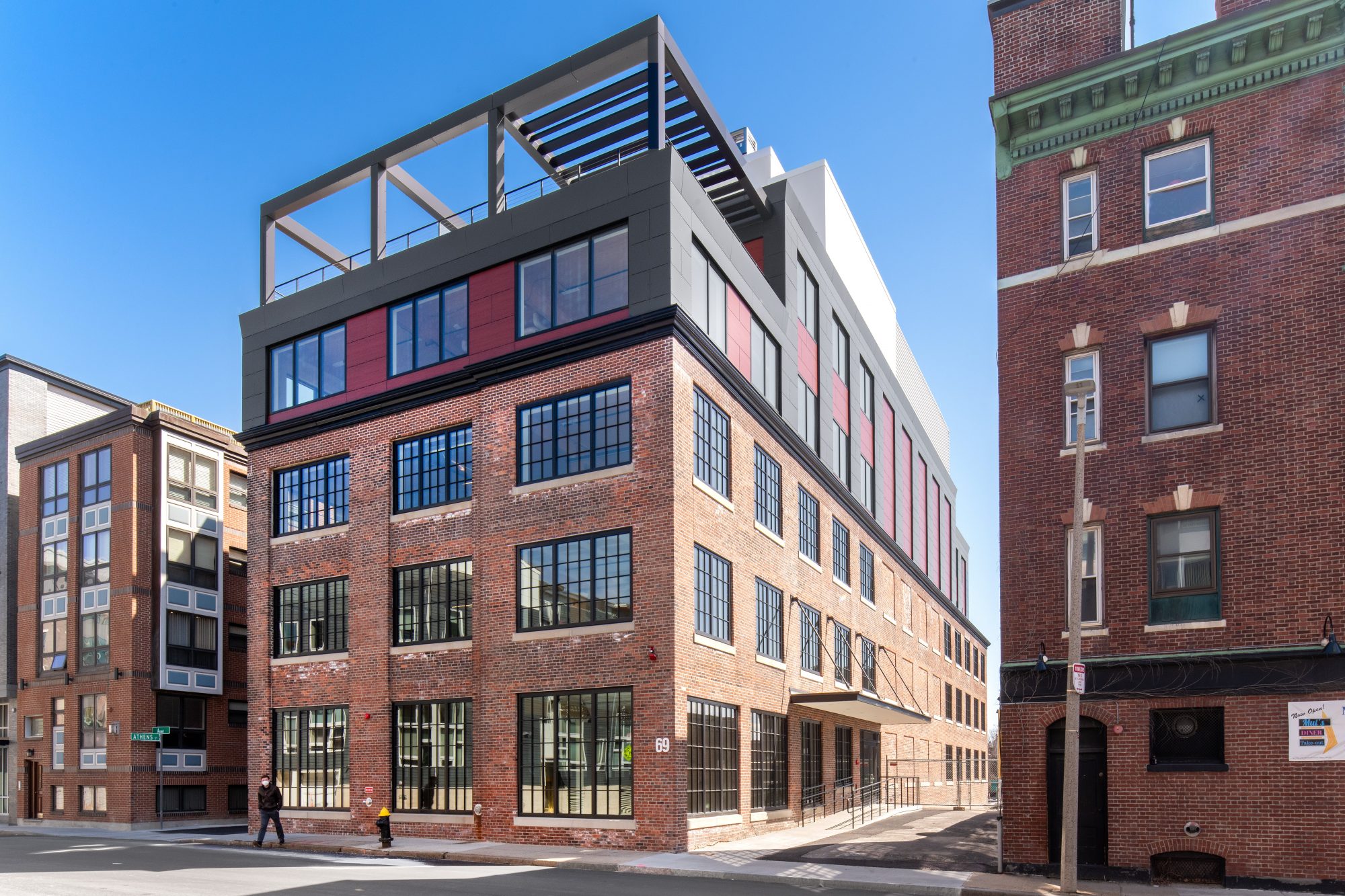
“The original 2016 Approval consisted of five (5) levels of commercial office space with ground level retail and fitness space on the lower levels, with an on-site garage containing 18 parking spaces. In early 2021, the project underwent an NPC due to The COVID-19 pandemic's impact on CIEE’s (Council on International Educational Exchange) operations. CIEE partnered with the established life-science venture of Genesis and Phase 3 Real Estate Partners to repurpose the Approved Project with a similar commercial use and resulting employment opportunities.

The current 2026 NPC seeks approval to convert the floors two through four of the existing building from approved office use to multifamily residential use, while retaining the active ground-floor and basement fitness center, as well as the limited office space on the fifth floor. Most notably, the proposed conversion will create twenty-four residential units specifically for participants in CIEE’s international internship programs.

The 2026 NPC contemplates interior modifications with no significant changes to the building’s exterior appearance, height, or footprint.”


1774223122925.jpeg


Last edited:
Fine, but F this guy and what he's let happen to the Tannery building across the street (see: https://www.universalhub.com/2026/controversial-boylston-street-landlord-wants-convert-office-space)

Might have to write into the public comments and be supportive but urge the city to actually use the leverage they have and not approved this project until something happens with the massive eyesore on one of the most important blocks in the city.

There’s a big tarp up and workers on the roof starting to dismantle things this morning (RE: Tannery eyesore)
 
Last edited:
If there were an HGTV show of people buying handsome but underused pre-war downtown office / warehouse buildings and converting them to residential I would watch the shit out of that show.
 
One state Street

1774913010217.png


“The Proponent seeks to renovate and convert approximately 64,428 gross square feet (“GSF”) of interior space within its existing 14-story commercial office building at the Project Site, by changing the legal use and occupancy from commercial office to residential multifamily housing of approximately 59,943 GSF on floors two (2) through fourteen (14) (the “Project”). The Project includes an interior renovation and conversion only, with no expansion to the existing building’s footprint, GSF or exterior conditions. Its existing ground floor commercial uses will also remain in place. As part of the City’s Downtown Office to Residential Conversion Pilot Program (the “Pilot Program”), the Project will create up to seventy-five (75) rental housing units, with up to 17% designated as income-restricted in compliance with the Pilot Program. Details on the proposed Project, its site and architectural plans are included in this Application”

 
Article on Boston.com that was not behind the paywall for me:

Can office-to-housing conversions revive Boston’s downtown?​

As hybrid and remote work empty office buildings, developers are tapping a new city program to turn vacant spaces into much-needed housing.​

A view of downtown Boston. Beth Treffeisen / Boston.com
By Beth Treffeisen
April 27, 2026 | 10:25 AM

From the outside, 281 Franklin St. looks like any other downtown office building, with a Mediterranean grill on one corner and a shoe repair shop on the other. But upstairs, where office workers once sat, there are now 15 new apartments.

The building is the first completed project in Boston’s office-to-residential conversion program, launched in 2023 and extended twice as the city pushes to transform underused office space into much-needed housing.

So far, the initiative has approved 29 buildings for conversion, a pipeline of 1,730 residential units, with six projects under construction and the one completed on Franklin Street.

“I view it as being a win-win, especially for Boston today,” says John Weil, who heads the city’s office-to-residential efforts.

The city’s conversion program is designed to make office-to-residential projects easier and more appealing. It offers developers a 29-year, 75% residential tax abatement, as-of-right zoning downtown, and a streamlined Article 80 permitting process, all intended to cut costs and speed construction.

Paired with the recently approved zoning changes that now allow residential use in every downtown district, city officials say the program could open the door to a wave of new housing.

But with vacancies still hovering around 20%, a larger question remains: Will these new apartments make a real dent in the housing shortage or the hollowed-out office market?

“Candidly, this program was never meant to be a panacea that’s going to solve the office vacancy problem,” Weil said. But by creating new housing and consolidating office demand into fewer buildings, he added, the program could leave both markets in a stronger position.

Where Boston fits in nationally

Nationally, office-to-apartment conversions continue to surge. More than 90,000 units are now in the pipeline with a 28% increase from last year, according to Yardi Matrix Research. The boom, which began four years ago in response to the post-pandemic glut of office space, is concentrated in older, more affordable Class B and C buildings.


New York City leads the nation with more than 16,000 planned conversions, followed by Washington, D.C., with nearly 8,500. Chicago and Los Angeles trail close behind at roughly 4,300 each.

Boston, however, didn’t crack the top 20, in part because Yardi excluded projects under 50 units and only counted those active at the start of the year.

Cost is a major driver for the increase in conversions. Demolishing and rebuilding is far pricier than converting what already exists, said Doug Ressler, senior research officer at Yardi Matrix.

“It costs more to knock down a building and then rebuild it with the new labor and material rates that you got today,” he said.

Many cities are adding incentives to encourage conversions. New York’s 467-m program offers up to 35 years of tax relief for projects with 50 or more units. Washington, D.C., provides a 20-year tax abatement for downtown conversions and a 15-year tax freeze under its Office-to-Anything program.

While Boston trails other major cities in the number of new units, Ressler said the city is moving in the right direction by streamlining Article 80, updating zoning, and offering a competitive abatement program.

“Faster time equals money, and people are beginning to realize that,” he said.

Challenges facing conversions

Converting offices into housing isn’t simple, said Adam Burns, owner of Burns Realty & Investments and developer of the Franklin Street project and the 63 Summer St. conversion now underway.

Advertisement:

Some elements like foundations, windows, and utilities can be reused. But major challenges remain, especially bringing natural light into deep floor plates, where every bedroom requires a window.

Layout also matters. Elevator and stairwell placement can complicate design, and the cost of bringing older buildings up to residential code can quickly make projects unworkable.

“I like to say it’s geometry and geography,” Burns said.

He added that the city’s program made both projects feasible and could again, under the right conditions.

Asked whether he would do this again, Burns said, “The short answer is yes. The longer answer depends on the building.”

Is downtown ready for more residents?

Demand to live downtown is growing, even as the area transitions from a workplace hub to more of a residential neighborhood, said Darin Thompson, founder and CEO of Stuart St. James.

“As Mayor Wu has noted publicly, Boston’s housing shortage isn’t measured in single units or even hundreds — it’s tens of thousands of units,” he wrote in an email to Boston.com.

At 281 Franklin St., studios are renting for about $3,150 a month, which Thompson said is competitive. Still, he doesn’t expect conversions alone to bring prices down. Adding units to what he called a “near-zero residential inventory,” however, should put “downward pressure over time.”

The early renters will likely be young professionals drawn to walkability — people willing to trade space for proximity to jobs, restaurants, and the waterfront. Amenities remain limited, but more residents could change that.

“It’s a bit of a chicken-and-egg situation,” Thompson said.

Industry leaders say the shift is already underway. “If conversions can happen, they will happen,” said Greg Vasil, CEO of the Greater Boston Real Estate Board, noting that demand to live in Boston remains strong.

More residents, Vasil added, will bring more retail and services, though affordability remains the biggest challenge.

With new housing supply slowing to a “trickle,” any added units help, Vasil said.

For downtown advocates, the payoff goes beyond housing numbers. “We’ve taken an office-to-everything approach,” said Michael Nichols, president of the Downtown Boston Alliance, pointing to conversions into hotels, dorms, and cultural spaces.

But the biggest impact, he said, will come from adding residents.

“There’s nowhere in the city that has more to offer,” Nichols said, citing the area’s density of shops, restaurants, and transit. “It’s the most accessible place … to live, work, and play all in one location.”

source: https://www.boston.com/news/local-n...conversions-revive-bostons-downtown/#comments

 
The above article cites Boston is not in the top 20 cities for office to residential conversions. I think this is the source for that statistic: https://blog.naiop.org/2026/04/offi...-adaptive-reuse-reshapes-the-rental-pipeline/

While it's good to see residential development occur in downtown Boston, it's disappointing to see how relatively poor Boston fares compared to some much smaller cities with lower housing demand and less dynamic economies.
 
I never really got the obsession with office-to-residential conversions. I was always under the impression that dense, centralized clusters of office buildings like downtown Boston are one of the best ways to boost transit ridership by making a larger percentage of commutes viable on transit (I've also heard it cited as one of the reasons for Canadian cities' higher per capita riderships... ). Why do we want to ruin that by converting them into housing? And so much so that we want to subsidize it? Is having a downtown that isn't as dead outside of working hours more important than reducing emissions now?
 
Because office vacancies are at 20%, the buildings are trading massively down when they’re sold, and CRE tax revenue is crumbling, which makes up the majority (plurality?) of Boston tax revenue. Having small old buildings sit vacant in a soft demand environment is just bad bad bad. Either bulldozing and replacing with newer offices (good luck) or incentivizing conversions are much better outcomes.

Plus, if people are living in the city and walking or taking a short T ride, that’s also net positive on emissions. Mixed use is good, and having the financial district be a ghost town outside of 9-5, T-Th, is a bad policy outcome.
 
If vacancies stay high, office leases would just get cheaper and attract more tenants from the suburbs, no? Low-density suburban office park vacancies could be redeveloped into medium-density housing, improving land use efficiency. As opposed to office-to-resi conversion, which would keep relative density at parity.

And if tax revenue is a worry, at least a low-value office pays some reasonable quantity of taxes, while these office-to-resi conversions get a 75% abatement for 30 years, after which they would be paying the residential rate, which is like half of commercial in Boston. Seems more like a way to prop up revenues in the short term by not recognizing real losses and borrowing from future potential revenue.

From the emissions perspective, you can fit like 4-5x the office workers in an area that one person could live in, so unless commuting is less than 1/4 of someone's transportation emissions, I don't think it would be as impactful. I also have a feeling medium-density suburbs and a high-density centralized office core would do more to set Boston up for long-term high transit ridership than putting housing downtown.
 
If vacancies stay high, office leases would just get cheaper and attract more tenants from the suburbs, no? Low-density suburban office park vacancies could be redeveloped into medium-density housing, improving land use efficiency. As opposed to office-to-resi conversion, which would keep relative density at parity.

And if tax revenue is a worry, at least a low-value office pays some reasonable quantity of taxes, while these office-to-resi conversions get a 75% abatement for 30 years, after which they would be paying the residential rate, which is like half of commercial in Boston. Seems more like a way to prop up revenues in the short term by not recognizing real losses and borrowing from future potential revenue.

From the emissions perspective, you can fit like 4-5x the office workers in an area that one person could live in, so unless commuting is less than 1/4 of someone's transportation emissions, I don't think it would be as impactful. I also have a feeling medium-density suburbs and a high-density centralized office core would do more to set Boston up for long-term high transit ridership than putting housing downtown.
The buildings being converted are not going to be replacements for suburban office parks. They are older Class B and C office space that is poor space for today's businesses, but pretty decent space as residential. The amount of office space being taken off the market is not huge -- it does seem net beneficial as residential versus vacant office. People living in the urban core are going to have the very lowest carbon footprint possible.
 
Why does this need tax breaks then?

If it truly was vacant, poor office space that would not serve office tenants, but would work well as residential if converted, the building owners would already have an incentive to convert. Subsidizing it admits that it doesn't actually make sense to convert in current market conditions.
 
Why does this need tax breaks then?

If it truly was vacant, poor office space that would not serve office tenants, but would work well as residential if converted, the building owners would already have an incentive to convert. Subsidizing it admits that it doesn't actually make sense to convert in current market conditions.
It is appropriate for the government to subsidize private initiatives to promote a vibrant and healthy metro core with a vital residential component, rather than vacant office buildings. The benefits to society and the city are substantial and are noted above by others.
 
It "needs" (or at least the city deemed it useful) to add the tax breaks because a pure market-based system would have the outcome of empty de-valued commercial buildings that are both (a) depreciating assets with plummeting tax receipts AND (b) vacancy eyesores that run the risk of further devaluing other comparable office buildings. At the extreme this could cause some version of capital flight and the dreaded urban doom loop where revenues collapse, services dry up, and people leave, causing an even worsening of the environment.

A tax break backstop to put bodies downtown on a long term basis while also shoring up the environment for salvageable or high class office space (which can then be buoyed on assessed value and increased occupancy) is the lightest touch that the city can take to make something happen on a time scale of months to a few years. Alternatives are doing nothing, as stated above, or using tax dollars to buy and either rehab or convert the units which is fraught with its own issues.

This system works even better when we have a massively lopsided housing market where any new capacity relieves pressure where there's basically no vacancy. Bonus points if that's in central areas of the city with relatively few abutters and complaining neighbors.

In these kinds of conversations I urge people to not think about what would happen if specific policy X were implemented, but rather "what happens if nothing happens and things just get worse" as that's all too often the most likely outcome in matters of urban development.
 
Why does this need tax breaks then?

If it truly was vacant, poor office space that would not serve office tenants, but would work well as residential if converted, the building owners would already have an incentive to convert. Subsidizing it admits that it doesn't actually make sense to convert in current market conditions.
If I had to guess I'd say because downward price rigidity for commercial space is really strong and will hold the market out of equilibrium in the medium term. In most cases I would agree with your logic here but I just think housing seems to be so broken that I would support intervention lmao
 
Why does this need tax breaks then?

If it truly was vacant, poor office space that would not serve office tenants, but would work well as residential if converted, the building owners would already have an incentive to convert. Subsidizing it admits that it doesn't actually make sense to convert in current market conditions.
Maybe, but you have to look at the complete picture to be sure. How much are the owners able to write-off as a loss? What are the tax implications? It could well be that pre-existing regulatory distortions mean that the most rational profit maximizing approach for the owner is to do nothing. In a perfect world, your suggestion would likely be correct, but we are not in that world.
 
To echo everything that's already been said, the existence of property tax means that real estate is a not a pure market, so non-market adjustments (e.g. adjusting that same tax code) are going to sometimes be necessary to align incentives.
 
Why does this need tax breaks then?

If it truly was vacant, poor office space that would not serve office tenants, but would work well as residential if converted, the building owners would already have an incentive to convert. Subsidizing it admits that it doesn't actually make sense to convert in current market conditions.
Generally it works well as residential once converted, but the conversion is quite costly. We have numerous example of building becoming blighted by neglect rather than being converted to another use, because the conversion cost is too high. Blighted building are of no benefit and huge detriment to the city (reducing the property values and hence taxes all around the blight). It is in the city's best interest to prevent that cycle. A bit of incentive now can prevent huge issues later.

Longer term societal benefits often do not have fast enough payback for the short term focused property investment community.
 
I never really got the obsession with office-to-residential conversions. I was always under the impression that dense, centralized clusters of office buildings like downtown Boston are one of the best ways to boost transit ridership by making a larger percentage of commutes viable on transit (I've also heard it cited as one of the reasons for Canadian cities' higher per capita riderships... ). Why do we want to ruin that by converting them into housing? And so much so that we want to subsidize it? Is having a downtown that isn't as dead outside of working hours more important than reducing emissions now?

If work from home is taking over, where would those people be transiting into???? These class B and class c office buildings are having the highest vacancies. An empty shell is an empty shell.
 

Back
Top