
What material do they use to build houses in Germany & why don’t we use it here?

Blackbird

Senior Member
Joined
Feb 2, 2014
Messages
1,246
Reaction score
1,832
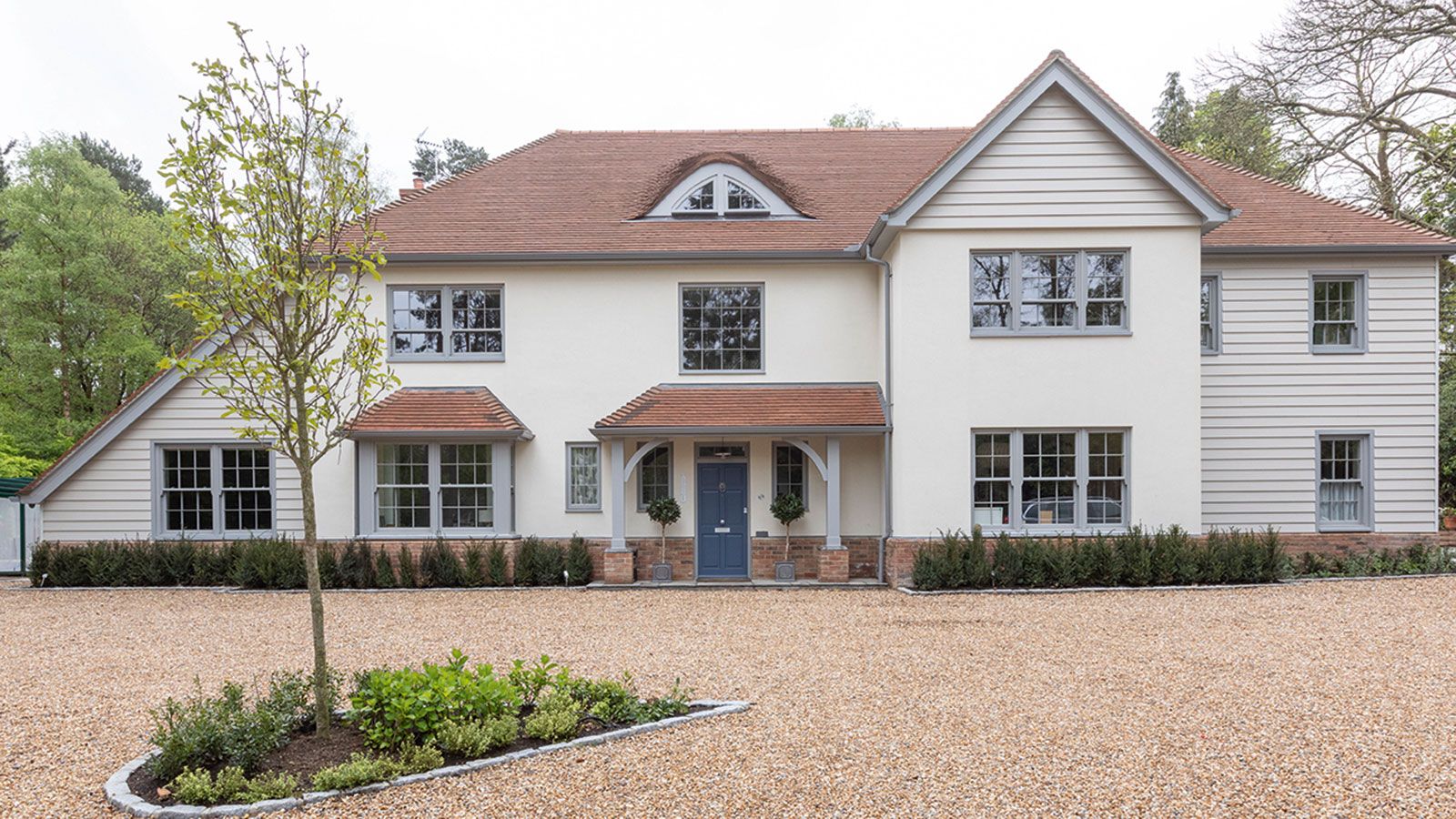
Just got back from a trip to Bavaria and was struck by how nice their houses look. Seems to be some sort of plaster or concrete? Makes for very clean lines and seems like it would hold up well in different types of weather.

Here’s an example:

Anyone know about this kind of material and why it’s not more common in New England? Seems sturdier than our typical wood/vinyl, and I can’t imagine there’s a natural resource you’d need to make it that only exists in Germany.
 
Just got back from a trip to Bavaria and was struck by how nice their houses look. Seems to be some sort of plaster or concrete? Makes for very clean lines and seems like it would hold up well in different types of weather.

Here’s an example:

Anyone know about this kind of material and why it’s not more common in New England? Seems sturdier than our typical wood/vinyl, and I can’t imagine there’s a natural resource you’d need to make it that only exists in Germany.
So keeping in mind that european houses, even single families like that one are typically built with a masonry structure, typically block built. In the UK, that type of siding is known as "Render" not to be confused with the 3D graphics term, but terminology aside, Americans would know this as stucco. Its a lightweight mortar thats treated like plaster and applied directly to the masonry - but Render is typically finished smooth and not textured with sand in the same way that Stucco in the US usually is. i think the European perspective would be that stucco is a subtype of render - I suspect if you look for stucco contractors locally, you'll find some that have done that smooth finish before. Of course, if its a new construction, it could also be a EIFS.

There is some stucco up here in New England, but its not particularly common - its more associated with the drier/warmer parts of the country like the Southwest or Florida. my fathers house in RI is stucco, and as a system goes if properly installed its fine. When it isn't properly installed, combined with wooden construction, you get cracks with the freeze thaw cycle, leading to water intrusion, the stucco falling off in chunks as it spalls, and rotting sheathing. Thats just not a likely failure mode with masonry walls.

 
Last edited:
Thanks for the informed reply and cool article! Still a bit mystified about why it isn’t more common; if it works in Germany surely it can’t be that susceptible to a 4 season climate. Is the aversion to it generally more cultural or economic, do you think?
 
I can't speak for that house in particular but from where I've been in western Europe it's lots of bricks, plaster, concrete, etc. Very durable, very difficult to punch a hole through the wall, and very difficult to insulate. Americans pay far, far less for heating than Europeans and it's not just because gas is cheaper. I used to live in a townhouse that cost €550 per month to heat to ~62º (~30º above ambient at worst) in the winter. Wooden frame with drywall is extremely easy to pack full of insulation, and in a place like New England where there aren't a lot of tornadoes or hurricanes the decreased durability is absolutely worth the tradeoff for better energy efficiency.
 
I can't speak for that house in particular but from where I've been in western Europe it's lots of bricks, plaster, concrete, etc. Very durable, very difficult to punch a hole through the wall, and very difficult to insulate. Americans pay far, far less for heating than Europeans and it's not just because gas is cheaper. I used to live in a townhouse that cost €550 per month to heat to ~62º (~30º above ambient at worst) in the winter. Wooden frame with drywall is extremely easy to pack full of insulation, and in a place like New England where there aren't a lot of tornadoes or hurricanes the decreased durability is absolutely worth the tradeoff for better energy efficiency.
I had always heard from European friends that the thick masonry construction in the old housing stock helped with insulation in the hot and cold, but never thought much about it. Looking at the article, averaging $400USD in utilities for a 900sqft apartment in a German city uhhh sounds not excellent especially considering incomes are way lower in USD and also that 90% of them probably aren't even using AC.
 

Back
Top