JeffDowntown
Senior Member
- Joined
- May 28, 2007
- Messages
- 5,094
- Reaction score
- 4,344
On, off, on, off. Gee, wonder why infrastructure costs so much in the USA?


On, off, on, off. Gee, wonder why infrastructure costs so much in the USA?
I'm over a year into my weekly (mostly Acela) BOS <-> NYC commute, and feel like Metro North dispatching is the biggest issue. Until late November, I had a year of running more or less on time with delays (ranging from minutes to "try again tomorrow") feeling like 10%-15% of the time. Occasionally, the stars align and we get a "highball" NYP <-> NHV, and that's a 10-15 minute difference in travel time. Going south, that means arriving early, and going north, that means chilling at NHV for up to 15 minutes for an on-time departure."can" is doing an awful lot of work here. Right now, unless significant track improvements have transpired in the mere five months since they debuted, they're actually running SLOWER than their predecessors in the Acela fleet.
I've had this happen both ways in the past 2 months. I've also had 2 false alarms where I received notice of an equipment change, so assigned seating does not apply, but then the expected trainset showed up.But I had a train flip from OG to NG on Jan 7 with no change in schedule (notice only a couple of days before) -- so that does not seem to indicate a dedicated OG slot.

 www.amny.com
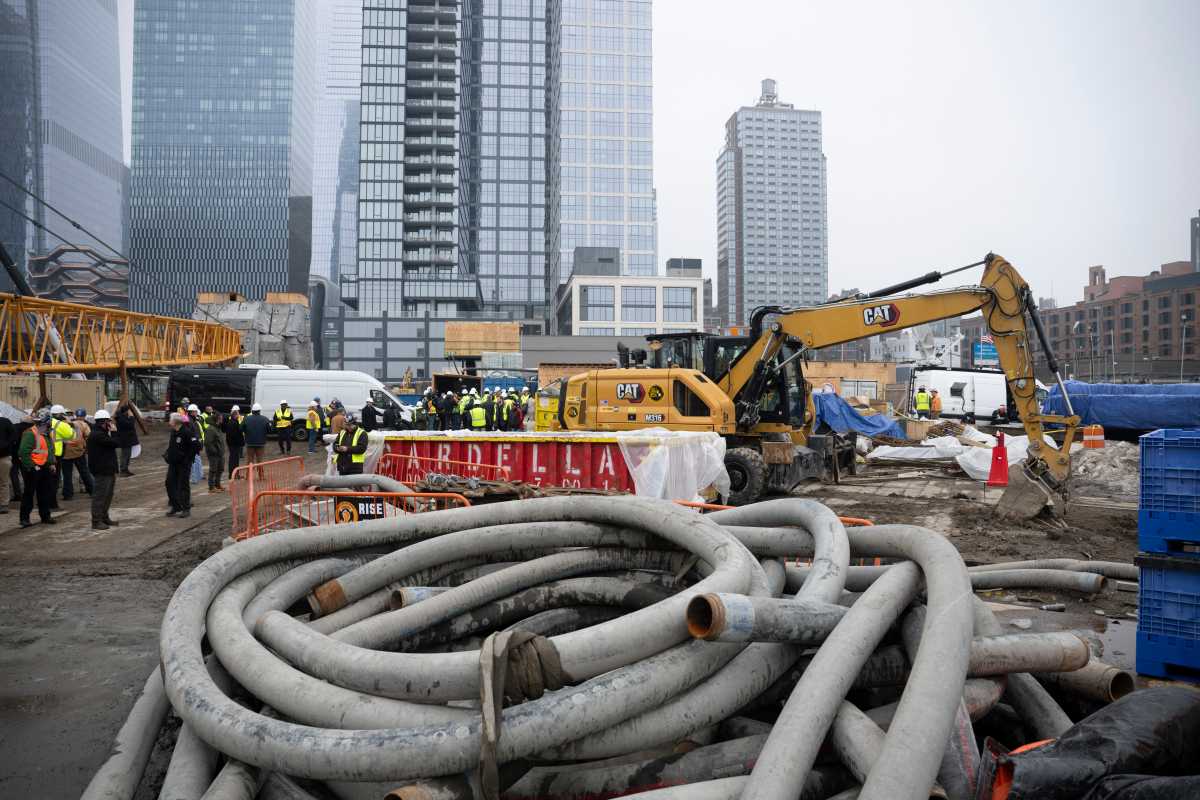
The massive Gateway Tunnel rail project will likely resume next week after receiving the remaining $205 million in funding withheld by the Trump administration since October, the Gateway Development Corporation (GDC) said Wednesday.
GDC said the feds unfroze $127 million it was owed in reimbursements for the $16 billion undertaking to replace a decaying rail tunnel connecting New York and New Jersey beneath the Hudson.
“Gateway Development Commission (GDC) has received the full reimbursement owed to us from the federal government and now has more than $205 million available to fund work on the Hudson Tunnel Project,” GDC said in a statement. “We are working with our contractors to deploy these funds to resume work as soon as possible.”
“Letters will be sent to contractors today, and construction activities are expected to resume next week,” GDC added, referring to a work stoppage triggered by the funding freeze that has dragged on for nearly two weeks.
 www.nbcboston.com
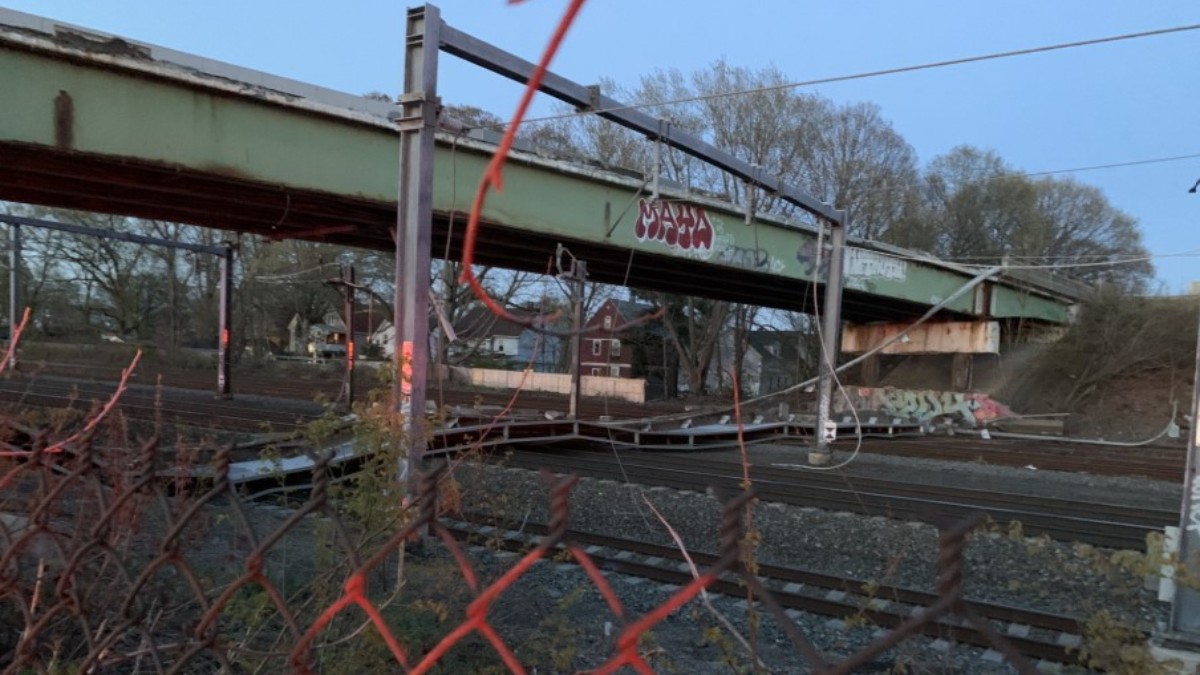
Police told NBC affiliate WJAR that structural parts of the on-ramp from Route 10 northbound to Interstate 95 northbound came detached, landing on the tracks near Wellington Avenue.
[…]
Wires could be seen on the tracks, WJAR reported, adding that the on-ramp to I-95 northbound was closed.
Cranston Mayor Ken Hopkins told WJAR in an interview that transportation officials are inspecting the area, and that electricity on the tracks has been shut off.

The M8s can't handle the 25hz used south of New Rochelle.
Amtrak sues Metro-North for blocking non-revenue movements of the Acela 2's for the past month. Includes overnight testing on the New Haven Line, and transfer moves on the Hudson Line for fresh trainset deliveries from the Alstom plant. Doesn't affect the accepted revenue sets. Acela-unrelated positioning deadheads, work trains, and track geometry test trains have also been ensnared in the non-revenue blanket ban. Apparently this all stems from a series of incidents where multiple Acela 2 pantographs failed in high-speed testing at one particular spot under one bridge on the New Haven Line, and finger-pointing therein over whose hardware--train or trackside--was to blame. NG Acela sets are FRA-required to test a certain number of reps at full speed across the whole NEC, including the New Haven Line, before they can get accepted into revenue service, so Metro-North is potentially holding new acceptances hostage with this blanket ban.
Apparently, per RR.net-sourced sleuthing of the full lawsuit package, the rash of broken pantographs happened close to 4 years ago and Alstom/Amtrak not only modded their pantos for that one exception MNRR refused to fix but also instituted a practice on the running NG Acela sets to lower their pantographs for a split second every time they passed the offending un-fixed bridge. A set that hadn't been modified and which forgot to drop its panto then had a similar damage incident about 4 months ago, reigniting the feud...which then escalated to the ban last month and the lawsuit this month. All happening while the NG Acelas' tilt is still running disabled because of lack of FRA sign-offs for the New Haven Line, and while Amtrak has blocked MNRR from getting any Amtrak-owned substation upgrades around Penn Station for Penn Station Access (forcing MNRR to buy the same 3x-as-expensive battery locos the T instead of running the EMU's they already own, and running on battery whenever they're in Amtrak power territory despite it being 100% wired-up).
Little children...all of them. They deserve each other.
That's why Metro-North proposed building a 1-mile extension of third rail to the 25 Hz/60 Hz phase break, because the M8's can handle the over-running third rail. They bought the supplemental order of M8's specifically for this. Amtrak dragged its feet for years then ultimately said no because the Penn Station 750V DC substations it owns doesn't have enough capacity, and they refused to expand said capacity. In comes the monumentally stupid and monumentally expensive battery loco purchase to get around that purely petty blocker so Penn Station Access isn't tied up in the courts for years.The M8s can't handle the 25hz used south of New Rochelle.


 www.thebanner.com
Amtrak will not proceed with plans to build a controversial ventilation facility along Baltimore’s West North Avenue for the future Frederick Douglass Tunnel, citing project cost savings.
The facility was proposed as an access point along the future two-mile passenger rail tunnel. It was designed both to vent smoke during a fire and serve as an emergency exit for passengers.
Amtrak still plans to build similar ventilation facilities near each entrance of the tunnel: a south facility near Mosher Street and North Payson Street in the Midtown-Edmondson neighborhood, and a north facility in the shadow of where Interstate 83 crosses over West North Avenue.
Removing the third facility from its construction plans will not impact future safe train operations within the tunnel, according to Amtrak spokesperson W. Kyle Anderson. It will also reduce future construction and noise impacts in the area, he added.
[...]
People in nearby Reservoir Hill turned out at public meetings and mounted a fierce campaign to push back on the tunnel. They cited potential damage to historic properties during construction, air quality concerns and the possibility of hazardous material carried by freight trains.
Residents also filed a civil rights complaint against the U.S. Department of Transportation two years ago, alleging that the project would have a disparate impact on several majority-Black neighborhoods.
As part of the pending complaint, they questioned the FRA’s selected route, which proposes an arcing curve instead of the more direct route of the current tunnel. The proposed route will allow trains to travel through the tunnel at speeds up to 100 mph, whereas the current tunnel restricts them to around 30 mph.
McGlasson said the new bridge will start being built next year and the project costs about $1.6 billion in total. “We started construction in 2023 and most of the work that we completed to date has been mostly the underground work that’s related to the infrastructure of the new bridge,” he said.
McGlasson said the underground work took a little longer than planned and pushed the project’s overall finish into 2030 instead of 2029 as previously expected.
He said a variety of other things have been completed, like installing a micro-tunneling system under the bridge to move the electrical cables underground. Previously, the cables were above the two 234-foot-high towers at both ends of the bridge. He also said a portion of the wires was removed and the rest will be taken care of next year.
“Those two high towers carry the Eversource electrical cables, and they’re also connected to the Metro-North cables on the railroad and the OCS, the old catenary system,” McGlasson said. “That energy source has been removed from those towers, so we’re removing those wires.”
McGlasson said there’s an adjacent project going on with four bridges being redone at Fort Point Street, Osborne Avenue, East Avenue, and Strawberry Hill Avenue.
[...]
He said there will be significant progress next year, and residents will start to visibly see the bridge being built. “We’ll start to put in the foundations for the new bridge and we’ll start to go vertical with different components,” he said.
He said several other things will occur, such as continuing pier construction under the existing bridge; completing the permanent power and signal bypass; and dismantling the high towers.
Norwalk WALK Bridge Replacement Project delayed until 2030:
the OCS, the old catenary system,” McGlasson said.
Not a single bench to be found.Between the new Avelia trains and the Moynihan train hall, my recent trip to NYC was down right civilized.
View attachment 72863
The ticket passenger waiting space is way too small.Not a single bench to be found.

True, but there is nevertheless quite a lot of seating in the food hall and the ticketed passenger lounge. To be honest, I think benches in the atrium area would disrupt both flow and queuing. Ultimately, as somebody who passes through there a few times each year, I've never found benches to be necessary.Not a single bench to be found.