Other People's Rail: Amtrak, commuter rail, rapid transit news & views outside New England

If anyone is interested in how private equity (and private credit, for that matter) REALLY works, please PM me - I don't want to derail this thread, but the assertions above made me giggle. F-Line, I treasure your knowledge about transit and system engineering, but ...

As someone who has worked for PE funds and Private Debt funds for decades, been a member of multiple boards and investment committees, worked with management teams across a number of industries, been part of successful funds and many successful investments, but also have had to deal with the pain of a few debt renegotiations and a bankruptcy filing, I can assure you that PE funds don't make money by "pump and dump" or cycling debt or PLANNING bankruptcies. I'd encourage even casual readers of the thread with limited interest in the subject to apply their critical reasoning skills here: if it were possible to make money simply by churning debt, then who are the lenders/chumps that keep handing all this money to PE to be left holding the bag? Bear in mind that some of the largest debt providers to PE-owned businesses (including to Brightstar!) are themselves divisions of financial firms with huge PE funds of their own! We're talking hundreds of millions here, and sophisticated parties on all sides of the transaction. They didn't borrow from grandma. Sure, we can agree in retrospect that there was too much debt put on the Company, but the reality is that they were walloped by the pandemic, the collapse of the commercial real estate market, and a bunch of other factors. Lots of losses here, and some fighting about who is on the hook for what, but nobody walks away a winner. As for the "attention span of a gnat," I've worked at senior levels of a PE-owned company that was acquired by a publicly traded company, and the latter was MUCH more focused on quarterly results than the former. That's common experience. No PE fund has decades-long patience, but it's A LOT easier to manage a three- or five-year investment cycle without the pressure of quarterly earnings calls being peppered with questions by 25-year-old analysts and exposure to punters who listen to Jim Cramer.
PE may not PLAN on bankruptcy, but they sure do PREPARE for it, and are the first in line to cash out. And, you are only kidding yourself if you believe that bankruptcy is never the ultimate end game. People lose their jobs sometimes, oh well that can be framed as " creative destruction", But when you are nearing retirement and you lose your pension, there is hardly enough time to pull yourself out of the hole that was dug for you by someone else walking away with the money promised to you. And don't kid yourself that the Seward Hospital fiasco didn't put people's lives in jeopardy. Had to vent
 
That user is generally correct, but my concern is that sometimes companies are worth more for their 'parts' than their services they provide. For example, PE firms buying legacy newspapers (which were not very profitable), stripping the legacy real estate holdings, firing all the employees, etc. leaving no company behind. When the OG firm was technically surviving on its own, just cash poor. I think that is the image that PE has in the eyes of the public, as with the user above. Everyone has a few bugbears related to PE.

On the whole, the user is correct, but again its a huge PR issue because it turns a 'natural' part of the business cycle (failure) into something that is, like F-line said, "planned for" because sometimes it makes more sense in terms of pure economic value / return on investment
 
PE may not PLAN on bankruptcy, but they sure do PREPARE for it, and are the first in line to cash out. And, you are only kidding yourself if you believe that bankruptcy is never the ultimate end game. People lose their jobs sometimes, oh well that can be framed as " creative destruction", But when you are nearing retirement and you lose your pension, there is hardly enough time to pull yourself out of the hole that was dug for you by someone else walking away with the money promised to you. And don't kid yourself that the Seward Hospital fiasco didn't put people's lives in jeopardy. Had to vent

Not to derail the thread further but why would bankrupting a company they bought be the endgame? I think the negative sentiment toward PE is well deserved, and they certainly take a lot of measures to protect themselves at the cost of lenders/employers (particularly with "liability management") but as the prior poster pointed out, private equity exists to take companies out of the quarter to quarter earnings beating game that Welch was famous for. Cynically they use being private and reporting less as having lower volatility which is a selling point to investors. PE sponsors that have a bad reputation (*cough Clearlake cough*) pay extra to fund their deals which is not a sustainable business practice.

To get back on topic, I'm not really sure what the best financing is for projects like this. Loading it with debt inherently makes it risker. but rail doesn't really seem like a great fit for venture capital either. Honestly seems like a great type of project for a sovereign wealth fund to take on, but we unfortunately lack one of those.
 
To get back on topic, I'm not really sure what the best financing is for projects like this. Loading it with debt inherently makes it risker. but rail doesn't really seem like a great fit for venture capital either. Honestly seems like a great type of project for a sovereign wealth fund to take on, but we unfortunately lack one of those.
Yeah for rail/real-estate you really need extraordinary patience. I can't imagine you'd find a public company willing to do it and even for a private company it's reasonably risky. A lot can go wrong with both infrastructure construction and real-estate development, as Brightline has learned.
 
These are the updated departure & arrival times for the Pennsylvanian:
Westbound:
Train #43: 5:50 a.m. depart Penn Station -> 3:14 p.m. arrive @ Pittsburgh
Train #45: 12:25 p.m. depart Penn Station -> 9:54 p.m. arrive @ Pittsburgh

Eastbound:
Train #42: 7:10 a.m. depart Pittsburgh -> 4:43 p.m. arrive @ Penn Station
Train #44: 1:00 p.m. depart Pittsburgh -> 10:25 p.m. arrive @ Penn Station
 
Kind of crazy that St. Louis has better mass transit to their primary and secondary airports than Boston does to Logan.

This is not the actual airport people use (that's in Missouri)

This is some dinky airport out in the middle of nowhere.

There's a second Illinois Airport that's closer to East St Louis... but that one is only slightly bigger.
 
Last edited:
Looks good.
Not to be too negative about this, but it's frustrating to see they didn't built to train to go exactly to the airport. It's across a parking lot and some wide street with no real new pedestrian infrastructure (in those pictures at least). There's so much open space around the airport. They could have had an indoor station connected to the terminal to keep passengers out of the rain, the snow, the heat. If you get driven to that airport, you can get dropped off right at the door. If you take the train, you might have to dash a couple minutes in the rain with luggage.
 

MTA launches environmental review of 125th Street subway extension​

The Metropolitan Transportation Authority has released a draft scoping document and opened the public comment period for a proposed extension of the 125th Street subway tunnel.
By starting the process now, the MTA’s goal is to reuse the tunnel boring machines that are part of the Second Avenue Subway extension. That project will end with the boring machines under West 125th Street between Lenox and Adam Clayton Powell Jr. avenues. By continuing westward, the 125th Street tunnel extension would facilitate future crosstown subway service that would create new connections to the 1, 2-3, and ABCD lines. The MTA says reusing the boring machines could save hundreds of millions of dollars and reduce future construction by more than two years.
125th.jpeg
 
I don’t know much about NYC transit news, but based on how long and delayed the SAS took for 3 stations, I’m surprised on how quickly NYC and the state has jumped on a subway proposal that didn’t exist for that long AFAIK. SAS took 90 years after it was first proposed, and I didn’t hear about this crosstown subway until a couple of years ago. It’s also surprising based on how long it seemingly took for even phase 2 to get under way, let alone phases 3 and 4 (are those shelved indefinitely at this point?).

Great to see NYC doing this though; if only they were this interested in Queenslink.
 

Feds send $550 million to North Carolina for Raleigh-to-Richmond passenger rail​

Three years ago the Biden administration pledged $1.1 billion to help the N.C. Department of Transportation begin building a new passenger rail line connecting Raleigh with Richmond, Virginia. On Thursday, the Trump administration released $550 million of that money to the state, a major boost for the project and a show of support for the work NCDOT has done so far.
David Fink, head of the Federal Railroad Administration, made the announcement at the edge of a new bridge that will soon carry Durant Road over the rail line in North Raleigh. Fink praised NCDOT’s management of what is known as the S-line project that will restore a route where dozens of Seaboard Air Line Railroad trains a day once operated decades ago. “The 162-mile corridor is a critical missing link in completing the build-out of the Southeast corridor and meeting state and federal goals of improving safety, providing economic opportunities and environmentally sound transportation options,” he said. NCDOT will use the federal money to build the first leg of the Raleigh-to-Richmond line in Wake County. From Raleigh Union Station downtown, the S-line follows tracks now owned by CSX and used by a handful of slow moving freight trains a day. NCDOT will buy the rail corridor and build new tracks that will allow it to extend Amtrak’s Piedmont service to Wake Forest by 2032.
richmond to raleigh.jpg
 
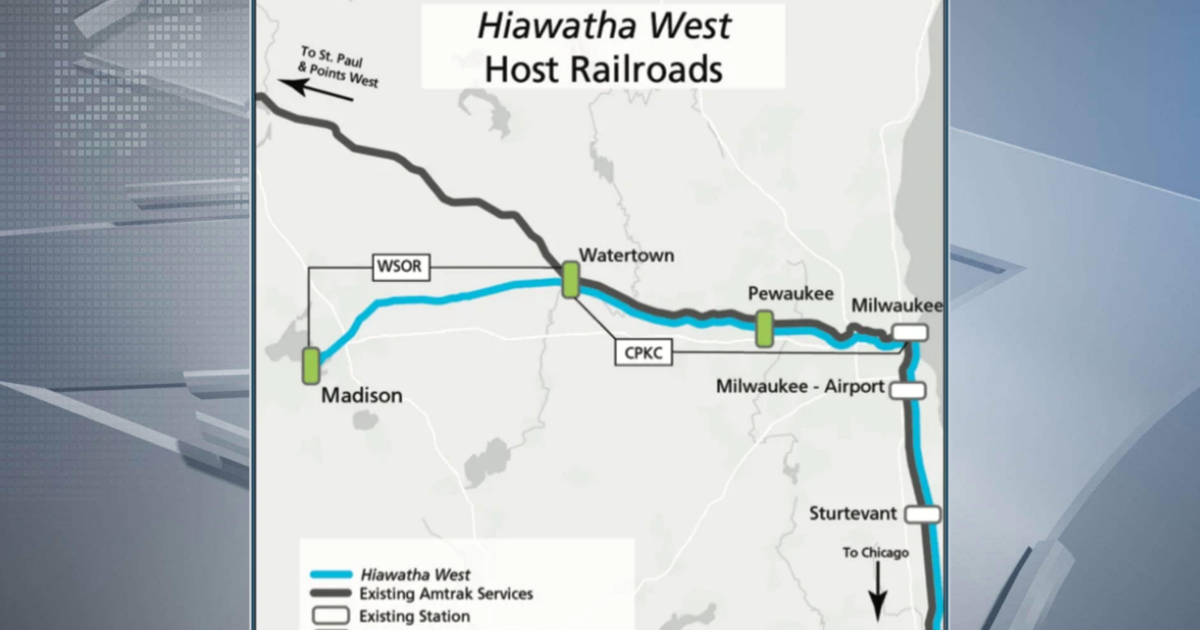
Nearly $220 million in federal funding has been secured to expand Amtrak's Hiawatha passenger rail service between Chicago and Waukesha, Jefferson and Dane counties.
According to a news release from U.S. Sen. Tammy Baldwin and Gov. Tony Evers, the Federal Railroad Administration will fund the final design and construction of the Hiawatha West Project, creating an intercity passenger service.
The project also aims to improve freight rail safety, speeds and reliability, create 200 permanent jobs and spur $46 million in annual economic benefits.
[...]
The $218 million in federal funding comes from the Federal Railroad Administration's Consolidated Rail Infrastructure and Safety Improvements program. The money will be used to rehabilitate and expand the capacity of track, bridges and crossings, and construct new intercity passenger rail stations.
The Hiawatha West Project is funded by the Bipartisan Infrastructure Law and annual government funding bills.
 
A new crosstown line too ftw! Love seeing more of these being proposed/built.

Yeah, it's great they can squeeze this through-running track into Union Station.

What really needs to happen eventually is through-run all the tracks at Union Station, which pretty much requires demolishing the office building that sits on top of it now. I thought there was some tentative official proposals to actually do that, but I guess that effort has petered out.
 

Back
Top