General Boston Discussion

People still aren't getting what happened here. Boston's vacant lab space is a "failure" of developers' demand analysis in much the same way the pile of null horse racing bet cards lying on the ground at the Kentucky Derby are a failure. No one developer thought we needed this much supply.
 

City Council agrees to study anti-suicide measures at high-rise parking garages after contentious debate between two councilors over how to discuss suicide​

The Boston City Council yesterday agreed to study requiring owners of high-rise parking garages to install railings and take other measures to prevent people from throwing themselves off the higher levels.

City Councilor Ed Flynn (South Boston, South End, Downtown, Chinatown) proposed a hearing on "security at high-rise garages in the City of Boston," following the recent death by suicide at a Chinatown garage, which he said followed several other suicides in recent years at Boston parking garages.

No councilor objected to the basic idea, but Flynn and Councilor Sharon Durkan (Beacon Hill, Back Bay, Fenway, West End, Mission Hill) got into an angry volley about how to refer to suicides, after Flynn referred to people who had "committed suicide" at the garages, which Durkan felt was triggering for her and others who feel that implies some sort of fault and that Flynn should have said they "died from suicide."
 
 
Opting to go here vs creating a rabbit hole in the Lyra thread....


kz1000ps posted this in a series of photos...

1755784230190.png


There, prominent in the background is the Cathedral of the Holy Cross. Every time I see it in a photo, I lament what was never built: the grand western spire. Boston has many notable nods to our European architectural roots, but this classic element of a tall gothic spire that you'd find in Europe is one of the sadder "never built" examples in the city in my opinion.

1755784174606.png

(lithograph courtesy of "Historic New England" that dates this to 1871).
 
I work just down the street from the Cathedral and on a daily basis the "unfinished" nature of the structure bugs me. Surprising that, during the many decades during which the Catholic church's coffers were bursting -- particularly in Boston -- and the financing would've been there, it never came to be. Can't imagine it'll ever happen now. Allegedly at least part of the reasoning was that the landfill in the area couldn't support the additional weight of the two spires, but certainly there are other materials and approaches other than solid puddingstone that could be employed to achieve the same ends.
 
Last edited:
Opting to go here vs creating a rabbit hole in the Lyra thread....


kz1000ps posted this in a series of photos...

View attachment 66005

There, prominent in the background is the Cathedral of the Holy Cross. Every time I see it in a photo, I lament what was never built: the grand western spire. Boston has many notable nods to our European architectural roots, but this classic element of a tall gothic spire that you'd find in Europe is one of the sadder "never built" examples in the city in my opinion.

View attachment 66004
(lithograph courtesy of "Historic New England" that dates this to 1871).
Not the only church in Boston that was denied spires! Gate of Heaven, in Southie, was originally designed with large spires that were ultimately never built:
 
Well well well…

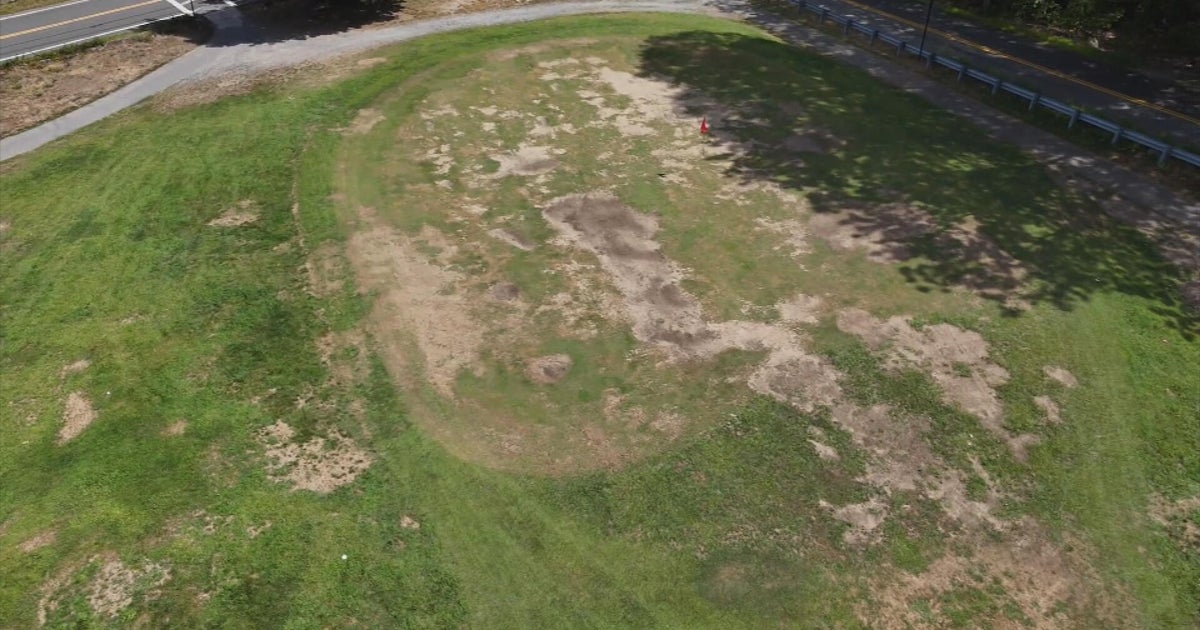
The worst golf course in America is in Weston, Massachusetts, according to a new ranking. Here's why.​


“Three Massachusetts golf courses have been ranked among the ten worst in the United States by a national golf website. At the top of that list is the Leo J. Martin Golf Course in Weston.

MyGolfSpy ranked the 18-hole course the absolute worst, citing its poor playing conditions. It's littered with patches of dead grass across fairways and greens covered in weeds and plenty of dirt.

"The fairways are mostly dirt, sand and then you get up to the green, if you hit a good shot and there's absolutely no way to judge where the putt's going to go," said golfer Jared McEvoy.

Despite its reputation, Leo J. Martin still attracts players looking for an affordable round of golf. Green fees on weekdays are $27 for 18 holes and $19 for nine, which are considered cheap for the Boston area.”


-Shitty golf course, 10 miles as the crow flies from beacon hill, directly adjacent to the commuter rail line, charles river waterfront… I can think of a few ways this land could be repurposed into something much better. Theres like 8 more golf courses close by anyways…

IMG_3683.jpeg
 
She will fill the seat left vacant by the resignation of Chantal Lima Barbosa. Skerritt will remain in the role until the end of 2027, when Lima Barbosa’s term was set to expire.
[...]
Boston is the only city in Massachusetts that does not elect its School Committee. The appointed committee has been in place since the change in 1992, when then-Mayor Ray Flynn replaced the elected members with his own appointees to eliminate infighting and dysfunction on the board. In 2023, Wu vetoed a City Council bill to switch back to an elected board.
 
Opting to go here vs creating a rabbit hole in the Lyra thread....


kz1000ps posted this in a series of photos...

View attachment 66005

There, prominent in the background is the Cathedral of the Holy Cross. Every time I see it in a photo, I lament what was never built: the grand western spire. Boston has many notable nods to our European architectural roots, but this classic element of a tall gothic spire that you'd find in Europe is one of the sadder "never built" examples in the city in my opinion.

View attachment 66004
(lithograph courtesy of "Historic New England" that dates this to 1871).
And it wasn't built because the towers, which were built along the southeastern edge of Boston Neck (the old town gallows were outside the town gate across the Neck at what is now Berkeley Street), settled out of plumb, and can't support the original design. When the five steel (lighter than traditional bell-metal bronze) bells of Holy Trinity Church were transferred and installed at the cathedral ten years ago, a structural steel framework was erected within the receiving tower to prevent load impact on the existing structure.

People don't realize that, volumetrically, the cathedral is approximately the same size as the main body of Westminster Abbey (that is, excluding the Henry VII Chapel extension) - the proportions are different, though: the cathedral's nave is broader and is without a tribune/triforium level, and the unusually styled wood-trussed vault (Patrick Keeley started out as a carpenter, and the vault is a testament to that and to the dedication of the cathedral to the Holy Cross of wood) is somewhat squatter. The renovations/refurbishment of the cathedral endowed it with good acoustics of which it had formerly been robbed by hundreds of square feet of carpeting - the entire floor and substructure was rebuilt, and surfaced in marble; the result of which is that the building now properly "sings" as an instrument. It's been a transformation, and visitors are consistently admiring and appreciative. The renovation won many awards, and for good reason.

Unlike St Patrick's in Manhattan, which was built on a few years' lag from Boston's cathedral and designed by James Renwick in a more academically "correct" Gothic Revival style (though the piers are only actual stone up a couple of dozen feet, and disguised concrete above that....), Keeley used a more idiosyncratic Puginesque style for Boston's cathedral and gleefully exploited the opportunities offered by using cast iron for its piers; the result is, with the new interior lighting and painting scheme, Boston's cathedral now has a thoroughly airier feel than New York's. (The renovators paid good attention to the opportunities afforded to them.)
 
Last edited:
Well well well…

The worst golf course in America is in Weston, Massachusetts, according to a new ranking. Here's why.​


“Three Massachusetts golf courses have been ranked among the ten worst in the United States by a national golf website. At the top of that list is the Leo J. Martin Golf Course in Weston.

MyGolfSpy ranked the 18-hole course the absolute worst, citing its poor playing conditions. It's littered with patches of dead grass across fairways and greens covered in weeds and plenty of dirt.

"The fairways are mostly dirt, sand and then you get up to the green, if you hit a good shot and there's absolutely no way to judge where the putt's going to go," said golfer Jared McEvoy.

Despite its reputation, Leo J. Martin still attracts players looking for an affordable round of golf. Green fees on weekdays are $27 for 18 holes and $19 for nine, which are considered cheap for the Boston area.”


-Shitty golf course, 10 miles as the crow flies from beacon hill, directly adjacent to the commuter rail line, charles river waterfront… I can think of a few ways this land could be repurposed into something much better. Theres like 8 more golf courses close by anyways…

View attachment 66047

That’s like saying who needs Burger King because there are eight steakhouses nearby. Most of those other courses are private and a million miles beyond the reach of the Leo Martin demographic(or the demo at nearly any other state/city-owned track) - typically beginners, individuals of more modest means and retirees on fixed incomes or folks who don’t play enough to justify the expense of a private club membership. Besides, the people of Weston would much prefer the dusty dog track they know to the large scale redevelopment and density they don’t.
 
And it wasn't built because the towers, which were built along the southeastern edge of Boston Neck (the old town gallows were outside the town gate across the Neck at what is now Berkeley Street), settled out of plumb, and can't support the original design. When the five steel (lighter than traditional bell-metal bronze) bells of Holy Trinity Church were transferred and installed at the cathedral ten years ago, a structural steel framework was erected within the receiving tower to prevent load impact on the existing structure.

People don't realize that, volumetrically, the cathedral is approximately the same size as the main body of Westminster Abbey (that is, excluding the Henry VII Chapel extension) - the proportions are different, though: the cathedral's nave is broader and is without a tribune/triforium level, and the unusually styled wood-trussed vault (Patrick Keeley started out as a carpenter, and the vault is a testament to that and to the dedication of the cathedral to the Holy Cross of wood) is somewhat squatter. The renovations/refurbishment of the cathedral endowed it with good acoustics of which it had formerly been robbed by hundreds of square feet of carpeting - the entire floor and substructure was rebuilt, and surfaced in marble; the result of which is that the building now properly "sings" as an instrument. It's been a transformation, and visitors are consistently admiring and appreciative. The renovation won many awards, and for good reason.

Unlike St Patrick's in Manhattan, which was built on a few years' lag from Boston's cathedral and designed by James Renwick in a more academically "correct" Gothic Revival style (though the piers are only actual stone up a couple of dozen feet, and disguised concrete above that....), Keeley used a more idiosyncratic Puginesque style for Boston's cathedral and gleefully exploited the opportunities offered by using cast iron for its piers; the result is, with the new interior lighting and painting scheme, Boston's cathedral now has a thoroughly airier feel than New York's. (The renovators paid good attention to the opportunities afforded to them.)
PS: For folks who've not seen the exterior or interior of the Cathedral of The Holy Cross, Boston, since the completion of the five-year renovation project in April 2019, here's a short video (I always prefer architectural depictions that include humans, as it provides a much clearer sense of multi-dimensional scale) - you can see more clearly it's no longer the grim and rather forbidding fortress it long appeared to be:

 
Does anyone else remember the huge lightsaber fight that took place on Boston Common in May 2016? It was called "Cats in Space", and there were hundreds of people fighting with plastic lightsabers on the Common. I was still in high school when this happened, and I went with two friends to participate in the massive lightsaber battle. It was one of the craziest experiences I had in Boston growing up. Here's a YouTube video of the event, and this is a Globe article about the event, with this picture included:
cats in space.jpg


Some pics from Flickr:
catsinspace.jpg
catsinspace2.jpg

catsinspace3.jpg
catsinspace5.jpg

catsinspace4.jpg
(source)

Someone attempted to redo this event in May 2017, but only around 25-30 people showed up. I'd love it if something like this happens again in Boston.
 
Last edited:
This is apparantly a record year for ballot proposals. The full list with all their texts are here

This is the very, very early stages for them and most won't actually appear on the ballot (supporters would need to get over 70K signatures to make that happen). But there are a bunch on the list that are probably of interest to people here. There are several about zoning. One would change the minimum lot size for SFHs to 5000 square feet, statewide. It looks like a couple aim to repeal the MBTA Communities law. There's rent control and "An Act to to Prevent Overdevelopment" (ffs) and a bunch others.

Actually getting any of these on the ballot will require some resources and a campaign. Maybe folks here know which ones have some momentum behind them.
 
The proposal to change how zoning amendments are passed is an extra special level of screw you. It makes it extra onerous for municipalities to modify their zoning and gives citizen plenty of ways to gum up the works.
 
One would change the minimum lot size for SFHs to 5000 square feet, statewide.

The criminal stupidity of such a proposal is laid bare by the tens of thousands of preexisting SFH units in metro Boston that be suddenly rendered retroactively illegal. Vast swaths of Boston, Cambridge, Brookline, Quincy, Everett, Medford, Malden, Revere, Saugus--and probably even some of the more modest sections of Newton, Waltham, Dedham, etc. Tens of thousands of units that compose great, walkable, picturesque, complete urban neighborhoods. Making this a beautifully simple litmus test for one's feelings vis-a-vis urbanism. Hate urbanism? Support this proposal!
 

Back
Top