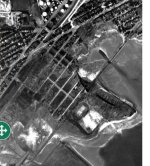
For want of a better place for it, this is more of a lost roads story, but I think it fits, because it is most definitely an odd piece of public way. Driving to and from Logan's economy garage, I was always facinated by
Neptune Road. I thought it looked like a forlorn, forgotten segment of Olmsted's work in the same vein as Park Drive in the fens; a lush, central median boulevard - just one that goes nowhere. In fact, it is the last remaining fragment of Olmsted's vision for this area. It the last remaining remnant of a grand waterfront plan, swallowed by the frenetic pace of demand for access to the air.
Neptune Road never reached it's full potential; Olmsted intended it as a central boulevard of a grand east boston grid, built to a plan proposed as early as the 1860s, leading into a waterfront park, later known as the World Wars memorial park - Olmsted's biggest neighborhood park.
View attachment 6739 View attachment 6740
However, these plans were never executed in full, as WW2 and air travel happened. Leading up to war, the southern grid was only built up from Maverick as far as Porter Street, as well as Neptune itself and the few blocks that didn't require new landfill. Indeed, the void left behind would come to define the future boundary between Logan and East Boston.
View attachment 6741
By 1950, just 12 years and over 2 square miles of landfill later, aerial imagry shows a sight already recognizable as Logan International airport, with all but one of its current runways havimg been built. This was the end of the street grid planned for East Boston; the initial construction of Logan required next to no land takings. The Neptune grid just never filled in; at the outbreak of war, few lots were occupied.
View attachment 6743
Even so, until the 1960s, it was still possible to build a grid north from Neptune; indeed, the siting of 1952 built Wood Island seems intended to provide a center piece to this area. Yet, as a result, Neptune was severed at the track crossing from Day Square, sealing it's fate. Ultimately, this area wouldn't be filled in until the 1970s, by which time the area had become fully swallowed by Logan. The few residential buildings ever built, and Olmsted's park, were soon demolished to make way for aviation support facilities and a runway extension.
View attachment 6742View attachment 6744
In the 21st century, all that remains of Olmsted's vision is the oddly disconnected grid of Frankfort and Swift terrace, and the stub of Neptune Road, which remains, to this day, a fully accessible public road, a beautiful boulevard to nowhere.


www.bostonglobe.com