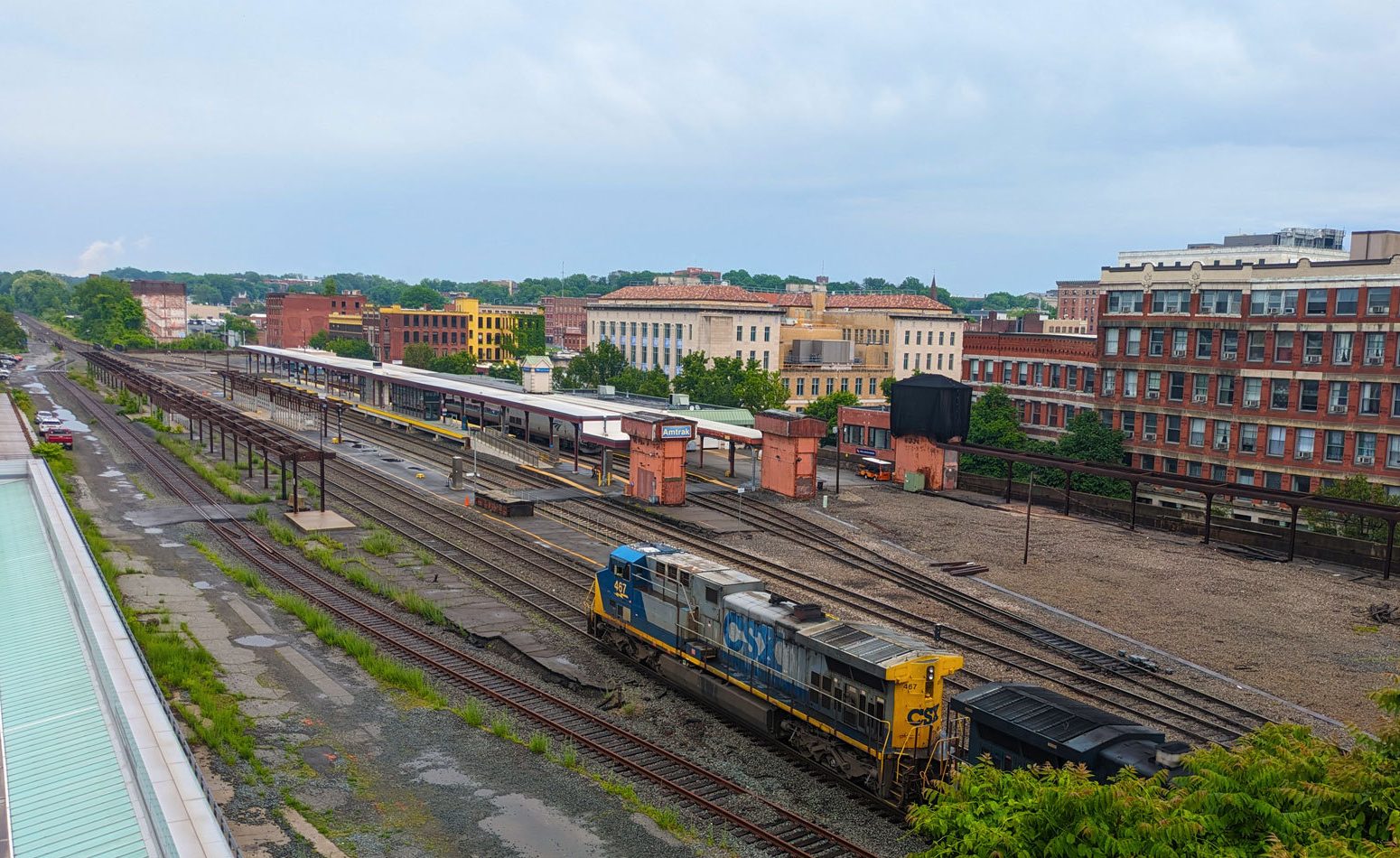
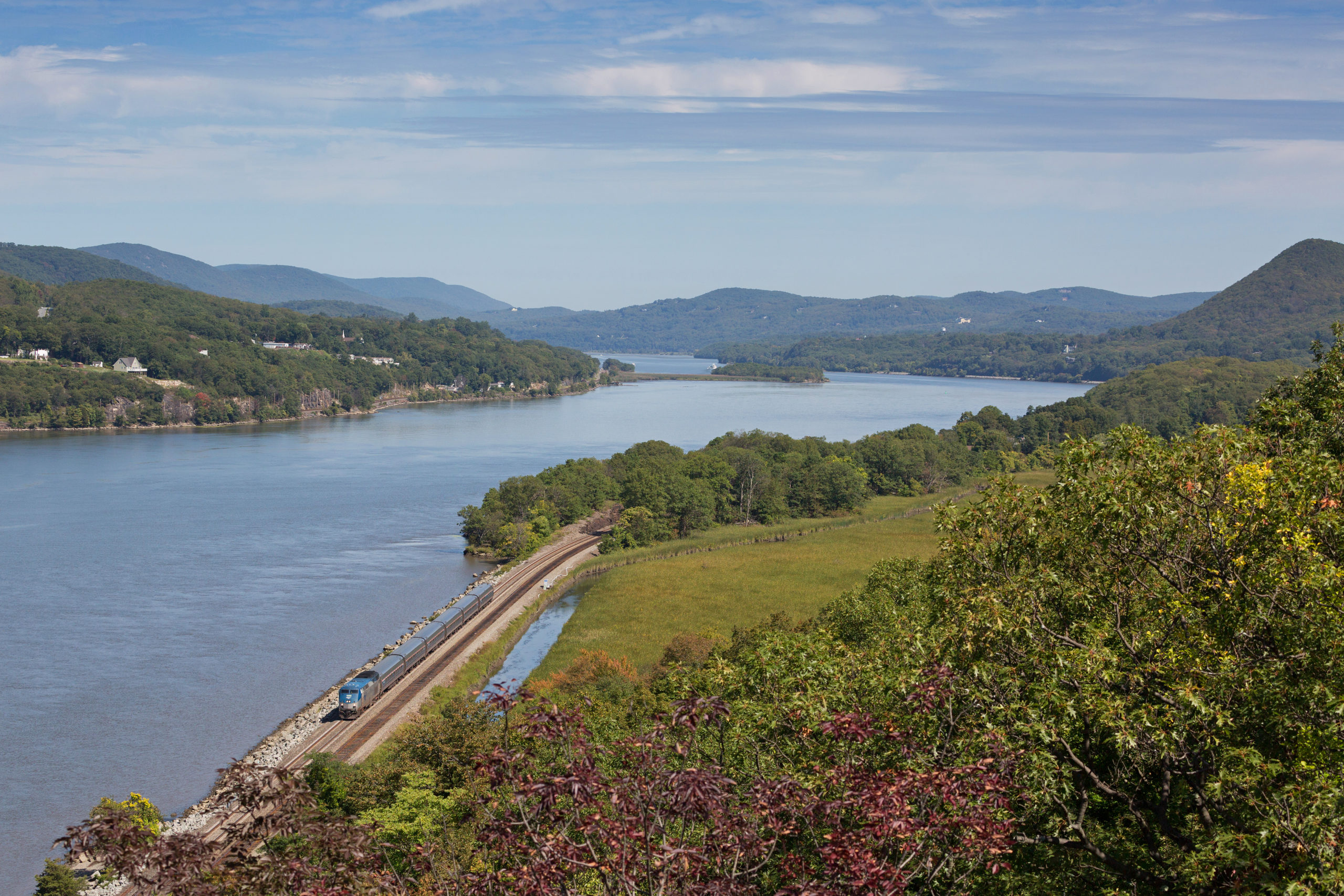
I think we are close to having the same understanding of things, but I would point out that there is a reason for timed transfer between Boston-Albany service and LSL trains, due to the local vs limited aspect of their stops. You can't take the Lake Shore Limited from Cleveland to Palmer, but you could take the train from Cleveland to Palmer if you transfer in Springfield. There may not be a lot of customers for that ticket, but if we can design the system to enable it, especially when the design isn't a significant cost bloat, then why shouldn't we?
Oh yeah, I'm guessing we have pretty similar understandings of this, but I'll try to answer your question.
The overwhelming primary purpose for the Boston-Springfield-Albany service is to improve frequencies throughout the day at those (and intermediate) stops. We need enough options through the day to actually make that service useful. Transfers, and especially timed transfers, are nice, but secondary. In your example of timing the Boston-Albany with the Lake Shore Limited, that would be failing in the primary purpose. One train would be following the other, just a couple minutes behind, the whole way from Albany to Boston. Riders would technically be able to pick from between the 1:00 from Albany to Boston or the 1:03 from Albany to Boston (for example), but that's not a meaningful difference for riders, and there would still be the same, huge gaps in the schedule through the rest of the day. The same would be true for every other stop along the line. To improve frequency and give more people more flexibility in travel, you need to run the new East-West trains when there isn't already a Lake Shore Limited train running. That is overwhelmingly more important than basically any possible transfer.
@millerm277 points out that that running those two services together could help with capacity, and that's true. You'd be running two trains at the same time, so that would carry more people. But I'm not aware of any capacity problems on the existing Lake Shore Limited. Someone else knows better than me, but a quick poke around Amtrak's website and I can't find any sold out trains, even day-of. Maybe those trains sell out around the holidays, but that's not a reason to run a redundant, mostly empty train every day the rest of the year.
Yes, if you ran these services together, you could get a timed transfer to Palmer (that'll be the only local stop, right?). But that's really inconsequential compared to the downsides. People taking the train from west of Albany to Palmer (population 12,000) might just have to wait a bit for transfer. That's vastly better than running redundant trains every day.
Don't get me wrong, obviously transfers are great. They improve options for people. Amtrak doesn't do a lot of timed transfers around the country, but we actually have the routes and the station to pull off a four-way timed transfer, which should be seen as minor miracle for North American railroading. A nickel for anyone who can name a
three-way timed transfer in the US, because I can't. It's great we're planning for this. But I think it's basically impossible you will ever, ever see a six-way timed transfer at Springfield. Any dollar we spend towards making more than four-way transfer is a wasted dollar.
There may not be a lot of customers for that ticket, but if we can design the system to enable it, especially when the design isn't a significant cost bloat, then why shouldn't we?
Yeah, the marginal cost of fixing up the last (almost certainly unnecessary) platform, might not cost too much extra, which is why I'm not too upset about it. It will never be used for a six-way transfer (or even a five-way), but maybe it's useful for some flexibility.
However, it is still bloat. It's not free. Just fixing up that extra platform will adds millions of dollars, maybe tens of millions. We're assuming it's not too much more, which is plausible, but we don't have any numbers. It could be that they can easily build on the existing infrastructure at the station. Or it could be the existing infrastructure is a huge impediment to things like ADA upgrades. We don't know. And either way, this kind of bloat at every level of planning is a part of why infrastructure costs keep going up. It's maybe not egregious on it's own, but it adds up and can be a sign of a worrying lack of planning.