I don’t think I’ve seen anything posted about it here, and I don’t know when it popped up (saw a link to it on Wikipedia), but it appears the MBTA is moving forward with a South Salem station. I’m not the best when it comes to understanding these, but they may also be discussing a yard at the Castle Hill area. The SOQ is due at the end of the month. Only thing I find new is the listing of 600ft Platforms (two side or one center), everything else seems typical or what was already discussed.

You are using an out of date browser. It may not display this or other websites correctly.
You should upgrade or use an alternative browser.
You should upgrade or use an alternative browser.
MBTA Commuter Rail (Operations, Keolis, & Short Term)
- Thread starter Balerion
- Start date

themissinglink
Senior Member
- Joined
- Jan 13, 2018
- Messages
- 2,201
- Reaction score
- 6,281
South Salem station is long overdue, so this is welcome news. I really hope it breaks ground before 2030.I don’t think I’ve seen anything posted about it here, and I don’t know when it popped up (saw a link to it on Wikipedia), but it appears the MBTA is moving forward with a South Salem station. I’m not the best when it comes to understanding these, but they may also be discussing a yard at the Castle Hill area. The SOQ is due at the end of the month. Only thing I find new is the listing of 600ft Platforms (two side or one center), everything else seems typical or what was already discussed.
Last edited:
themissinglink
Senior Member
- Joined
- Jan 13, 2018
- Messages
- 2,201
- Reaction score
- 6,281

Commuter Rail fare gates coming to Ruggles station next month
Commuter Rail riders using Ruggles Station will need to tap or scan their tickets to enter and exit the station, as the MBTA and Keolis announced new fare gates.
 www.boston25news.com
The change goes into effect on August 3 and will feature seven fare gates, including two wider accessible gates designed for wheelchairs, scooters, bicycles, strollers, and luggage.
“The installation of Commuter Rail fare gates at Ruggles is just the next step by the MBTA as we follow through on our commitment to improve fare collection and reinvest back into the system that our riders depend on,” said Phillip Eng, interim secretary of transportation and MBTA general manager and CEO.
[...]
Customer service staff will be available at Ruggles to help passengers during the transition. Back Bay Station is expected to become the next Commuter Rail station to receive fare gates in early 2027.

cubbe8
Active Member
- Joined
- Mar 18, 2022
- Messages
- 429
- Reaction score
- 763
I just passed through there today and most of them are in use and they were working on the last couple. Also there are none on Track 2.Commuter Rail fare gates coming to Ruggles station next month
Commuter Rail riders using Ruggles Station will need to tap or scan their tickets to enter and exit the station, as the MBTA and Keolis announced new fare gates.
themissinglink
Senior Member
- Joined
- Jan 13, 2018
- Messages
- 2,201
- Reaction score
- 6,281
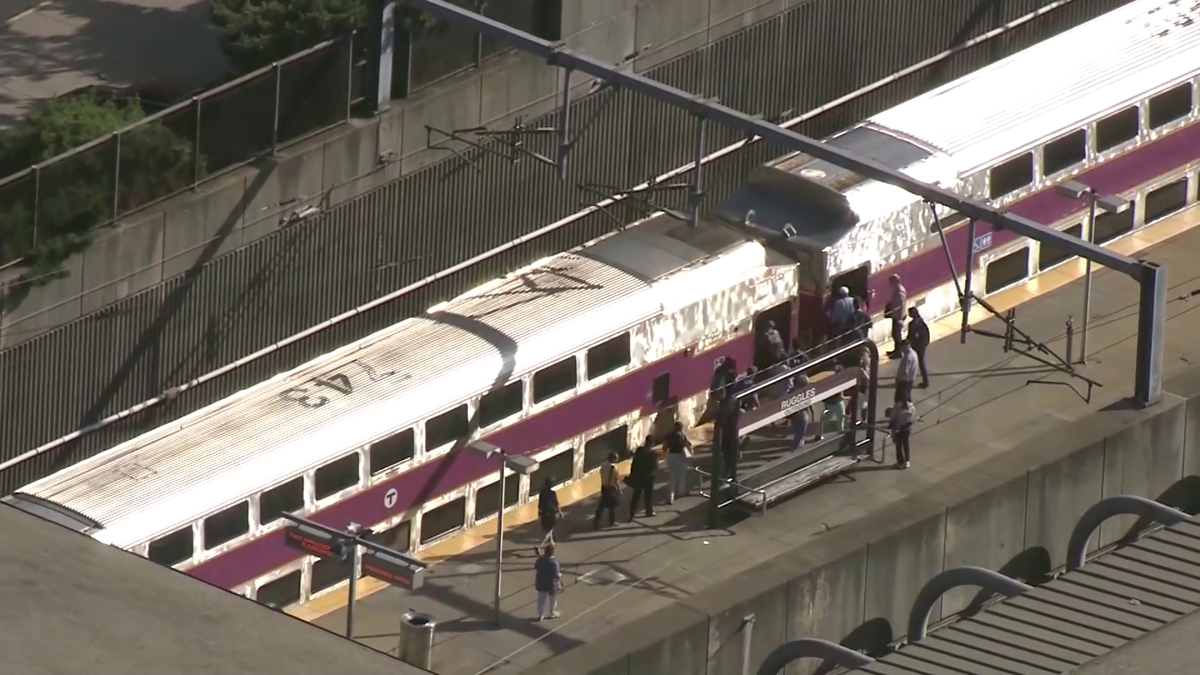
Fare gates now in use at Ruggles Station for commuter rail riders
Ruggles Station now requires commuter rail riders to scan tickets or passes at fare gates as the MBTA expands its anti-fare-evasion effort.
 www.wcvb.com
themissinglink
Senior Member
- Joined
- Jan 13, 2018
- Messages
- 2,201
- Reaction score
- 6,281
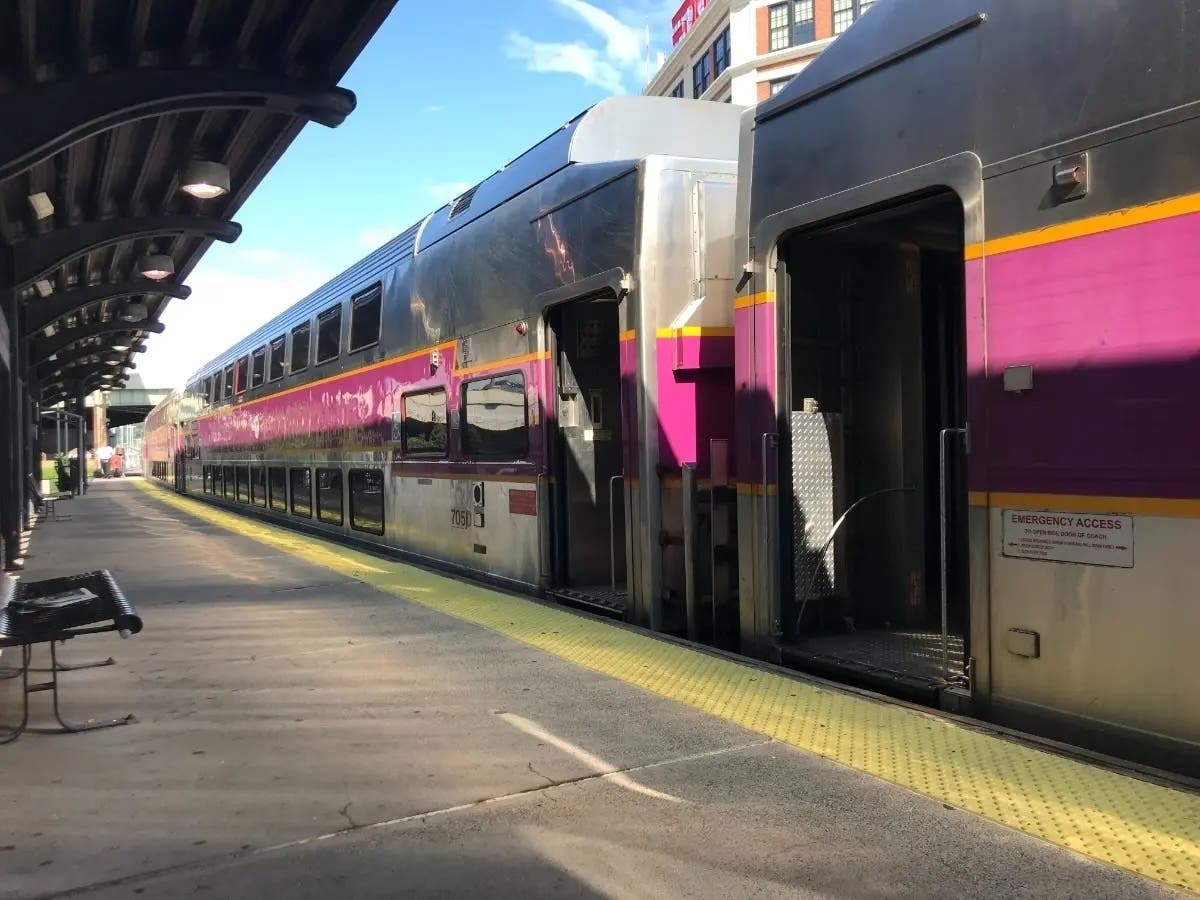
New Report Examines Worcester’s Passenger Rail Needs
Worcester city leaders will hold a press conference to discuss findings from a recent Worcester MBTA Working Group report.
 patch.com
Worcester will outline a new vision for the city's passenger rail service Monday at Union Station.
Worcester city leaders will hold a press conference at 10 a.m. on Monday in the station’s Grand Hall to discuss findings from a recent Worcester MBTA Working Group report. City officials, working group members, state representatives, Worcester Regional Chamber of Commerce leaders, Worcester Regional Research Bureau representatives and MBTA riders are expected to attend.
The report examines what Worcester needs to preserve, expand and modernize passenger rail service now and in the future, according to the city.
Mayor Joseph M. Petty and City Manager Eric D. Batista established the working group in April 2024. The city said at the time that the group would work with the MBTA to improve commuter service through Union Station, examine the implications of east-west passenger rail and create a structure for consistent public input on transportation between Worcester and Boston.
themissinglink
Senior Member
- Joined
- Jan 13, 2018
- Messages
- 2,201
- Reaction score
- 6,281
Worcester leaders demand return of MBTA express train, signal upgrades
Chairmans Report - Worcester MBTA Working Group.pdfCity leaders are demanding the MBTA bring back the Worcester-to-Boston express service, ensure non-express trips aren’t slow and improve signals to speed up travel times. These recommendations, along with several others, are part of a 30-page report released Monday by the city’s MBTA working group.
[...]
The first demand from the group is the return of the “heart to hub” express service. The MBTA launched the service in 2016 to allow commuters in Worcester and Boston to travel by train without stopping at the stations between Framingham and Worcester.
These services continued until September 2023, when the MBTA and Keolis, the company that operates the commuter rail system, announced they would add more stops to the “heart to hub” services. These additional stops increased ridership on the Framingham/Worcester Line but effectively eliminated the original express service.
The MBTA brought back an express service in 2024 but it does not arrive at South Station until 8:45 a.m., which is often too late for 9-5 workers, according to the report. Additionally, the train’s express service is from Worcester to Boston only. The group wants the MBTA to bring back the 55- to 60-minute express service while also ensuring non-express trips are capped at no more than 70 minutes. “The train should be the easiest, more convenient option,” said Batista. Modernizing outdated signals is also a priority for the group. The group report reads that when signals are upgraded, trains can run faster and on time.
Gov. Maura Healey’s administration has allocated $22 million for signalization modernization, with a targeted completion date at the end of the year, according to the report.
Last edited:
What's the issue with running every MBTA trip as an all-stop local service and having East-West rail as the express service? I know Amtrak is generally more expensive, but weren't there similar explorations in Providence with the "Rhody Pass" to have some sort of collaboration between systems for riders wanting express access. The future frequency of East-West Rail makes it seem redundant to run express MBTA service on top of Amtrak intercity and a disservice to the TOD potential of the towns and future infill stops on the way, same with NER and Providence. If speed is the primary concern, then shouldn't they be advocating for electrification?
My other thought is why do they want to skip over West Station so much? I get it saves some time, it's still in design, it's a straight shot and there's lots of space, but I think it is potentially a decent destination and huge rail transfer node in the future (it would probably be the third most important station for commuters after South Station and Back Bay). The potential is huge with the future of the Grand Junction and Cambridge/North Station service (even more so with speculative super far flung BL West Extension and Urban Ring to Ruggles/Harvard/Cambridge). I think it would make sense for all services to stop here rather than stopping at Lansdowne or Boston Landing.
My other thought is why do they want to skip over West Station so much? I get it saves some time, it's still in design, it's a straight shot and there's lots of space, but I think it is potentially a decent destination and huge rail transfer node in the future (it would probably be the third most important station for commuters after South Station and Back Bay). The potential is huge with the future of the Grand Junction and Cambridge/North Station service (even more so with speculative super far flung BL West Extension and Urban Ring to Ruggles/Harvard/Cambridge). I think it would make sense for all services to stop here rather than stopping at Lansdowne or Boston Landing.
What's the issue with running every MBTA trip as an all-stop local service and having East-West rail as the express service?
No room. Even it theoretically possible, I have serious doubts the MBTA would consider more than 4 tph. And that's what it was doing at the Peak before the pandemic.
H2H always had a crappy timeslot because of that. Any earlier and you'd be robbing Peter to pay Paul.
F-Line to Dudley
Superstar
- Joined
- Nov 2, 2010
- Messages
- 10,112
- Reaction score
- 12,904
Dude...the T's own Rail Vision projects 10 TPH on the inner Worcester Line: 4 TPH in :30 Framingham all-locals, 4 TPH in :30 Worcester semi-expresses, and up to 2 TPH for hourly Amtrak.No room. Even it theoretically possible, I have serious doubts the MBTA would consider more than 4 tph. And that's what it was doing at the Peak before the pandemic.
H2H always had a crappy timeslot because of that. Any earlier and you'd be robbing Peter to pay Paul.
And you've been corrected on this very claim before, so don't claim ignorance while you try to vibes-troll yet another thread.

F-Line to Dudley
Superstar
- Joined
- Nov 2, 2010
- Messages
- 10,112
- Reaction score
- 12,904
The T is envisioning a zone express setup for Worcester where one :30 frequency layer does all local stops inside of Framingham and one :30 frequency layer skips to Framingham and then does all local stops to Worcester. Sort of how the New Haven Line separates GCT-Stamford locals from Stamford-New Haven locals and GCT-New Haven expresses. Having one all-local pattern makes the travel times to, say, Grafton, absolutely excruciating. So splitting the beast gives equitable travel times to each half of the line while maintaining the :30 Regional Rail frequency to all destinations. Amtrak obviously isn't going to help with the intermediate stops at all since it hops from Back Bay to Framingham to Worcester, and Amtrak isn't going to be any denser than hourly at full-build (and less than that before full-build, so H2H occupies a stiffening niche in the interim) because of traffic constraints west of Worcester.What's the issue with running every MBTA trip as an all-stop local service and having East-West rail as the express service? I know Amtrak is generally more expensive, but weren't there similar explorations in Providence with the "Rhody Pass" to have some sort of collaboration between systems for riders wanting express access. The future frequency of East-West Rail makes it seem redundant to run express MBTA service on top of Amtrak intercity and a disservice to the TOD potential of the towns and future infill stops on the way, same with NER and Providence.
This is duh-obvious, of course. Worcester would benefit from electrification with EMU's almost more than any other line. Framingham all-locals can slim down from 1:00 to about :40 with stock EMU's, and a zone express to Worcester can slim down from about 1:25 to 1:08. But an all-local to Worcester would still run about 1:26 with EMU's...far too long. It's the service pattern itself that is the problem. There aren't any neat tricks for making 16 (possibly 19 future) intermediate stops go by any quicker on a unified run.If speed is the primary concern, then shouldn't they be advocating for electrification?
West is not going to be the third-most important CR stop in any universe. The only bus connections it will have is the crippled 64 and 3 members-only jitneys to Harvard, Kendall, and LMA. The Grand Junction dinky has pretty low odds of happening due to traffic management difficulties, and the Urban Ring (whose West stop will only be on the Harvard Square branch at sub-mainline/alt-routed frequencies) is far off. So it's probably going to be a couple generations before it has any rail transfers whatsoever. I honestly think Lansdowne with all the Kenmore/LMA buses is probably going to slug higher on ridership at least until the UR gets implanted at West, and is far more likely to be included on a Worcester zone express than either West or Boston Landing.My other thought is why do they want to skip over West Station so much? I get it saves some time, it's still in design, it's a straight shot and there's lots of space, but I think it is potentially a decent destination and huge rail transfer node in the future (it would probably be the third most important station for commuters after South Station and Back Bay). The potential is huge with the future of the Grand Junction and Cambridge/North Station service (even more so with speculative super far flung BL West Extension and Urban Ring to Ruggles/Harvard/Cambridge). I think it would make sense for all services to stop here rather than stopping at Lansdowne or Boston Landing.
BeansTheCat
Active Member
- Joined
- Aug 14, 2024
- Messages
- 219
- Reaction score
- 710
An ideal scenario here would probably feature :30 minute frequency true express trains (Worcester, Framingham, and Boston stations) and :30 minute frequency all-local trains with timed transfers at Framingham. This is faster express service for Worcester, maintains semi-express service at the cost of a transfer, and provides the ability to easily travel between any two stations on the line easily. The current schedules seem to accomodate some semi-express to local transfers at Framingham, but not anything consistent. The full express service also allows Amtrak trips to easily slot in as a replacement/supplement, but would probably require some amount of fare integration with MBTA. IMO, this allows for better service with only 8 TPH instead of the current 10 TPH envisioned. The only major limitation I'm aware of is that Framingham transfers require going up & over the tracks. The fix is probably rebuilding Framingham as 4 tracks with two (or three) island platforms that enable cross-platform transfers. This shouldn't be too difficult, but based on other CR station cost, the T could easily pass $100M without capital delivery reform.The T is envisioning a zone express setup for Worcester where one :30 frequency layer does all local stops inside of Framingham and one :30 frequency layer skips to Framingham and then does all local stops to Worcester. Sort of how the New Haven Line separates GCT-Stamford locals from Stamford-New Haven locals and GCT-New Haven expresses. Having one all-local pattern makes the travel times to, say, Grafton, absolutely excruciating. So splitting the beast gives equitable travel times to each half of the line while maintaining the :30 Regional Rail frequency to all destinations. Amtrak obviously isn't going to help with the intermediate stops at all since it hops from Back Bay to Framingham to Worcester, and Amtrak isn't going to be any denser than hourly at full-build (and less than that before full-build, so H2H occupies a stiffening niche in the interim) because of traffic constraints west of Worcester.
This is duh-obvious, of course. Worcester would benefit from electrification with EMU's almost more than any other line. Framingham all-locals can slim down from 1:00 to about :40 with stock EMU's, and a zone express to Worcester can slim down from about 1:25 to 1:08. But an all-local to Worcester would still run about 1:26 with EMU's...far too long. It's the service pattern itself that is the problem. There aren't any neat tricks for making 16 (possibly 19 future) intermediate stops go by any quicker on a unified run.
While I don't expect West to become the third-most important CR station on the line, it's not completely ridiculous. Boston Landing, which is less than 10 years old, already has the 4th highest ridership on the Worcester line and was within 100 daily riders of Lansdowne. West Station has significantly more developable land than the area around Boston Landing did, and the city/state seem very welcome to the idea of higher densities there (30+ stories compared to 12-15 max at Boston Landing). West Station would also have a much denser walkshed from the jump, close proximity to a major job center (BU), and should have better connectivity across the Pike. None of this guarantees a bustling transit hub, but it is absolutely set up to succeed.West is not going to be the third-most important CR stop in any universe. The only bus connections it will have is the crippled 64 and 3 members-only jitneys to Harvard, Kendall, and LMA. The Grand Junction dinky has pretty low odds of happening due to traffic management difficulties, and the Urban Ring (whose West stop will only be on the Harvard Square branch at sub-mainline/alt-routed frequencies) is far off. So it's probably going to be a couple generations before it has any rail transfers whatsoever. I honestly think Lansdowne with all the Kenmore/LMA buses is probably going to slug higher on ridership at least until the UR gets implanted at West, and is far more likely to be included on a Worcester zone express than either West or Boston Landing.
Another note: all of the local Allston-Brighton activists for West Station, including Fred Salvucci(!), have been adamant that all trains going through the station stop at it. This is even to the point of pushing back on 4-track station designs. Especially while Boston Landing continues to get express service, I'd be quite surprised to West Station skipped.
Is 10 TPH doable with just the Natick triple track, express tracks at West Station, and a few more crossovers? I'd image to manage that many overtakes that you'd want either a 3 or 4 track mainline (e.g. Metro-North New Haven Line, New Jersey Transit Northeast Corridor Line) or passing tracks at every station (e.g. railways in Taiwan - Taiwan Railway, Taiwan HSR, and the Taoyuan Airport MRT - all heavily mix local and expresses services. They generally have 2-track mainlines but tend to have 4+ tracks at every station, and the overtakes happen when the locals are stopped at the stations).
bigeman312
Senior Member
- Joined
- Jul 19, 2012
- Messages
- 2,439
- Reaction score
- 2,552
I’m having a hard time envisioning West Station being more important than North Station, which serves the Newburyport, Rockport, Haverhill, Lowell, Fitchburg, and Downeaster Amtrak lines, with connections to the Green and Orange Lines, is downstairs from TD Garden, and is the closest Commuter Rail station to many institutions and businesses, like MGH, for example.What's the issue with running every MBTA trip as an all-stop local service and having East-West rail as the express service? I know Amtrak is generally more expensive, but weren't there similar explorations in Providence with the "Rhody Pass" to have some sort of collaboration between systems for riders wanting express access. The future frequency of East-West Rail makes it seem redundant to run express MBTA service on top of Amtrak intercity and a disservice to the TOD potential of the towns and future infill stops on the way, same with NER and Providence. If speed is the primary concern, then shouldn't they be advocating for electrification?
My other thought is why do they want to skip over West Station so much? I get it saves some time, it's still in design, it's a straight shot and there's lots of space, but I think it is potentially a decent destination and huge rail transfer node in the future (it would probably be the third most important station for commuters after South Station and Back Bay). The potential is huge with the future of the Grand Junction and Cambridge/North Station service (even more so with speculative super far flung BL West Extension and Urban Ring to Ruggles/Harvard/Cambridge). I think it would make sense for all services to stop here rather than stopping at Lansdowne or Boston Landing.
West Station will, at most, serve Worcester Line and Inland Route / East-West trains with no direct connection to rapid transit. It’s probably pretty close to North Station in terms of employment catchment, but that’s about the only metric it’s competitive on.
Last edited:
I mean third most important station on the Worcester line, not the entire system. I get it is abysmal for bus transfers, but I think it has more long-term potential than Lansdowne, Newton stations, or Boston Landing due to Grand Junction proximity and the future developments there.I’m having a hard time envisioning West Station being more important than North Station, which serves the Newburyport, Rockport, Haverhill, Lowell, Fitchburg, and Downeaster Amtrak lines, with connections to the Green and Orange Lines, is downstairs from TD Garden, and is the closest Commuter Rail station to many institutions and businesses, like MGH, for example.
West Station will, at most, serve Worcester Line and Inland Route / East-West trains with no direct connection to rapid transit. It’s probably pretty close to North Station in terms of employment catchment, but that’s about the only metric it’s competitive on.

TheRatmeister
Senior Member
- Joined
- Sep 23, 2023
- Messages
- 1,632
- Reaction score
- 3,341
I would go 4th or 5th behind South Station obviously, Back Bay, Worcester, and maybe Framingham.I mean third most important station on the Worcester line, not the entire system. I get it is abysmal for bus transfers, but I think it has more long-term potential than Lansdowne, Newton stations, or Boston Landing due to Grand Junction proximity and the future developments there.
But I still think it should have passing tracks, it needs to be a huge pull to justify stopping Intercity services there. Like you said that's not impossible and it would be prudent to keep provisions for those services to stop in the future, but likely for 15 years after it opens you'd likely just be slowing Worcester commuters down.
the key point here - that with electrification, the zone express to worcester (all local stops after natick) will achieve Heart-2-Hub travel times that Worcester wants without introducing another stopping pattern into the clock facing schedule. So just electrify the dang thing.Framingham all-locals can slim down from 1:00 to about :40 with stock EMU's, and a zone express to Worcester can slim down from about 1:25 to 1:08.
And the few riders who want to pay extra to save another 10-15 mins can just ride amtrak.

HBH
Senior Member
- Joined
- Apr 17, 2018
- Messages
- 1,566
- Reaction score
- 4,761
Over 7 years ago I worked on conceptual designs of the triple track project on the Worcester line, final design was then awarded in 2021 and as far as I know no one has heard a thing publicly since about that project. Their own slides say it was supposed to be in construction by last year, and as far as I know they haven't even started environmental permitting. Worcester leaders need to get on the T to deliver their capital projects to enable these services.

Worcester Line Track and Stations Accessibility Improvements (P0261) Design and Engineering Services : Massachusetts Bay Transportation Authority : Free Download, Borrow, and Streaming : Internet Archive
Worcester Line Track and Stations Accessibility Improvements (P0261) Design and Engineering Services
archive.org

JumboBuc
Senior Member
- Joined
- Jun 26, 2013
- Messages
- 2,853
- Reaction score
- 2,129
Boston Landing is a great example of "if you build it, [they] will come." It's right up there among the highest ridership stations that don't also serve as transfer points with other rail lines (Red, Orange, Green, and Amtrak), which I don't think anybody really expected when it opened less than a decade ago. See: this Reddit chart.While I don't expect West to become the third-most important CR station on the line, it's not completely ridiculous. Boston Landing, which is less than 10 years old, already has the 4th highest ridership on the Worcester line and was within 100 daily riders of Lansdowne. West Station has significantly more developable land than the area around Boston Landing did, and the city/state seem very welcome to the idea of higher densities there (30+ stories compared to 12-15 max at Boston Landing). West Station would also have a much denser walkshed from the jump, close proximity to a major job center (BU), and should have better connectivity across the Pike. None of this guarantees a bustling transit hub, but it is absolutely set up to succeed.
I'd expect "West Station" (which is a truly terrible name: call it "Beacon Yards") to perform similarly to it and Lansdowne. They're all the sort of stations which would likely have Blue Line-esque ridership with more frequent service (Boston Landing and Lansdowne already aren't that far behind Suffolk Downs), but they don't make a ton of sense as intermediate stops for every CR train that comes through.
In my fantasy-pitch land I'd run a BLX along the Worcester ROW from the Grand Junction/BU Bridge to around Market St then duck under the river up to "Arsenal" in Watertown (maybe with another super-densely-zoned TOD "Birmingham" stop on the Boston side, too) . This could give frequent service to both West Station/Beacon Yards and Boston Landing, with only one of them (probably West Station/Beacon Yards?) providing a CR transfer.

Delvin4519
Active Member
- Joined
- Oct 8, 2022
- Messages
- 962
- Reaction score
- 1,657
"West Station" is absolutely a terrible name, and it should really be called "Beacon Yards". Literally not a single bus route can get to "West Station" easily because it's not "on the way to anything". "Beacon Yards" as a name accurately reflects the fact that the station is not on the bus grid that can be connected to anything."West Station" (which is a truly terrible name: call it "Beacon Yards")