MBTA Buses & Infrastructure

No, it's not going in circles - you're just not getting the point. Emergency services folks like bus lanes because they generally keep some part of the street clear even if it's for a few blocks. Where before bus lanes, they would be stuck in traffic and no one - masshole or ambulance/truck driver - had any space on the street to move into to get out of the way when lights/sirens are running. This is especially true of the places with "massive traffic backups" in the places you name.
Im glad you talked to someone who drove an ambulance once, but you can cool your attitude, bro. I’m not opposing bus lanes. But it’s asinine to make the argument you’re making, which is just a flat denial that poorly planned traffic decisions that cause backups have zero downstream effects on ALL vehicles, including ambulances, and that the downstream effects of any traffic change must be taken into account, especially in a city with like capacity. It is you who is not getting the point, and it’s a pretty basic one.
 
Last edited:
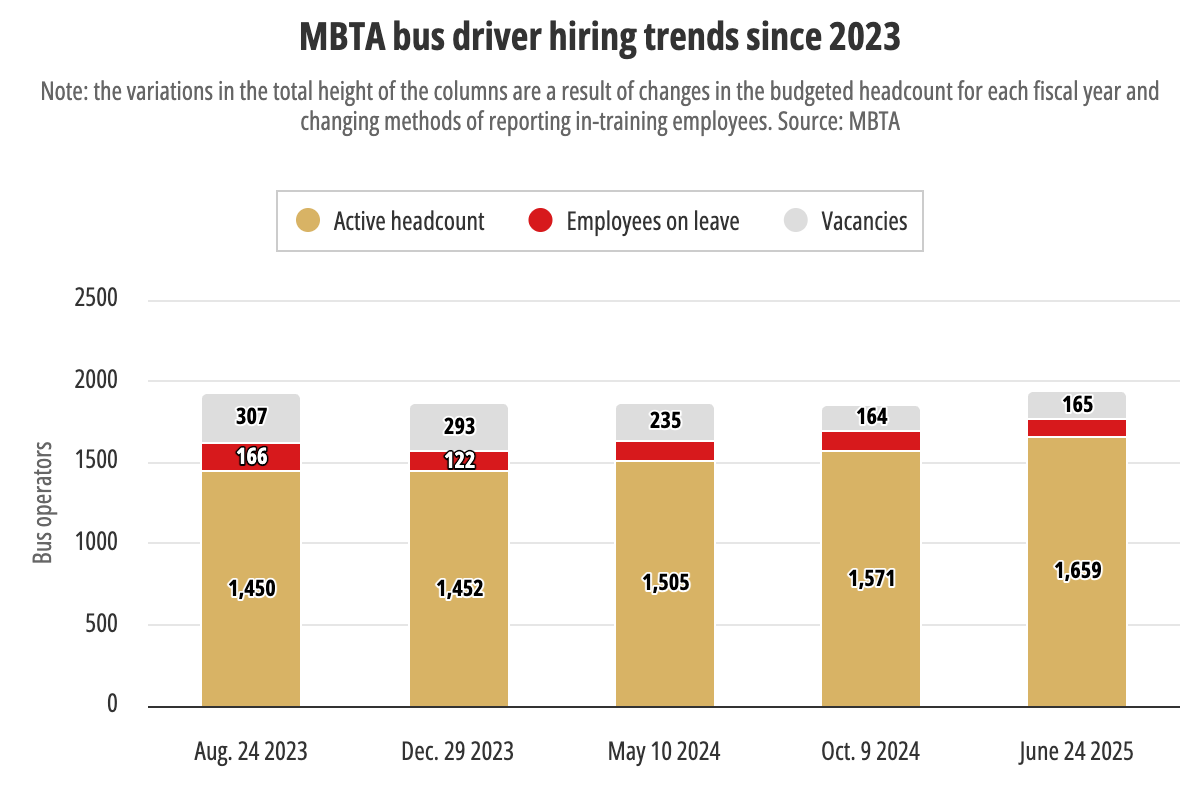
An update on bus operator hiring and Bus Network Redesign Phase II:

Man, I didn't realize even today, 2 years later, the T still hasn't been able to reach not even the FY2023 budgeted headcount. It's been so bogged down.

And now we're coming on the heels as solidly blue cities in Providence, Chicago, and Portland are getting ready to massacre their transit systems completely with crippling 25-45% cuts.

This doesn't look good, at all, in the context of borrowed time.
 
An update on bus operator hiring and Bus Network Redesign Phase II:

In order to meet its existing schedules, the T announced in a press release that "more than half of the additional bus operators available this spring will be dedicated to addressing traffic congestion" on just seven bus routes: the 1, 22, 23, 32, 66, 111, and Silver Line 4.

"These changes do not expand service or increase frequencies beyond the existing schedule," the press release clarified.
This is definitely concerning. However, it will be interesting to see how much of an impact automated bus lane enforcement has on enabling the T to run more service with the same number of operators. Interestingly, the scheduled rollout of bus lane enforcement (starting fall of 25 and running into the beginning of 26) lines up with the implementation of Phase 2 of BNRD:
"Beginning in 2025 and continuing through 2026, the MBTA will increase service frequencies on the 15, 22, 23, and 28 as part of Bus Network Redesign Phase II," the memo said. "These service changes include span and frequency promotions specifically bringing Routes 22 (+52 percent service, +16 operators) and 28 (+20 percent service, +8 operators) to High Frequency status, and increasing Route 23 service (+8 percent service, +3 operators)."
 
Last edited:
This is definitely concerning. However, it will be interesting to see how much of an impact automated bus lane enforcement has on enabling the T to run more service with the same number of operators. Interestingly, the scheduled rollout of bus lane enforcement (starting fall of 25 and running into the beginning of 26) lines up with the implementation of Phase 2 of BNRD:
The MBTA has 96.2% of pre-COVID scheduled revenue service hours, but only 88.3% of scheduled trips compared to pre-COVID. Routes are scheduled to take 9% longer and are scheduled 9% slower across the systemwide bus network on average, compared to pre-COVID.

Running off of pre-COVID 2019 staffing levels is only going to give us 91% of pre-COVID service.
 
Running off of pre-COVID 2019 staffing levels is only going to give us 91% of pre-COVID service.
That's assuming average bus speeds stay where they're currently at (differences between routes notwithstanding). Bus lane enforcement will almost certainly speed up busses, lowering cycle times and allowing the same amount of service to be delivered with fewer operators (or more service with existing operators). The only question here is how big of an effect this brings. I'd wager that the impact will be enough to make a sizeable difference, but not enough to completely close the pre-COVID gap in operator efficiency.

Also, you might have analyzed this elsewhere, but doesn't the significantly higher dropped trips rate pre-COVID shrink this difference as well? A number of the recent schedule adjustments have been a service reduction on paper, but in practice were made to accurately reflect the amount of service being provided.
 
That's assuming average bus speeds stay where they're currently at (differences between routes notwithstanding). Bus lane enforcement will almost certainly speed up busses, lowering cycle times and allowing the same amount of service to be delivered with fewer operators (or more service with existing operators). The only question here is how big of an effect this brings. I'd wager that the impact will be enough to make a sizeable difference, but not enough to completely close the pre-COVID gap in operator efficiency.

Also, you might have analyzed this elsewhere, but doesn't the significantly higher dropped trips rate pre-COVID shrink this difference as well? A number of the recent schedule adjustments have been a service reduction on paper, but in practice were made to accurately reflect the amount of service being provided.

The dropped trips were mostly during the 2021-2023 era at the end of Baker's term, that's when the schedule cuts were made, between Q1 2022 and Summer 2023.

I'm wary whether bus lane enforcement is going to make a difference. Mayor Wu of Boston has been busy ripping apart bus lanes in Copley, South Boston, and in the North End, and she's been doing it since the new federal administration took over.

At most I think maybe 1-2% out of the 9% can be restored, but I hardly think it's going to be noticable, that is, if the bus lanes even exist at all, or whether the T is even going to get funding at all after next spring to begin with.
 
Automated lane enforcement can only help so much if municipalities aren't building bus lanes (or are removing them). Of the routes mentioned above (1, 22, 23, 32, 66, 111, and SL4), only the SL4 has more than ~20% of its route miles on bus lanes. The 23, 32, and northbound 111 have none at all. In August 2020, we were told that Warren Street, Malcolm X Boulevard, and Hyde Park Avenue were going to have outreach in the fall for possible spring 2021 implementation. That simply didn't happen.
 
Fines would increase incrementally if the same vehicle is caught violating a bus lane multiple times in any 60-day period:

  • $50 for the second offense
  • $100 for the third offense
  • $125 for the fourth and subsequent offenses
Commercial vehicles – like the delivery vans that habitually block the Silver Line bus lanes downtown – will face steeper fines, and a longer lookback period for multiple offenses.

  • $50 for the first bus lane violation by a commercial vehicle within any 12-month period
  • $75 for the second offense within a 12-month period
  • $100 for the third offense within a 12-month period
  • $125 for the fourth and subsequent offense within any 12-month period
 
Fourth and subsequent offenses should be impound the vehicle and driver loses their license. At that point you have proven you are a sociopathic scofflaw.
It has long baffled me that some of the worst offenders (UPS) are actually given more lenient treatment and a bulk discount.
 
How does American enforcement of bus lane measures compare to those in Europe? I think I know the answer, but would like to hear it from someone more knowledgeable.
 
Automated lane enforcement can only help so much if municipalities aren't building bus lanes (or are removing them). Of the routes mentioned above (1, 22, 23, 32, 66, 111, and SL4), only the SL4 has more than ~20% of its route miles on bus lanes. The 23, 32, and northbound 111 have none at all. In August 2020, we were told that Warren Street, Malcolm X Boulevard, and Hyde Park Avenue were going to have outreach in the fall for possible spring 2021 implementation. That simply didn't happen.
They redid Hyde Park Ave not that many years ago (but Boston being what it is, the city still has managed to block random turns with gross Jersey barriers that have sat there for years). I really dont know what the solution is to the next re-design... either parking needs to go or a lane needs to go, or the median needs to be removed. I dont spend a ton of time on this road but I have rarely seen significant traffic on it and I am sure the neighborhood would flip at any attempt to ban parking... so the only solution is to make auto traffic one lane and the other for bus and bike.
It should be 50 for the first offence, then 100, 200, 300, 500.
 
How does American enforcement of bus lane measures compare to those in Europe? I think I know the answer, but would like to hear it from someone more knowledgeable.
In my experience, side bus lanes are just really uncommon. For example the Netherlands is quite fond of dedicated busways and center lanes but side lanes are not much of a thing.
 
Good step in the right direction.

Here are adjustments I’d make, putting us in line with peer agencies:
  • Include double parked cars blocking a shared general travel lane in the enforcement program.
  • 12-month look back period for all vehicles, not just commercial. 60 days for non-commercial vehicles is inadequate.
  • $50 for the first offense within a 12-month period for all vehicles, not just commercial vehicles. $25 for non-commercial is too low.
  • $100 for a second offense within a 12-month period. $75 commercial and $50 non-commercial is too low.
  • $150 for a third offense. $100 is too low.
  • $200 for a fourth offense. $125 is too low.
  • $250 for each subsequent offense. $125 is too low.

The worst part of this proposal is how short the 60-day lookback period is for non-commercial vehicles. It’s easy to imagine a driver racking up a few first time offenses in a year. If you are caught parking in a bus lane once per season, every three months, four times per year, that will cost you only $100/year.
 
Absolutely too lenient. Moving violations are within a 12 month window, so should these violations. I have heard of multiple people in the city not paying for parking because they have done the math in that the parking tickets they receive for illegally parking do not approach what it would cost to actually pay for parking. These "penalties" will have the same outcome and the bad habits will only continue.
 
Screenshot 2025-08-02 at 17.13.47.png

31 becoming a Frequent Bus Route and 15 being extended to Fields Corner for all trips. Is this the future of the BNRD, small changes a couple routes at a time?

Side-note, I'm curious what the next map is going to look like. The draft I've seen looks like this at Fields Corner, which looks, less than ideal. Obviously I'm biased but I have my alternate design on the right for comparison.
Screenshot 2025-08-02 at 17.16.58.png
Screenshot 2025-08-02 at 17.18.30.png
 
Last edited:
Also noteworthy is that the MBTA is reverting the changes made to Route 90 back in June "pending roadway changes from the City of Somerville" and returning it to operate via Cross Street and Broadway instead of via Washington Street, though the release hints at "future changes to Route 88/90 service." (The BNRD plans have the 88 being eliminated and the 90 being extended to Clarendon Hill to compensate.)
 
Here are the bus routes with more than 10,000 weekly boardings which grew the most in terms of passengers between 2023 and 2024:

Route% Change since 2023% Change since 2019
426 (Lynn-Haymarket/Wonderland via Cliftondale)21.1%-4.9%
435 (Lynn-Salem via Peabody)19.9%50.3%
429 (Lynn-Northgate via Square One Mall)17.3%5.4%
450 (Salem-Haymarket/Wonderland)16.3%24.6%
33 (River St @ Milton St-Mattapan)15.5%-5.2%
430 (Saugus-Malden Ctr)13.6%-10%
350 (North Burlington-Alewife)12.7%-23.5%
40 (Georgetown-Forest Hills)12%-10.8%
57 (Watertown Yard-Kenmore)11.1%-19.1%
240 (Avon Sq-Ashmont)11%-17.3%
120 (Orient Heights-Maverick)11%-7.5%
455 (Salem-Wonderland)10.9%12.4%
116 (Maverick-Wonderland) (Pre-BNRD)10.9%7.4%
SL3 (South Station-Chelsea)10.5%32.7%
238 (Holbrook/Randolph-Quincy Center)9.9%-17.9%
Lots of growth from the suburban routes. Is this from a general return to the office, a move away from the CR due to unreliability, or some of both? North shore ridership in general seems to be growing rapidly, so in conclusion extend the blue line, the end.

...and here are the ones that shrank the most.
Route% Change since 2023% Change since 2019Suspected reason for contraction/Comments
17 (Fields Corner-Andrew)-15.2%-28.5%Increasing RL reliability
216 (Houghs Neck-Quincy Ctr)-14.6%12.4%???
83 (Rindge Ave-Central)-13.1%-35.4%???
CT2 (Ruggles-Sullivan)-10.3%-11%Same pattern as 47, suggests demand along the route has changed? Possibly more reliable subway lines have made changing downtown more attractive?
29 (Jackson Sq - Mattapan)-10.1%-43.2%This one is especially baffling given that the Columbus Ave bus lanes should have made this route faster
47 (Broadway-Central)-8.6%-20%Same pattern as CT2, suggests demand along the route has changed?
96 (Medford Sq - Harvard)-7.6%-51.5%GLX?
11 (City Point - Downtown)-7.2%-46.2%???
34 (Dedham Sq - Forest Hills)-6.9%-29.2%34E ridership is up YOY however
8 (Kenmore-Harbor Point)-6.6%-4.8%More crosstown contraction
91 (Sullivan-Central)-6.6%-41.2%???
501 (Brighton Express)-5.3%-34.5%???
41 (JP-JFK)-5.8%-25.7%???
19 (Fields Corner-Kenmore)-3.6%-16.7%Maybe LMA demand is down?
28 (Ruggles-Mattapan)-2.4%3.3%More people choosing the Fairmount line?
 
Last edited:
Here are the bus routes with more than 10,000 boardings which grew the most in terms of passengers between 2023 and 2024:

Route% Change since 2023% Change since 2019
426 (Lynn-Haymarket/Wonderland via Cliftondale)21.1%-4.9%
435 (Lynn-Salem via Peabody)19.9%50.3%
429 (Lynn-Northgate via Square One Mall)17.3%5.4%
450 (Salem-Haymarket/Wonderland)16.3%24.6%
33 (River St @ Milton St-Mattapan)15.5%-5.2%
430 (Saugus-Malden Ctr)13.6%-10%
350 (North Burlington-Alewife)12.7%-23.5%
40 (Georgetown-Forest Hills)12%-10.8%
57 (Watertown Yard-Kenmore)11.1%-19.1%
240 (Avon Sq-Ashmont)11%-17.3%
120 (Orient Heights-Maverick)11%-7.5%
455 (Salem-Wonderland)10.9%12.4%
116 (Maverick-Wonderland) (Pre-BNRD)10.9%7.4%
SL3 (South Station-Chelsea)10.5%32.7%
238 (Holbrook/Randolph-Quincy Center)9.9%-17.9%
Lots of growth from the suburban routes. Is this from a general return to the office, a move away from the CR due to unreliability, or some of both? North shore ridership in general seems to be growing rapidly, so in conclusion extend the blue line, the end.

...and here are the ones that shrank the most.
Route% Change since 2023% Change since 2019Suspected reason for contraction/Comments
17 (Fields Corner-Andrew)-15.2%-28.5%Increasing RL reliability
216 (Houghs Neck-Quincy Ctr)-14.6%12.4%???
83 (Rindge Ave-Central)-13.1%-35.4%???
CT2 (Ruggles-Sullivan)-10.3%-11%Same pattern as 47, suggests demand along the route has changed? Possibly more reliable subway lines have made changing downtown more attractive?
29 (Jackson Sq - Mattapan)-10.1%-43.2%This one is especially baffling given that the Columbus Ave bus lanes should have made this route faster
47 (Broadway-Central)-8.6%-20%Same pattern as CT2, suggests demand along the route has changed?
96 (Medford Sq - Harvard)-7.6%-51.5%GLX?
11 (City Point - Downtown)-7.2%-46.2%???
34 (Dedham Sq - Forest Hills)-6.9%-29.2%34E ridership is up YOY however
8 (Kenmore-Harbor Point)-6.6%-4.8%More crosstown contraction
91 (Sullivan-Central)-6.6%-41.2%???
501 (Brighton Express)-5.3%-34.5%???
41 (JP-JFK)-5.8%-25.7%???
19 (Fields Corner-Kenmore)-3.6%-16.7%Maybe LMA demand is down?
28 (Ruggles-Mattapan)-2.4%3.3%More people choosing the Fairmount line?
The general theory of transit planning as I understand it is that frequency is the biggest driver.

As a new Medfordian, I can tell you that the 96 is not what I remember it from when I last lived here almost 209 years ago, and I think the schedules tell the frequency story as well. Albeit, the GLX is part of the story - maybe some Tufts-bound folks are using the GLX instead of Red to 96 or 94 to get here, but much of it is going to be what I think were some big service cuts. I assume related to the panini.

The same with the CT2 on my old commute and I suspect the 91 and 47 from having been in Central often after being in Kendall for work.
 

Back
Top