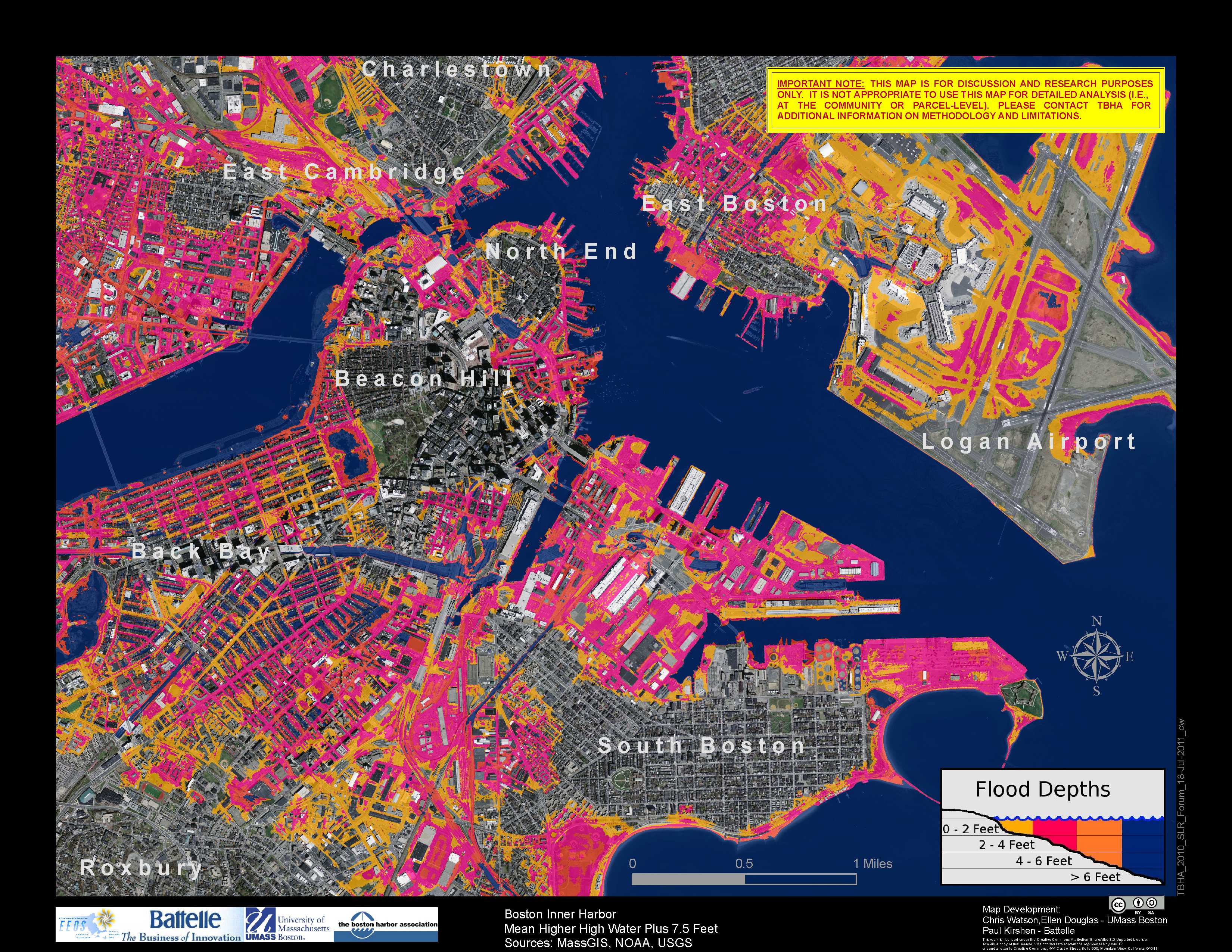
With the discussion of new landfill, I finally remembered to get from the library Gaining Ground by Nancy Seashoals. I'm just browsing through, but I highly recommend it to anyone interested in landfill in Boston. It is an extremely detailed history of Boston's expansion, practically parcel by parcel.
I think a part of it is interesting because filling land is way more expensive than just using existing land, so it was mostly only done when there was some really compelling need. Probably the bulk of it was done for maritime reasons like building out successively larger wharfs, or giant Navy expansions for wartime shipbuilding. A lot of tidal flats got filled in because the town polluted them and they became stinking and dangerous. Transportation right-of-ways, especially railroads had no way to get in to the city except embankments built over tidal flats. The airport was put where it was put, then had to gradually accommodate bigger and bigger planes. There were a bunch of tidal mill damns that didn't work well, and their reservoirs got filled in.
Back Bay and South End are pretty notable exceptions for creating new land just for residential space. But that was at a time when there was no other option but to walk to downtown, and so it was likely much more important that Boston build more land next to downtown. Purely recreational areas exist, like the Esplanade, but are relatively rare. It was just too expensive.
With those categories in mind, and all the ways the city has changed, it's hard to image there is a ton of new land to build. Other than a climate-change-related dyke.
(I know the original question assumed infinite money, but some of the constraints are pretty interesting, too)
I think a part of it is interesting because filling land is way more expensive than just using existing land, so it was mostly only done when there was some really compelling need. Probably the bulk of it was done for maritime reasons like building out successively larger wharfs, or giant Navy expansions for wartime shipbuilding. A lot of tidal flats got filled in because the town polluted them and they became stinking and dangerous. Transportation right-of-ways, especially railroads had no way to get in to the city except embankments built over tidal flats. The airport was put where it was put, then had to gradually accommodate bigger and bigger planes. There were a bunch of tidal mill damns that didn't work well, and their reservoirs got filled in.
Back Bay and South End are pretty notable exceptions for creating new land just for residential space. But that was at a time when there was no other option but to walk to downtown, and so it was likely much more important that Boston build more land next to downtown. Purely recreational areas exist, like the Esplanade, but are relatively rare. It was just too expensive.
With those categories in mind, and all the ways the city has changed, it's hard to image there is a ton of new land to build. Other than a climate-change-related dyke.
(I know the original question assumed infinite money, but some of the constraints are pretty interesting, too)