MBTA Buses & Infrastructure


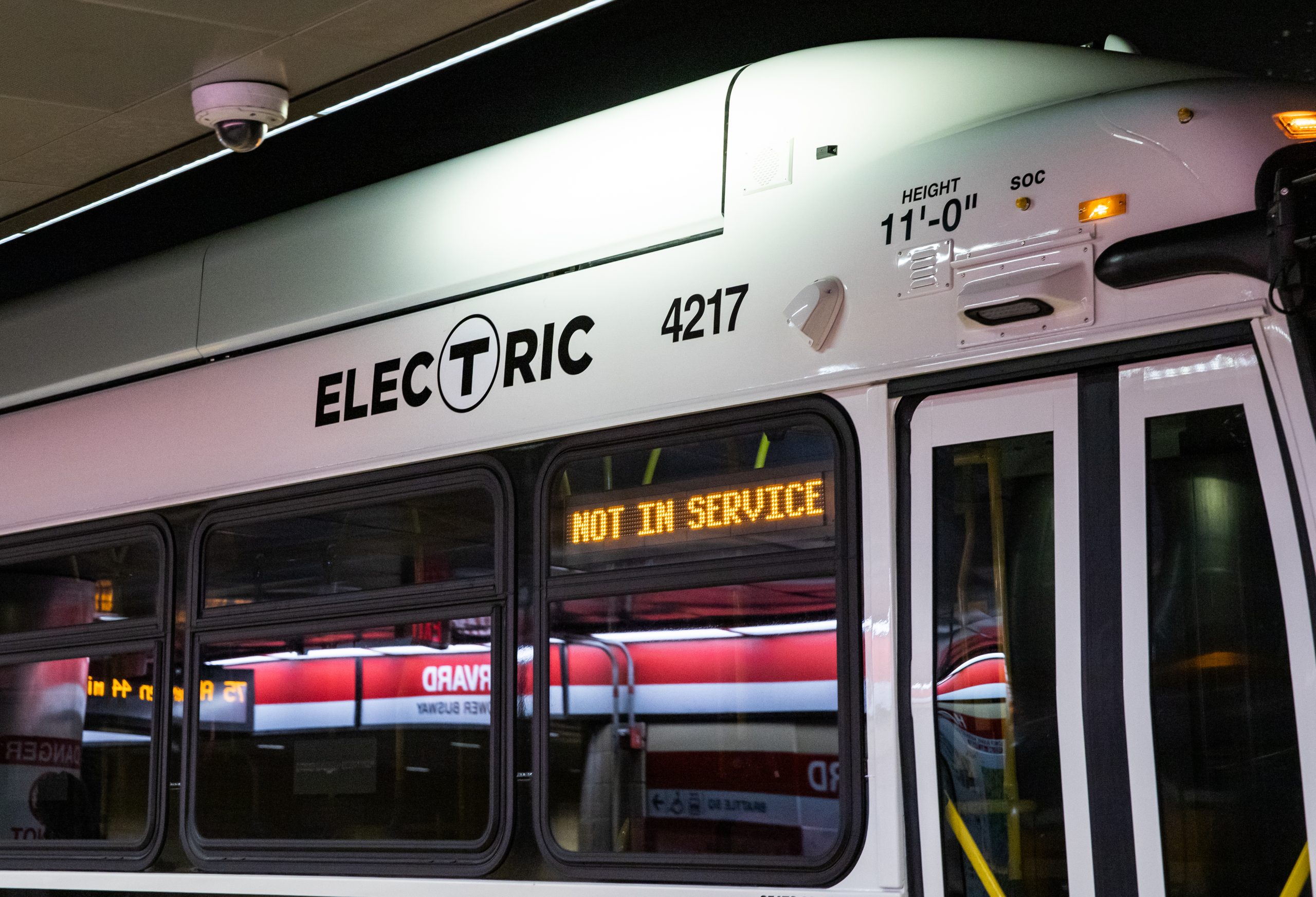
The white flag is starting to wave pretty vigorously from within on the state's bus electrification mandate, with general consensus that the 2041 deadline for full deployment and 2031 cutoff for buying fossil-fuel buses won't be even close to met. And they're saber-rattling already about service cuts as a result. Dovetails with the very downbeat overall tone of the T's board presentation last week on agency-wide decarbonization, which indicated that the early results of BEB testing have been problematic. For reference, the T's 5-bus fleet of 2019 New Flyer XE60's assigned to the Silver Line haven't run any trips at all since mid-December, missing virtually the entire 2025-26 winter season (I don't think they have diesel heaters like the new North Cambridge and Quincy XE40's).
 
The Legislature's position on electrifying buses contains the same logical fallacy as Boston's position on decarbonizing its buildings, which is transportation causes emissions, therefore lowering transportation emissions lowers emissions. For buildings in Boston, the argument is buildings cause the most emissions, so lowering building emissions lowers emissions.

The article does a great job of calling this fallacy out here:

Transportation accounts for about 38 percent of greenhouse gas emissions in Massachusetts, the largest share of all sectors, according to state data. The entire MBTA, including diesel fuel burned to power commuter rail trains and its use of electricity that comes from a grid still reliant on fossil fuels, is responsible for about 1 percent of the state’s transportation-related emissions. That makes the T a tiny dot, and non-electric buses even more microscopic, in the bigger emissions picture.
With that in mind, advocates like Aloisi and Kane argue that Massachusetts can better achieve its overall decarbonization goals in the short term, counterintuitively, by spending money on more diesel buses. More bus service could incentivize more people to use public transit instead of driving alone, the thinking goes, and dozens or hundreds more diesel buses would spew less greenhouse gases than thousands or tens of thousands of gasoline-powered cars taken off the roads.


If buses run less frequently, or not at all, those trips switch to a less efficient, higher emission mode, i.e. driving. Likewise, a building that is not built in Boston will be built either (a) in a Massachusetts suburb that requires a car to get, or (b) another state that has lower emission standards or none at all. Therefore, by forcing the most energy efficient sectors to be even more energy efficient, you are in effect causing higher emissions.

The administration in Boston is hopelessly stubborn and ideological, but hopefully the MA Legislature can realize the problem with this bus mandate and change course.
 
The Legislature's position on electrifying buses contains the same logical fallacy as Boston's position on decarbonizing its buildings, which is transportation causes emissions, therefore lowering transportation emissions lowers emissions. For buildings in Boston, the argument is buildings cause the most emissions, so lowering building emissions lowers emissions.

The article does a great job of calling this fallacy out here:

Transportation accounts for about 38 percent of greenhouse gas emissions in Massachusetts, the largest share of all sectors, according to state data. The entire MBTA, including diesel fuel burned to power commuter rail trains and its use of electricity that comes from a grid still reliant on fossil fuels, is responsible for about 1 percent of the state’s transportation-related emissions. That makes the T a tiny dot, and non-electric buses even more microscopic, in the bigger emissions picture.
With that in mind, advocates like Aloisi and Kane argue that Massachusetts can better achieve its overall decarbonization goals in the short term, counterintuitively, by spending money on more diesel buses. More bus service could incentivize more people to use public transit instead of driving alone, the thinking goes, and dozens or hundreds more diesel buses would spew less greenhouse gases than thousands or tens of thousands of gasoline-powered cars taken off the roads.


If buses run less frequently, or not at all, those trips switch to a less efficient, higher emission mode, i.e. driving. Likewise, a building that is not built in Boston will be built either (a) in a Massachusetts suburb that requires a car to get, or (b) another state that has lower emission standards or none at all. Therefore, by forcing the most energy efficient sectors to be even more energy efficient, you are in effect causing higher emissions.

The administration in Boston is hopelessly stubborn and ideological, but hopefully the MA Legislature can realize the problem with this bus mandate and change course.
The Legislature is not exactly detail-oriented, so I have little hope that change is going to come from the top-down. The slides in the T's decarbonization presentation outline some of the problems with them making all this an unfunded mandate. Replacing the old bus garages is necessary even with the transition to hybrid buses because so many critical vehicle systems are being moved from the undersides of buses to the roofs to create room for things like hybrid batteries. Decrepit facilities like the current Quincy garage can't service buses with anything on the roofs and so are stuck with the old pure diesels, while the other garages that can kinda-sorta service the hybrids do so more slowly than they should be able to because of the less-than-easy roof access, meaning daily fleet availability isn't as good as it could be. The deferred facility maintenance has to be addressed in one way or the other to even make partial progress, but the T has been starving for funds for that despite eating its peas properly on the procurement front buying almost nothing but hybrids for 15 years now. You can throw all that into the same rancid vat of the Legislature's chronic underfunding of the T. If they can't keep the back end of the system up to modern repair, service levels naturally decline and car dependency increases. Doesn't take a genius to figure that out, but we're dealing with very much not-geniuses in the seat of power.

The T then compounds these problems with its hopium belief in magic-beans new technology to get out of expending effort and brainpower solving actual problems with the mandates they (fairly are unfairly) are expected to implement. They scrap the whole of the century-proven trackless trolley system, then find out that BEB's even on the small scale of that former system can't handle the charging range in winter and are way more taxing to maintain. Whoops...service cuts ahoy! Nobody could've foreseen!...except for every freaking other cold-weather system in the world that ended up undershooting its projected charging ranges in practice. Seriously...look at any case study about how badly Moscow belly-flopped on ripping down its TT lines for BEB's, or how badly Shenzhen, China dug itself into a budgeting doom loop underestimating its (much warmer-weather!) BEB spare ratios to the detriment of service levels when it jumped without a safety net at 100% diesel replacement without proper consideration of the risks. These risks were absolutely known and very well-documented! As were the procurement market considerations of few reputable BEB suppliers, shakiness of first-generation technology reliability, overreliance on other rare-earth minerals rich countries and fragile geopolitics therein for supplying the batteries, and inherent susceptibility to (now-realized) price shocks. T leaders could've been expending more advocacy effort warning and educating the dunces in the Legislature about the risks of early adoption of immature technology so there could be better guardrails, but they didn't. They sprouted nothing but hopium about battery magic for 4 years and now...oops! Need way more spares, but ripped down the TT's that required very few spares. Need diesel heaters, but did no legwork on the arcane regulatory approvals and are now behind-schedule. Need special permitting for charging rigs, but did no research so now yard costs are exploding to their complete surprise. All of these things were anticipateable and were duly warned by advocates who saw the wreck coming, but they're just going deer-in-headlights because they thought they were getting miracle tech without altering course...not a whole new way of doing things that requires whole new kinds of problem-solving. Like a slow-motion train wreck, it's going to ream them on Commuter Rail, too. Absolutely no adherence to best-practices whatsoever, and total befuddlement that doing things their own way doesn't end up working out. On repeat. This management attitude isn't sustainable. And Eng, to my eternal dismay, is just pouring cement over it.


I believe it's absolutely the right thing to delay or heavily modify this mandate, because everyone involved in it fucked up to some LARGE degree and if service cuts are now a top risk they're doing absolutely more harm than good. But there needs to be self-reflection and learned behavior coming out of it. The mandate needs to be replaced with a more realistic mandate to the same general goal and targeted reforms to the way we do things and WHO gets to do those things...not just scrapped because it's all (*hand-waves*) too hard. "Too hard" is just a cop-out to never learn anything and never evolve. There's tons of world best-practice to learn from to do this better, if only they'd be willing to learn from it. I fear that everyone involved is so far up their own buttholes that they're just going to run in terror from anything that forces them to learn new things, and we're either going to continue plowing ahead full-steam on the current untenable course--and fail badly with worse service--or just retreat totally and never pursue a good and necessary thing. Our leaders are just not up to figuring a way through this challenge...not Healey, not Eng, not the godforsaken Legislature, and not the department higher-ups at the T.

 
Last edited:
Should the Commonwealth centrally procure BEBs and parcel them out to the various transit agencies?
 
Should the Commonwealth centrally procure BEBs and parcel them out to the various transit agencies?
What would that change? There's like 3 halfway reputable BEB manufacturers with Buy America-compliant plants, which is why unit prices are so uniformly high. You have the same limitations of first-generation technology no matter who you buy from: poor winter charging range, consistently undershot general charging ranges and spare ratios vs. route profiles, overly heavy vehicle weights causing escalated wear-and-tear maintenance issues, expensive midlife overhaul cycles because of the batteries' more limited lifespans before replacement is needed, etc. And the bus garage readiness problem and permitting problems that the Legislature isn't funding enough to fix cuts across all the RTA's too.

It's not a procurement problem, it's a management problem. Transit management in this state (actually, many others too) thinks BEB's are a drop-in replacement for current diesel ops and that they don't need to change practices, then find out rudely that it takes a whole new way of doing things that they're not mentally prepared for and panic.

The only centralized thing the Commonwealth can do here at the top-down level is actually provide adequate funding for the appropriate service facilities and inevitable higher quantities needed for first-generation BEB spare ratios, and hire people at the transit agencies who actually understand what best-practices are and how to apply them instead of arrogantly assuming they've come up with a totally novel lifehack to get out of implementing hard things. Then monitor things carefully and work together to improve ops practices until later generations of BEB tech inevitably shave more of the rough edges off. The Legislature and Governor are free to take up that task any time by opening the purse and making more intrepid leadership appointments, but they seem completely uninterested in doing any of that.
 

The white flag is starting to wave pretty vigorously from within on the state's bus electrification mandate, with general consensus that the 2041 deadline for full deployment and 2031 cutoff for buying fossil-fuel buses won't be even close to met. And they're saber-rattling already about service cuts as a result. Dovetails with the very downbeat overall tone of the T's board presentation last week on agency-wide decarbonization, which indicated that the early results of BEB testing have been problematic. For reference, the T's 5-bus fleet of 2019 New Flyer XE60's assigned to the Silver Line haven't run any trips at all since mid-December, missing virtually the entire 2025-26 winter season (I don't think they have diesel heaters like the new North Cambridge and Quincy XE40's).
How many of these problems could be resolved if the T was allowed to keep using diesel busses as long as they ran on biofuels? While it's not strictly carbon-neutral, it's a lot closer and should require significantly less capital costs. I can't find good data on what the cost premium would look like, but even if it was 50% more expensive than traditional diesel, that would only be about $20-30 million more annually in fuel costs. There's also the ability to have range-extended electric busses, which can provide most of the electric cost-savings (both for operating and maintenance), while mitigating the increased spare ratio needs (this is very much a new technology, but does appear to have been implemented in some Western systems).

None of this is to say biofuels are ideal or some magic bullet, but they could immensely ease the bus electrification pressure now and let that money get spent on much more valuable CR electrification instead.
 
How many of these problems could be resolved if the T was allowed to keep using diesel busses as long as they ran on biofuels? While it's not strictly carbon-neutral, it's a lot closer and should require significantly less capital costs. I can't find good data on what the cost premium would look like, but even if it was 50% more expensive than traditional diesel, that would only be about $20-30 million more annually in fuel costs. There's also the ability to have range-extended electric busses, which can provide most of the electric cost-savings (both for operating and maintenance), while mitigating the increased spare ratio needs (this is very much a new technology, but does appear to have been implemented in some Western systems).

None of this is to say biofuels are ideal or some magic bullet, but they could immensely ease the bus electrification pressure now and let that money get spent on much more valuable CR electrification instead.
Well, it's not going to mitigate the need to build new or heavily renovated bus garages and have the Legislature do its damn job funding that crawl-back from eons of deferred maintenance. The hybrid fleet is an emissions-control godsend and we're lucky that majority of the fleet is now populated with them, but the T is sending off the emergency flares that even that's not enough to stabilize service levels when the garages are so ill-equipped to handle any buses with roof-mount components because of the constrained vertical clearance at so many facilities. You see slippage in service levels when they can't cycle maintenance fast enough, and that's already happening to worrisome degree with the hybrids. The BEB's shoving even more crap on the roofs is just pushing that existing problem to a breaking point, and there isn't any Jetsons Shit stuff you can come up with for technological augments that doesn't shove ever more crap on the roofs. We can change the fuel mix in the hybrids, but their overall technology is still thoroughly early-21st century and we're failing to maintain them properly because nearly all our facilities are designed for no better than mid-20th century fleets.

BEB spare ratios can be managed. Winters can be managed. There's ever growing number of systems worldwide that accommodate BEB's with no major growing pains at all. But those systems actually exercised foresight in their planning by having up-to-spec maintenance facilities, built-in capacity to grow those 1st-gen battery spare ratios, and exercising rigorous ops reform so the very different duty cycling of BEB's doesn't pose such a potentially destabilizing shock to the system's integrity-of-service. As well as proactively traffic-modeling which of their routes pose the most challenge for conversion before jumping headfirst without a safety net. Simply blanket-assuming that ops don't have to change at any level because "new bus go brrrrrrrr... just like old bus" and letting the maintenance backlog continue merrily along accumulating just happen to be fatally faulty assumptions that quite a few cities have made because they didn't pay attention to best practices and the evolving conversation around best practices. Boston is now one of those stubborn, unlucky outliers. We absolutely suck balls at applying knowledge from peer best-practice; that's been laid completely bare. The T's electrification strategy bus and rail is completely and utterly fucked at all levels, and they're flailing now that it's crunch time on delivering the promises. Healey and Eng need to own that and learn to deputize to better people than these "magic beans" evangelists they're currently stocked with at the department level who've been upselling battery-magic-with-no-fundamental-ops-change for 5 years now across modes, and are now hitting panic time because it was clearly never going to be that easy.
 
Well, it's not going to mitigate the need to build new or heavily renovated bus garages and have the Legislature do its damn job funding that crawl-back from eons of deferred maintenance. The hybrid fleet is an emissions-control godsend and we're lucky that majority of the fleet is now populated with them, but the T is sending off the emergency flares that even that's not enough to stabilize service levels when the garages are so ill-equipped to handle any buses with roof-mount components because of the constrained vertical clearance at so many facilities. You see slippage in service levels when they can't cycle maintenance fast enough, and that's already happening to worrisome degree with the hybrids. The BEB's shoving even more crap on the roofs is just pushing that existing problem to a breaking point, and there isn't any Jetsons Shit stuff you can come up with for technological augments that doesn't shove ever more crap on the roofs. We can change the fuel mix in the hybrids, but their overall technology is still thoroughly early-21st century and we're failing to maintain them properly because nearly all our facilities are designed for no better than mid-20th century fleets.
This wasn't clear in my original post, but I was talking about acquiring brand-new fully diesel busses, with the only restriction being that they eventually move to biodiesel. The main point is allowing the Legislature/T to say they are de-carbonizing without the investments/reforms needed for full bus electrification. Maybe it's overly cynical, but even if the T got the money it needs to do bus electrification "right", that money would be much better spent on rail investments.

Like you said, the ultimate problem is that the T cannot deliver on discontinuously electrified bus network with current funding at current timelines. And the T's management is the most to blame, for refusing to realize or admit that electrification would be this disruptive.
 
This wasn't clear in my original post, but I was talking about acquiring brand-new fully diesel busses, with the only restriction being that they eventually move to biodiesel. The main point is allowing the Legislature/T to say they are de-carbonizing without the investments/reforms needed for full bus electrification.
If they're buying anything diesel, it's going to be a hybrid not a pure-diesel biodiesel. They're already too far in with a majority-hybrid fleet. And there's no way you'd get equivalent emissions by deleting the hybrid battery for a simpler overall biodiesel setup...one is still engine-off at idling conditions which matters the world in stop-and-go city traffic through dense neighborhoods, one is still engine-on at all times even if what it's physically burning is cleaner. The hybrids are heavier and more complicated to maintain than pure diesels, but that hasn't proved backbreaking yet because the route ops are still the same. They get turned around slower for maintenance because of the compromised roof access at the old garages we haven't upgraded or replaced, but they're still getting turned around and have been without major crisis for 15 years. If anything, you can simply convert some share of the hybrid fleet at midlife to biodiesel. It's not an invasive vehicle mod at all. Even with the funded BEB deployments at North Cambridge, new Quincy, and new Arborway there's going to be a net gain of systemwide hybrid numbers in the fleet because the 55 CNG buses at Cabot garage are due to be replaced by them when the agency gets out from under the last of its CNG fleet.

Maybe it's overly cynical, but even if the T got the money it needs to do bus electrification "right", that money would be much better spent on rail investments.
The way they're proceeding with rail electrification--"partial" wire-ups, 3x as expensive battery locos on an already-electrified Providence Line, BEMU guinea pig on the easiest-to-wire-up line on the whole system under ultra-funky self-inhibiting legal gymnastics outsource agreements--is way, way stupider than the bus electrification follies. Like, groundbreaking never-before-tried levels of stupidity. At least their BEB mistakes are on well-trodden ground that Moscow and Shenzhen and a number of other cities stubbed their toes at, and eventually started to turn in a more favorable direction with lessons learned and applied. And, because of the 2030-40 Legislative bus mandate, is something they have no choice but to stagger along and try to figure out the right way...because service cuts from not doing it right are going to end a lot of careers in T management. The rail strategy is just going to light a couple billion dollars of magic beans on fire for no discernible benefit, while thoroughly scaring them off from doing anything more for a generation. I am MUCH more pessimistic about rail decarbonization at the T right now, because they're so far up their own asses eschewing anything close to best practices and blazing their own trail of original stupidity that it's going to create generational planning trauma holding back service.
 
Generational fumble. I can't imagine how the staff who have put in so much time and work on this feel

“All these projects exist because someone asked for them,” said one Streets Cabinet employee, who, like 10 other former or current city workers, spoke on the condition of anonymity out of fear of retaliation from the administration. “These are going to be more promises that the city’s breaking. I think that’s what is breaking people’s hearts who are working for the city right now.”
 
The two are a bit different. The SL3X study shows no bus lanes from Bartlett St to Sweetser Circle, but your notes from from last night's meeting show bus lanes ending at Beacham Street, about 0.2 miles south of the Bartlett St/Broadway intersection. That's quite a difference.
Some notes from looking at the presentation:
  • The current proposal maintains a continuous Sullivan-bound bus lane, while there will be an Everett-bound gap from Beacham to Sweetser Circle.
  • They're actually cutting the Everett-bound bus lane back from its existing length at Sweetser Circle, meaning that the stop at Bartlett Street will be in mixed traffic rather than a bus lane. It seems like you could very easily modify the embankment to fit a bus lane at the stop.
  • The traffic modeling results make no sense to me. They're claiming that Everett-bound queues will be substantially longer in the PM peak with their proposed design than no-build, including at Bartlett Street even though there's no changes downstream of Bartlett. The only possible way I can imagine that being true is if the Beacham and Bartlett lights were so badly coordinated that traffic from Beacham is hitting the back of the Bartlett queue.
  • Previous work showed two bus stops at Beacham and Horizon. This has stops at Bartlett, Thorndike, and Dexter.


1774652059778.png
 

Wu’s about face on transportation is utterly baffling. She won reelection essentially unopposed and then decides to throw away years of work and funding for projects she championed. For what? Even if she is running for another office…does she really think the bus lanes on Blue Hill Ave would make or break a campaign for US Senate? I can’t make heads or tails of it.
 
This is the person who stood up to a Republican Congress that wished to humiliate her and won. She can also stand up to those who do not want this by washing her hands of it and threatening to walk away. So I hope the bike people stop sounding a lot like Josh Kraft and realize who is and is not on their side. They are aligning with the very people Wu warns us, want to kill the Blue Hill Ave project
 
I
This is the person who stood up to a Republican Congress that wished to humiliate her and won. She can also stand up to those who do not want this by washing her hands of it and threatening to walk away. So I hope the bike people stop sounding a lot like Josh Kraft and realize who is and is not on their side. They are aligning with the very people Wu warns us, want to kill the Blue Hill Ave project
I’m not sure how she “won” anything tangible in Congress. She looked and sounded nice but nothing actually changed.

I think the times have changed dramatically. People are looking for Democrats who will actually use the power granted to them. This isn’t the era for people who dither and piss away their time in the drivers seat.
 
I

I’m not sure how she “won” anything tangible in Congress. She looked and sounded nice but nothing actually changed.

I think the times have changed dramatically. People are looking for Democrats who will actually use the power granted to them. This isn’t the era for people who dither and piss away their time in the drivers seat.
"Piss" and moan about it all you want, she is clearly not wasting her political capital without support from her supposed allies on this issue.
 

Back
Top