RandomWalk
Senior Member
- Joined
- Feb 2, 2014
- Messages
- 4,063
- Reaction score
- 7,886
Should the Commonwealth centrally procure BEBs and parcel them out to the various transit agencies?

What would that change? There's like 3 halfway reputable BEB manufacturers with Buy America-compliant plants, which is why unit prices are so uniformly high. You have the same limitations of first-generation technology no matter who you buy from: poor winter charging range, consistently undershot general charging ranges and spare ratios vs. route profiles, overly heavy vehicle weights causing escalated wear-and-tear maintenance issues, expensive midlife overhaul cycles because of the batteries' more limited lifespans before replacement is needed, etc. And the bus garage readiness problem and permitting problems that the Legislature isn't funding enough to fix cuts across all the RTA's too.Should the Commonwealth centrally procure BEBs and parcel them out to the various transit agencies?


 www.dotnews.com
Dotnews, please, copyediting lolIn the interview, Wu said she is in regular communication with MBTA General Manager Philip Eng, who along with Wu has been the chief champion of the Blue Hill Avenue project, particularly the dedicated bus corridor that would increase commute times for tens of thousands of regular bus riders.
How many of these problems could be resolved if the T was allowed to keep using diesel busses as long as they ran on biofuels? While it's not strictly carbon-neutral, it's a lot closer and should require significantly less capital costs. I can't find good data on what the cost premium would look like, but even if it was 50% more expensive than traditional diesel, that would only be about $20-30 million more annually in fuel costs. There's also the ability to have range-extended electric busses, which can provide most of the electric cost-savings (both for operating and maintenance), while mitigating the increased spare ratio needs (this is very much a new technology, but does appear to have been implemented in some Western systems).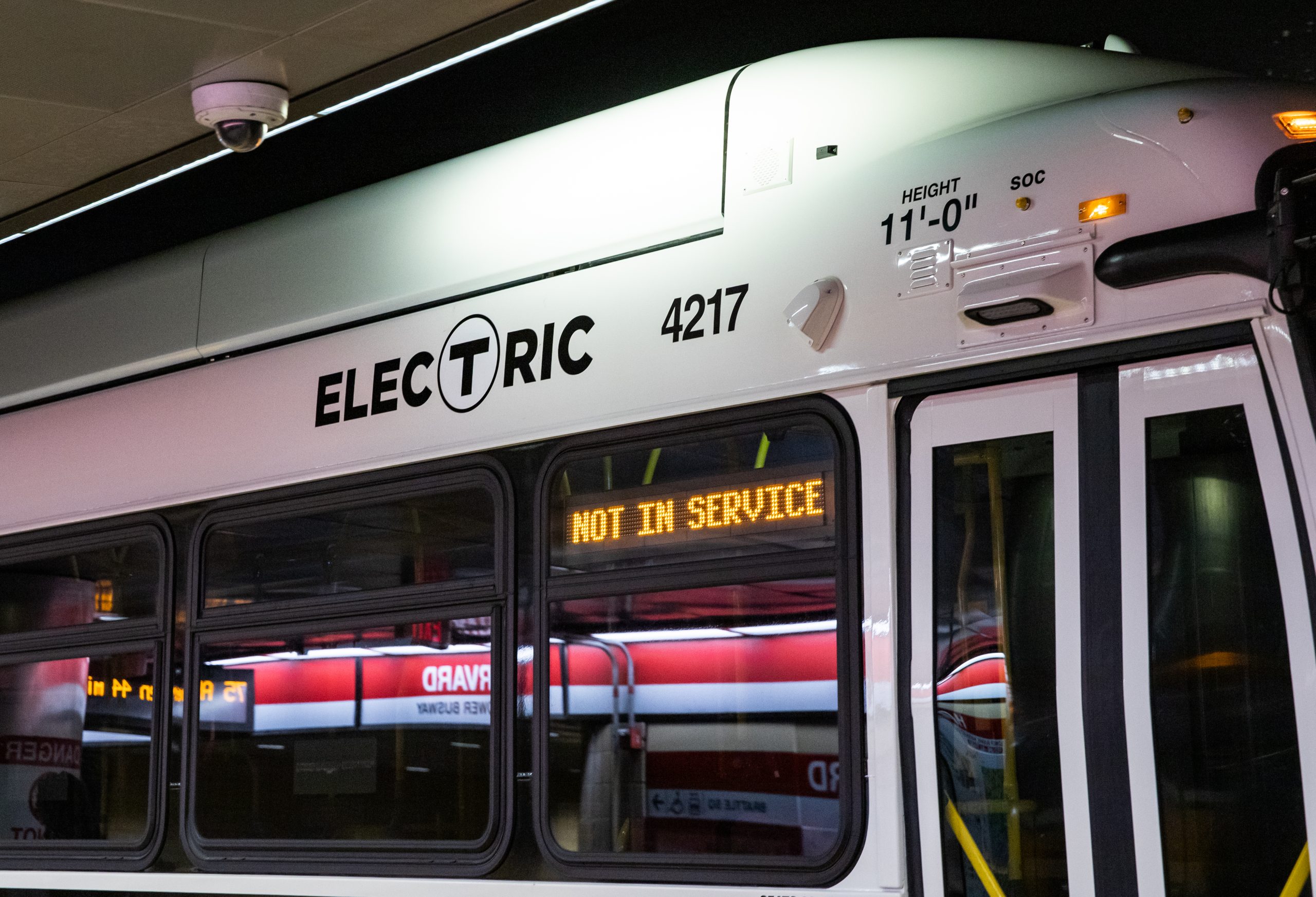
Where the rubber meets the road: MBTA questions if electric bus mandate is worth the tradeoffs
State law requires the MBTA to purchase only zero-emissions buses starting in 2031 and to have the entire fleet transitioned by 2041. Now, to the ire of a key lawmaker, agency leaders want to kickstart a public discussion about whether that hard-to-accomplish change is still in the state’s best...commonwealthbeacon.org
The white flag is starting to wave pretty vigorously from within on the state's bus electrification mandate, with general consensus that the 2041 deadline for full deployment and 2031 cutoff for buying fossil-fuel buses won't be even close to met. And they're saber-rattling already about service cuts as a result. Dovetails with the very downbeat overall tone of the T's board presentation last week on agency-wide decarbonization, which indicated that the early results of BEB testing have been problematic. For reference, the T's 5-bus fleet of 2019 New Flyer XE60's assigned to the Silver Line haven't run any trips at all since mid-December, missing virtually the entire 2025-26 winter season (I don't think they have diesel heaters like the new North Cambridge and Quincy XE40's).
Well, it's not going to mitigate the need to build new or heavily renovated bus garages and have the Legislature do its damn job funding that crawl-back from eons of deferred maintenance. The hybrid fleet is an emissions-control godsend and we're lucky that majority of the fleet is now populated with them, but the T is sending off the emergency flares that even that's not enough to stabilize service levels when the garages are so ill-equipped to handle any buses with roof-mount components because of the constrained vertical clearance at so many facilities. You see slippage in service levels when they can't cycle maintenance fast enough, and that's already happening to worrisome degree with the hybrids. The BEB's shoving even more crap on the roofs is just pushing that existing problem to a breaking point, and there isn't any Jetsons Shit stuff you can come up with for technological augments that doesn't shove ever more crap on the roofs. We can change the fuel mix in the hybrids, but their overall technology is still thoroughly early-21st century and we're failing to maintain them properly because nearly all our facilities are designed for no better than mid-20th century fleets.How many of these problems could be resolved if the T was allowed to keep using diesel busses as long as they ran on biofuels? While it's not strictly carbon-neutral, it's a lot closer and should require significantly less capital costs. I can't find good data on what the cost premium would look like, but even if it was 50% more expensive than traditional diesel, that would only be about $20-30 million more annually in fuel costs. There's also the ability to have range-extended electric busses, which can provide most of the electric cost-savings (both for operating and maintenance), while mitigating the increased spare ratio needs (this is very much a new technology, but does appear to have been implemented in some Western systems).
None of this is to say biofuels are ideal or some magic bullet, but they could immensely ease the bus electrification pressure now and let that money get spent on much more valuable CR electrification instead.
This wasn't clear in my original post, but I was talking about acquiring brand-new fully diesel busses, with the only restriction being that they eventually move to biodiesel. The main point is allowing the Legislature/T to say they are de-carbonizing without the investments/reforms needed for full bus electrification. Maybe it's overly cynical, but even if the T got the money it needs to do bus electrification "right", that money would be much better spent on rail investments.Well, it's not going to mitigate the need to build new or heavily renovated bus garages and have the Legislature do its damn job funding that crawl-back from eons of deferred maintenance. The hybrid fleet is an emissions-control godsend and we're lucky that majority of the fleet is now populated with them, but the T is sending off the emergency flares that even that's not enough to stabilize service levels when the garages are so ill-equipped to handle any buses with roof-mount components because of the constrained vertical clearance at so many facilities. You see slippage in service levels when they can't cycle maintenance fast enough, and that's already happening to worrisome degree with the hybrids. The BEB's shoving even more crap on the roofs is just pushing that existing problem to a breaking point, and there isn't any Jetsons Shit stuff you can come up with for technological augments that doesn't shove ever more crap on the roofs. We can change the fuel mix in the hybrids, but their overall technology is still thoroughly early-21st century and we're failing to maintain them properly because nearly all our facilities are designed for no better than mid-20th century fleets.
If they're buying anything diesel, it's going to be a hybrid not a pure-diesel biodiesel. They're already too far in with a majority-hybrid fleet. And there's no way you'd get equivalent emissions by deleting the hybrid battery for a simpler overall biodiesel setup...one is still engine-off at idling conditions which matters the world in stop-and-go city traffic through dense neighborhoods, one is still engine-on at all times even if what it's physically burning is cleaner. The hybrids are heavier and more complicated to maintain than pure diesels, but that hasn't proved backbreaking yet because the route ops are still the same. They get turned around slower for maintenance because of the compromised roof access at the old garages we haven't upgraded or replaced, but they're still getting turned around and have been without major crisis for 15 years. If anything, you can simply convert some share of the hybrid fleet at midlife to biodiesel. It's not an invasive vehicle mod at all. Even with the funded BEB deployments at North Cambridge, new Quincy, and new Arborway there's going to be a net gain of systemwide hybrid numbers in the fleet because the 55 CNG buses at Cabot garage are due to be replaced by them when the agency gets out from under the last of its CNG fleet.This wasn't clear in my original post, but I was talking about acquiring brand-new fully diesel busses, with the only restriction being that they eventually move to biodiesel. The main point is allowing the Legislature/T to say they are de-carbonizing without the investments/reforms needed for full bus electrification.
The way they're proceeding with rail electrification--"partial" wire-ups, 3x as expensive battery locos on an already-electrified Providence Line, BEMU guinea pig on the easiest-to-wire-up line on the whole system under ultra-funky self-inhibiting legal gymnastics outsource agreements--is way, way stupider than the bus electrification follies. Like, groundbreaking never-before-tried levels of stupidity. At least their BEB mistakes are on well-trodden ground that Moscow and Shenzhen and a number of other cities stubbed their toes at, and eventually started to turn in a more favorable direction with lessons learned and applied. And, because of the 2030-40 Legislative bus mandate, is something they have no choice but to stagger along and try to figure out the right way...because service cuts from not doing it right are going to end a lot of careers in T management. The rail strategy is just going to light a couple billion dollars of magic beans on fire for no discernible benefit, while thoroughly scaring them off from doing anything more for a generation. I am MUCH more pessimistic about rail decarbonization at the T right now, because they're so far up their own asses eschewing anything close to best practices and blazing their own trail of original stupidity that it's going to create generational planning trauma holding back service.Maybe it's overly cynical, but even if the T got the money it needs to do bus electrification "right", that money would be much better spent on rail investments.
Generational fumble. I can't imagine how the staff who have put in so much time and work on this feelWu: Blue Hill Ave. design 'not set in stone' as bus-lanes face more scrutiny - Dorchester Reporter
Mayor Wu emphasized that no final decisions have been made about the design of the Blue Hill Avenue corridor, including a controversial proposal for center-running bus lanes.
Generational fumble. I can't imagine how the staff who have put in so much time and work on this feel

 www.bostonglobe.com
“All these projects exist because someone asked for them,” said one Streets Cabinet employee, who, like 10 other former or current city workers, spoke on the condition of anonymity out of fear of retaliation from the administration. “These are going to be more promises that the city’s breaking. I think that’s what is breaking people’s hearts who are working for the city right now.”

Some notes from looking at the presentation:The two are a bit different. The SL3X study shows no bus lanes from Bartlett St to Sweetser Circle, but your notes from from last night's meeting show bus lanes ending at Beacham Street, about 0.2 miles south of the Bartlett St/Broadway intersection. That's quite a difference.
Wu: Blue Hill Ave. design 'not set in stone' as bus-lanes face more scrutiny - Dorchester Reporter
Mayor Wu emphasized that no final decisions have been made about the design of the Blue Hill Avenue corridor, including a controversial proposal for center-running bus lanes.
Yeah, what every Dem wants to see now right now is a completely jello-spined loser who collapses immediately under mild political pressure.Maybe angling for cabinet in a future Dem administration?
I’m not sure how she “won” anything tangible in Congress. She looked and sounded nice but nothing actually changed.This is the person who stood up to a Republican Congress that wished to humiliate her and won. She can also stand up to those who do not want this by washing her hands of it and threatening to walk away. So I hope the bike people stop sounding a lot like Josh Kraft and realize who is and is not on their side. They are aligning with the very people Wu warns us, want to kill the Blue Hill Ave project
"Piss" and moan about it all you want, she is clearly not wasting her political capital without support from her supposed allies on this issue.I
I’m not sure how she “won” anything tangible in Congress. She looked and sounded nice but nothing actually changed.
I think the times have changed dramatically. People are looking for Democrats who will actually use the power granted to them. This isn’t the era for people who dither and piss away their time in the drivers seat.
People want leaders and fighters, not ditherers and triangulators."Piss" and moan about it all you want, she is clearly not wasting her political capital without support from her supposed allies on this issue.

And people also want leaders who don't just... abandon their platform when a minority (that voted for the losing candidate no less) complains. Essaibi-George and Kraft ran significantly if not primarily on pausing bike/transit project expansion in favor of car drivers, and lost. It would be more than a little weird and off-putting if you voted in one president and then they just adopted the platform of the losing candidate instead.People want leaders and fighters, not ditherers and triangulators.