The Legislature's position on electrifying buses contains the same logical fallacy as Boston's position on decarbonizing its buildings, which is transportation causes emissions, therefore lowering transportation emissions lowers emissions. For buildings in Boston, the argument is buildings cause the most emissions, so lowering building emissions lowers emissions.
The article does a great job of calling this fallacy out here:
Transportation accounts for about 38 percent of greenhouse gas emissions in Massachusetts, the largest share of all sectors, according to state data. The entire MBTA, including diesel fuel burned to power commuter rail trains and its use of electricity that comes from a grid still reliant on fossil fuels, is responsible for about 1 percent of the state’s transportation-related emissions. That makes the T a tiny dot, and non-electric buses even more microscopic, in the bigger emissions picture.
With that in mind, advocates like Aloisi and Kane argue that Massachusetts can better achieve its overall decarbonization goals in the short term, counterintuitively, by spending money on more diesel buses. More bus service could incentivize more people to use public transit instead of driving alone, the thinking goes, and dozens or hundreds more diesel buses would spew less greenhouse gases than thousands or tens of thousands of gasoline-powered cars taken off the roads.
If buses run less frequently, or not at all, those trips switch to a less efficient, higher emission mode, i.e. driving. Likewise, a building that is not built in Boston will be built either (a) in a Massachusetts suburb that requires a car to get, or (b) another state that has lower emission standards or none at all. Therefore, by forcing the most energy efficient sectors to be even more energy efficient, you are in effect causing higher emissions.
The administration in Boston is hopelessly stubborn and ideological, but hopefully the MA Legislature can realize the problem with this bus mandate and change course.
The Legislature is not exactly detail-oriented, so I have little hope that change is going to come from the top-down. The slides in the T's decarbonization presentation outline some of the problems with them making all this an unfunded mandate. Replacing the old bus garages is necessary
even with the transition to hybrid buses because so many critical vehicle systems are being moved from the undersides of buses to the roofs to create room for things like hybrid batteries. Decrepit facilities like the current Quincy garage can't service buses with anything on the roofs and so are stuck with the old pure diesels, while the other garages that can kinda-sorta service the hybrids do so more slowly than they should be able to because of the less-than-easy roof access, meaning daily fleet availability isn't as good as it could be. The deferred facility maintenance has to be addressed in one way or the other to even make
partial progress, but the T has been starving for funds for that despite eating its peas properly on the procurement front buying almost nothing but hybrids for 15 years now. You can throw all that into the same rancid vat of the Legislature's chronic underfunding of the T. If they can't keep the back end of the system up to modern repair, service levels naturally decline and car dependency increases. Doesn't take a genius to figure that out, but we're dealing with very much not-geniuses in the seat of power.
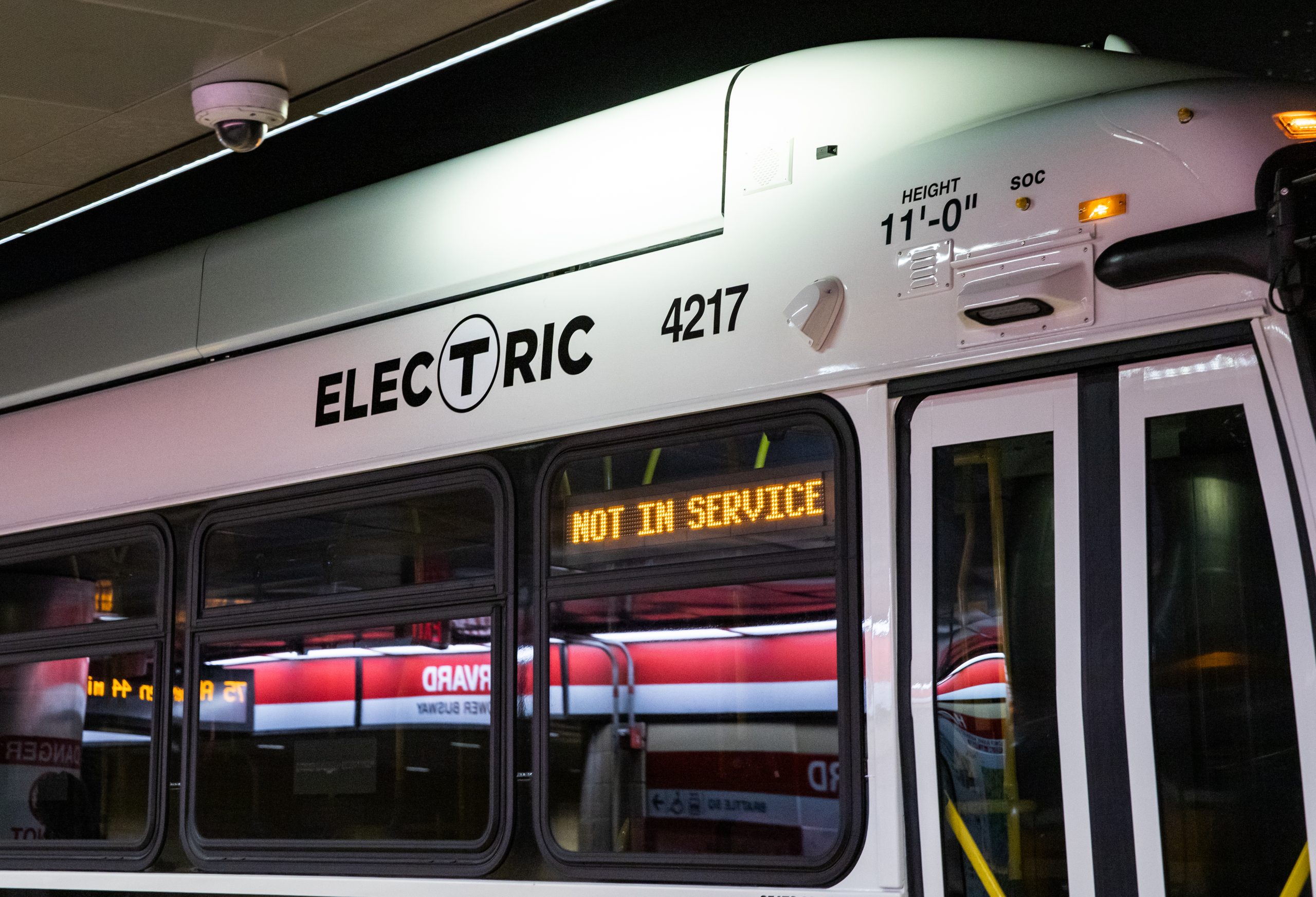
The T then compounds these problems with its hopium belief in magic-beans new technology to get out of expending effort and brainpower solving actual problems with the mandates they (fairly are unfairly) are expected to implement. They scrap the whole of the century-proven trackless trolley system, then find out that BEB's even on the small scale of that former system can't handle the charging range in winter and are way more taxing to maintain. Whoops...service cuts ahoy! Nobody could've foreseen!...except for
every freaking other cold-weather system in the world that ended up undershooting its projected charging ranges in practice. Seriously...look at any case study about how badly Moscow belly-flopped on ripping down its TT lines for BEB's, or how badly Shenzhen, China dug itself into a budgeting doom loop underestimating its (much warmer-weather!) BEB spare ratios to the detriment of service levels when it jumped without a safety net at 100% diesel replacement without proper consideration of the risks. These risks were absolutely known and very well-documented! As were the procurement market considerations of few reputable BEB suppliers, shakiness of first-generation technology reliability, overreliance on other rare-earth minerals rich countries and fragile geopolitics therein for supplying the batteries, and inherent susceptibility to (now-realized) price shocks. T leaders could've been expending more advocacy effort warning and educating the dunces in the Legislature about the risks of early adoption of immature technology so there could be better guardrails, but they didn't. They sprouted nothing but hopium about battery magic for 4 years and now...oops! Need way more spares, but ripped down the TT's that required very few spares. Need diesel heaters, but did no legwork on the arcane regulatory approvals and are now behind-schedule. Need special permitting for charging rigs, but did no research so now yard costs are exploding to their complete surprise. All of these things were anticipateable and were duly warned by advocates who saw the wreck coming, but they're just going deer-in-headlights because they thought they were getting miracle tech without altering course...not a
whole new way of doing things that requires whole new kinds of problem-solving. Like a slow-motion train wreck, it's going to ream them on Commuter Rail, too. Absolutely no adherence to best-practices whatsoever, and total befuddlement that doing things their own way doesn't end up working out. On repeat. This management attitude isn't sustainable. And Eng, to my eternal dismay, is just pouring cement over it.
I believe it's absolutely the right thing to delay or heavily modify this mandate, because everyone involved in it fucked up to some LARGE degree and if service cuts are now a top risk they're doing absolutely more harm than good. But there needs to be self-reflection and learned behavior coming out of it. The mandate needs to be replaced with a
more realistic mandate to the same general goal and targeted reforms to the way we do things and WHO gets to do those things...not just scrapped because it's all
(*hand-waves*) too hard. "Too hard" is just a cop-out to never learn anything and never evolve. There's tons of world best-practice to learn from to do this better, if only they'd be willing to learn from it. I fear that everyone involved is so far up their own buttholes that they're just going to run in terror from anything that forces them to learn new things, and we're either going to continue plowing ahead full-steam on the current untenable course--and fail badly with worse service--or just retreat totally and never pursue a good and necessary thing. Our leaders are just not up to figuring a way through this challenge...not Healey, not Eng, not the godforsaken Legislature, and not the department higher-ups at the T.

 commonwealthbeacon.org


