Once you get past 495, doesn't the population tend to get poorer
Yeah but they aren't the ones who ride the CR.

Once you get past 495, doesn't the population tend to get poorer

That's not what the data says. Yes, CR riders are on average richer than MBTA riders as a whole. But the biggest part of this difference comes from middle to upper middle income families earning $75,000-$93,000 per year. This makes sense, as this is the main demographic that would be commuting into Boston in the first place, people who have jobs in the biotech, university, healthcare, finance, or other sectors highly concentrated within Boston.Yeah but they aren't the ones who ride the CR.
Unless it's packaged as part of a much larger overall fare restructuring, or the T changes it's policy to look at opportunity equity/ population (which I'm not entirely sure is within its ability to do so,) it's hard to see how lowering fares on the CR wouldn't decrease fares less for protected populations.the MBTA must ensure that any fare increase does not increase fares more for protected populations than all riders, and that any fare decrease does not decrease fares less for protected populations than for all riders.
But isn't the whole point of Regional Rail to change the ridership mix on the Commuter Rail routes?For reference, this is the chart the T used last time they did a Title VI analysis of the CR fare system. I can't find the full presentation anymore, but those high non-minority / non-low-income numbers are what catches the T every time on a Title VI equity analysis.
Unless it's packaged as part of a much larger overall fare restructuring, or the T changes it's policy to look at opportunity equity/ population (which I'm not entirely sure is within its ability to do so,) it's hard to see how lowering fares on the CR wouldn't decrease fares less for protected populations.
View attachment 49545
I don't disagree, but that's a fundamental issue with the Title VI policy as currently formulated. The system allows you to include potential riders, but it fundamentally looks at what is, not what could be. The FTA allows you to do a title VI analysis by either population geography (minority census blocks) or ridership. The T has, since inception, used ridership, which I do actually think is the right choice. My understanding is that when it came into force, it functionally froze things in amber, as the DB/DI analysis only looks back at the ridership impacted before the change.But isn't the whole point of Regional Rail to change the ridership mix on the Commuter Rail routes?
If you don't implement a fare structure that attracts the different mix of riders, Regional Rail will fail. Regional Rail is not about the current riders, it is about the non-users today.
And this is the big caveat. A reformed fare structure wouldn't just mean taking $1 off every fare zone, for example. It would mean changing fare zones for the lower income cities served by the network like Lynn, Fitchburg, Brockton, Worcester, Leominster, etc to provide lower fares. It would mean allowing less frequent riders to connect to an MBTA bus without being charged extra. It would mean expanding the half-fare program to the Commuter Rail (Which as far as I can tell has basically no low-income fare program currently).Unless it's packaged as part of a much larger overall fare restructuring
And there is no shortage of mitigation options. Increasing funding to local transport agencies to provide better feeder services, building new stations and prioritizing upgrades to existing stations to better serve low income cities and neighborhoods, and of course there's always the 'brute force' approach of just funding rapid transit expansions. (Or 'Rapid transit' in the case of the Fairmount Line)That, or accept the DB/DI finding but include enough mitigation or justification in it to make it worthwhile.


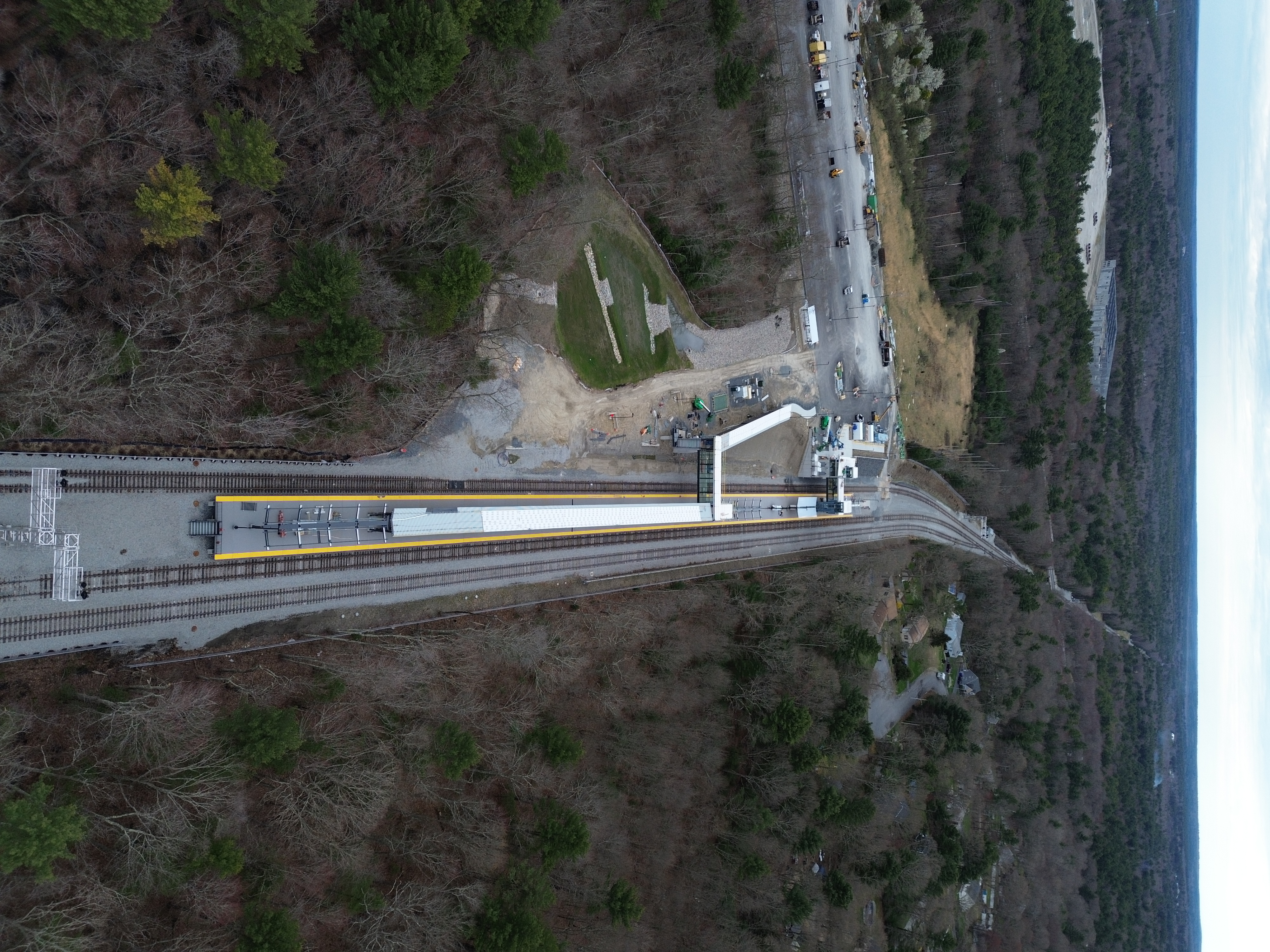
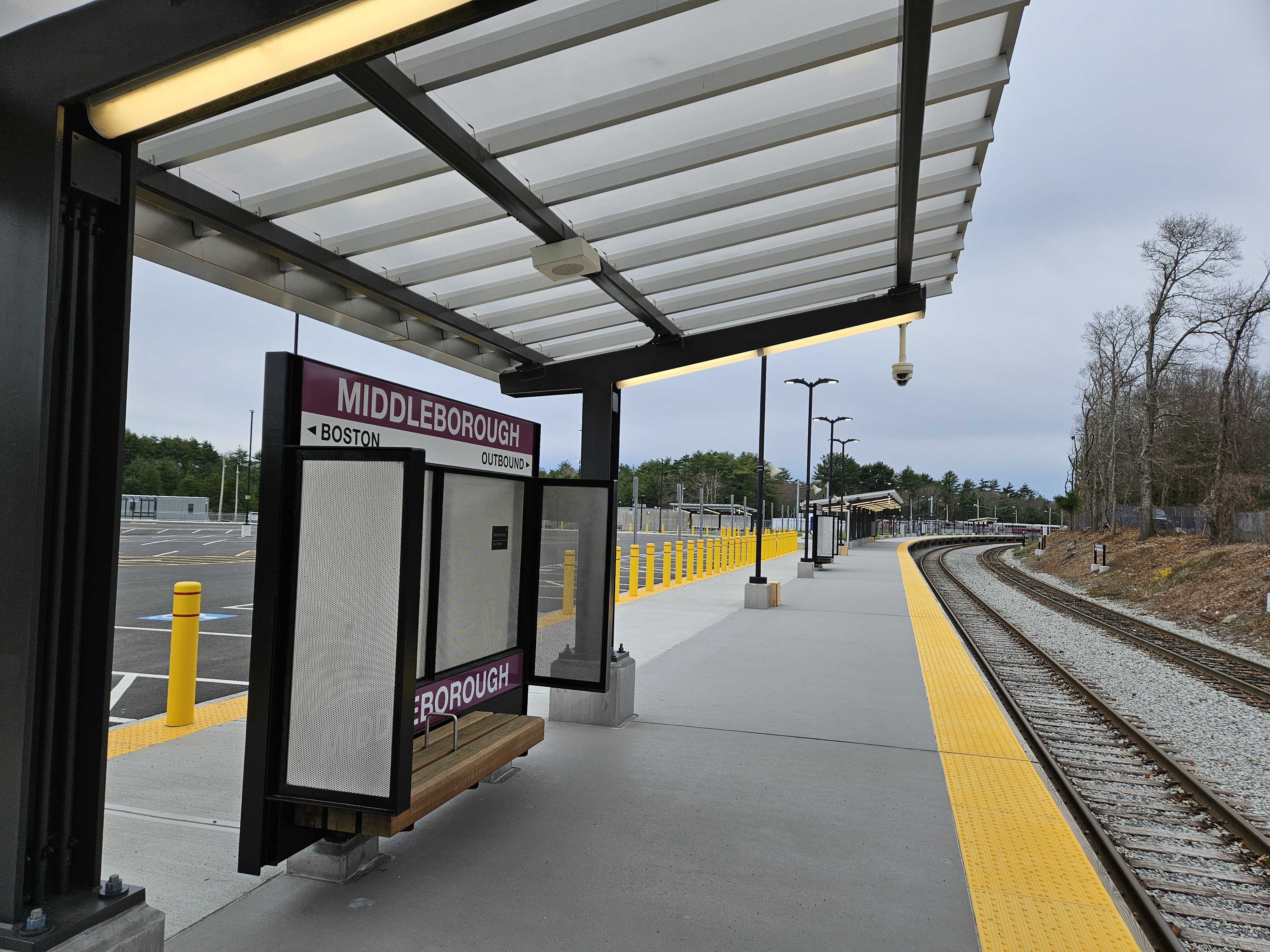
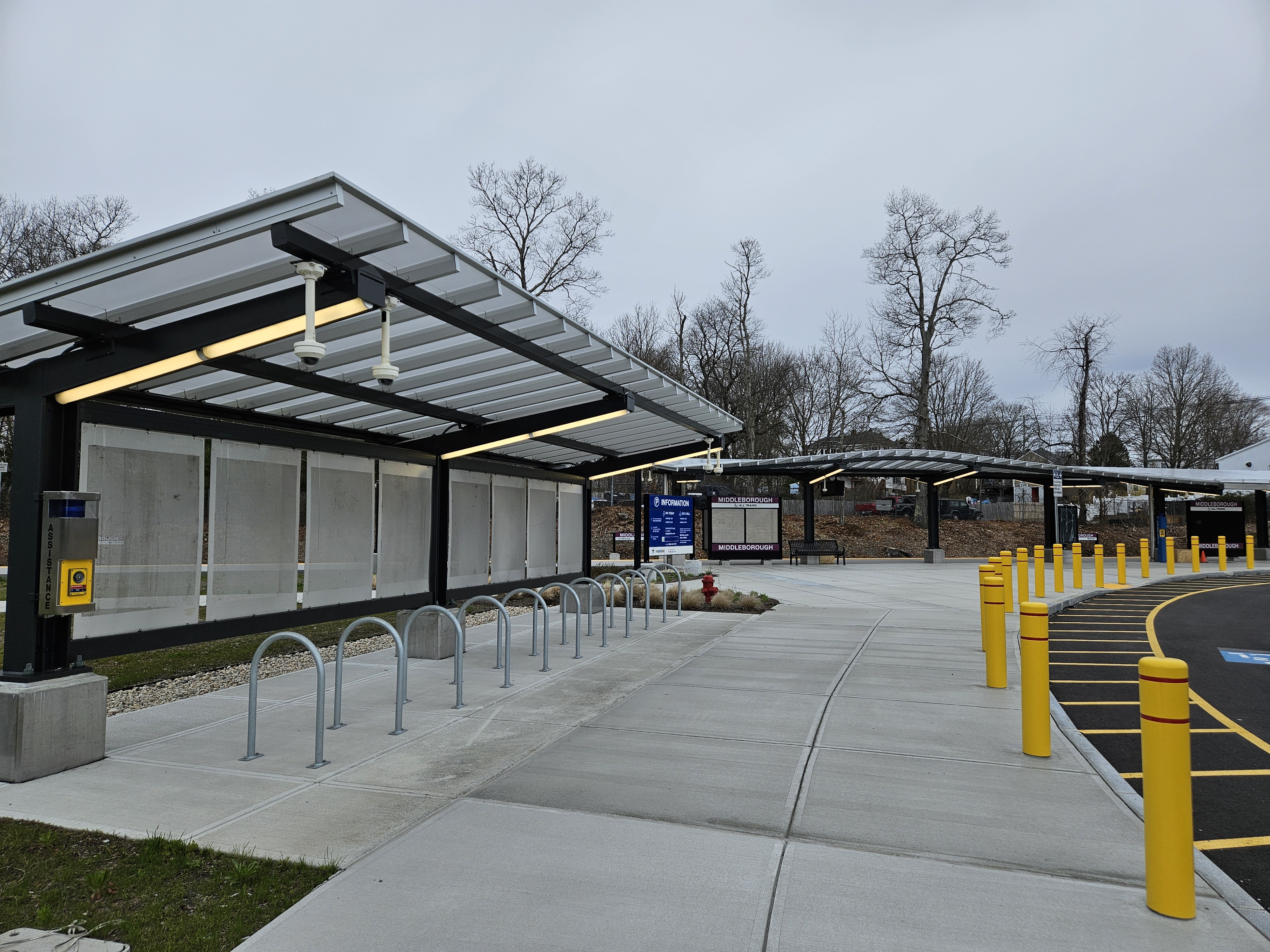
On another forum, someone complained that East Taunton station doesn't have any pedestrian access from the southwest side of the tracks, and likened it to Anderson/Woburn. While I do agree that the lack of access is unfortunate for the few people who live off Plain Street, it's amazing just how different it is from Woburn. East Taunton is entirely a park-and-ride station - it's just 2.5 miles from downtown Taunton, yet there is no safe way to walk or bike to the station. (Route 140 doesn't even have sidewalks.) The one bus route that will be extended to the station will take 25 minutes to reach the station from downtown.
The north-of-Cotley station siting at Mozzone Blvd. at least would've had the adjacent big-box shopping center for some TOD potential. But that assumes that the locals are capable of executing on TOD. The 2009 Corridor Plan tried to do ambitious mixed-use infilling with housing, new sidewalk buildouts, and greenspace...but all of that disappeared from the plans by the 2013 FEIR. While there were/are still empty lots around the shopping center ripe for infilling, the environs are car-centric to the max with seas of parking, poor sidewalk coverage, the same disconnection from Plains St. residential, and the same inferior bus connection. Either site makes the Kingston sand pit look borderline progressive on TOD. So I doubt the ridership needle moved much with the flip to the sparser surroundings south of the junction. It would be 90% park-and-rides at either site, and that's all the locals seem to be shooting for nowadays.Taunton is really getting screwed over with the Middleborough routing, especially since the East Taunton stop had to get relocated south of Cotley junction instead of the previously planned location north of the junction. Phase 2 is essential for Taunton because of the planned stop close to downtown, but I'm not getting my hopes up since there's been no word on Phase 2 since like 2017.
Commonwealth has blown several opportunities to push back against Army Corps. Phase II without a viaduct becomes reasonable.The north-of-Cotley station siting at Mozzone Blvd. at least would've had the adjacent big-box shopping center for some TOD potential. But that assumes that the locals are capable of executing on TOD. The 2009 Corridor Plan tried to do ambitious mixed-use infilling with housing, new sidewalk buildouts, and greenspace...but all of that disappeared from the plans by the 2013 FEIR. While there were/are still empty lots around the shopping center ripe for infilling, the environs are car-centric to the max with seas of parking, poor sidewalk coverage, the same disconnection from Plains St. residential, and the same inferior bus connection. Either site makes the Kingston sand pit look borderline progressive on TOD. So I doubt the ridership needle moved much with the flip to the sparser surroundings south of the junction. It would be 90% park-and-rides at either site, and that's all the locals seem to be shooting for nowadays.
The 2013 FEIS for Phase II projected 400 daily boardings for East Taunton and 670 daily boardings for the downtown stop at Dean St. At Phase I frequencies the East Taunton boardings are likely to suffer a little.
Per Keolis employees on RR.net, the signals on SCR are still not operational. There's a freight bulletin out for CSX and Mass Coastal to outright ignore the signal readouts and continue operating as if it were dark territory given that field techs apparently have a lot of debugging left to do with the system. No T test trains are operating for the foreseeable future; they haven't even started signal tests, let alone crew qualifications.Project Manager Jean Fox presented an update on status during the Cape Cod Chapter, NRHS banquet last June. I noted her presentation then did not include a planned opening date, so I asked during the Q&A. She said it was hoped to be late "this year" (2023), but it was dependent on PTC testing. Any defects found could lead to a delay of months, so early 2024 was more likely she said last June. Slip sliding away...
Yup. Slip sliding away. But I'm sure the project management team is being held accountable.Per Keolis employees on RR.net, the signals on SCR are still not operational. There's a freight bulletin out for CSX and Mass Coastal to outright ignore the signal readouts and continue operating as if it were dark territory given that field techs apparently have a lot of debugging left to do with the system. No T test trains are operating for the foreseeable future; they haven't even started signal tests, let alone crew qualifications.
If they haven't even started live testing reps as of June it's almost impossible that they're going to make service starts by Fall 2024. This is increasingly looking like Winter 2025 or later.


The MBTA also revealed the ticket cost to the public, but would not say what the daily train schedule would look like and would not guarantee weekend service.
Eng said the MBTA determined that based on distance from Boston, the entire South Coast Rail project would be in Zone 8 in terms of fare structure.
I am also glad that it will be Zone 8. The only Zones 9/10 stations are the ones south of Providence, which seem like special cases to me, given Providence's size. (If the Worcester Line were extended to Palmer or Webster, I'd expect its additional stations to also be in Zones 9 and 10.)I'm surprised (but glad) that South Coast Rail will be Zone 8. I expected Zone 9 for East Taunton and Zone 10 for Freetown, Fall River, and both New Bedford stations.
The weekday schedule is something I raised two years ago. The earlier iterations of the SCR proposal simply extended the then-existing Middleboro/Lakeville runs, alternating between Fall River and New Bedford. That would have meant headways of 70-100 minutes:but would not say what the daily train schedule would look like and would not guarantee weekend service.
As I've explained previously, this sucks:The bottom line is that, applying the same logic to the current schedule as was used to create the original "3 trains per peak, 3-3.5 hours off-peak" number now gives us something more like "2-3 trains per peak, 2.5 hours off-peak" or "2 hours peak, 2.5 hours off-peak."
If I were Phil Eng (who apparently earlier "changed" the team managing the SCR project -- I doubt he fired anyone, but sounds like a shakeup), I would have sat the team down, showed them the above numbers and told them this wasn't acceptable, and note that the DSEIR's "just extend the existing schedule" logic was obviously done as a reasonable effort to simplify planning -- refactoring the entire Old Colony system's schedule would have been well out of scope of the DSEIR. "But," he/I would say, "it's not out of scope for us." And directed the team to investigate refactoring the entire Old Colony schedule to create something more reasonable for South Coast Rail. Based on other changes he's made (e.g. single track service at South Attleboro), I am guessing he would have told them to get creative and try to squeeze as much juice out of this goddamn lemon as possible.The Phase 1 proposal calls for 6 trains to/from the South Coast during each peak period -- 3 from New Bedford, 3 from Fall River. Now, first of all, let's compare how many inbound peak trains cities of similar size had before covid:
Historically, 5 inbound peak trains has been the minimum on branches going to cities. Greenbush and Kingston usually had 4.
- Lowell: 8
- Brockton: 5
- Lynn: 8
- Lawrence: 5