General MBTA Topics (Multi Modal, Budget, MassDOT)

Personally, I'm of the mindset that overnight, even 24/7, service could be provided by overnight bus routes that roughly follow the subway lines. Daytime closures are so disruptive to so many people. The Orange Line being closed 3 straight weekends, and 4 out of 5, is insane. At late hours, traffic is not much of a concern, and it would make early access easier to do as well.
 
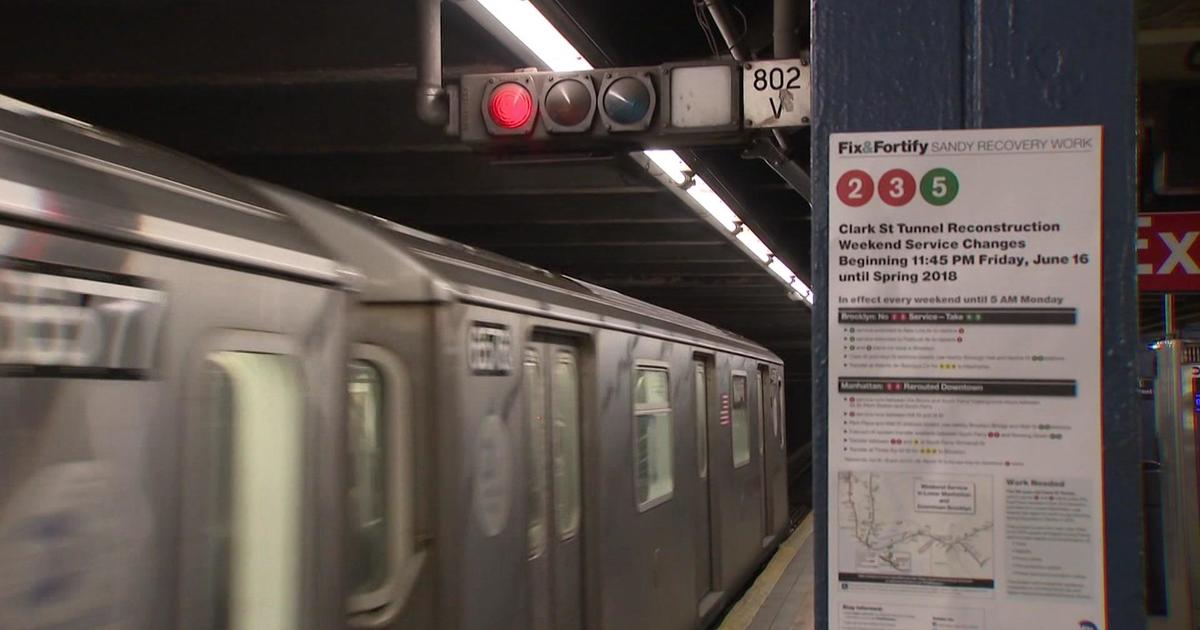
The NY MTA's history with single track operation, maintenance, is that it is pretty deadly for workers. Recent years (since 2000) about one worker per year is killed doing maintenance. 2 were killed last year. Prior to 2000 it was even less safe (more than 200 killed between 1946 and 2000).
We've had this discussion before. There is not an MTA track worker killed every year.
 
We've had this discussion before. There is not an MTA track worker killed every year.
This is last year's reporting. The MTA itself does not report out deaths in its safety reporting -- it take some investigative digging. The last major dig into this was NYT reporting in 2007 which was not pretty (238 worker deaths on tracks over 61 years - which is almost 4 per year).


The Federal Transit Administration conducted an audit, and they say subway workers face unsafe conditions and even a substantial risk of death.

MTA accused of unsafe practices in federal audit​

The report cites an accident from November in which an MTA worker was hit and killed by a train, and another accident in June when a worker was struck and critically injured.

It also identifies 38 near misses last year involving transit workers – a 58% jump from 2022. The FTA blames those close calls on workers failing to follow flagging procedures, improper radio use, a lack of supervision or train operator inattention.

The agency is directing a review of some the current safety and training programs, and it also says the New York Public Transportation Safety Board must submit monthly reports to show progress in lowering safety risks.
 

The announcement of service changes for Fall 2025 is now out.

If I ever get around to doing my analysis, it will be a bit delayed this time.

At this time, there is no GTFS data nor PDF schedules, so I can't analyze the changes for now anyways.
GTFS for Fall 2025 is out:

These are the actual service changes:
1755791314976.png


Green Line weekend frequency will decrease. There will now be reduced service on the Green Line on weekends.
The Mattapan Line will have reduced service every day.
Due to the Green Line and Mattapan Line service cuts, net Sunday subway service will decrease this fall, as increases on the Red and Orange are insufficient to offset the light rail cuts..

The Orange, Red, and Blue Lines will have improved service weekdays and Saturdays, and on Sundays as well on Red and Orange.

These bus routes will have reduced service:
The 9 and 88 buses will have reduced Sunday service.
The 47 bus will have reduced weekend service.
The 74, 75, and CT3 buses will have reduced weekday service.
The 78 bus will have reduced weekday and Sunday service.
The 220 bus will have reduced Saturday service.
Service will both decrease and increase on the 39, 104, 109, and 435 buses.

Service increases on the 1, 15, 21, 22, 23, 26, 28, 31, 32, 57, 62, 66, 69, 76, 89, 90, 101, 106, 108, 110, 111, 116, 222, 426, 430, 436, and CT2 buses. (See the attached image above for which days)

The MBTA is now up to 89.8% of pre-COVID bus trips, compared to 88.3% during the summer.
1757525952788.png


Map changes:
Downgraded
on the frequency map:
* Route 47 - fell below 21 Sunday trips and so gets moved from "every 30 - 60 minutes" to "every 1 - 2 hours"
Upgraded on the frequency map:
* Routes 15, 23, 28, 31 - now exceed 81 Sunday trips, all are now "every 12 - 15 minutes" instead of "every 15 - 20 minutes"
* Routes 62 - newly added as "every 1 - 2 hours" with 20 Sunday trips
* Route 106 - Extend "every 30 - 60 minutes" frequency to Lebanon Loop with over 21 Sunday trips
* Route 26, 426 - now exceed 21 Sunday trips as "every 30 - 60 minutes" instead of "every 1 - 2 hours".
Route 22 is not upgraded because it is 1 trip short of the 81 Sunday trip threshold to be considered "every 12 - 15 minutes"

1755213668127.png

Old maps: Pre-COVID; 2023: Winter, Spring (Slow Zones), Summer, Fall; 2024: Winter, Spring, Summer (News), Fall; 2025: Winter, Spring, Summer

 
Last edited:
"There was a male victim under the train, fairly seriously injured. We made sure the power was secure and then went down and initiated efforts to extract him from the pit," Boston Fire Department Deputy Chief Steven Shaffer said.

The man, who was not identified, suffered serious injuries.

The MBTA warned of delays on the Blue Line as crews attended to the emergency.
 
Trivia: what transportation facility is owned by the MBTA, but is used only by another entity and not the MBTA?
 
Trivia: what transportation facility is owned by the MBTA, but is used only by another entity and not the MBTA?
My first guess would be the South Station bus terminal, but maybe you consider that part of the larger "transportation facility" of South Station?

Otherwise, all I've got are various railroad lines that were included in the big line sale packages in the 1970s but that don't have passenger service.
 
Trivia: what transportation facility is owned by the MBTA, but is used only by another entity and not the MBTA?
South Station Bus Terminal?

Edit: alewife got it before me, but otherwise I'd say the Milford Secondary, which the MBTA bought from CSX but which is used by the G&U
 
Correct, South Station Bus Terminal was my intention! I suppose the lines that are now rail trails do count, as do a few freight/Amtrak-only segments (Milford Branch north of Forge Park, East Junction Branch, Western Route north of Haverhill, etc).

Interestingly, the MBTA briefly used - but did not own - one of its predecessors. When the MBTA acquired the Eastern Mass in 1968, its Lowell-Boston route used the Trailways bus terminal in Park Square rather than the Eastern Mass terminal in Haymarket or an outer rapid transit station. (That dated back to its origin as a Boston and Maine bus route, which the Eastern Mass acquired in 1957.) The MBTA continued to operate it into Park Square until April 1981 when it was cut back to Kendall - then soon extended to Haymarket, renumbered 350 in 1982, and cut to Alewife in 1985.
 
I saw a ceramic T station map many moons ago that showed the 700 terminating at the Trailways/Peter Pan Terminal on Atlantic Avenue, which was where the park is now. Could've been an incorrect map or it's a faulty memory.
 
It's possible. Trailways and other lines moved to the South Station busway (on the Atlantic Avenue side of the tracks) in May 1980, then to Dewey Square in November 1980, and stayed there until the terminal opened in October 1995. I'm not sure whether the 700 moved with Trailways or just switched to a curbside stop in Park Square. Either way, it would have been in the South Station area for less than a year.
 
That’s crazy that adding service requires any sort of process or analysis.
The other way around is probably just adding 55-59 minutes at a time. They can't just go cold turkey and extend service from 12:30 a.m. to 2:00 a.m. in 1 single go. They have to extend from 12:30 a.m. to 1:29 a.m., then wait a full quarter or some determined amount of time, and then extend from 1:29 a.m. to 2:28 a.m.

They've done this with the 108 bus on Sundays.
QuarterFirst inbound trip arrival at inbound terminalLast outbound trip departure at inbound terminal
Fall 20179:34 a.m.6:40 p.m.
Winter 20199:54 a.m.7:00 p.m.
Spring 20209:04 a.m.7:45 p.m.
Summer 20209:10 a.m.7:45 p.m.
Winter 20219:10 a.m.7:50 p.m.
Fall 20219:18 a.m.8:10 p.m.
Winter 20229:00 a.m.8:20 p.m.
Fall 20258:00 a.m.8:27 p.m.

Before it used to be only 9:35/9:55 a.m. to 6:40 p.m. in 2018. Changes between 2018 and 2022 gradually extended Sunday morning service to start at 9:00 a.m., and evening Sunday service extended to 8:20 p.m.

This fall, service on the 108 is being extended again to start at 8:00 a.m. instead of 9:00 a.m., and evening outbound service extended to 8:27 p.m from 8:20 p.m.. However, they've cut back evening inbound service slightly, with the last departure reduced down to 8:57 p.m. instead of 9:15 p.m..

So over the course of 7 years, the T has added almost 2 extra hours of Sunday morning service and 1 and a half hours of extra evening service to the 108. Instead of barely 9 hours of full service, it is now almost 12.5 hours of service. They don't seem to need to go through a process or analysis if they go slow at a time and not do a huge jump all at once.
 
The nearly an hour is key here. Adding a full hour requires a public process and equity analysis. As I understand they're literally adding 59 minutes? All for it.
Interesting. Do you know what laws would trigger that?

That’s crazy that adding service requires any sort of process or analysis.
I also want transit agencies to be able to just seamlessly add service. But there are a couple of reasons this isn't totally crazy. (I don't know if whatever equity analysis would come from state or federal law, so these are just guesses.) There are absolutely cities that would primarily (or exclusively) invest in better service only in white or rich neighborhoods. Doing that year over year, decade over decade, is a real problem. Doing some equity analysis theoretically tackles that problem. Also, cutting back on service does more reasonable require equity analysis in some cases, which could happen for T if they expand service but then find they need to revert to an old schedule. The T might be picking some service expansion they know they seamlessly revert, if need be. But I don't know. Just guesses.
 
Interesting. Do you know what laws would trigger that?


I also want transit agencies to be able to just seamlessly add service. But there are a couple of reasons this isn't totally crazy. (I don't know if whatever equity analysis would come from state or federal law, so these are just guesses.) There are absolutely cities that would primarily (or exclusively) invest in better service only in white or rich neighborhoods. Doing that year over year, decade over decade, is a real problem. Doing some equity analysis theoretically tackles that problem. Also, cutting back on service does more reasonable require equity analysis in some cases, which could happen for T if they expand service but then find they need to revert to an old schedule. The T might be picking some service expansion they know they seamlessly revert, if need be. But I don't know. Just guesses.
While rooted in Title VI, the definitions are determined by the T - the threshold isn't a bright line "one hour=equity analysis."

 
Interesting. Do you know what laws would trigger that?

Title VI of the civil rights act requires transit agencies to have a "major service change policy" - so agencies are able to set their own threshold. From the guidance: "A major service change policy is typically presented as a numerical standard, such as a change that affects “x” percent of a route, “x” number of route miles or hours, or some other route-specific or system-wide change, or the number or concentration of people affected. The major service change policy will include adding service and reducing service. The threshold for analysis shall not be set so high so as to never require an analysis; rather, agencies shall select a threshold most likely to yield a meaningful result in light of the transit provider’s system characteristics."

So as @Stlin said, the MBTA and other service providers have to set a policy. The MPO typically performs these analyses on behalf of the MBTA, which is where I got the one-hour threshold from, but it seems pretty clear in the MBTA's policy that it's about percentage of total hours rather than a raw number.
 
I think the regulation is in place to not overly produce suburban, white, white collar oriented express services when the transit district also includes urban, poorer minorities.
 
This is disparate impact liability. Despite Title VI or VII, this is an analysis separate from that. Disparate impact is a legal doctrine actually created through legal decisions. See Supreme Court 1970 Griggs vs. Duke Power Co. Not an Act of Congress codified in law. Disparate impact theory is unique to the USA. It occurs when a facially neutral policy results in a disparate impact to a protected class. So the MBTA is likely comparing majority minority geographies (MMG i.e. the protected class) (possibly at the census tract level) to non-majority minority geographies (NMG i.e. the control group) to identify statistically significant disparities. Same thing with disproportionate burden: they are comparing low and moderate income (LMT) geographies and non-LMT geographies. In either case, they are probably using a Pearson Chi-Squared test at the 90% or 95% significance level to detect potentially disparities quantitatively. But to prove legitimate disparate impact, you have to show qualitatively that there is no legitimate business reason for the disparity. So disparate impact has a much higher legal burden than comparative discrimination of disparate treatment. Disparate impact is likely to be challenged next year at the Supreme Court and overturned so this could all be gone by this time next year anyway.
 

Back
Top